

The facts about insulation and home efficiency
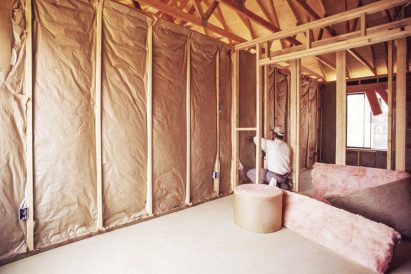
Insulation can go a long way toward making a home more comfortable. Insulation reduces the transfer of heat from indoors and outdoors, so homes stay more comfortable in both the winter and summer. Insulation also can block exterior noise. A properly insulated home is a must, particularly in the wake of rising energy costs. Insulation will help a home be more energy efficient.
“Insulation is critical to a home to maintain a good level of warmth in the winter and cool in the summer,” said Von Braddock, owner of Braddock Painting and Restoration on Jefferson Avenue in West Brownsville. “Even if the homeowner can do just a portion of the home one year and another portion the next, it is worth it for the comfort and to maintain the value of the home. People are always looking to keep electrical costs down, and being properly insulated, not over-insulated, is important.”
Insulation is easily taken for granted. The following are some facts about insulation and home efficiency that illustrate how much homeowners can benefit from upgrading their insulation:
n Insulation is made from a variety of materials, including fiberglass, wool, cellulose, and spray foam.
n Unless damaged, insulation lasts for the life of the building. Some settling of insulation may occur, particularly with loose-fill type insulation, and gaps can be filled in.
n During the Middle Ages, walls of homes were stuffed with straw and mud to help keep out the cold. It is one of the first documented types of insulation.
n According to the U.S. Environmental Protection Agency, insulation saves more than 600 times more energy each year than compact fluorescent lights, Energy Star Appliances, and Energy Star windows combined.
“Being insulated helps the homeowner have more control of utility bills and other energy-related costs said Michael Howell, an owner of M&J General Construction, Monessen. “The warning signs for insufficient insulation is how cold the home is during the winter and how hot it is during the summer. Most brick house have bare walls, never insulated. That’s how old houses were built.
“One way to find out about the insulation’s conditions is to drill real small holes and just check,” added Howell, whose business stretches from the Mon Valley to the South Hills, Washington and Pittsburgh. “You can also just touch the walls in the winter and find out how cold they feel.”
n For every Btu consumed in the production of insulation each year, 12 Btus are saved using insulation.
n An insulating material’s resistance to heat flow is measured in terms of its thermal resistance, or R-value. The higher the R-value, the greater the insulating effectiveness. An insulation contractor can let a homeowner know how much insulation and what R-value is recommended for his or her climate.
n Manufacturers continue to experiment with insulation materials. Environmentally friendly options include recycled cotton denim, paper or plant cellulose, and sheep’s wool.
n Large pieces of insulation are called batts. Traditionally they are made from pink fiberglass, which is extremely fine woven glass. It’s important to realize fiberglass insulation can release small particles or fibers in the air when disturbed, so respiratory protection and gloves should be used when handling to reduce risk of irritation.