

Stay local applies to health care too
There is something quietly powerful that happens 24 hours a day, 365 days a year in your community.
Every day, hundreds of people walk through the doors of your local hospital and step into a calling that has defined this community for generations. They show up to take care of their neighbors. Not in an abstract way. Not as a transaction. They care for people they know. People they grew up with. People that sit beside each other in church and cheer under the lights on Friday nights.
That matters more than we often admit.
Because in a world that keeps getting bigger, faster, and more impersonal, choosing to stay local is not the easy path. It is a deliberate one. It is a statement about what we value. It says that where you come from still matters. It says that relationships matter. It says that taking care of one another is not outdated. It is essential.
And there is a deeper truth underneath it all. When you take care of your neighbors, you are also taking care of yourself. You are strengthening the very place that will be there for you when you need it most.
You can see that commitment in the results. Typically, while the national hospital infection rate hovers around 9%, local hospitals can be much lower. That is not an accident. That is what it looks like when people care for patients the same way they would care for their own family and friends. That is what happens when accountability is personal.
I had the privilege of leading a small rural hospital for over a decade, and I learned something quickly. Small is not a limitation. Small is a strength.
Large systems offer scale and sophistication, and those things have value. But they often come with a tradeoff. You can become a number in a system rather than a member of a community. In your town, that tradeoff does not exist. Here, people know your name. They ask about your family, and they mean it. That kind of trust cannot be manufactured. It is built over time, one relationship at a time.
And in health care, trust is not a luxury. It is a clinical advantage. When people feel known, they speak more honestly. They ask better questions. They follow through. They heal better. Science will tell you that outcomes improve with engagement. The human side will tell you why.
But this story is about more than what happens at the bedside.
Your local hospitals are nonprofit. That matters. It means the mission is not to extract value from the community, but to invest in it. It means decisions are made with the long-term health of this place in mind, not short-term gains somewhere else.
Think about the impact. All those people working with purpose. Millions of dollars in payroll circulates through local businesses, restaurants, schools, and churches. This hospital is not just a provider of care. It is part of the economic and social backbone of the county.
And here is the part we do not always say out loud.
A nonprofit community hospital does not thrive on its own. It thrives because its community chooses it. Supports it. Believes in it. Uses it.
Those choices matter. They bring new physicians to town. They expand services. They strengthen what is already good. They create a cycle where care continues to improve because the community stands behind it, and the community grows stronger because that care is close to home.
That is a cycle worth protecting.
This is not just about health care. It is about identity. It is about pride. It is about a shared commitment to one another.
It is a commitment to staying local. To recognize the value of what we have right here. To support the people who have built their lives around caring for this community. And to understand that when we walk through those doors, we are part of something larger than ourselves.
Hundreds of your neighbors showed up today.
They are ready to take care of you
The question is whether we are ready to take care of each other.
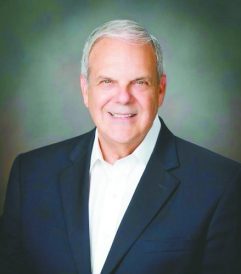
Nick Jacobs lives in Windber.