

Red menace
Fetterman, McCormick introduce bill to stop spotted lanternfly spread
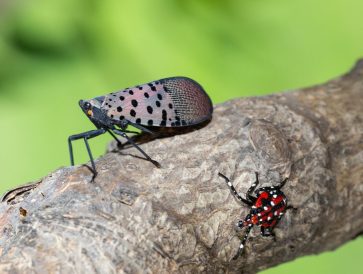
They’re back.
Spotted lanternflies have returned in high numbers across Pennsylvania, infesting more than 50 counties and threatening local crops like grapes, peaches, and apples.
In response, Pennsylvania’s U.S. Sens. John Fetterman and Dave McCormick, alongside Sens. Ron Wyden of Oregon and Kirsten Gillibrand of New York have introduced the bipartisan Spotted Lanternfly Research and Development Act, aimed at finding new ways to control spotted lanternflies and limit the invasive insect’s impact on farmers.
The bill would add the spotted lanternfly as a “high-priority research initiative” under the National Institute of Food and Agriculture.
If passed by Congress, the act will unlock specialized federal grants that will enable scientists to develop and distribute new research-backed tools, treatments, and biocontrol methods to stop the insect’s expansion.
Fetterman, noting the pests are expanding into Western Pennsylvania, expressed support for the bipartisan effort to protect local farmers.
Native to Asia, spotted lanternflies were first detected in Pennsylvania in 2014, and have since been found in 51 counties, according to Fetterman’s office.
The invasive insects feed on a range of plants and crops, including grapevines, apples, peaches and hops.
According to a press release from Fetterman, the species “could cost the state $324 million annually” as a result of the damage. It is estimated that spotted lanternflies could cost Pennsylvania’s economy as much as $324 million annually if their spread is not contained. It also could result in the loss of more than 2,800 jobs.
Said McCormick in a press release, “Pennsylvania’s farmers work hard to produce some of the best agricultural products in the world, and it’s concerning that their hard work is at risk of being eaten away by pests. By investing in research to combat spotted lanternflies, this bill will help protect our farms, strengthen our agricultural economy, and better control this invasive species.”
New spotted lanternflies most commonly hatch during early summer before growing their distinctive red-with-black-polka-dot wings in July. They typically die by December, but their mating season begins during August.
If you spot a lanternfly, the state Department of Agriculture advises to squash it and make sure to scrape any eggs left behind on trees, vehicles and other outdoor equipment. You can also report them online at services.agriculture.pa.gov/SLFReport/ or call at 1-888-4BADFLY.