

Thinking outside the box
Trinity CEL program addresses substitute teacher shortage

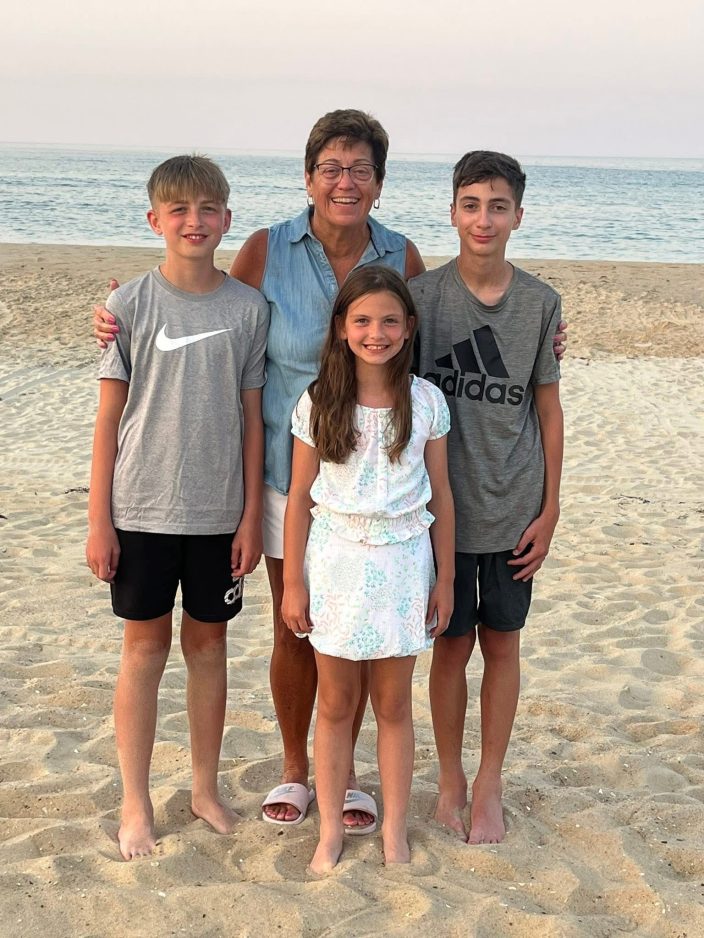
Becky Knoneberg retired as a labor and delivery nurse in 2020 and then cared for her mother, Elinor Hunt Ellis Newman, a beach lover, crossword player and puzzler who passed away in February 2025 at the age of 89.
After her mother died, Knoneberg wanted to volunteer, and she looked into several nonprofits. But when she stumbled across a newspaper article about “It Takes a Village,” an innovative program the Trinity Area School District was launching for the 2025-26 school year that trained professionals in the district to work as substitute teachers, she was intrigued.
“I thought that sounded cool, but I was very nervous,” said Knoneberg, 67, of Washington. “I taught Lamaze classes for 15 years, but I hadn’t worked with middle school or high school students and I didn’t feel comfortable walking into a school. I wasn’t sure how it would go.”
Turns out, it went well.
One or two days a week during the last school year, Knoneberg, armed with a lesson plan, would check into the office, report to a classroom, and lead dozens of students in lessons.
“I can’t wait for school to start again,” said Knoneberg, a Trinity High School graduate who has seven grandchildren – three of them attend the intermediate school, the middle school and high school, and she noted with a laugh that she she tried not to embarrass them in front of their friends.
When the Community Education Liaison program started, Knoneberg joined nine other professionals who substituted at least one day a week and brought real-world experiences to the classroom.
The goal of the program, funded with a $35,000 Moonshot grant awarded by ReMake Learning, a Homestead nonprofit, was to address a substitute teacher crisis that has left districts across the country struggling to find substitutes when teachers are absent.
The outside-the-box idea has turned out to be a win-win for the school district and the substitutes.
“We have found some of the most amazing gems, the most wonderful human beings who are interacting with our kids and making an impact,” said Dr. Constance DeMore Savine, Trinity’s director of curriculum and instruction who, along with Dr. Samantha Shinsky, director of technology and innovation, developed the program.
The bonus, the educators said, is the real-world experiences that the CELs bring to the classroom.
“We looked for people who had real-world experience in different areas of expertise,” said DeMore Savine. “The surprising thing was how good it was for our CELs, the joy they found through doing this, and how it has enriched their lives.”
There is, indeed, a shortage of substitute teachers. A 2025 Pennsylvania School Boards Association report found that 82% of districts surveyed reported a shortage of substitutes.
Additionally, by 2025, the number of in-state teaching certification issued in Pennsylvania had dropped by roughly 66% since 2010, according to the state Department of Education.
The substitute shortage has forced schools to call on regular classroom teachers to cover classes during their designated preparation periods, cutting into lesson planning and grading time, and leading to burnout.
About a week after the district announced it was seeking CELs for the “It Takes a Village” program, DeMore Savine and Shinksy received about 30 applications from residents, and they pared those to 10 – the number of CELS the grant covered – including Knoneberg, a police officer, two attorneys, a Realtor, a motivational speaker, an EMT, and a retired CEO.
“My heart was full,” said DeMore Savine. “It’s heartwarming to know that there are so many people in the community who want to do good things for our students.”
The CELs had to get emergency teaching certifications – a temporary permit that allow an uncertified person or a person with a bachelor’s degree to fill a teaching vacancy – and required clearances.
They also underwent a 40-hour training session that included 10 hours of classroom observation and courses on teaching and behavior management. They received a stipend for the training and a $2,000 bonus after they substituted for 10 days, and earned $125 a day for the days they subbed.
Substitutes were able to choose which grade levels and classes they wanted to teach.
Knoneberg, for example, enjoyed teaching middle school, and she often substituted in science classes.
South Strabane Township Police Officer and CEL Andrea Potts substituted at the middle school and high school level, and often incorporated her job into lessons.
Said Knoneberg, “(The administration) encouraged me to share my life experiences, and why I wanted to be a nurse and what it was like to work as a labor and delivery nurse in a hospital. I’m really enjoying the middle school kids and getting to know them. There’s so much energy. They’re good kids and they want to help you. I think the obvious way I help is that I can guide them if anyone is interested in medical careers.
“For me, I think it’s important for the kids to know that I want to be here. This was my school, and I want to share what I have learned. And I have gotten to connect with the kids. There’s a group of middle school girls I call ‘Miggles’ because they’re middle school girls who like to giggle. It’s been a great experience. It fits in with my life and I love it.”
Tyler Samstag, executive director of Remake Learning, lauded Trinity’s innovative solution for addressing the substitute teacher shortage.
“What excites us is that education is not a group that typically is afforded opportunities to think boldly about solving problems, and Trinity recognized there is a problem with getting substitutes – a problem that affects the country – and found this incredible opportunity to connect with the community, and recognized there are people who want to solve the problem, and their program stood out,” said Samstag.
The CELs said teachers have been supportive.
“I’ve had teachers say, ‘I’m next door if you need anything.’ They’ve made me feel welcome,” said Knoneberg.
DeMore Savine said the community has long been interested in helping the district’s students, and the CEL program offers a way to do that.
“In the end, it’s all about doing good things for kids,” said DeMore Savine. “The CELS are not the same thing as full-time teachers – teachers are incredible humans, schooled in science of instructional design and the art of pedagogy and instructional strategies, and there’s nothing that’s going to replace that, even AI, in our opinion – but when they’re not available, it’s just incredible to have people in the classroom who bring depth and real-world experience, and who serve as mentors. We have adults in the community who care about our students, and who are building strong relationships and doing good for students.”