

From crates to couches
Rescued Envigo beagles thriving in local homes
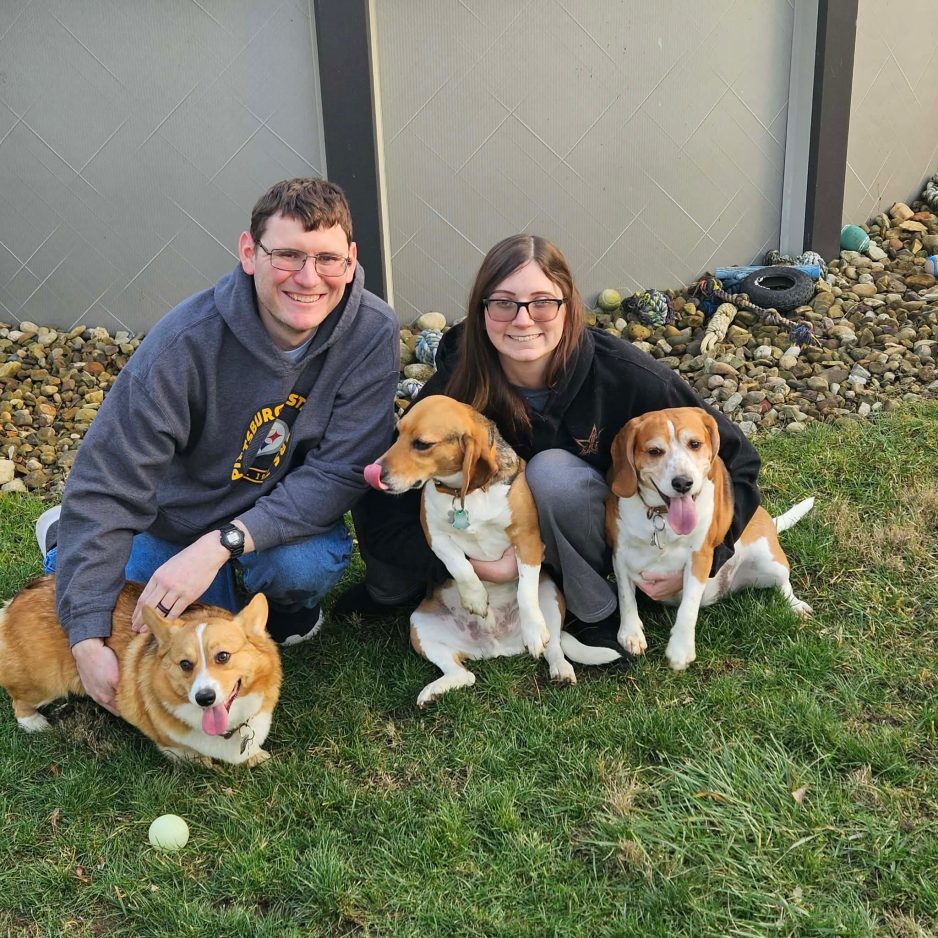
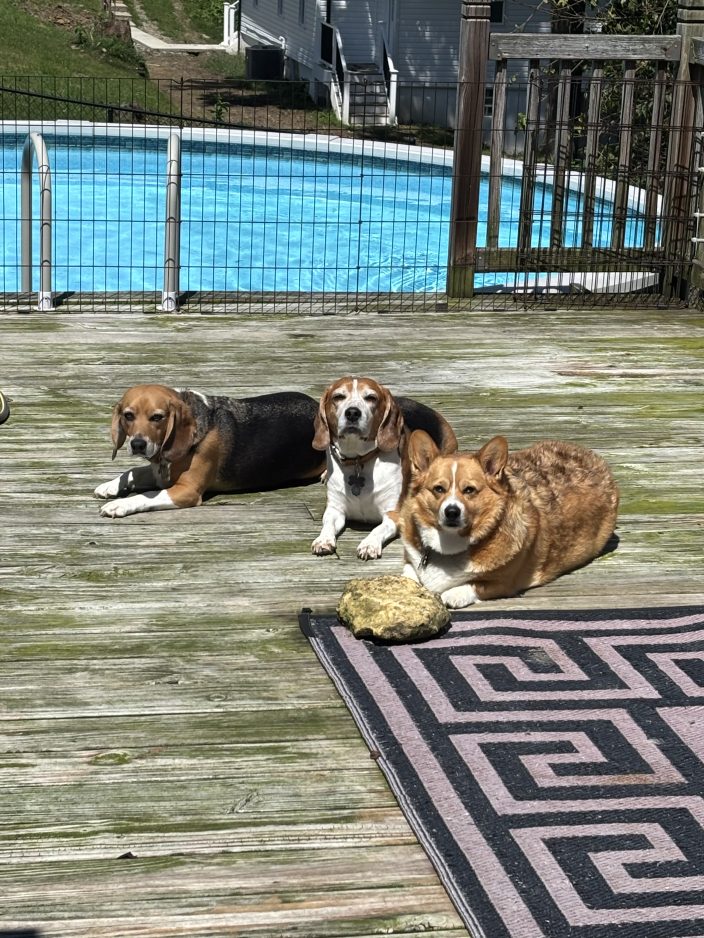
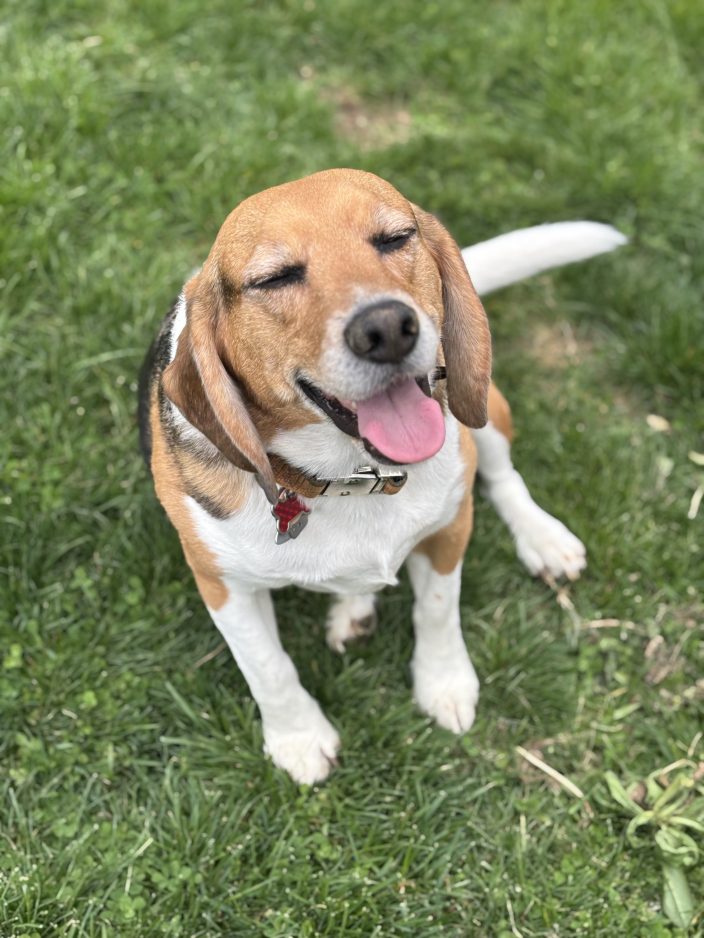
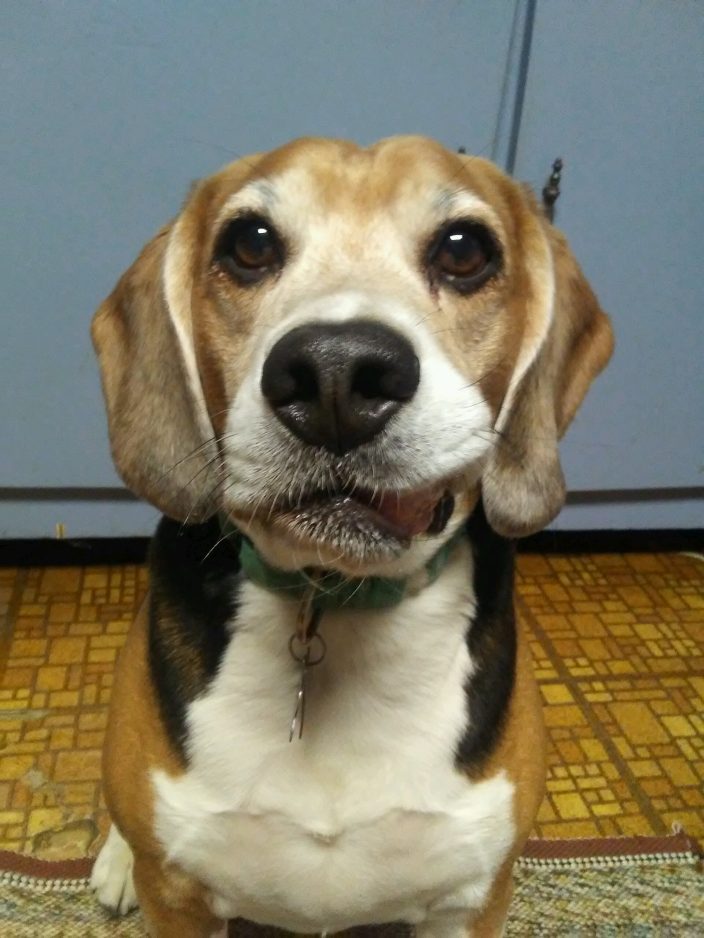
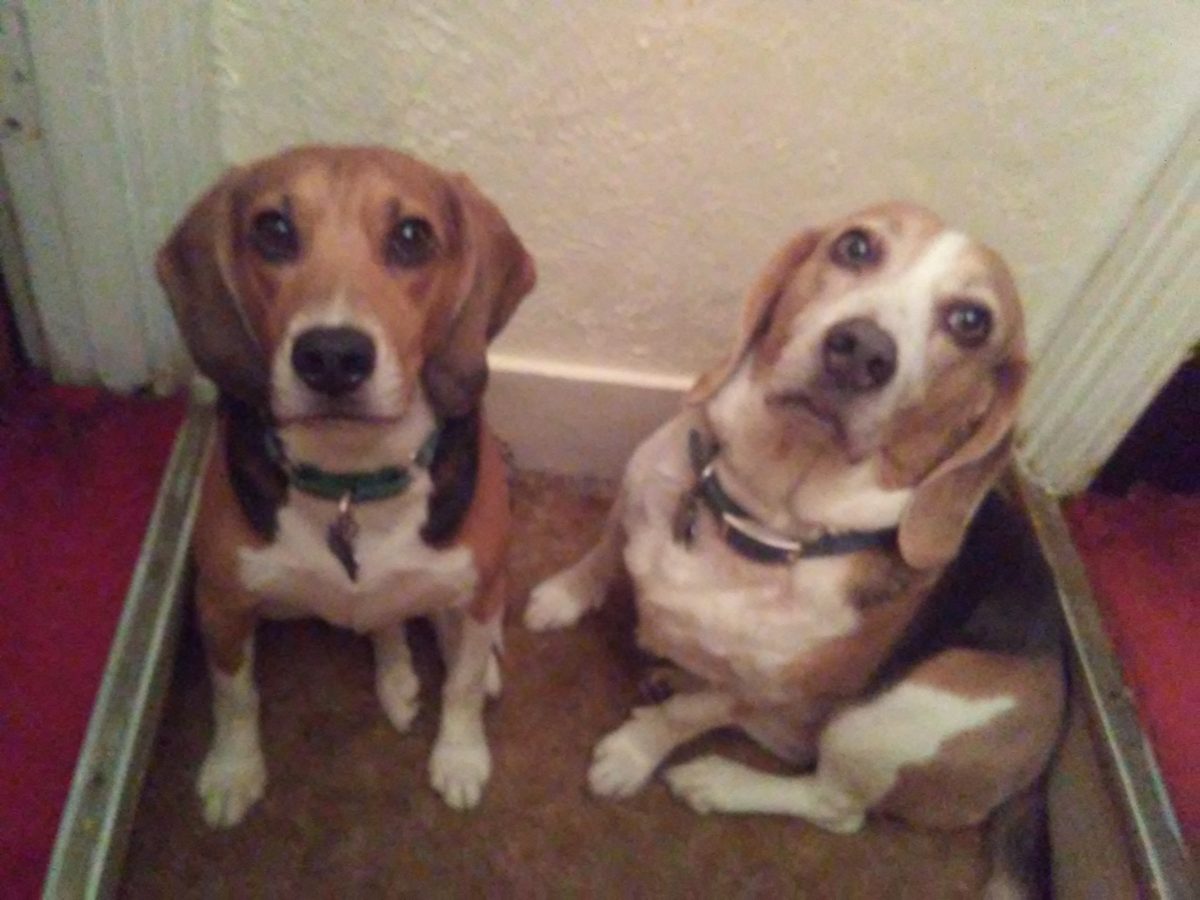
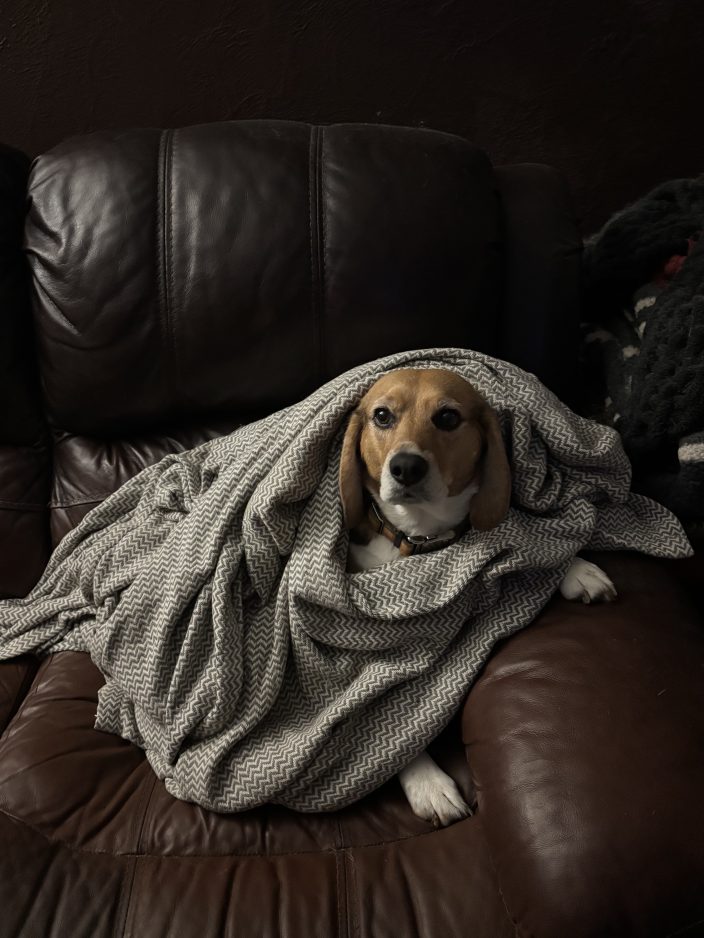
In 2022, more than 4,000 beagles were rescued from horrific conditions at Envigo, a now-closed dog-breeding facility in Cumberland, Va., which supplied dogs for laboratory research.
The largest rescue in the history of the Humane Society of the United States, it was launched after an undercover PETA investigation in 2021 found dogs and puppies crammed into dirty, overcrowded cages, underfed and eating rotting, maggot-infested food, and sometimes euthanized while they were conscious.
Today, those beagles – once known only by the green identification letters and numbers tattooed inside their ears – are living their best lives in loving homes across the country.
Eight of those rescued canines were re-homed through the Washington Area Humane Society, including Noah and Charlie Brown, who both were 7 months old when they were rescued.
“It pulls at my heartstrings to think about what he went through,” said Taylor Trump-Taylor of Canonsburg, who adopted Charlie Brown on Sept. 1, 2022, after the person originally selected to adopt him did not show to pick up the beagle.
After Trump-Taylor and her husband, Richard Taylor, brought Charlie Brown home, he was “extremely timid.”
Having lived in a cage, Charlie Brown had never felt grass under his feet, played with a toy, eaten a treat, or slept in a dog bed.
“He was afraid of everyone – my husband, my parents, neighbors, the mailman. He was scared to death of anyone that would come into the house. He’d run upstairs and hide under a chair, behind a couch, behind a door, anywhere he could fit. His whole body would vibrate and shake,” said Trump-Taylor.
But Charlie Brown, now 4, gradually learned to trust the Taylors.
“I’d talk softly and gently to him, pet him, tell him it would be OK. I’d give him treats, I had my husband and parents give him treats so that he’d associate that people in this house aren’t going to hurt you, they’re not going to abuse you, and slowly he came around from hiding to being excited to see people,” said Trump-Taylor.
One of his favorite activities is jumping onto a cushioned ledge under a picture window in the house and seeing who is coming up to the front door.
“He gets excited and gives out a ‘baroo!’ and when my parents or neighbors come in, he gets kisses and pats. He’s a transformed dog,” said Trump-Taylor.
The Taylors’ other beagle, Benny, and Welsh corgi, Jimmy, have also provided emotional support and companionship for Charlie Brown.
Charlie Brown loves to snuggle, but the beagle – who was subjected to near-constant noise and frantic, relentless barking – is nervous and fearful around sudden noises, especially fireworks, and sometimes gets jealous when Trump-Taylor’s other dogs seek her attention.
Trump-Taylor said she grew up with a beagle mix, and she fell in love with the breed – friendly, curious, outgoing and even-tempered, with a love for sniffing.
“Charlie’s very energetic. We have a fenced-in back yard and he’s always running around the yard, sniffing around with our other dogs,” said Trump-Taylor. “He’s definitely the one who likes to run around the most. He likes to chase things, especially squirrels. He runs up and down the fence line trying to catch the squirrels.”
In Bridgeville, Ed Black has settled in with his 3-year-old beagle, who he renamed Noah (the humane society had named him Bumper).
Black adopted Noah in August 2022, days after he was taken in by the humane society.
Noah adjusted to his new life outside a metal cage with the help of Black’s other rescue dogs, Jack, a beagle adopted by Black at age 3 in 2019, and Jake, a senior German shepherd/Labrador retriever who passed away in 2025.
Black said Noah was “very shy, very quiet.”
“He picked a spot in the house, a favorite corner he’d go to, and he’d stay there,” recalled Black. “He was an observer; he’d just observe everything. He was very sensitive, and you couldn’t speak loudly to him. He slowly started to trust me. That first year, I’d let him do his thing, and he’d see the other dogs with me, going outside, getting fed, and as time went on, he came to trust the other dogs. He’d lie down with them, start to play with them. It was a slow process but he was slowly learning that in this world, he could be a dog, he could be around people. He became more curious and started to enjoy life. Now, he’s doing really, really well. He’s a normal dog doing dog things. It took a little time.”
Noah enjoys sniffing around the fenced-in yard and following Black and Jack everywhere they go.
The Envigo case significantly accelerated the passage of animal welfare legislation across the United States.
Affectionately known as “Beagle Bills,” the legislative measures have directly shaped state-level regulations targeting laboratories, commercial breeders, and the life of research animals after testing concludes, including in Pennsylvania.
In a major victory for animal welfare advocates, Gov. Josh Shapiro last week signed Senate Bill 381, or the “Beagle Bill,” into law.
The bipartisan legislation improves animal cruelty protections for all dogs and cats in Pennsylvania. It bans the sale of cosmetics and cosmetic ingredients that have been newly tested on animals.
The legislation also establishes mandatory pathways for dogs and cats used in research to be adopted rather than euthanized, increases transparency by requiring research facilities to link to USDA public search tools, and places restrictions on state taxpayer funding for certain animal experiments.
With the bill’s passing, Pennsylvania becomes the 18th state that has passed legislation that require dogs and cats used in research to be put up for adoption when they are retired.
The provision, which goes into effect April 20, 2027, will apply to all research facilities in the state.
“It’s a good day for dogs, cats, and the people who love them in Pennsylvania, and there are a lot of us. Polling shows that 80% of Pennsylvanians support this bill and they made their voices heard in the halls of Harrisburg,” said state Sen. Carolyn Comitta, who introduced the bill, along with Sen. Doug Mastriano.
Comitta also thanked all those who helped get the bill across the finish line, especially Humane World for Animals, Humane Pa., and animal shelters, rescues, and SPCAs across the state.
Trump-Taylor and Black hope Charlie Brown’s and Noah’s journeys from timid dog who didn’t know how to play to content canines who are enjoying their lives “raise awareness about the animals still living in research facilities.”
“I hate the idea of experimentation on any animal. These dogs are such nice dogs. I feel so badly that they had to go through the awful things they did,” said Black. “I’m a big supporter of the Washington Area Humane society and the work they do, and I’m grateful to the organizations who rescued these dogs. If not for them, Noah wouldn’t have had the opportunity to live the life he’s living now, and I can’t imagine that.”