

‘Wake-up call’: U.S. loses measles elimination status
U.S. loses measles elimination status
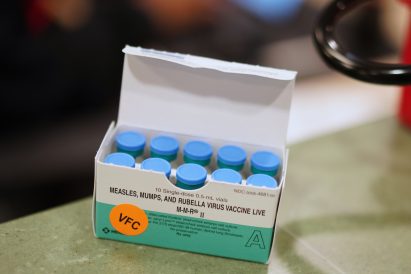
Local health officials believe the United States has lost a major public health achievement after the country officially lost its measles elimination status following more than two decades.
The decision was made by the Pan American Health Organization, which determined that the same strain of the virus had spread uninterrupted in the United States for at least 12 months.
Losing the designation reverses decades of progress against a disease once considered eliminated in the U.S.
“If you think about how long we’ve had this designation, almost 26 years, the (loss of measles elimination status) is a wake-up call. There hasn’t been a sustained community transmission like we have seen in the last one or two years,” said Dr. Dean Moukamal, Chief Quality Officer for Allegheny Health Network. “This should be a warning to get back to the best way of preventing measles, which is getting vaccination. From our perspective, this unfortunately was expected given the last year, the number of cases, and the change of transmission.”
Pennsylvania has been the epicenter of the nation’s worst measles resurgence in more than 35 years.
Unlike isolated travel-related spikes seen over the past two decades, an outbreak that began in April in Lancaster County among the plain religious communities has spread to 46 of Pennsylvania’s 67 counties, including one case in Washington County.
According to the Pennsylvania Department of Health, the state has confirmed more than 1,600 cases in 2026 alone as of Nov. 20, accounting for roughly a quarter of all cases nationwide, alongside more than 300 hospitalizations and eight measles-associated deaths in the state.
More than half the cases recorded in Pennsylvania have been in adults between the ages of 18 and 49, and nearly all measles cases have occurred among unvaccinated people.
Public health experts say several factors have contributed to declining vaccination rates in recent years.
COVID-era disruptions interrupted routine childhood vaccinations: MMR vaccination coverage among U.S. kindergartners fell from 95.2% in the 2019-20 school year to 92.7% in 2023-24, according to the CDC.
Meanwhile, the Pennsylvania Department of Health has increased its efforts to promote a measles vaccination campaign, and according to the DOH, nurses have administered more than 11,500 measles, mumps, and rubella (MMR) doses in 2026 — including more than 7,200 shots across 269 pop-up clinics since late April — marking a notable surge from the fewer than 1,000 monthly doses the staff typically gave between January and July.
Statewide, healthcare providers saw a similar spike in demand, with monthly MMR vaccinations climbing from a typical baseline of 25,000 doses to more than 49,000 in August, 56,000 in September, and nearly 62,000 in October.
“We cannot underestimate the impact that COVID had on the vaccination hesitancy narrative. Our role is to combat that, to share information about the safety of vaccines, and to rebuild trust with our patients and community,” said Moukamal.
Regaining measles elimination status will require the United States to go a full year without continuous transmission of the virus, according to PAHO.
Health officials said that process could take years, but regaining measles elimination status shouldn’t be the only priority.
“I think the focus shouldn’t be just to gain that designation, but I think we need to emphasize the importance of vaccinations, and to close those gaps that led to this stage,” said Moukamal.
So, measles – now back, and endemic in the United States – is “something we have to deal with,” said Moukamal. “It’s something we must deal with, and our role is to combat it, to share with people how important it is to share the safety of vaccines and to rebuild trust with our patients and community.”
The United States is expected to submit a corrective plan of action to PAHO in the coming weeks. The CDC has said it is committed to regaining measles elimination status.