

Cornerstone Genealogical Society finds a home in historic log courthouse
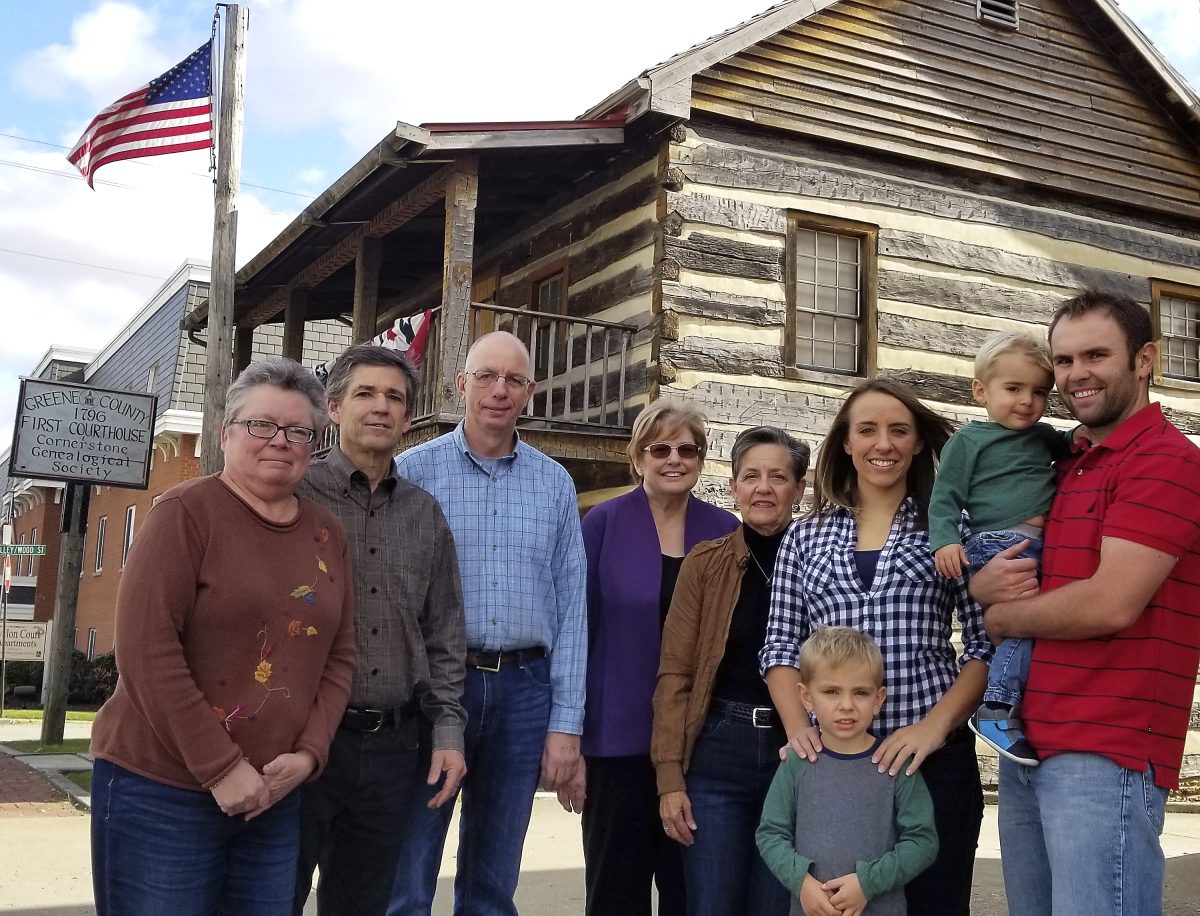
Members of the Cornerstone Genealogical Society stand in front of the log courthouse on Greene Street in Waynesburg, where the group has been since the building was renovated and reopened in 2002.
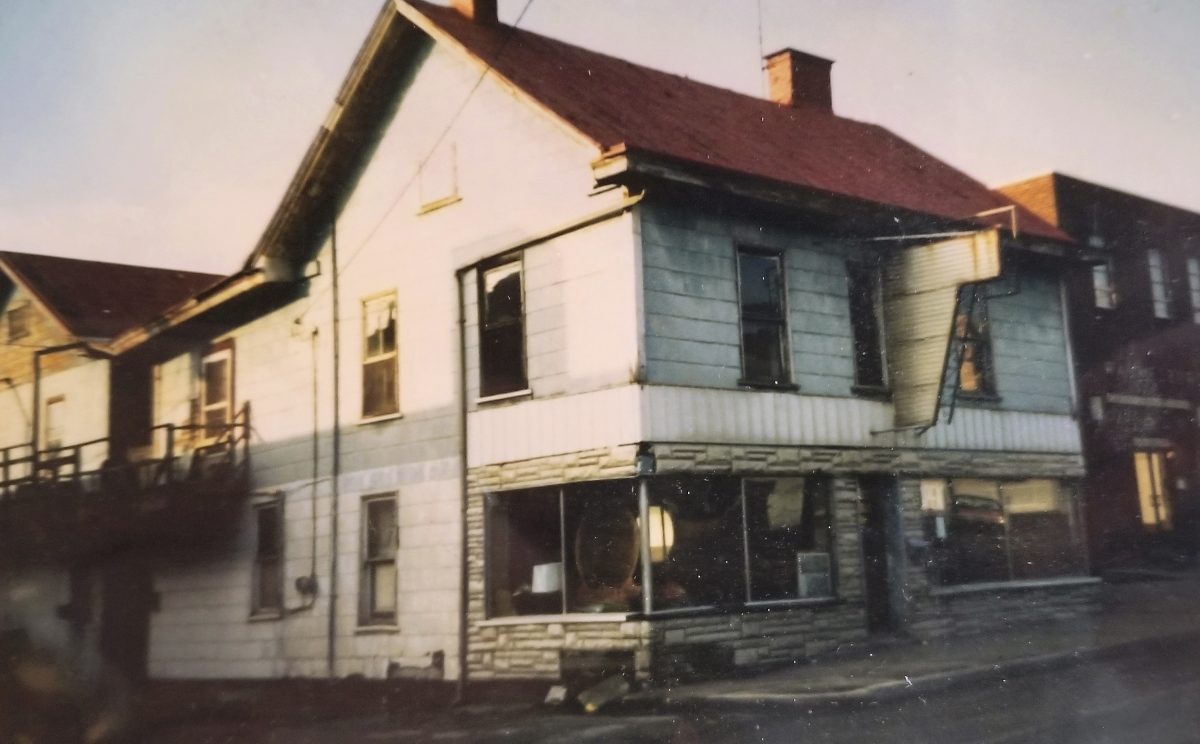
This 1990 photo of the former log courthouse shows how it appeared when it was used as a furniture repair shop.
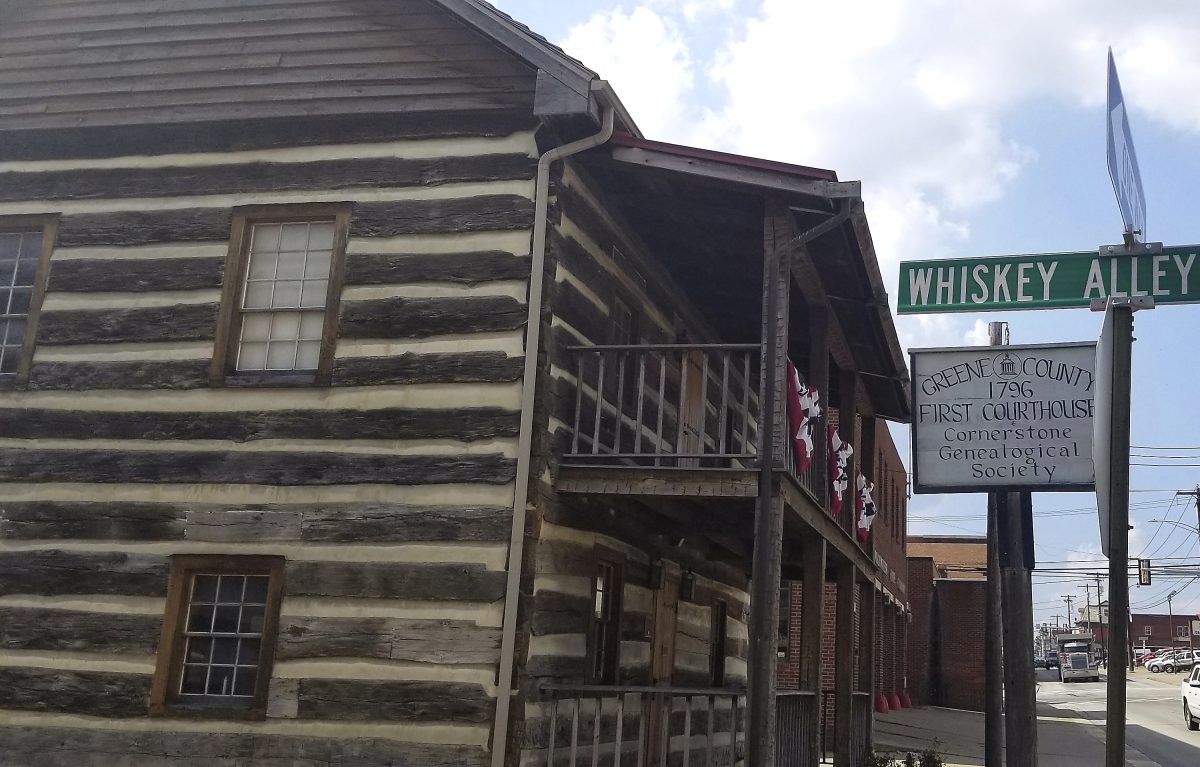
Cornerstone Genealogical Society finds a home in a historic log courthouse
The Cornerstone Genealogical Society, which began 42 years ago as a mail-order service in a member’s living room, has flourished over the past 15 years with the help of an old friend. Very old, that is.
The society, which now boasts 350 members in 40 states and has about 15 core volunteers, has seen its collection double since it moved into the original log courthouse on Greene Street in Waynesburg in 2002.
In addition to being a historic site – Greene County is the only place in Pennsylvania that can say its original courthouse remains at the same location – it has given the genealogical society a place to expand and welcome new people who want to research their history.
It nearly didn’t happen if it wasn’t for a “bad break” more than four decades ago between some members of the Greene County Historical Society who wanted to focus on historical artifacts, and others who wanted to include genealogy records in the mix, says David Cressey, the board president of Cornerstone. That split in 1975 created a small but passionate group of volunteers working out of one member’s living room and sending records by mail upon request for seven years.
“They had nothing at first,” Cressey says. “No money. No facility. Nothing but a vision to devote a library to the people of Greene County.”
In 1982, the group moved into two upstairs rooms at the Bowlby Mansion above the library, but by the mid-1990s, the society eventually outgrew its space and needed a place to hold meetings.
Around that time, Greene County had just financed a bond to renovate the current courthouse. With some money left, the county decided to take ownership of the log courthouse in 2000 from the historical society, which had purchased it a few years earlier. The historical society had initially hoped to relocate the courthouse to the history museum’s location, but the county decided to keep it in its current spot.
“For one reason or another, it didn’t happen,” Cressey says of the historical society’s plans. “They just didn’t have the resources.”
Mike Jones
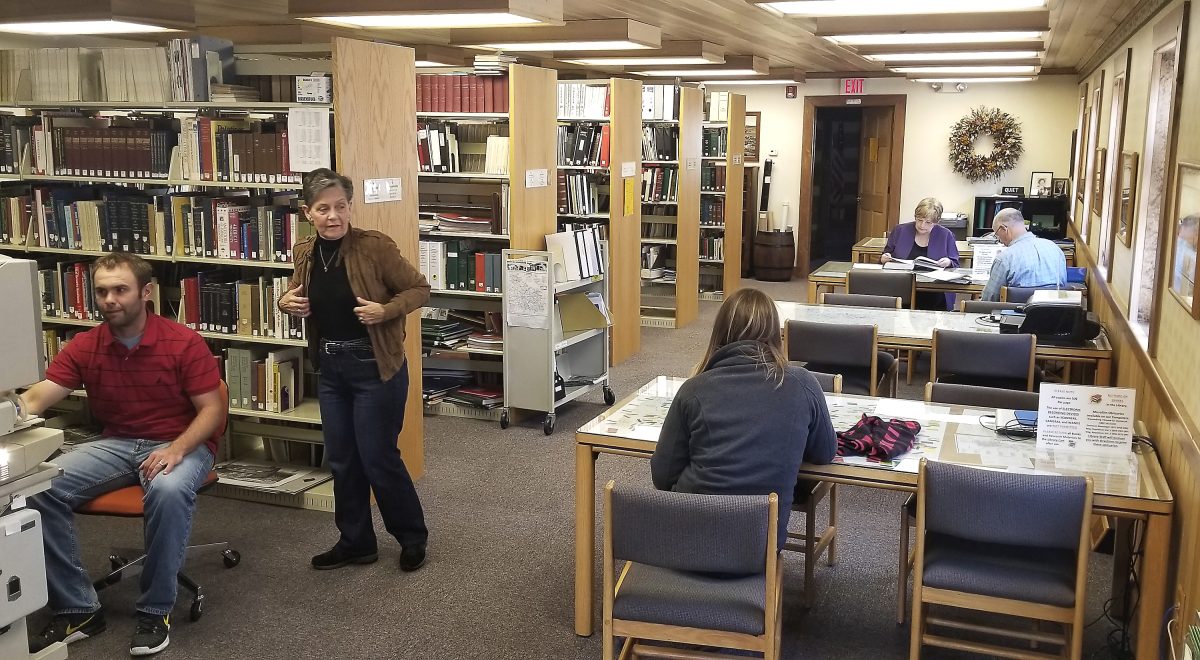
The collection of the Cornerstone Genealogical Society has doubled in the 15 years since the group moved into its library located in the back of the log courthouse.
It looked nothing like it does today, with siding covering the logs. Most recently, it had been used as a furniture repair shop for years.
It was a “slow process” to dismantle and rebuild the log courthouse, Cressey says. County workers performed upgrades during their “spare time” as the house was dismantled and logs taken to the county fairgrounds for refurbishing. By 2001, the work kicked into high-gear.
On Oct. 17, 2002, the log courthouse was rededicated with a ceremony and Cornerstone moved into a new library built onto the back of the cabin.
It was a perfect marriage for the county and genealogical group.
Cressey says the mission of the preservation was to open the courthouse to the public, but that could only be done with a full-time staff, which the county would not be able to afford. Meanwhile, the genealogical society had a dedicated group of volunteers who could staff the library, giving people an opportunity to research family history and tour the courthouse.
“Let’s not just restore it,” Cressey says of thinking at the time. “How are we going to make it available to be seen by the public?”
The decision seems to have helped everyone.
Some people performing family research stumble into the courthouse and take a quick tour. Others whose interest is piqued by the building’s history end up spending time looking up ancestors.
“It’s magnet for people doing family research and we’re attracting people from out of state,” Cressey says of the society’s records. “There’s a natural attraction there.”
The society has been able to expand its holdings, doubling the collection it had in Bowlby as more people donate books, documents, photographs, newspaper clippings and scrap books. That keeps the society’s costs down while expanding the trove of documents over the past 15 years.
“We’re constantly – almost to the point we can’t keep up – sorting through, cataloging and getting it organized,” Cressey says.
Another thing that has changed over the past decade is the clientele. The natural gas boom has brought more drilling companies in as workers search old ancestry records to match 100-year-old oil and gas leases with people who are entitled to the royalties.
Cressey notes that while the reason for the research is different, the research is the same nonetheless. The county as a whole also benefits with people from out of state coming in and matching old leases with locals.
“It’s the same process. You’re tracing those generations through the years – just for different reasons. It doesn’t change what we do, just who we’re doing it for. That’s been a boon to use.”
Cressey’s favorite part of the building is imagining the history behind the very spot where the log courthouse still stands. There are other historic courthouses that remain in Pennsylvania, but only Greene County’s is on the original site.
The first court was not held here, however, but a few miles east along modern-day Route 21 at the Muddy Creek tavern home of Jacob Cline. A couple cases were heard there, and then a procession marched to the log courthouse when it opened in March 1797, about a year after Greene County was formed from Washington.
Cressey also imagines the courthouse as being the formation of not only Greene County, but the town of Waynesburg. Besides the courthouse, there was just a tavern and Fort Jackson around in the late 1700s. That eventually changed in 1800 with construction of a new brick building at the current courthouse site.
Visitors “get a thrill” from imagining what their frontier ancestors did at this very spot, Cressey says, while other remember when the building was a furniture restoration store years ago.
“It’s a nice hook for people,” he says. “They come to see the courthouse and then, ‘Wow! I didn’t think you had all of this family history. I didn’t know this existed.’ It’s a nice marriage.”