

Pennsylvania Livestock Auction near Waynesburg a family tradition
By Mike Jones
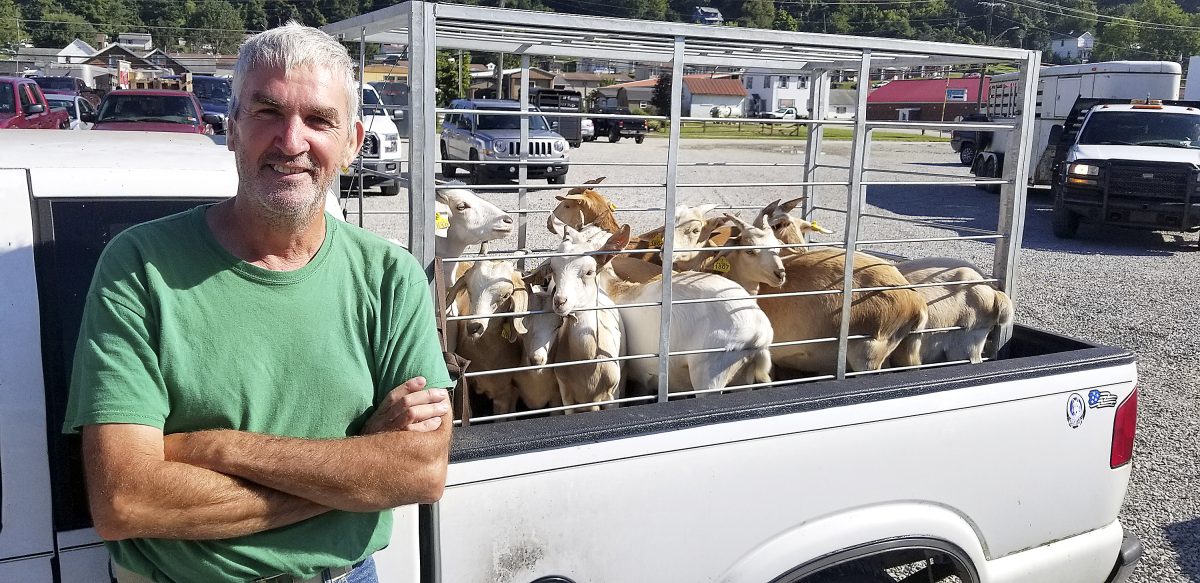
Jan Cox of Greensboro has been raising goats on his 125-acre farm near Greensboro for the past five years.
By Mike Jones
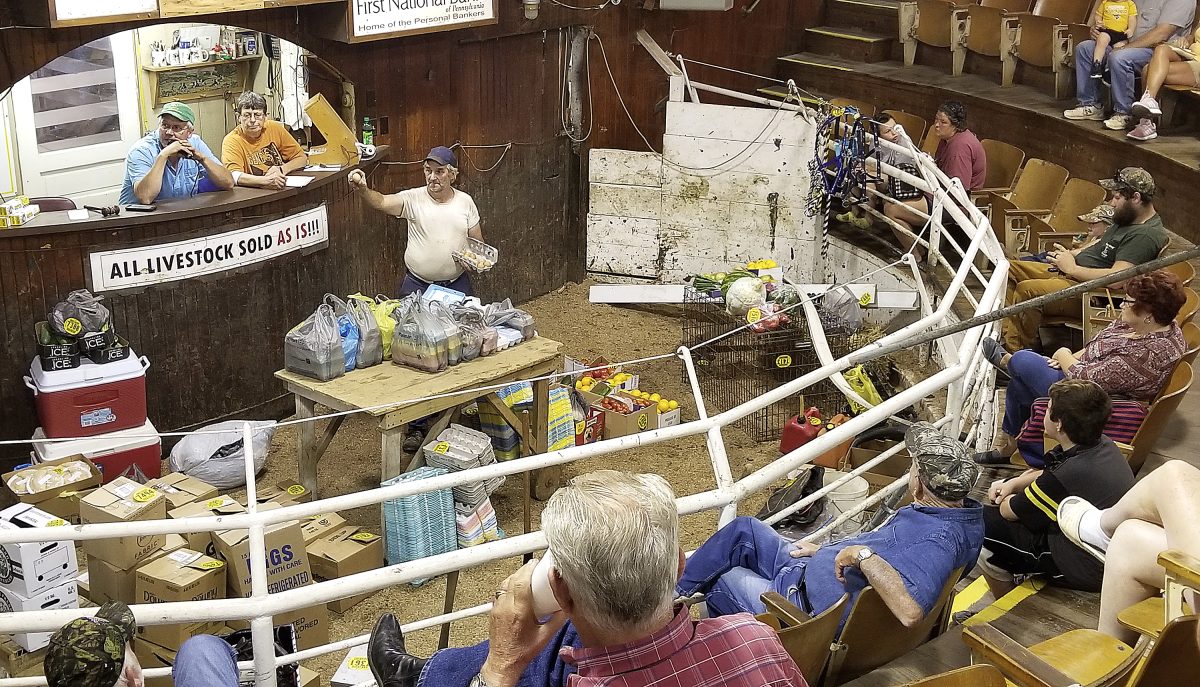
Joe Friend, the auctioneer at the Pennsylvania Livestock Auction, sits in the auction stand while people bid on eggs.
By Mike Jones
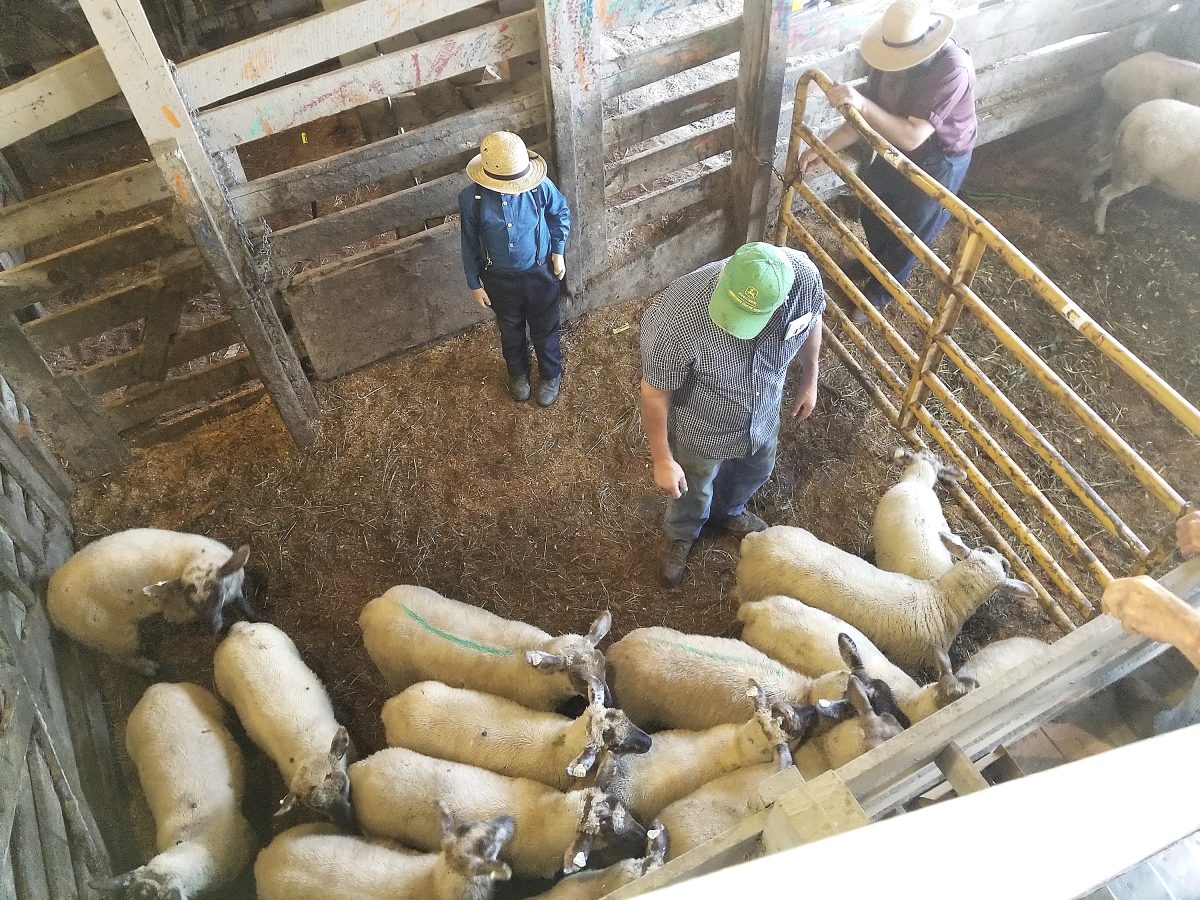
Joe Friend, the auctioneer at the Pennsylvania Livestock Auction, counts sheep that will be sold at his auction house near Waynesburg.
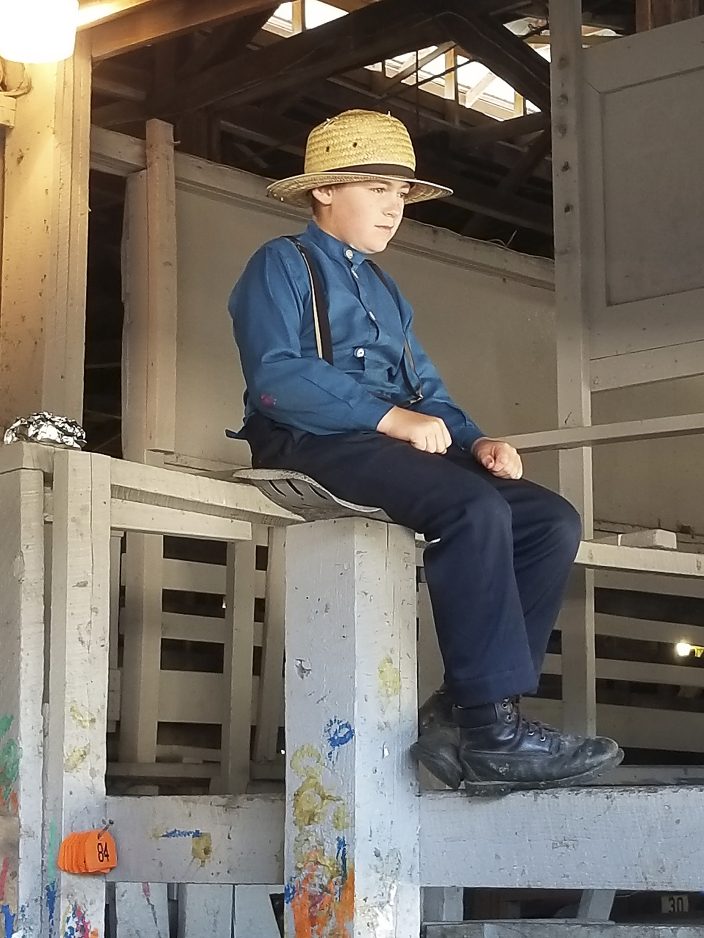
Nathan Yoder, 11, of Springs, Pa., sits on a seat overlooking the unloading area at the Pennsylvania Livestock Auction near Waynesburg.
Most people who roll their shopping carts through the local grocery store probably don’t think twice about where their food comes from when they pick up a package of meat from the butcher. But for many farmers in the tri-state area, it all starts at the Pennsylvania Livestock Auction in Greene County.
Here, at the massive auction house about a mile west of Waynesburg, dozens of farmers unload hundreds of animals such as cows, pigs and sheep that are then herded into holding pens while they wait to be sold to the highest bidder.
The auction usually sells about 700 animals each Thursday during its busiest season, which begins ramping up at the end of the summer.
Joe Friend, the auctioneer, moves animals out of vehicle transports and into the pens, calling out their breeds and slapping a yellow identifying sticker on their backs for the auction.
“One thing about them,” he says to one farmer while pulling several ornery steers out of a trailer, “you grow ’em big.”
Friend’s family has owned this auction house for 45 years, and operates two other livestock auctions in Maryland. His grandfather, Blaine Friend, started their auction business in 1971, and his descendants have made sure that it continues to flourish. The family bought the Pennsylvania location near the spur of Route 18/21 from a group of farmers who had operated an auction since the 1930s.
Friend encapsulated farming in one word: “Livelihood.”
“This is the true version of raising livestock,” Friend says. “We’ve been doing this all my life. Oh, it’s not easy.”
Family traditions are immensely important to the auction, with generations of farmers returning year after year. Friend says the business relationships they’ve built over decades are “very valuable to us.”
Jan Cox is one of those multi-generation farmers. When he was a child, Cox brought animals from his family farm to sell at this auction. Now 64, he brings goats he raises on his 125-acre farm near Greensboro.
“This is an institution,” Cox says of the auction. “It’s just a part of farm life most people don’t get to see.”
After retiring from working in the mental health field in Washington, he’s been raising his goats for the past five years and is close to breaking even. At a recent auction in late August, he expected to sell 14 goats loaded in the back of his pickup truck for about $120 each.
“It’s a way to make some money,” he says. “You hope so, at least.”
But it’s more than just about the money, at least for Cox. He enjoys raising the animals and learning about himself in the process. “If you’re taking care of your animals, you’re trying to understand them,” Cox says. “Maybe I’m really trying to get to understand me.”
Nearby, a few youngsters gathered around one of the pens, looking between the slots in a fence as the animals were marched through the gates. Barbara Phillips wouldn’t be surprised if her children, Rylee and Lucas, eventually get into farming. “The kids really enjoy seeing all of the animals, and it’s good to get them out of the house. It’s exciting,” she says. “We come to hang out and sometimes go home with a stray animal.”
Her sister, Nadean, especially enjoys the reaction of the children when they see the animals. “The cows! They mimic all of the sounds,” she says of the excitement the kids exude when coming to the auction. “Here, they’re in their natural environment. You get the real smell.”
Experiences like that is what Patty Friend, who is Joe’s aunt, likes to hear. “People need food. This is the first step before they go to the (grocery) store. A lot of children, especially in today’s society, go to the store, but they don’t know where their food is coming from.”
She runs the office and works to get “top dollar” for their farmers, shipping some of the animals to butchers out West. But it’s not the business side that makes their auction tick.
“It’s the relationships with the people we love,” she says. “There is a backbone of this nation, and it’s the farmer. It’s a family tradition to hand down.”
At that moment, Joe walks in with his blue shirt soiled with animal droppings. He asks his Aunt Patty for a change of clothes, and she rummages through the office closet for a clean shirt. He throws the shirt over his head and heads to the auctioneer stand at the center of a dirt ring.
The auction is about to begin.