

A stroll down memory lane
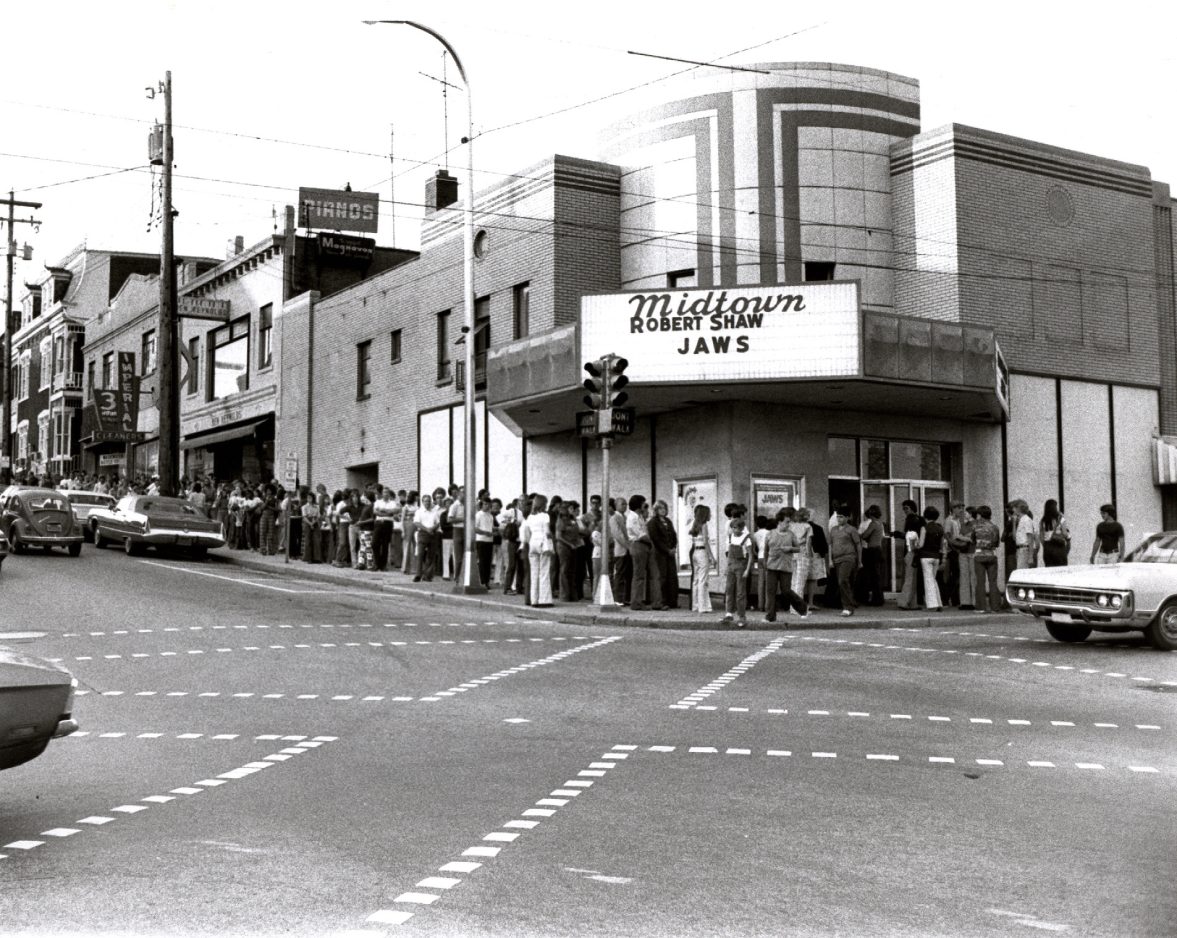
Area residents line up outside the former Basle Theater, which changed ownership in the 1960s and was renamed Midtown in December 1972, in the summer of 1975 to watch “Jaws.” The movie enjoyed a 10-week run at the theater.
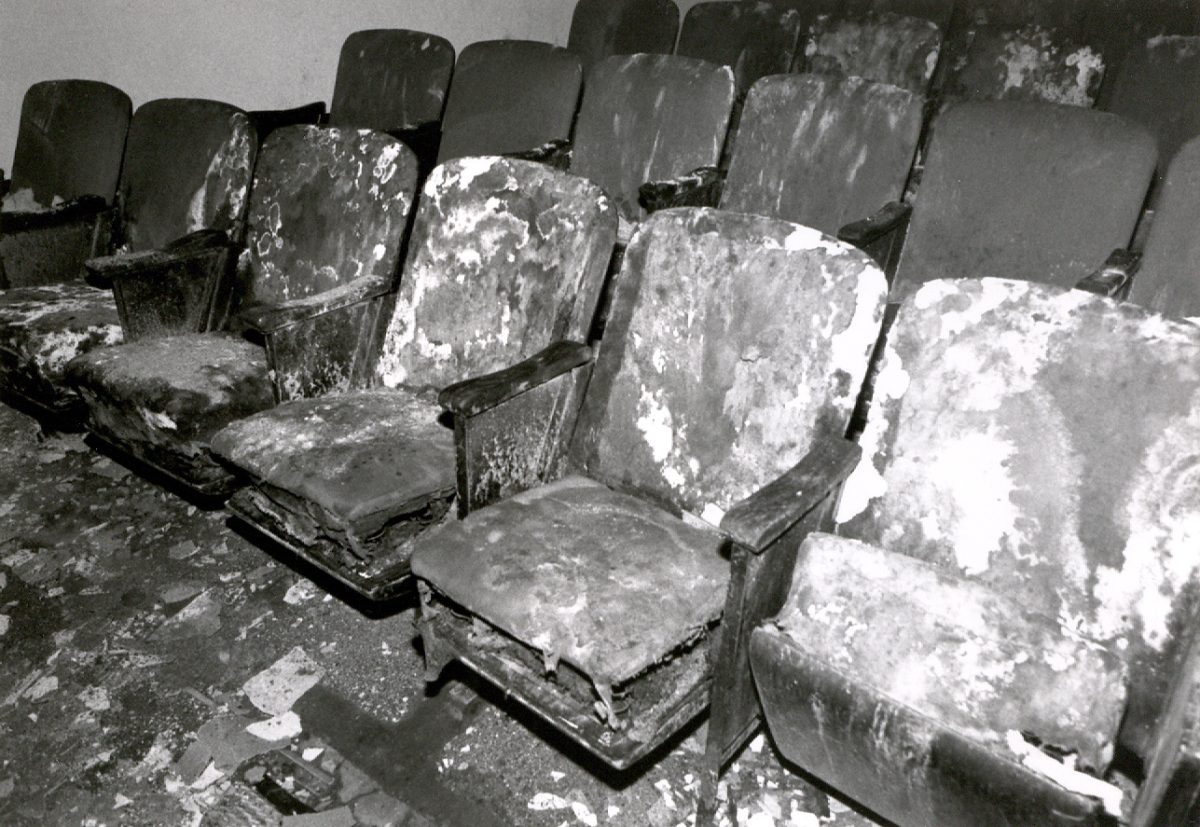
The interior of the Midtown in 1988, three years after it closed when patrons complained of a leaky roof, a foul odor, littered floors and dirty restrooms
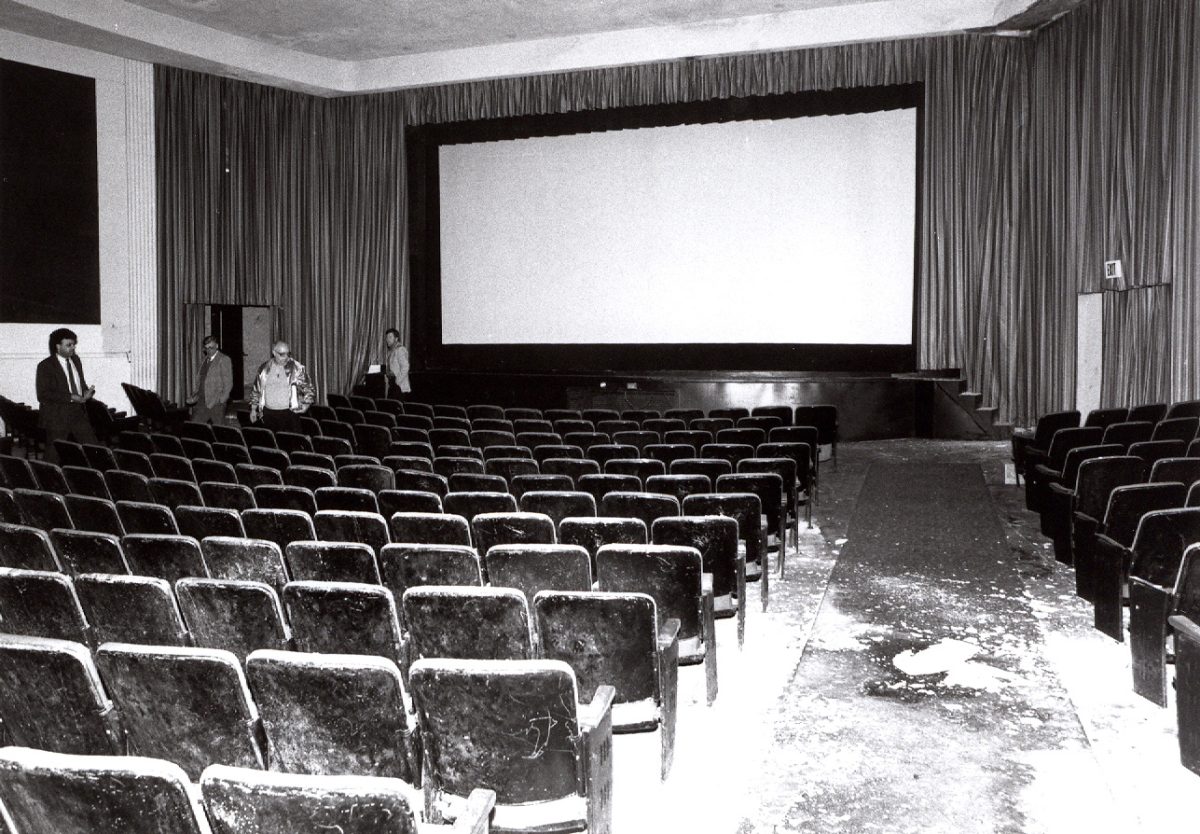
The interior of the Midtown Theater in October 1988
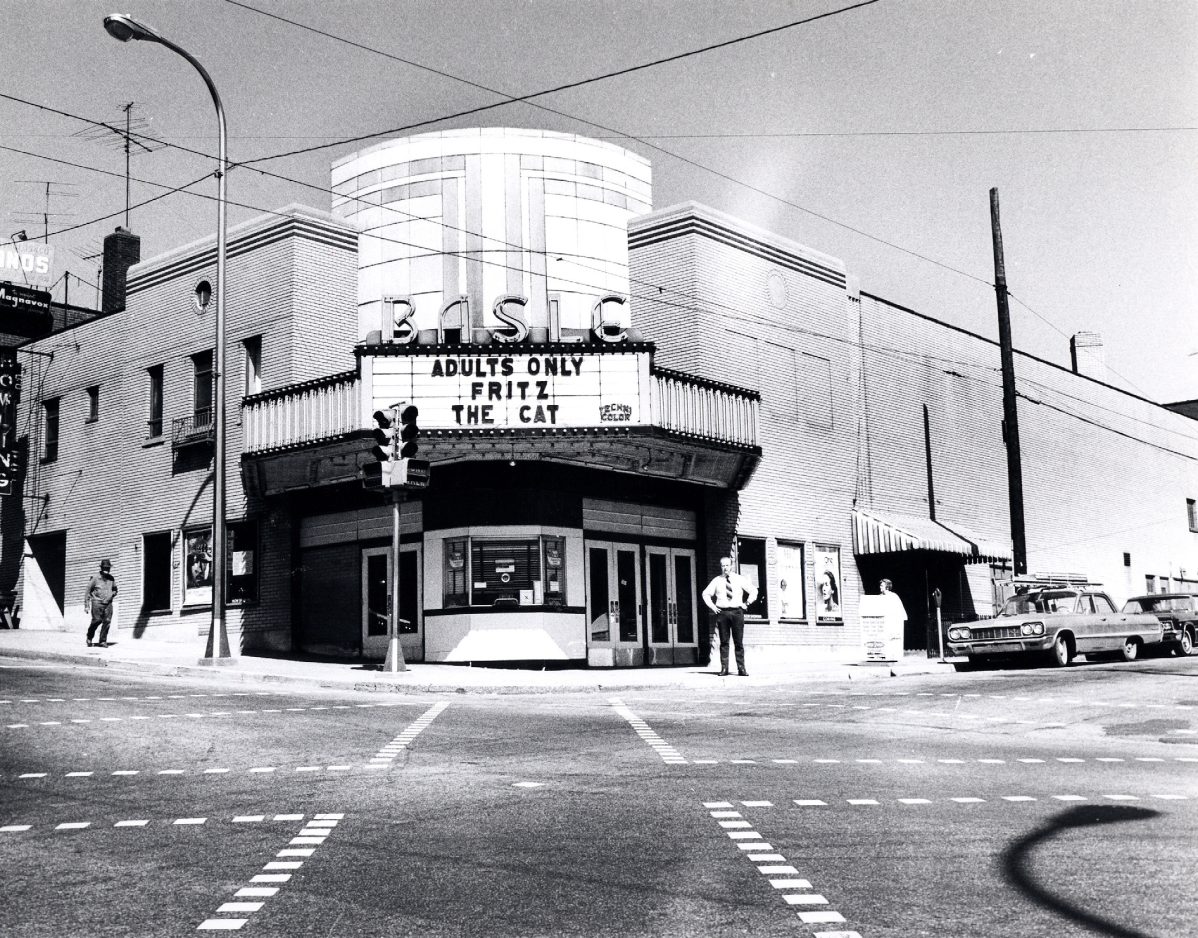
The Basle Theater, shown in 1972, was built in 1939, and was once one of three movie theaters in Washington.
James Bond, Mary Poppins, Dr. Strangelove and Godzilla are just a few of the movie characters Washington residents met for the first time at the Basle Theater.
Currently home to Life Church, the building in downtown Washington turns 75 this year. It’s filled not only with cinematic history, but also the personal history of many moviegoers who have passed through its doors.
Through the magic of cinema, they got to have an adventure in “20,000 Leagues Under The Sea,” see Bond thwart evildoers “Dr. No” and “Goldfinger” and laugh at the live-action comic misadventures of “Abbot and Costello” and the animated shenanigans of “Tom and Jerry.”
“You went to the Basle to watch a good movie,” said former Washington Mayor L. Anthony (Sonny) Spossey, who attended the Basle in the 1950s, when Washington also had two other theaters, the State and the Washington, later known as the Penn.
“It had very comfortable seating and was well-maintained,” Spossey said. “It was one of the finer theaters in the area.”
The Basle’s history began in April 1939, when Eugene Basle purchased a vacant site where, two years eariler, the Woodward and Wright Furniture Store had been destroyed by fire. Construction on the Basle began in June, and the theater opened in September. Matinees cost 10 cents, and evening shows were 15 cents. Admission for children was 10 cents.
The Basle had a “cry room” equipped with a loud speaker and a large window so that mothers with fussy infants could still enjoy the movie without disturbing other patrons. A year later, the Halliday Bowling Alley opened underneath the theater, and throughout the 1940s, audiences also could catch vaudeville and musical acts.
In the 1950s, sisters Patty Stanley and Ella McCart attended many Saturday matinees at the Basle. It was there that Stanley first saw one of her favorite films, “Cinderella.”
“It’s still one of my all-time favorite films, a true classic,” Stanley said.
“We looked forward all week to attending Saturday matinees at the Basle,” McCart said. “The architecture was beautiful, and it had such a wonderfully brightly lit marquee.”
On June 15, 1959, the Basle did something that today would seem unthinkable for any movie theater: It closed until July 12 so its employees could enjoy a vacation.
During the Cold War in the 1960s, the bowling alley at the Basle was one of the designated fallout shelters in Washington County. It was stocked with enough water, crackers and sanitation and medical kits to accommodate 13,000 people in case of emergency.
The 1960s also marked a change in ownership, as Associated Theaters assumed operations from the Basle family before purchasing it in 1971.
In September 1972, the Basle closed, underwent remodeling and opened under a new name, Midtown, in December 1972, after a “Name the New Theater Contest” was held by the Observer Reporter, WJPA Radio and Associated Theaters.
“The remodeling was quite a big deal,” said Terry Hazlett, a columnist for the Observer-Reporter and former entertainment editor. “It was mostly a new box office, removing the outside ticket booth, a new concession stand, carpeting and exterior work.”
The remodeling project seemed to be a success, with a 10-week run of “Jaws” beginning in July 1975.
But the Midtown’s popularity didn’t last.
“It failed to revive attendance over the long term because of parking issues and resistance to visiting downtown Washington at night,” Hazlett said. “Still, it was a unique experience attending traditional theaters like the Midtown, which continued to make special events of certain movies.”
In 1973, the Midtown became downtown Washington’s last surviving movie theater when the Penn was demolished, and by 1974, Associated opened two new theaters, Cinema 19 in Gabriel’s Shopping Center on Route 19 and the Mall Twin Cinema at Washington Mall.
Slowly, Associated began giving those two theaters most of the high-profile releases. The original “Star Wars,” for instance, played at the Mall Twin for a record 26 weeks, but never reached the Midtown until a 1982 re-release.
“The Mall Twin became ideal for moviegoers,” said Paul Tripoli of Washington. “You could drop the kids off at a movie, then shop, all under one roof, plus there was free parking.”
By 1985, the condition of the Midtown had declined. Patrons complained of a leaky roof, a foul odor, littered floors and dirty restrooms. The Midtown officially closed in November 1985.
It was used as storage space for an antique business from 1993 until 2002, when it was purchased by Dan Dye, who saw the beauty of the building behind all of its flaws.
“After retiring from a life of venture investing, I wanted to do my part to revive what was at one time the heart of downtown Washington by providing an outlet for live musicians and artists of all kinds,” Dye said.
“It was a very solid underground space. What also remained was the shell of the building itself, which was solid and intricately designed for theater usage,” said Dye, noting that the dressing rooms, stage areas, acoustically shaped walls and convenient upstairs offices, lounges and projection rooms were just “waiting to be invigorated.”
Dye’s hard work paid off, and the Uptown Theatre opened in September 2003. But in July 2005, Dye decided to sell the building at auction when his health started to decline. It first became the Vineyard Church in 2005, then Life Church in 2011.
Many parts of the original 1939 building still exist. The theater area is used for church services, the former projection room now contains church offices, the “cry room” is a nursery, and the former bowling alley is used for day care.
“While we don’t show movies anymore, we do a lot with multimedia, so there are still screens in the main theater room,” Associate Pastor Bret Maverich said. “The church is quickly becoming a training and equipping hub for the city of Washington.
“I can’t think of any part of our mission and life that doesn’t include media and video. So it’s really kind of fitting we’re located in the old theater.”