

Fewer women aware of risks of heart disease; local woman shares her story
Courtesy Cheryl Sabatula
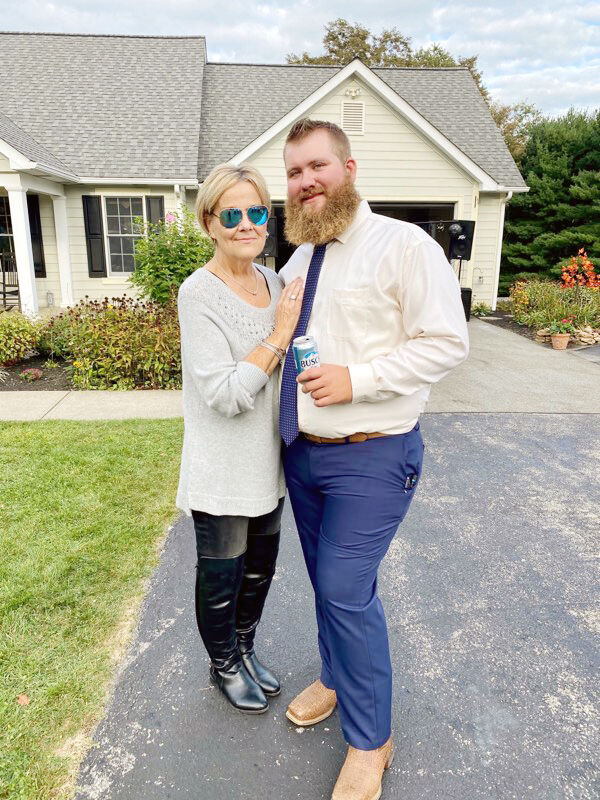
Cheryl Sabatula and her son, Tyler, now 26. Ten years ago, Sabatula was driving Tyler to baseball practice when she suffered cardiac arrest and was given a less than 10% chance to survive.
Courtesy Cheryl Sabatula
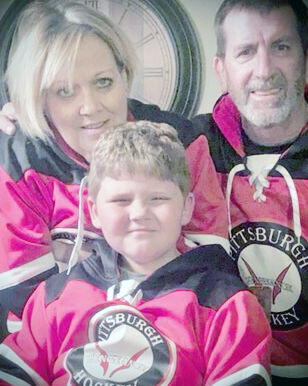
Cheryl Sabatula with her husband, Kevin, and their grandson, Easton Rawlings Sabatula (named after the companies that make baseball bats and gloves) at a hockey game where the rooted for the Pittsburgh Vengeance, a team owned by one of her physicians.
Courtesy Cheryl Sabatula
A photo of Cheryl Sabatula, who has overcome several cardiac issues.
Courtesy Cheryl Sabatula
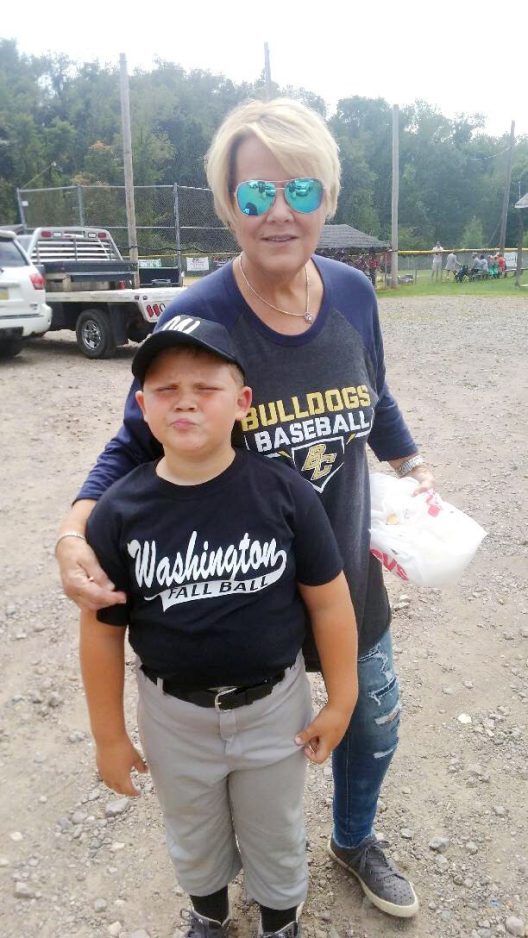
Cheryl Sabatula and her grandson, Easton, at one of his baseball games.
In May of 2010, Cheryl Sabatula was driving her then-16-year-old son home from baseball practice when she was overcome with nausea.
“I said, ‘Something’s wrong,’ and I pulled over to the side of the road and I threw up. That’s the last thing I remember before I ended up at Jefferson Hospital,” said Sabatulo, whose odds for survival were less than 10%.
Sabatula, it turned out, suffers from a rare cardiac condition called long QT syndrome. Abnormal electrical activity in her heart causes abnormal heart beats, which can result in sudden heart attacks, explained her cardiologist, Dr. Amish M. Mehta of Jefferson Hospital – who noted she suffered from sudden cardiac death.
Sabatula, 63, also has other health issues – including atrial fibrillation and a leaky mitral valve.
A former prison nurse, Sabatula knew the symptoms of cardiovascular disease, but – like many women juggling family and work – dismissed the signs she was seriously ill.
“I was exhausted, and just attributed it to everything else – working, running my son around, taking care of the house,” said Sabatula. “Every day is a bonus for me. If you have any inkling that anything is wrong, do not put off going to the doctor’s. Don’t think just because we’re women it’s something else. Go get checked.”
Sabatula’s right. For years, heart disease was believed to be a disease that struck men.
But, noted Dr. Valentyna Ivanova, a cardiologist at AHN Women’s Heart Center, heart disease is the leading cause of death in women in the United States, accounting for one in three deaths each year.
“The statistics are chilling,” said Ivanova.
In 2004, the American Heart Association introduced Go Red for Women, an educational campaign to raise women’s awareness about heart disease.
And while studies showed women’s awareness increased over the next several years, a recent survey shows that progress has slowed.
Fewer U.S. women these days are aware heart disease is the No. 1 threat to their lives – especially younger and minority women, according to Ivanova.
In a recent study conducted by the American Heart Association, only 44% of women knew heart disease in the top killer among women, down from 65% in 2009. The decrease was most evident in women younger than 65 and was greater among Hispanic and Black women.
“Those findings are alarming,” said Ivanova, “and should be a call to action.”
To that end, AHN operates the Women’s Heart Center, which works with women to identify and manage heart disease risk factors, and helps them make healthy lifestyle changes and recognize the warning signs of heart problems.
While women might know some of the traditional risk factors, including high blood pressure, obesity, high cholesterol level, and smoking, they are not aware of others – among them, pregnancy, depression and menopause.
The good news, Ivanova said, is although 90% of women have one or more risk factors to develop heart disease, 80% of those risk factors can be modified.
“We cannot change our family history, but we can manage our lifestyle and how we handle where we are,” said Ivanova. “Women are very busy and we have lots of responsibilities to juggle, and there’s no time left for us. We need 48 hours in a 24-hour day. But, we work on seeing how we can incorporate a healthier lifestyle – how to increase the level of activity, how to change the diet.”
Ideally, said Ivanova, heart disease prevention begins at a young age.
Young women tend to consider heart disease as a problem that occurs in older women.
But many young women in the United States have risk factors for heart disease such as diabetes and obesity.
Ivanova also said she emphasizes more culturally sensitive care, and said medicine needs to offer culturally relevant education to patients, especially Hispanic and Black women.
“We need to acknowledge differences in ethnic groups, how their lifestyle is different, and we need to provide culturally sensitive care,” said Ivanova. “We also need more diversity in the providers themselves.”
Additionally, Ivanova pointed out cancer also increases the risk of heart disease in women – several of the medications used to treat cancer cause side effects, including cardiovascular disease – and encouraged women who have been treated for cancer to be aware of their risks.
And even amid the COVID-19 pandemic, Ivanova encourages women to keep doctor appointments. She noted telemedicine visits are an important tool for monitoring patients’ health.
Sabatula agreed.
“I keep my doctor appointments. I take my medication. I listen to my doctors,” she said.
Mehta said he admires Sabatula’s strength as she has battled through her cardiac issues.
Following her diagnosis of long QT system, Sabatula had an implantable cardioverter-defibrillator inserted. It’s been replaced twice, most recently last month.
She also has suffered two strokes, from which she has nearly fully recovered.
She also is facing surgery to address the leaky mitral valve.
Sabatula never smoked or drank, but she did have risk factors for cardiovascular disease, including being overweight and dealing with stress – she lost her mother and her brother within two years of each other.
She has implemented lifestyle changes to lose weight, and maintains a healthy diet and exercises. And she focuses on self-care.
And, she is grateful for the support from her family, including her husband, Kevin, with whom she celebrated their 30th anniversary, and her doctors – Mehta and Dr. Glenn Miske, nurses and staff at Jefferson Hospital.
One of her disappointments, though, is that because of her health issues, she had to leave her job at Fayette County Prison, which she loved.
Sabatula encourages women to take care of themselves.
“We need to be mindful daily and listen to ourselves. We are our own best source of information on how we feel,” said Sabatula. “My life changed the minute I pulled off the road that day. I didn’t listen to the signs that were there. But I’ve been given a second, and then a third change and I’m feeling better every day. I’m going to fight to stay here.”