

Free online mindfulness classes aimed at easing pandemic stress

Courtesy of Metro Creative
Health care officials say it’s important to practice mindfulness and remain in the moment even when exercising.
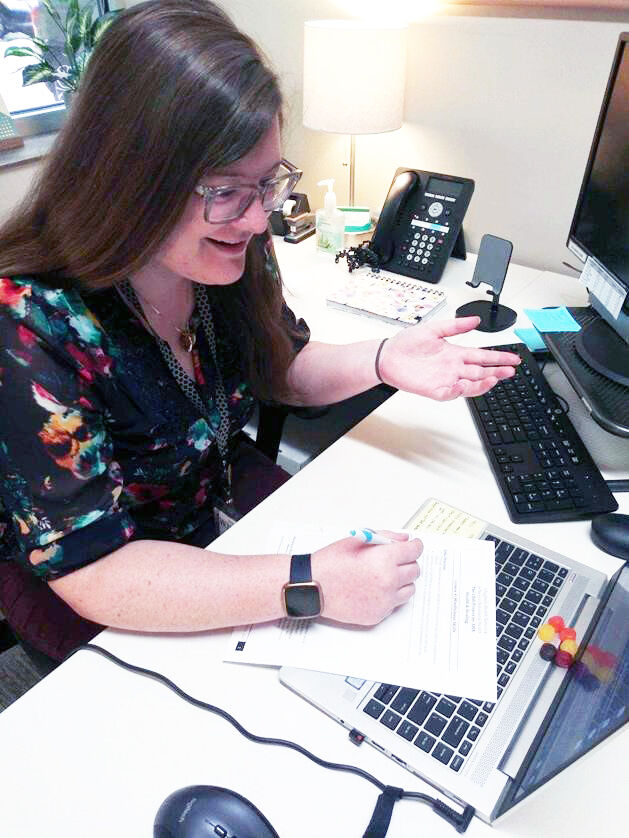
Courtesy of Allegheny Health Network
Lakin Weakland, LPC of Allegheny Health Network, leads a Zoom mindfulness session.
Many people are feeling stressed out right now.
The COVID-19 pandemic added even more stress to the daily lives of many people over the past year and a half impacting everything from their jobs to relationships and even a sense of well-being. Many medical and mental health experts recommend mindfulness practices as a way to cope with the increased stress, anxiety and uncertainty of the current times.
But what is mindfulness and how is it practiced?
Mindfulness is the process of training one’s attention and awareness by focusing on the immediate moment. The American Psychological Association says mindfulness offers many research-proven benefits including reducing anxiety.
“Practicing mindfulness skills has been proven to reduce the stress reaction,” said Dr. William Davies, program manager of The Chill Project at Allegheny Health Network and Jefferson Counseling.
The program has brought mindfulness training to students and teachers at several local school districts and AHN’s Volunteer Resources Department.
“It helps improve attention, stabilize mood and – in the case of individuals who are living with medical concerns – mindfulness skills have been proven to reduce the perception of pain and allowing people to live fuller lives in the moment,” Davies said.
Now, the Chill Project and AHN are helping to spread the word about mindfulness by offering free, virtual mindfulness classes online each month. The classes are called, “Take a Deep Breath and Learn How to Relax With Us,” and offer tips and tools to help with good daily decision-making, stress management and overall health and well-being.
“The mindfulness Zoom sessions bring the opportunity of such a perspective to a wider range of people with the hope of bringing some healing and peace to their lives,” Davies said. “As we are in a mental health pandemic, as well as a COVID pandemic, it is essential for us to bring opportunities to learn about mindfulness to the public.”
Just how does this process of mindfulness work?
“Mindfulness skills have been proven to reduce the symptoms of anxiety and depression, provide a stabilizing factor to people during a stress response, improve interpersonal relationships and allow people to enjoy the color and fullness that is the present moment,” Davies said. “We are often consumed with our thoughts, thinking about the past and the future. In such a mindset, we miss the fullness of the current moment that can bring us satisfaction and fulfillment to our lives.”
Davies illustrates this with an example of a person driving to work and realizing it was just a blur and they were on autopilot because of their thoughts.
“Practicing mindfulness allows us to recognize when we are in that state of mind and can us bring to the present moment, so we can enjoy our cup of coffee, or the beautiful sunrise, or even the cute dog that someone is walking down the street,” Davies said. “During this process, our heart rate tends to lower, our breathing becomes less shallow and we can get a clearer perspective on life.”
Living mindfully is a state of being and a way of life and studies show it can also help de-escalate a moment of rage, recognize when we a person is in a state of stress.
“Think about sitting in traffic and someone cuts you off,” Davies said. “Just by reading that statement, maybe your body starts to feel a little more tense, your heart rate increases, and maybe your breathing becomes shallower.”
If so, he said, the person is starting to have a stress reaction and the high-level decision-making part of the brain is shutting off – which is dangerous.
“We can use some deep breathing techniques to quickly make the higher-level decision-making part of your brain kick back in and better decisions can arise,” Davies said.
As much as mindfulness can help in each person’s daily life, it can be even more useful and even lifesaving during mental health crises.
“The pandemic has brought mental health concerns to the forefront,” Davies said. “The utilization of behavioral health services has skyrocketed to the point that many providers have excessive wait lists and inpatient facilities in the state are routinely full. Patients are being sent to neighboring states if there is a bed available.”
Davies’ hope is when preventive coping skills are provided, a certain portion of people will be able to use them rather than relying on a higher level of care.
The monthly online mindfulness classes are open to everyone and started this summer.
“We have had a wide range of individuals, including medical professionals, who are taking the course to identify skills that they can utilize with their patients,” Davies said. “We have also had patients who are struggling with medical concerns such as cancer and pain.”
They are free and two sessions are held on the fourth Monday of every month via Zoom or by phone.
“Chill Project clinicians who are skilled and personable create an interactive presentation that isn’t just a slide show and someone reading a script,” Davies said.
“There are lots of open-ended conversations that allow the clinicians to create a meaningful learning experience around evidence-based coping skills.”