

New procedure offers relief for patients with spinal stenosis

Courtesy of Metro Creative
Nearly five out of every 1,000 Americans over age 50 are dealing with symptoms of spinal stenosis. Symptoms can range from back and pain numbness, tingling and weakness in the arms and legs.
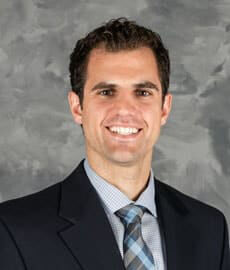
Dr. Anthony Cuneo
Nearly five out of every 1,000 Americans over age 50 have symptoms of spinal stenosis.
It’s a condition where one or more spaces in the spine narrows and compresses the spinal cord or nerve roots exiting each vertebrae. Lumbar spinal stenosis (LSS) can occur anywhere along the spine but most often happens in the lower back or neck and can be very painful.
Symptoms can range from back and neck pain to numbness, tingling and weakness in the arms and legs.
“It is more common in advancing age with 20% of people over age 60 having LSS,” said Dr. Anthony Cuneo, who specializes in physical medicine and rehabilitation with The Orthopedic Group, which has offices in Rostraver, Charleroi, Uniontown and Mt. Lebanon.
“Typical symptoms include low back pain that travels to the legs with a feeling of heaviness, cramping, or weakness,” Cuneo said. “The discomfort is worse with standing and walking, which narrows the spinal canal further.”
Patients with LSS sometimes find that bending forward – for instance, leaning on a shopping cart – or sitting helps to improve the discomfort.
The most common treatments for LSS until now have been physical therapy, self-help remedies like hot and cold compresses, pain medication, steroid injections or surgery.
“Traditionally, LSS has been difficult to remedy due to non-surgical treatment options leaving the root problem of the spinal narrowing untreated,” Cuneo said. “More invasive surgical treatments can relieve the pressure off of the nerves and blood vessels, however, these procedures have relatively high complication and reoperation rates.”
Cuneo said physical therapy helps to strengthen the core muscles, stretch other muscles and help with posture to promote overall lower back health. As for pain medication, he said both non-narcotic and narcotic medications can be used.
“We are currently in the middle of the opioid epidemic and there has been a movement toward reducing or even eliminating the use of narcotic medications to combat the epidemic,” Cuneo said. “Injections work for many patients to help treat the inflammatory component of LSS. However, the effectiveness of injections is not perfect and the use of steroids with these injections may not be tolerated by patients with diabetes or other health conditions.
Lastly, invasive spinal surgery is a major surgery requiring general anesthesia,” he added, “a multi-night stay in a hospital, bone removal to open the spinal canal and sometimes fusion (or locking together) the bones of the back with metal or bone-graft.”
For those searching for another treatment option, Cuneo performs a new procedure for LSS called Vertiflex that offers relief without the risk or longer recovery of invasive surgery.
Vertiflex is an FDA-approved spine spacer that is placed in the lumbar spine to treat up to moderate spinal stenosis.
“Vertiflex treats the root problem of stenosis increasing the spinal canal space for the nerves and blood vessels,” Cuneo said. “The benefits of Vertiflex compared to more traditional spinal surgery include reduced complications, a truly minimally-invasive procedure, no general anesthesia being needed, going home the same day of the procedure, reduced recovery time, little to no pain medications needed following the procedure and no invasive bone removal.”
Cuneo currently performs Vertiflex at Monongahela Valley Hospital as a same-day procedure that does not require an overnight hospital stay.
How does it work?
The surgeon places a small spacer inside the spine without the removal of any nearby bone or tissue. Once inserted, the spacer’s arms open around the spinous processes, which are the bumps people can feel around their spine, to help open the narrowed spinal canal and increase space for the affected nerves. The spacer helps to keep pressure off of the nerves that cause back and leg pain.
The procedure is also reversible.
“Vertiflex is an exciting new technology to treat moderate LSS for select patients,” Cuneo said. “Vertiflex is just as effective as more traditional spine surgery while reducing the risks involved. Patients commonly are able to have reduced leg and back pain, walk for greater distances and cease opioid use following the Vertiflex procedure.”
Candidates for Vertiflex, cannot have had previous surgery at the level of the stenosis and the discomfort must be improved with sitting or bending forward.
Cuneo said patients’ results following the procedure have been very good.
“Our results mirror clinical studies with 80% of patients having improved leg pain and 65% having reduced back pain,” he said. “After getting Vertiflex, 85% of patients that are opioid-users are able to stop opioid use by five years following their procedure. There is a 90% satisfaction rate and walking distance and tolerance is improved.”
Patients have restrictions for six weeks after the procedure including limiting bending, twisting, lifting and strenuous activities. Patients are encouraged to walk as much as tolerated immediately following the procedure.
Potential complications of the procedure include infection, bleeding, nerve damage and inadequate pain reduction.
“Specifically for Vertiflex, there is a risk of the spacer moving out of position, however, the likelihood of this is greatly reduced when post-procedure restrictions are followed,” Cuneo said. “Also, there is a potential for fracture in the area where Vertiflex is placed. Even if a fracture does happen, this is treated non-surgically and typically resolves on its own within a few weeks. With all of this being said, the risks of Vertiflex are lower compared to traditional spine surgery.”
For more information on Vertiflex, call The Orthopedic Group offices at 724-379-5802.