

USC middle-schooler completes ‘toughest race’
Youngest to finish Bataan Memorial Death March in Heavy Division
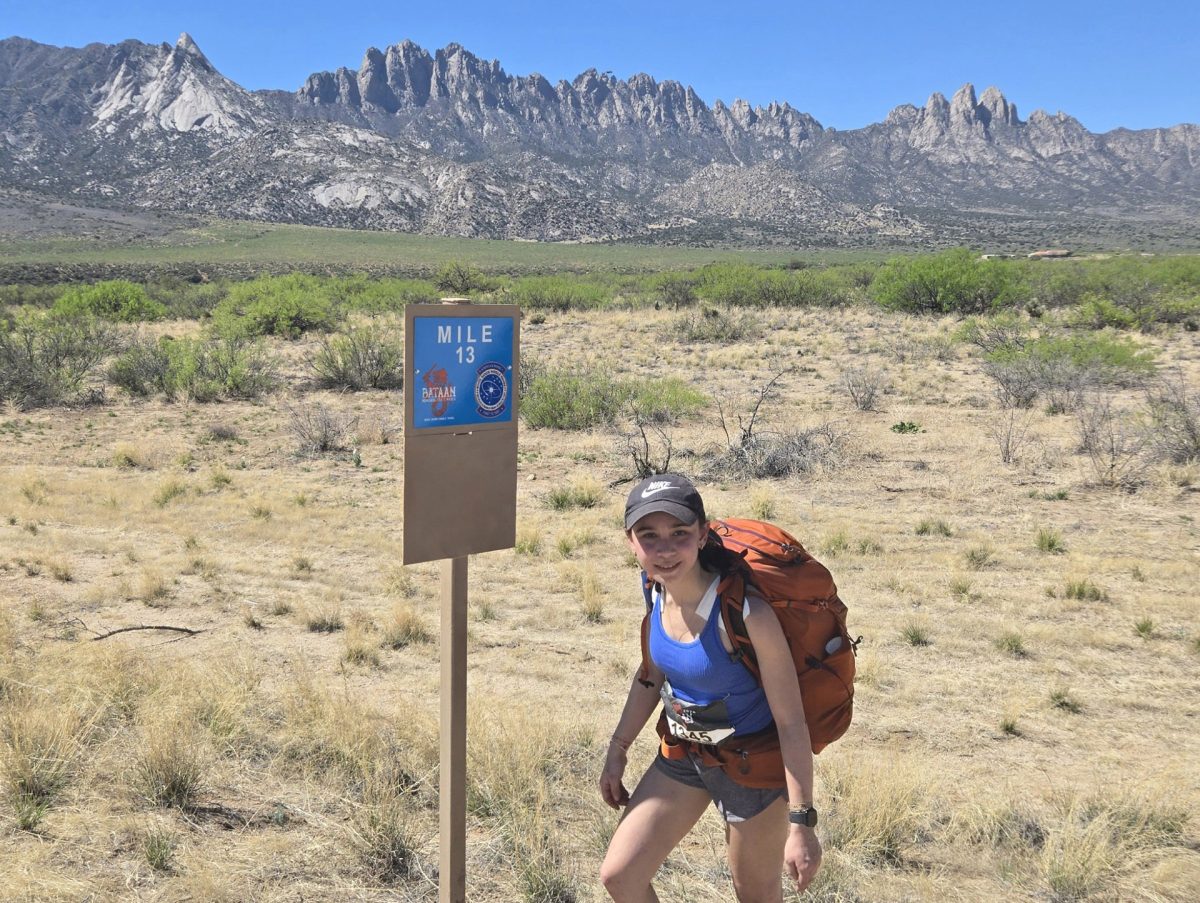
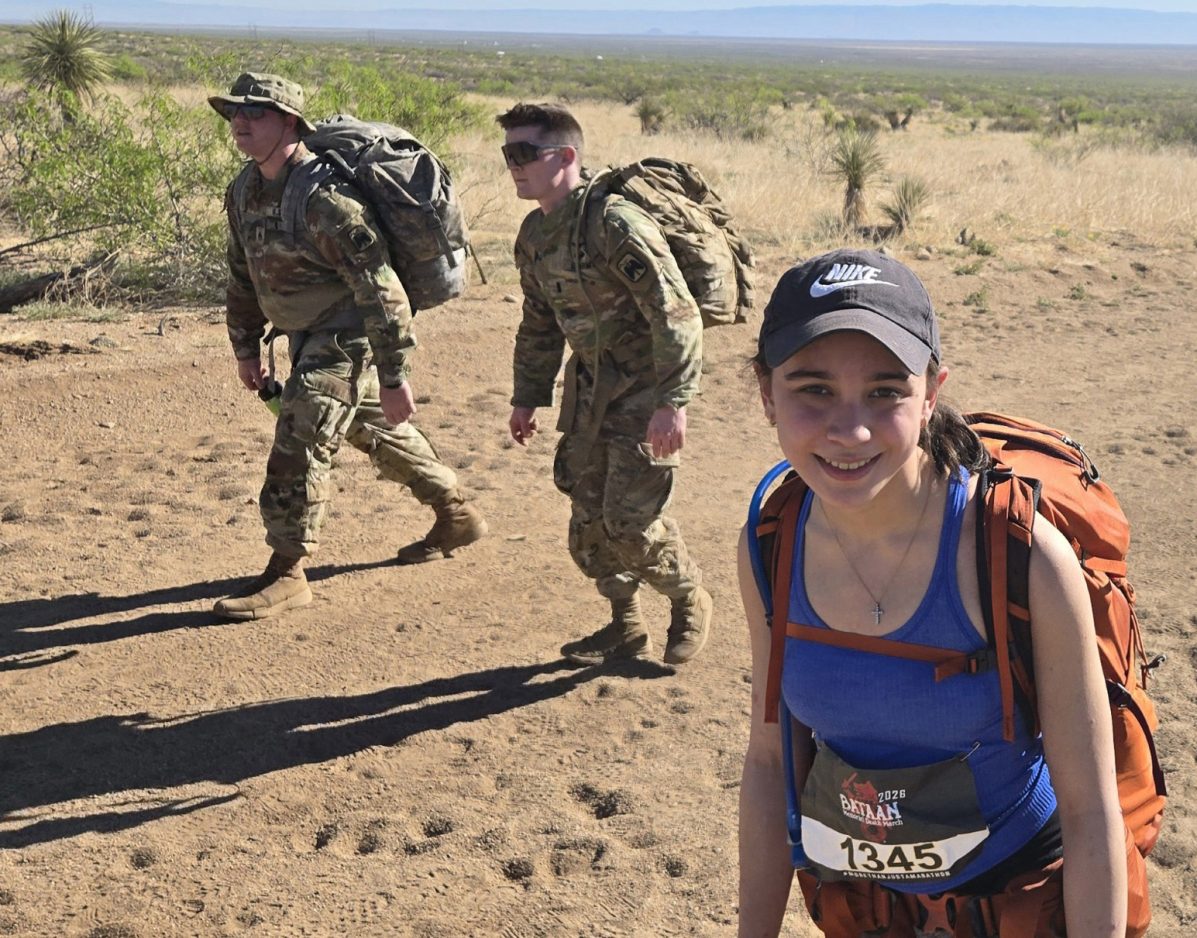
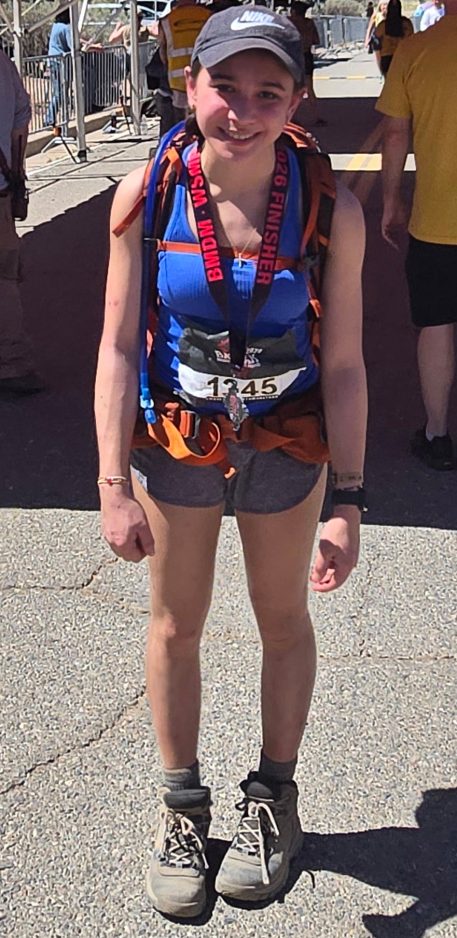
A marathon in the high desert of New Mexico tests even the most seasoned endurance athletes. The terrain is unforgiving – a grueling mix of pavement, dusty dirt trails, and the infamous sand pit, a 2- to 3-mile stretch of beach-like sand that saps strength with every step. For competitors in the Heavy Division, the challenge intensifies: Each participant must carry a rucksack weighing at least 35 pounds for the entire course.
It’s no surprise that Men’s Health has called the Bataan Memorial Death March the “toughest race in America.”
This year’s event, held March 21 at White Sands Missile Range, drew more than 6,000 participants from across the country, many of them active-duty and reserve military personnel. Only about 20% chose to compete in the Heavy Division.
Among them was Juliette Hirzel. The 14-year-old Upper St. Clair native became the youngest person in the event’s 37-year history to complete the Heavy Division. To avoid disqualification, Hirzel carried a pack weighing exactly 40 pounds – nearly 38% of her body weight.
An eighth-grader at Fort Couch Middle School, Hirzel is no stranger to the event.
Three years ago, she completed the march in the Light Division, which does not require carrying weight. During the 2023 opening ceremony, she met former prisoner of war Valdemar DeHerrera, the last known surviving member of the Battle of Bataan. DeHerrera, who died in July 2025 at age 105, left a lasting impression.
That meeting inspired Hirzel to return – this time to complete the Heavy Division in honor of the soldiers who endured the original Bataan Death March during World War II.
Balancing school, violin, piano, softball, and cross-country, Hirzel trained for months leading up to the event. Her preparation included early morning weightlifting sessions at the Upper St. Clair recreation center and weekly pre-dawn marches along the Montour Trail, sometimes beginning as early as 3 a.m.
Much of her training took place during the harsh Pittsburgh winter, often in below-freezing – and occasionally below-zero – temperatures. Race day conditions, however, presented the opposite extreme, with temperatures climbing into the mid-90s. One unexpected benefit of winter training, she noted, was that trudging through snow helped simulate the resistance of desert sand.
Physical preparation was only part of the challenge. Hirzel also had to develop mental resilience. Because White Sands Missile Range is an active military installation, spectators are not permitted along the course. Unlike most marathons, there are no cheering crowds, music, or signs of encouragement.
“It’s basically just your thoughts, the beautiful view of the desert, and the pain for hours,” Hirzel said. “There is absolutely no shade, and the sun is intense – very different from what I’m used to in Pittsburgh.”
More than a marathon
The march commemorates one of the darkest chapters in U.S. military history.
Following Japan’s invasion of the Philippines in the months after Pearl Harbor, more than 80,000 American and Filipino troops were forced to surrender after the fall of Bataan on April 9, 1942. It marked the largest surrender of U.S. forces since the Civil War.
What followed was the Bataan Death March, during which captured soldiers were forced to travel more than 65 miles in extreme heat through the Philippine jungle. Thousands died from exhaustion, starvation, disease, or execution. Among them were an estimated 500 to 650 Americans.
Those who survived faced years of brutal conditions in prisoner-of-war camps.
Gen. Douglas MacArthur, who had been ordered to evacuate prior to the surrender, famously vowed, “I shall return.” He fulfilled that promise in October 1944, and by July 1945, Allied forces had liberated the Philippines. The remaining prisoners were freed following Japan’s formal surrender on Sept. 2, 1945.
Honoring WWII vets
According to the U.S. Department of Veterans Affairs, approximately 45,000 American World War II veterans were still living as of the end of 2025 – less than 0.5% of the 16.4 million who served. Most are now in their late 90s or older, and their numbers continue to decline rapidly.
The Bataan Memorial Death March serves as a living tribute to their sacrifice.
For Hirzel, that history provided powerful motivation during the most difficult moments of the race.
“When I was tired and in pain, I thought about the soldiers who had to complete a much longer march as a matter of life and death,” she said. “When they finished, they became prisoners of war. I knew that when I finished, I’d be going back to an air-conditioned hotel and a nice dinner. That gave me the will to keep going – I had it so much easier than they did.”
Despite the grueling experience, Hirzel hasn’t ruled out returning.
“When I crossed the finish line, I was so exhausted that I told myself, ‘I’m never doing this again,'” she said. “But after a few days of recovery, I started thinking about the beautiful desert, the history, and the people we’re honoring. So – maybe one day.”