

Cast away: Connecting with nature through fly fishing
Connecting with nature through fly fishing
Many may only be familiar with fly fishing from the iconic scenes featured in the 1992 film, “A River Runs Through It,” starring Brad Pitt.
But for anglers and would-be anglers in the South Hills, there is a little-known “port of entry” into the mysterious world of fly fishing, and it is free.
The Orvis store at the Galleria of Mt. Lebanon conducts Fly Fishing 101 most Saturdays at 9 a.m.
“It’s a zero to fishing class,” according to Robert Watson, Orvis store manager. “The idea is, you can have zero fishing experience, come take the class and have knowledge after the class to go and target fish locally.” The 101 class is held at the Orvis location in the Galleria.
All materials are provided for the 101 class at the store led by Rob Ranko, store fishing manager, with assistance from Watson.
Retired engineer Don Wardius of Mt. Lebanon is appreciative of the class.
“I just retired and was looking for something new to try out. I’ll keep going at my own pace. It’s fun and relaxing. It’s great to be outside.”
Fly fishing – for some a hobby and for others a sport – has distinct differences from conventional fishing. Rather than a spinner rod with a lure at the end of the line which uses the weight of the lure to cast, fly fishing employs the actual fly line to cast the “fly.” The fly is generally a lightweight lure made of organic materials that mimics an insect (or other natural object) to float on top of the water, and in some cases below the water, depending on the conditions of the environment.
“The idea of mimicking something on top of the water, in the water using natural materials on a hook, is a very old method of fishing,” Watson said. Natural materials often include feathers, buck hair, elk hair, thread and rabbit hair.
There’s no age limit for the class, and Watson said they teach a variety of ages, both men and women, as well as kids and young adults.
The first hour covers casting. “It’s all about technique on the cast,” explains Watson.
Ranko and Watson teach a five-step technique that does not require the person fishing to be in the water.
Women and kids sometimes pick up the technique faster than the guys do, said Ranko.
“It’s the finesse part that all the ladies catch on to real quick. The guys want to do the whole ‘grip it and rip it,’ I call it. That does not work with fly fishing.
“That’s the reason we do those 101 classes, to teach that technique. And from there, you can go over and throw tiny little flies, pretty much weighing nothing, that can lay on top of the water, or you can throw larger flies that can go under the water, mimicking a fish or mimicking nymphs,” explained Watson.
The class includes instruction on how to assemble the rod, different riggings (lines) and how to use them, how to tie the two basic knots needed (clinch and double surgeons), the lingo used in fly fishing, the different types of flies and how they are used.
This time of year, Fly Fishing 101 is generally full and online registration is required. The class size is about 12.
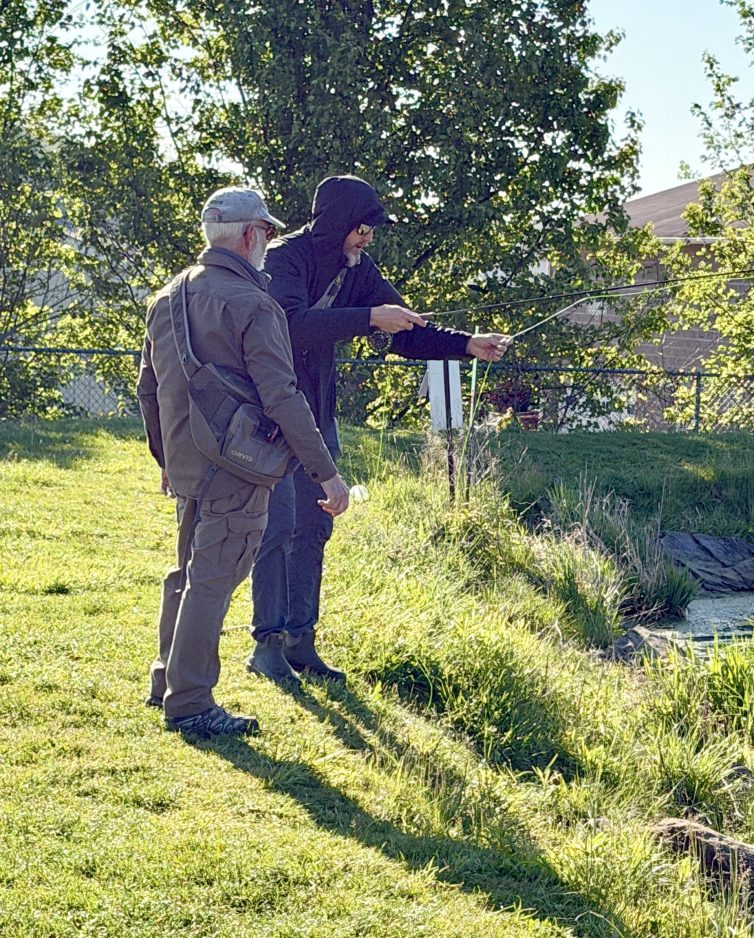
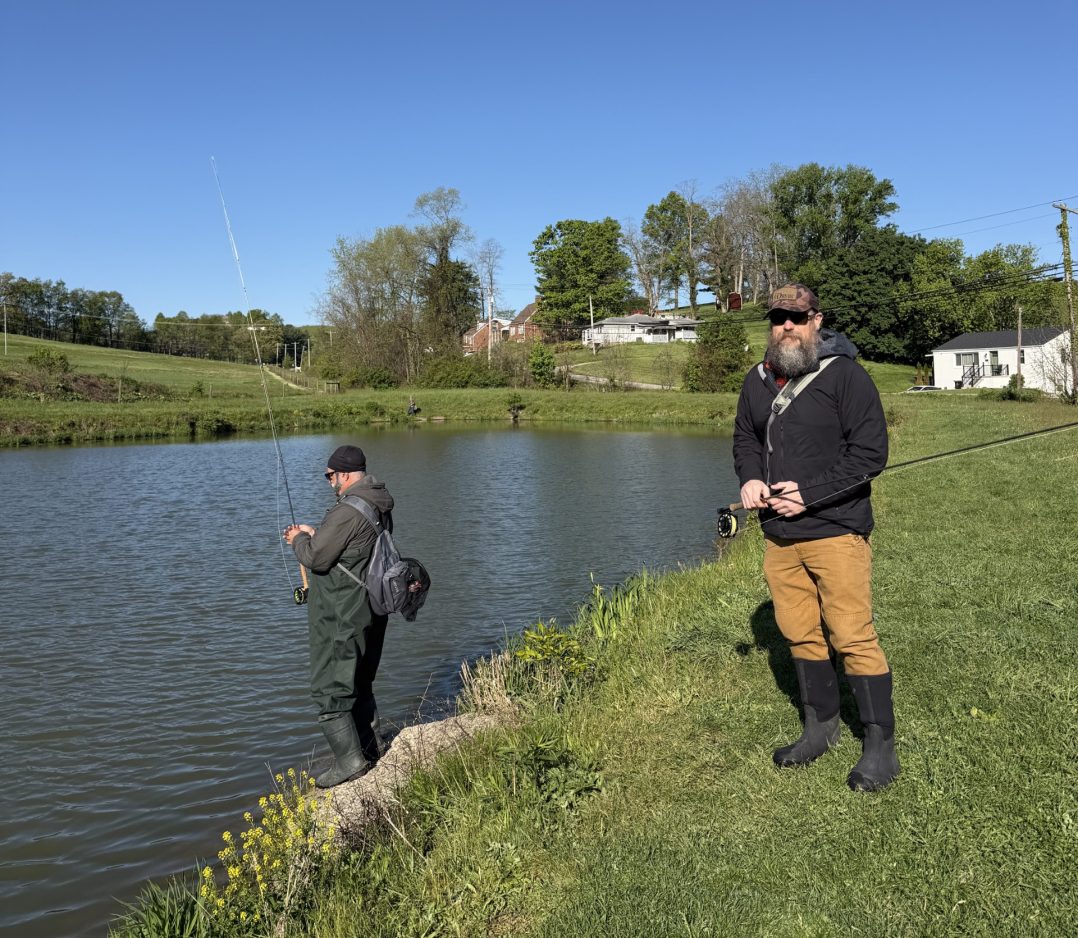
For those who are ready to “cast out” and try their hand at fly fishing, Ranko, along with endorsed fishing guide for Western Pennsylvania, Eric Bailey, facilitate Fly Fishing 201 two Sunday mornings a month at a local pond.
Anglers joining the 201 class will need to have their own equipment and a Pennsylvania license to fish, but there is no additional charge for instruction. Fly fishers can work with instructors on their technique and be introduced to more advanced casting methods, like a roll cast (cue visual from the movie “A River Runs Through It”).
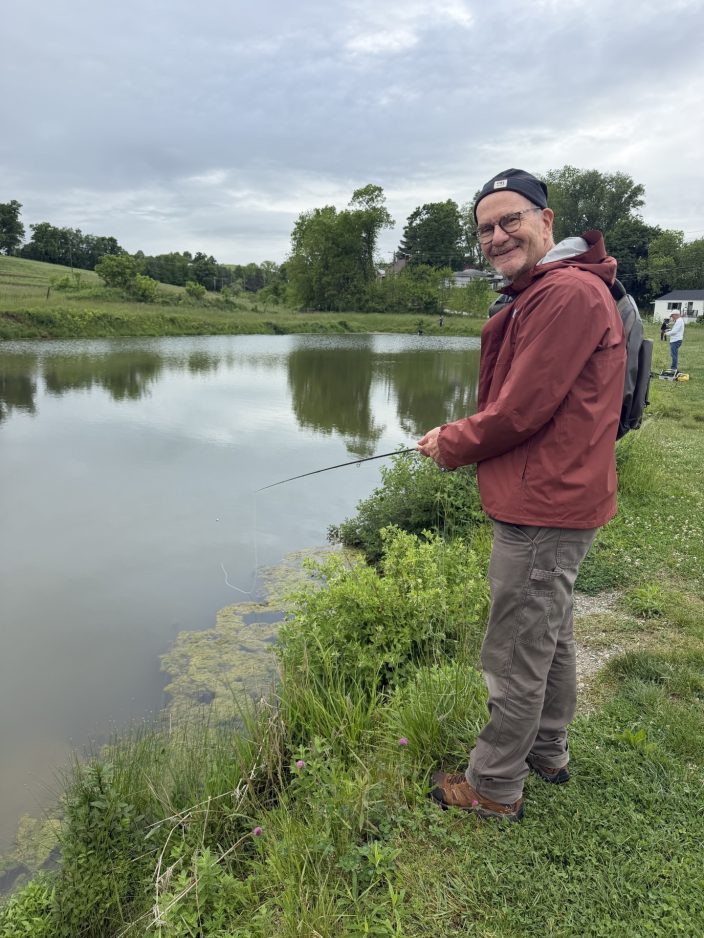
After taking Fly Fishing 101, Ray Sexauer of Bethel Park has been out to the pond at Trax Farms in Finleyville to practice with Watson, Ranko, and Bailey.
“It’s going to take practice,” Sexauer said, but he’s hoping to eventually travel to areas well known for fly fishing, including Montana.
“We do have a 301 class, a fish with us class, which is generally where we pick a location and we go with a small group of folks,” Watson said.
Pennsylvania, Watson mentioned, has the second most fishable trout waters in the United States outside Alaska.
Ted Paladino, a retired doctor from Jefferson Hills, is back to fly fishing after a decade. “It’s been going well since I met Eric,” Paladino said with a laugh. “Hopefully I can get back into it more and not tangle the line.”
Bailey and the instructors from Orvis operate on a “catch and release” policy.
While catching fish is important, there is also a deeper relationship with nature. “At first, it’s the verification that you are doing it right,” said Bailey.
There is a connection with the natural surroundings that is just as important and unique.
“You have to look around, understand what’s going on under the water, on top of the water, be aware of stream temperatures. There’s a lot of strong connections to nature. That’s hard to get anywhere else,” Watson said.
The Orvis store instructors also work with schools and scouting groups locally.
“I’m at the point in my career where I enjoy teaching what I’ve learned over the past decade or so that I’ve been doing this sport,” said Ranko.
“I just like to see the smiles on everyone’s faces. Everybody always has, I call it the ‘light bulb moment’ in class, when they feel what a cast is supposed to feel like. And then they start making that same cast over and over and over again. It’s cool to watch that progression of anglers coming through the shop,” said Ranko.
“The value of this is that it’s a sport or pastime that you can do for the rest of your life and never completely master. You are always learning and getting better,” said Bailey. “The biggest takeaway in fly fishing is, there is so much stuff going on that you can spend a whole day fishing and never think about anything else than what you are doing. That’s the magic of fly fishing. It puts you in a different state of mind where your focus is just on what you are doing.”
For information on classes, call or go Orvis.com/pittsburgh.