

Drought can complicate landscape irrigation
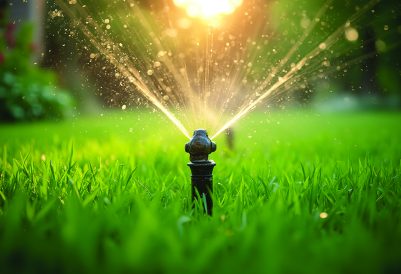
Extreme weather is no longer an aberration. Drought conditions are one of the extreme weather phenomena that people may experience in a given year, making managing water usage a critical aspect of home ownership.
Researchers warn that drought is expected to increase in both frequency and severity, putting a strain on an already tapped resource: water. The Environmental Protection Agency says outdoor water use accounts for up to 50% of all residential water consumption. That can add up to a waste of approximately four billion gallons of water each day. Adopting water-wise strategies can significantly reduce environmental impact, all the while keeping a landscape thriving.
Explore hydrozoning
Homeowners can get in the habit of grouping plants with similar water requirements in the same area, known as hydrozoning. This reduces the blanket irrigation technique that has high-water-need plants like lawns being watered on the same schedule as drought-tolerant shrubs. Colorado State University notes segregating these zones can make it easy to direct a limited water supply exactly where it’s needed.
Time it right
Minimizing water loss should be a goal. Evapotranspiration will occur more readily when plants are watered during the heat of the day. Most experts advise the optimal window for irrigation takes place between 9 p.m. and 9 a.m.
Water deeply
Light, frequent watering is a common mistake made by homeowners. Utah State University says doing this will encourage shallow root systems that are more susceptible to heat and drought. Rather, homeowners should aim for deeper, less frequent watering to force roots to grow deeper into the soil in search of moisture. This produces plants that are more resilient and capable of riding out dry spells.
Use soil amendments
Applying a two- to four-inch layer of organic mulch around trees, garden beds and shrubs can help retain soil moisture readily. Also, adding compost to the soil will improve its structure and ability to retain water. In sandy soils, compost can help retain moisture. In clay soils, compost helps improve drainage and aeration.
Rely on passive techniques
Capturing rain water and using it in gardens will help to reduce reliance on municipal water systems or well water. Techniques like grading the land to create small water basins can help, says the University of Arizona. Also, homeowners can use collection devices to utilize rainwater and direct it right to plants.
Brown grass isn’t bad
Homeowners should realize that cool-season lawns are designed to go dormant when they aren’t frequently watered. Although the lawn is brown, it is likely not dead. Lawns can recover quickly after water restrictions are lifted. Therefore, homeowners can direct preserved water to other elements like trees and shrubs that may need it more to thrive.
Drought can wreak havoc on a landscape if homeowners do not take steps to ride out the dry spells.