

Will ultrasound be future of fighting cancer?

Doctors have a new emerging weapon in the fight against cancerous tumors: ultrasound.
After a five-year study by the University of Michigan showed promising results in treating liver cancer with ultrasound, the U.S. Food and Drug Administration (FDA) recently approved the procedure called histrotripsy. It’s a noninvasive treatment options that can be an alternative to or used in combination with chemotherapy and radiation. The technology works by using sound waves to form tiny bubbles within the tumor which later collapse and cause the cancerous tumor to break apart and the body’s immune system to get rid of the leftover debris.
The study also found another benefit to the histotripsy procedure, showing that by patients’ immune systems getting rid of leftover cancer debris cells, they learned how to keep fighting the initial tumor creating natural immune responses to the cancer.
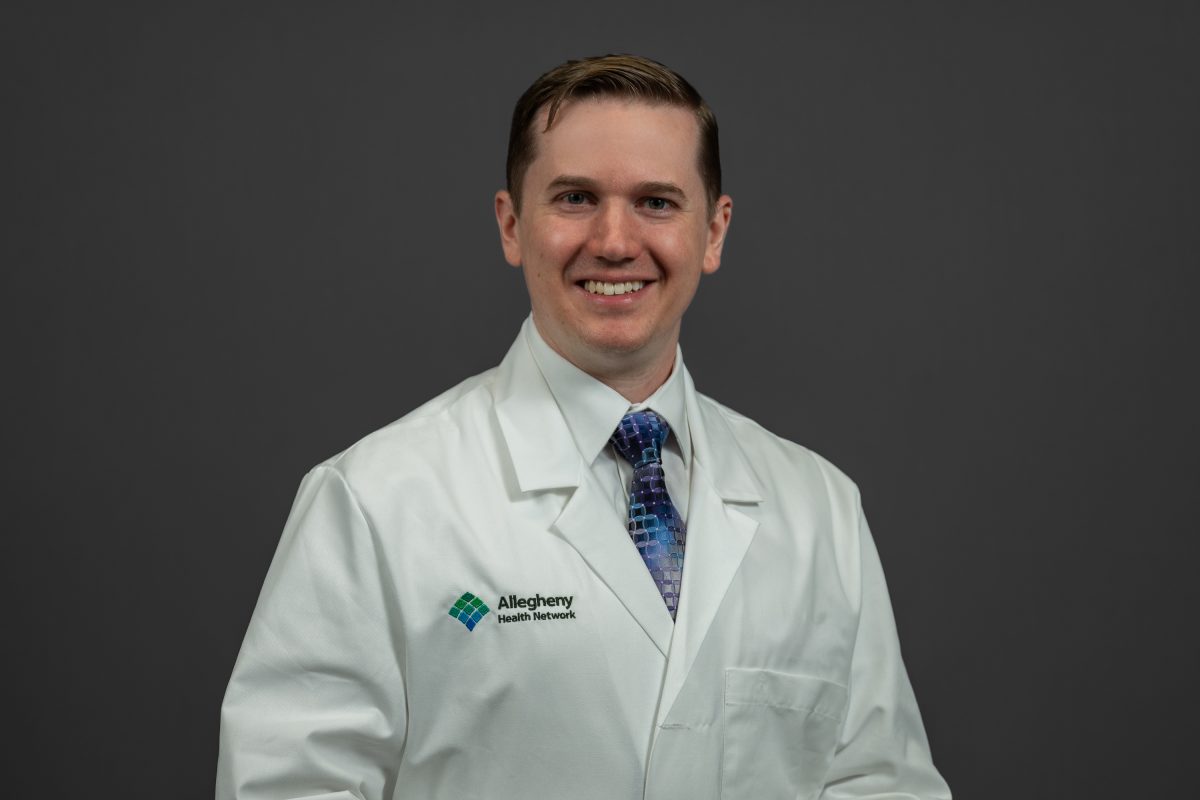
“It’s kind of a burgeoning technology,” says Dr. Andrew Klobuka, AHN Director of Interventional Radiology. “There are a couple centers around the country that are using it, and it’s becoming more and more appealing.”
“Histotripsy is a little bit different in the sense that the ultrasound energy is tuned at the level not to heat up the tissue to destroy it, but rather to create little bubbles within the fluid that are in all the cells in that area,” Klobuka explains. “And when those bubbles expand and contract, almost like in like a teapot as you’re boiling water, that bubbling disrupts and breaks down the cells in the area that you’re targeting.”
He goes on to note one advantage of histotripsy is that it’s easier to preserve surrounding, non-cancerous tissue.
“The other part is that you leave little bread crumbs behind,” he says. “We’ve seen some initial interest in the fact that the immune system then starts to pick these things up and say, this isn’t part of me. This is foreign. And the tumors are pretty good at masking their own immune signature, but when you break them open like this, without melting everything, you kind of leave all these proteins that are different, and the body then can start to pick those up and generate immune response.”
What’s even more exciting is that the technology may pave the way for this kind of treatment of other types of cancer other than liver tumors.
“The parallel technology that we use at AHN is called pulsed electric field ablation (PEF),” says Klobuka. “Functionally, it is very similar in terms of that mechanism, but there have been a couple really surprising success stories early for people, even with metastatic cancer, where you treat one or two other spots with histotripsy or PEF, and then they get this crazy quantum scope of response, which is essentially treat one spot, but all of them start shrinking with scans.” He says that’s the immune system response to the “bubbling” of the tumors and the proteins left behind.
“The body starts to generate almost an antibody response, much like you would for vaccine against the virus.”
Klobuka says this type of therapy works hand in hand with the immunotherapy treatments that have been emerging in recent years.
“It just generally ramps up your immune system in many ways to kind of go after all kinds of stuff,” he adds.
Another benefit to ramping up the immune system to only target leftover proteins from the cancerous tumor is that patients can avoid harmful side effects that some immunotherapy drugs can cause, such as rashes, gastrointestinal issues and auto immune type reactions. These can be caused because those drugs heighten the body’s overall immune system reaction to any type of foreign cells or disease.
“Instead of just letting it go wild on everything, you’re kind of giving it something now to go after and be a little bit more selective,” Klobuka says.
The primary use of histrotripsy technology so far has been for treating liver cancer, but he says doctors are expanding its use to fight other types of cancer including lung cancer through the use of a bronchoscope.
Overall, he sees the use of ultrasound technology as the possible future of fighting cancer.
“The early studies, they’re very small trials, but they’re really encouraging, and I think you’re going to see this start to take off in the next couple of years. I think it’s definitely a really exciting area to be practicing in, and one that I think there’s a lot of energy for, especially going forward for the next 10 years.”