

South Fayette designs, builds sports boards for national company
What begins as a design in a high school classroom could end up on sports equipment sold by an industry giant.
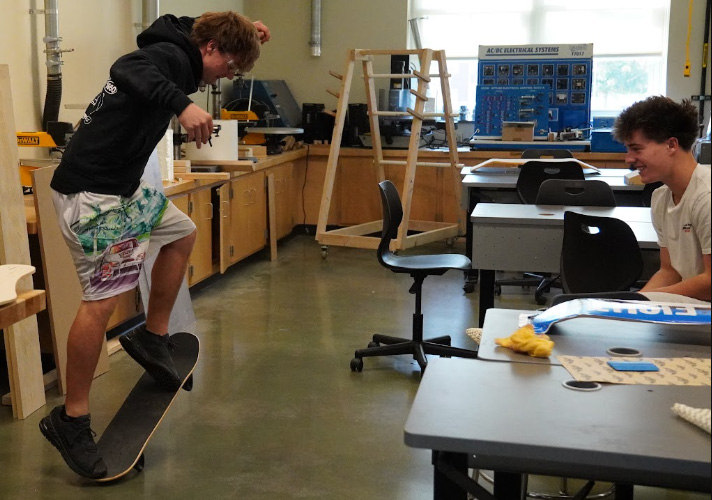
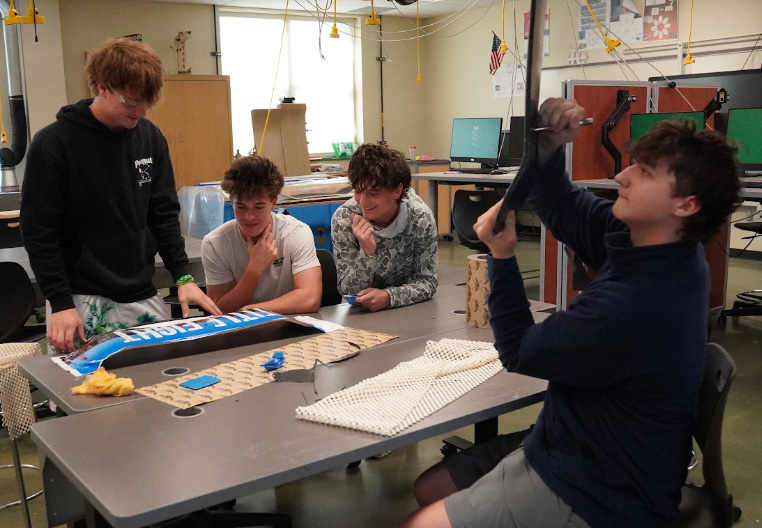
Through South Fayette High School’s new Applied Fabrication Engineering courses, students are not only learning to design and build skateboards and snowboards, but also competing to showcase their creativity to national companies and industry professionals.
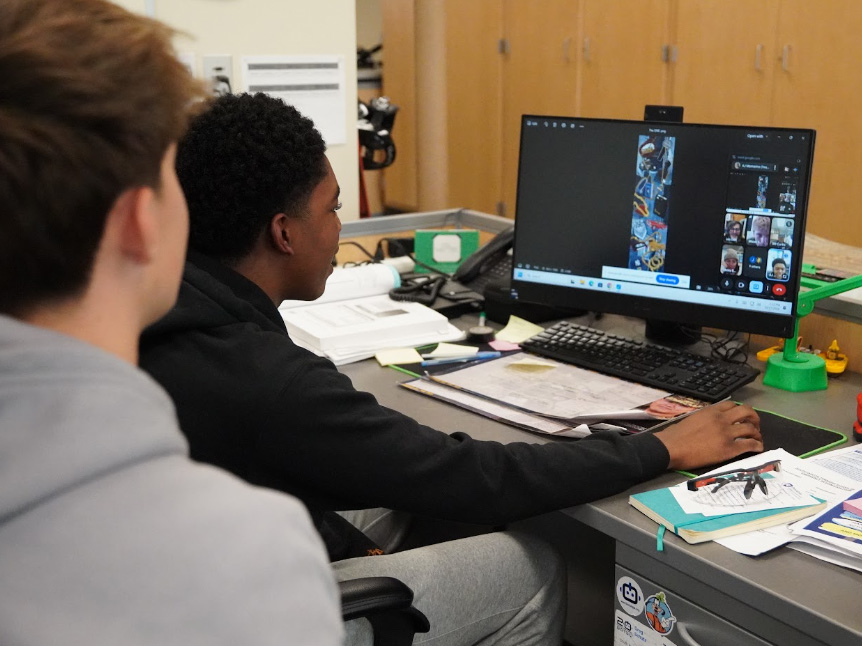
One of those opportunities recently brought junior Machi Wallace into a virtual presentation with representatives from Gone Boarding and Burton, along with students from other schools.
Wallace presented his snowboard design, inspired by 1990s hip-hop style, via Zoom. His design is among the entries in a contest in which Burton will produce the winning student’s design on a custom snowboard. South Fayette sophomore Vid Mares also submitted a design for consideration.
The competition is one example of how the new program is connecting students’ interests with opportunities beyond the classroom. The two courses allow students multiple opportunities to develop their ideas, share their work with industry professionals, and potentially see their designs brought to life by major brands.
The program grew from a simple question: What do students want to learn?
High school teacher Anthony “AJ” Mannarino surveyed students about their interests and discovered strong enthusiasm for hands-on projects connected to adventure sports like biking, skateboarding, snowboarding, and skiing. Students wanted opportunities to work with their hands, move around, and develop projects of their own.
A pilot program near the end of the 2025-26 school year confirmed that interest was strong enough to make the Applied Fabrication courses a permanent part of the curriculum.
“In a district where students are very driven by academic achievement, I want them to think about more than just which classes look impressive on a transcript. I want them to ask
themselves what they’re interested in, what they want to do after graduation, and what skills they’ll need to get there,” said Mannarino. “If a student is interested in engineering, they should have hands-on opportunities to explore engineering. When students are passionate about what they’re learning, they’re more engaged, they take ownership of their work, and they begin to see how what they’re doing in the classroom connects to their future.”
High school assistant principal Tonya O’Brien connected Mannarino with Gone Boarding, a Grand Rapids, Michigan-based company that helps schools bring board sports manufacturing into the classroom. Mannarino traveled to the company for training in July 2026, learning how to establish and grow the program using fabrication tools and techniques that build on the school’s existing lab.
The result is a pair of semester-long courses that connect students’ personal interests with engineering, design, and manufacturing. Applied Fabrication Engineering I focuses on building skateboards and longboards, while Applied Fabrication Engineering II expands into snowboards. Approximately 50 students are currently enrolled in the two courses, with the snowboarding class reaching its maximum enrollment for the class.
In the introductory course, students work through the process of making a skateboard, from shaping and sanding materials to applying graphics and installing hardware. Snowboard construction introduces additional techniques, including routing the core and base, installing metal edges, working with fiberglass and epoxy, and vacuum-forming materials. Throughout both courses, students learn to use fabrication tools and technology safely while exploring computer-aided design (CAD), graphic design, materials science, computer numerical control (CNC) applications and manufacturing processes.
The courses also emphasize experimentation, persistence, and problem-solving. “Failure is data,” said Mannarino. “When part of the project fails, students have to figure out what went wrong and learn from it. They are challenged with researching, making decisions, testing, and learning from one another.”
Through Gone Boarding’s industry connections, including relationships with brands such as Burton, Vans, and GoPro, students can participate in design contests, creative challenges and other experiences that connect classroom projects with professional work. These opportunities allow students to share their ideas with professionals in the industry and explore how creativity and technical skills translate into potential careers.
The impact extends beyond technical skills. Students are taking ownership of their work, helping classmates, building confidence, and developing pride in what they create. For Wallace, one of the most rewarding moments of the program has been when people ask where he bought his skateboard, and he gets to tell them he made it himself. Now, he has another opportunity to share his creativity with the possibility of seeing his work featured on a Burton snowboard.
“At South Fayette, we have a history of growing industry partnerships across our region and providing students with real-world problem-based learning opportunities,” said district
Superintendent Dr. Michelle Miller. “The Applied Fabrication Engineering courses allow students to develop technical skills and explore future career pathways while focusing on their passions.
I’m so proud of our educators for the way they continually present ideas for teaching required academic standards in unique and creative manners that are relevant, engaging and impactful for our learners.”