

Understanding breast density, its impact on cancer detection
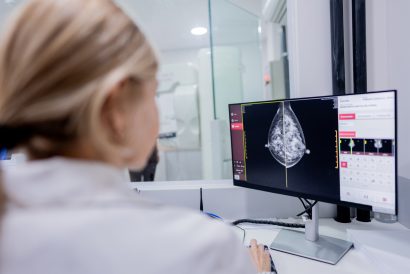
October is National Breast Cancer Awareness Month, dedicated to spreading education, supporting patients and encouraging early detection. And while many women are familiar with traditional risk factors like age and family history, a significant element often remains overlooked — breast density.
Breast density refers to the proportion of fibrous and glandular tissue compared to fatty tissue in women’s breasts as seen on a mammogram. Having dense breasts is extremely common, affecting more than 40% of women over the age of 40 and can significantly impact cancer detection and overall risk.
First, dense tissue makes mammograms harder to interpret. On an X-ray, fatty tissue appears dark, while both dense tissue and potential tumors appear white. This similarity can cause dense tissue to “mask” underlying cancers, making early detection through standard mammography more challenging. Second, research indicates that women with extremely dense breasts face an elevated baseline risk of developing breast cancer compared to those with predominantly fatty tissue.
“Dense breast tissue is completely normal, but it is a factor every woman should understand when reviewing her annual screening results,” said Suzanne Miller, DO, chief of breast imaging at Penn Highlands Healthcare. “Because that tissue appears white on a mammogram just like a lesion might, standard screenings don’t always tell the whole story.”
National standards require mammogram summary letters to clearly state a patient’s breast density category. This enables patients to work closely with their care teams to evaluate personal risk factors and build tailored screening plans.
“Knowing your density score helps you and your doctor to decide if secondary imaging — like 3-D mammography or a breast ultrasound — is necessary to catch small changes early,” said Alexis Smith, DO, a fellowship-trained radiologist at Penn Highlands Healthcare.
For women with dense breasts, having an open conversation with a healthcare provider is an important part of making informed screening decisions. Breast density can change over time, particularly as women age or experience hormonal changes, so discussing screening results from year to year can help ensure care remains appropriate. Depending on a woman’s individual risk factors and breast density, a provider may recommend additional imaging or other monitoring strategies.
“Early detection remains our most powerful tool in treating breast cancer successfully,” said Kelley Smith, DO, FACOS, board-certified general surgeon at Penn Highlands Healthcare. “Breast density shouldn’t cause panic, but it should prompt a personalized conversation. When we combine high-resolution 3-D imaging with routine checkups, we can catch subtle abnormalities long before they become life-threatening.”
Penn Highlands Healthcare is dedicated to providing comprehensive, advanced breast health services tailored to every patient’s unique needs. From state-of-the-art 3-D digital mammography (tomosynthesis) and diagnostic breast ultrasound to specialized MRI screenings, Penn Highlands offers the full spectrum of imaging technology designed to evaluate dense breast tissue accurately. Their team of experienced radiologists, oncologists and nurses guides individuals step-by-step through routine screenings, risk assessments and personalized follow-up care.
For more information, visit phhealthcare.org/pink.