

Cecil Historical Society to commemorate coal miners

Ken Marley, who grew up in Cecil Township, proposed the idea of constructing a coal miner memorial in Cecil Park. Cecil Township Historical Society took on the project and is soliciting donors.
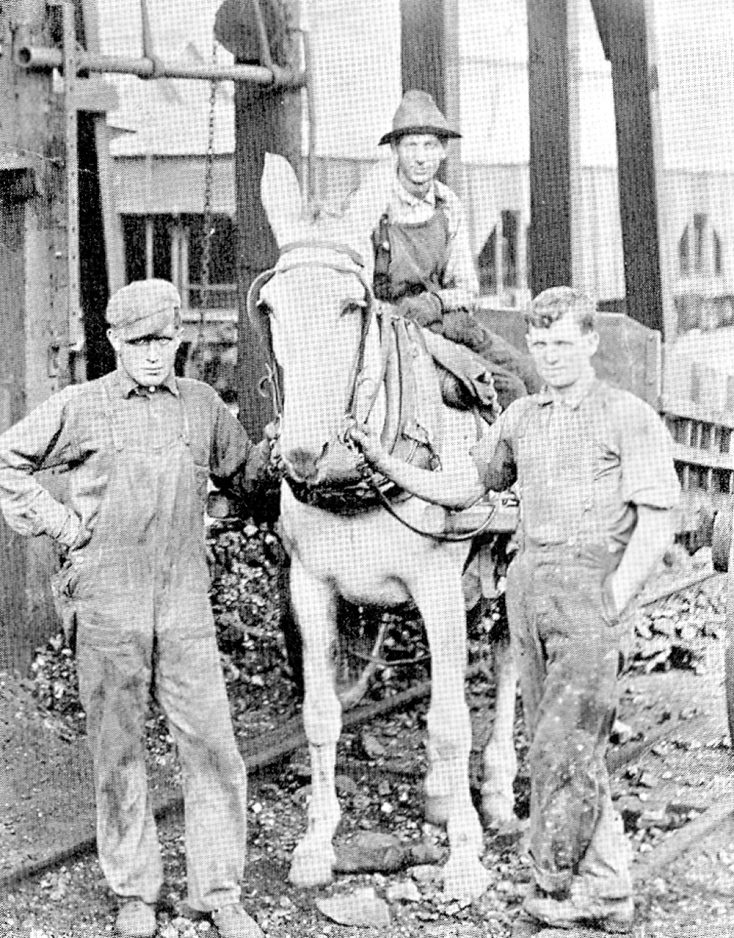
Three miners use a mule to remove coal from a mine in the Cecil area.
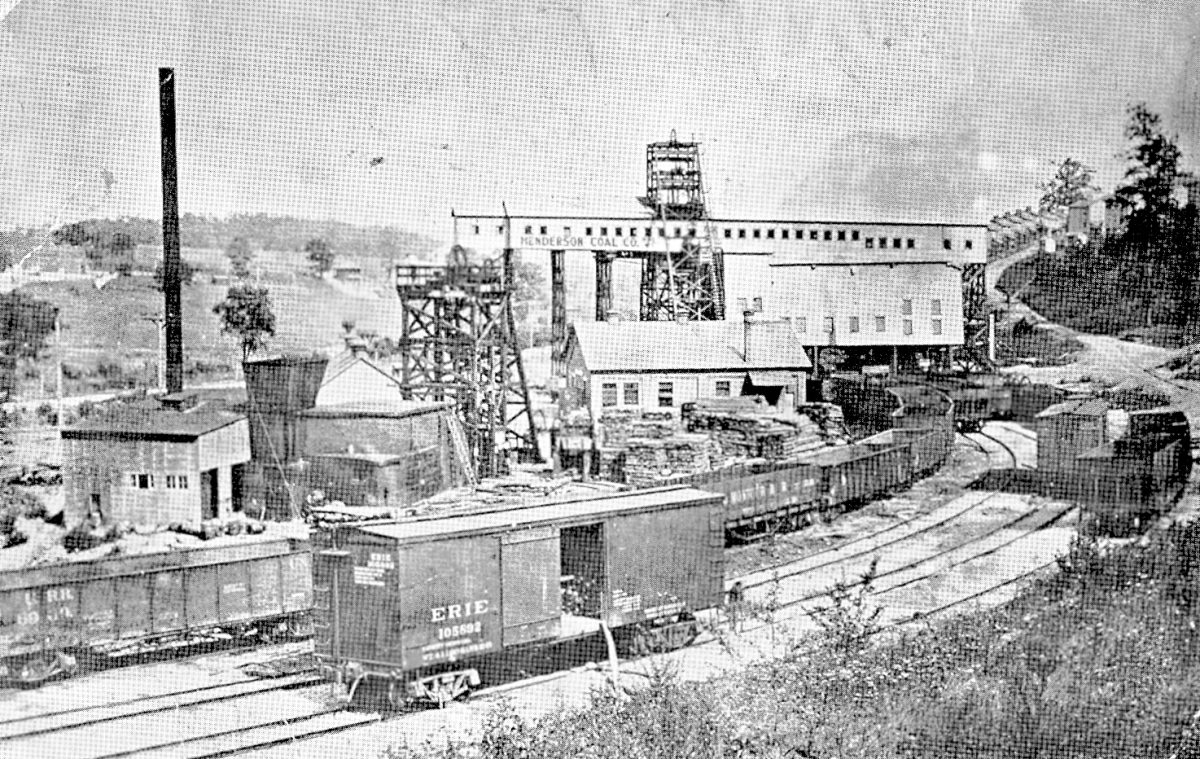
The Henderson Coal Co. mine in Hendersonville
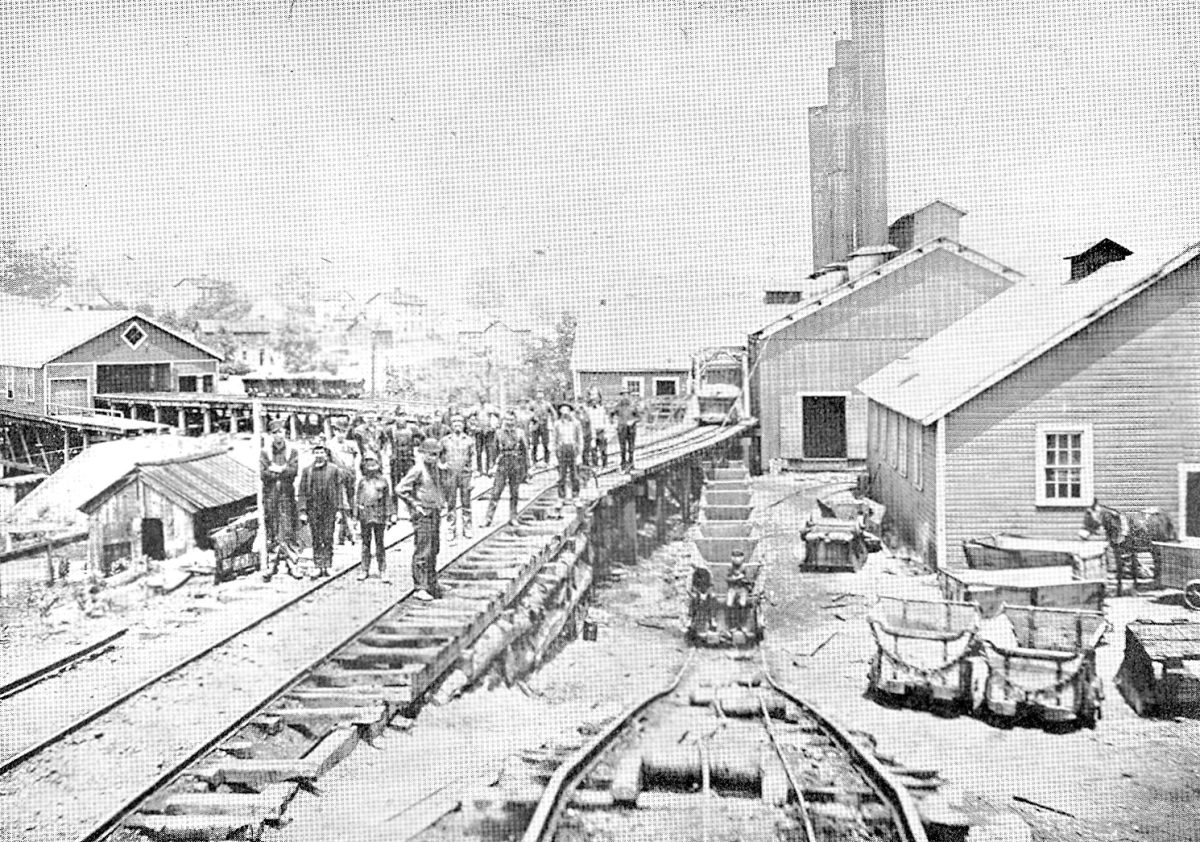
This photo shows Bishop Coal Mine, around 1911, at the site where the Cecil American Legion post now sits on Route 50.
Joseph Marley was left on his cousin’s doorstep when he was just a baby. At the behest of his stepmother and father, who later regained custody, he dropped out of school at age 12 and entered a Cecil Township coal mine to help pay the bills.
He worked as a miner for more than four decades in “knee-deep water, hunched over all day,” said his son, Ken Marley.
It was no way to live, but it was one of the few ways to make a living in early 20th-century Pennsylvania. Like Marley, many men worked in now-shuttered Cecil coal mines, and some even died there.
To preserve their memory and the township’s history, Ken Marley proposed the construction of a coal miner memorial and pavilion in Cecil Park. The Cecil Township Historical Society took on the project and collected about $5,000 in individual donations, but organizers need about $30,000 altogether.
A large headstone will contain the names of the 271 men who died in Cecil Township mines, free of cost to family members. Anyone else who wishes to honor a former Cecil miner can donate $100 and have that person’s name displayed on a brick in front of the memorial. The historical society also hopes to attract corporate donors.
Marley grew up in Hill Station, which is now Lawrence, and said his inspiration for the memorial comes from his father – a “brilliant” man who could make a radio out of a spool and wires, and a man who touted the virtue of sacrifice. Joseph Marley died six years ago from lung disease at the age of 93.
“In spite of his black lung, he must have had a heart made of steel,” Marley said.
Today, the coal mining industry is almost unrecognizable when compared to its 20th-century predecessor. Little remains except for the stories passed down from one generation to the next. One remaining artifact in Cecil Township is a “clinker” – a large slab of low-grade coal compacted with other materials – that is displayed near the old Muse slate dump on Muse-Bishop Road.
The clinker, and a short essay written by Marley, will be incorporated into the memorial. There will also be a kiosk displaying the history of Cecil mines, which Marley hopes will become a project for aspiring Eagle Scouts.
George Babeji, of Lawrence, was the first person to donate to the memorial fund. His father, John Babeji Bobble, was a first-generation American whose parents emigrated from Czechoslovakia. Bobble worked for 41 years in the Montour 4 mine.
Babeji said it was a dirty, dangerous job and recalled the time his father lost a finger.
“Back in the old days, he ran a regular cuttin’ machine, which was like running a chainsaw that cut the coal,” he said. “He got his finger cut off in the mine, and he brought it home in his glove and took a shower before he got it operated on. He didn’t want to go to the hospital dirty.”
Babeji said while his father was dying from lung disease, he shared his proudest accomplishment: the fact none of his four sons became a coal miner.
Marley said he went to the bottom of a mine as a child and gained a deeper appreciation of his father’s positive attitude despite the difficulties he faced. He recalled the time his father wore a necktie to work because his boss complained the miners didn’t dress appropriately.
“He put his dirty, old work clothes on – body nice and clean, but those dirty, filthy work clothes – and he’s got a necktie on,” Marley said. “My mother just started laughing – she peed herself.”
The job was undesirable in many ways, but few coal miners complained. Brenda Thornburg, who grew up in Montour, said her father, James Hawkins, loved the job. It was just “in his blood,” and he started working in the coal mine as a teenager.
She remembers him coming home with “coal black” skin, with only the whites of his eyes glowing. At the time, they had only a granite washing tub in the kitchen. His entire paycheck went toward bills, except for the $5 he used to purchase a gallon of zinfandel wine.
“He’d drink a glass every once in a while, and he’d make the funniest face,” Thornburg said.
Hawkins died at age 50 from injuries he sustained in the Hills Henderson mine when a “roof bump” caused a wall to cave in. Some men who died in Cecil mines were as young as 16, and others were in their 70s.
Marley wrote in his essay that although the “lowly clinker” is useless, it is all that is left of Cecil’s coal mining past.
“(It) becomes a memorial to the now-deceased king and displayed as part of the memorial to the miners who worked, suffered and died in the coal mines of our communities,” Marley wrote. “And like the surviving clinker, they too survive.”
To donate, mail a check payable to the Cecil Township Historic Society to P.O. Box 48, Cecil, Pa 15321. Donors are asked to include the full name of the person they wish to honor and the coal mine where he worked.