

Casey opposes longer trucks on state roads
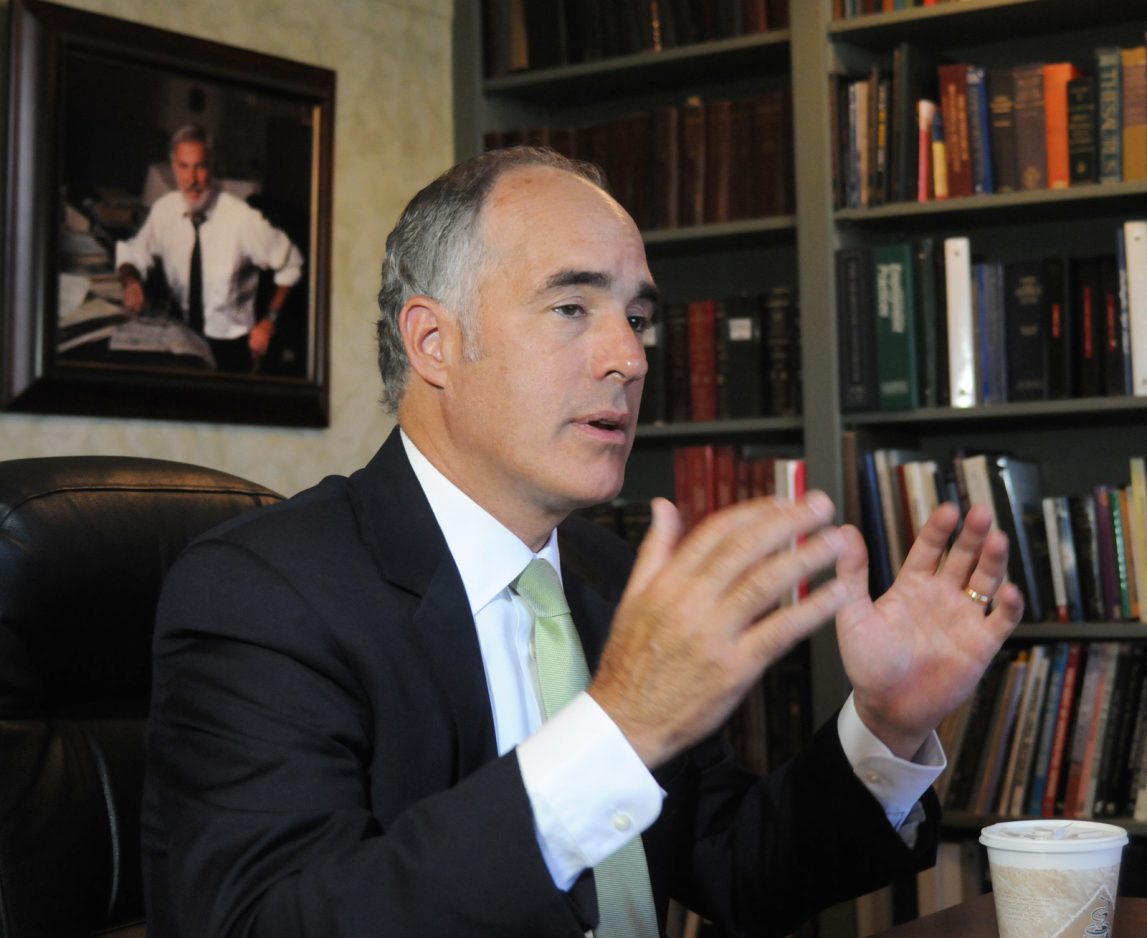
Sen. Bob Casey speaks with members of the Observer-Reporter editorial board.
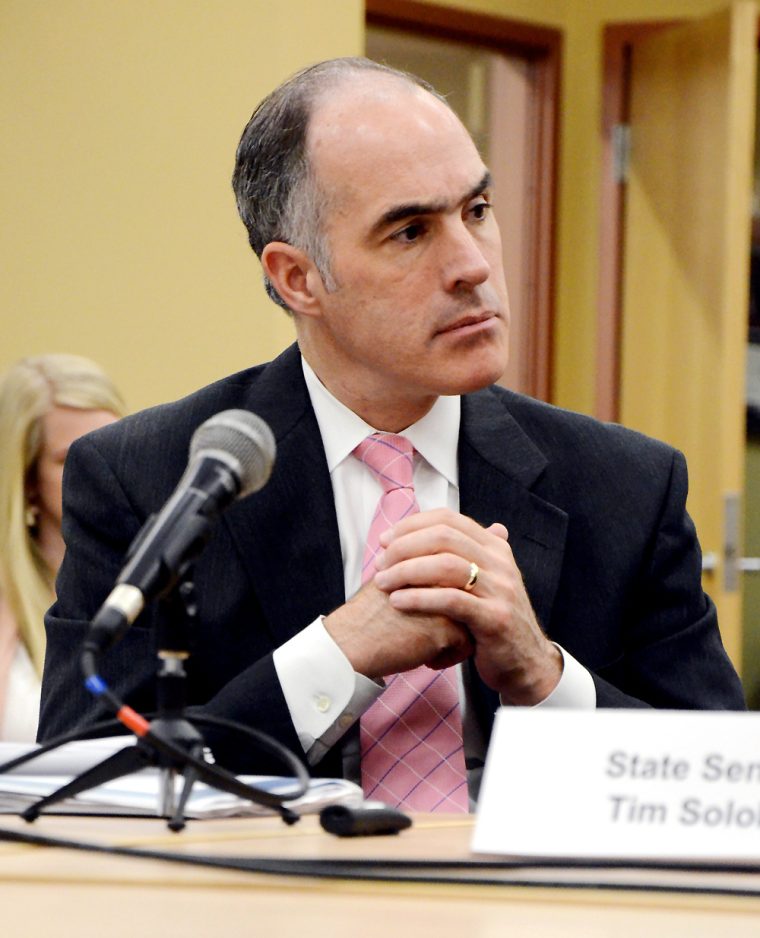
Observer-Reporter U.S. Sen. Bob Casey, shown during a 2011 visit to Cecil Township, is sounding the alarm about a proposal to make sharp cuts in the Community Development Block Grant program.
U.S. Sen. Bob Casey wants to put the brakes on a provision in the federal highway bill that would allow longer tractor-trailers on Pennsylvania’s roads.
Pennsylvania’s harsh winters and mountains would create more safety challenges on the state’s roads if the 85-foot-long trucks, known as Twin 33s, were to compete for space on highways, Casey, D-Pa., said in a conference call Thursday with the media.
“That doesn’t make sense in Pennsylvania,” Casey said.
Lobbyists for major retailers have been pushing for such trucks to be allowed on all highways in the United States, claiming the longer trucks are more stable on the road.
There are currently 11 states in the nation that have approved the trucks, which are 17 feet longer than the double tractor-trailers that are permitted in Pennsylvania, Casey said.
Casey said there have been 20,893 accidents involving large trucks in Pennsylvania since 2011. The numbers have increased by 37 percent from that year to 2014, he said.
The number of crashes involving large trucks has nearly doubled since 2011 in Washington and Greene counties.
There were 21 such crashes in Greene County in 2011 as compared to 44 last year. There were 96 of them in 2011 in Washington County and 176 last year. Interstate 79 crosses both counties while Interstate 70 is heavily traveled in Washington County.
Casey said Pennsylvania has 5,000 deficient bridges that need to be repaired and roads that need more space for traffic.
“Essentially, there will be trains on our highways,” he said, discussing the possibility of the Twin 33s competing for traffic in Pennsylvania.
He said he has yet to meet one person in Pennsylvania who has asked him to “make our trucks bigger, longer.”
“We have enough in the way of challenges in Pennsylvania right now,” Casey said.
He said Congress needs to focus its attention on repairing the nation’s highways and “not draining its time and resources on a policy that doesn’t make sense in Pennsylvania.”
The measure has passed the full U.S. House and cleared the relevant U.S. Senate committee, Casey said. There is no timeline for a Senate vote on the bill, he said.