

Canonsburg dedicates historical marker to Civil War doctor, native son Letterman
Holly Tonini/Observer-Reporter
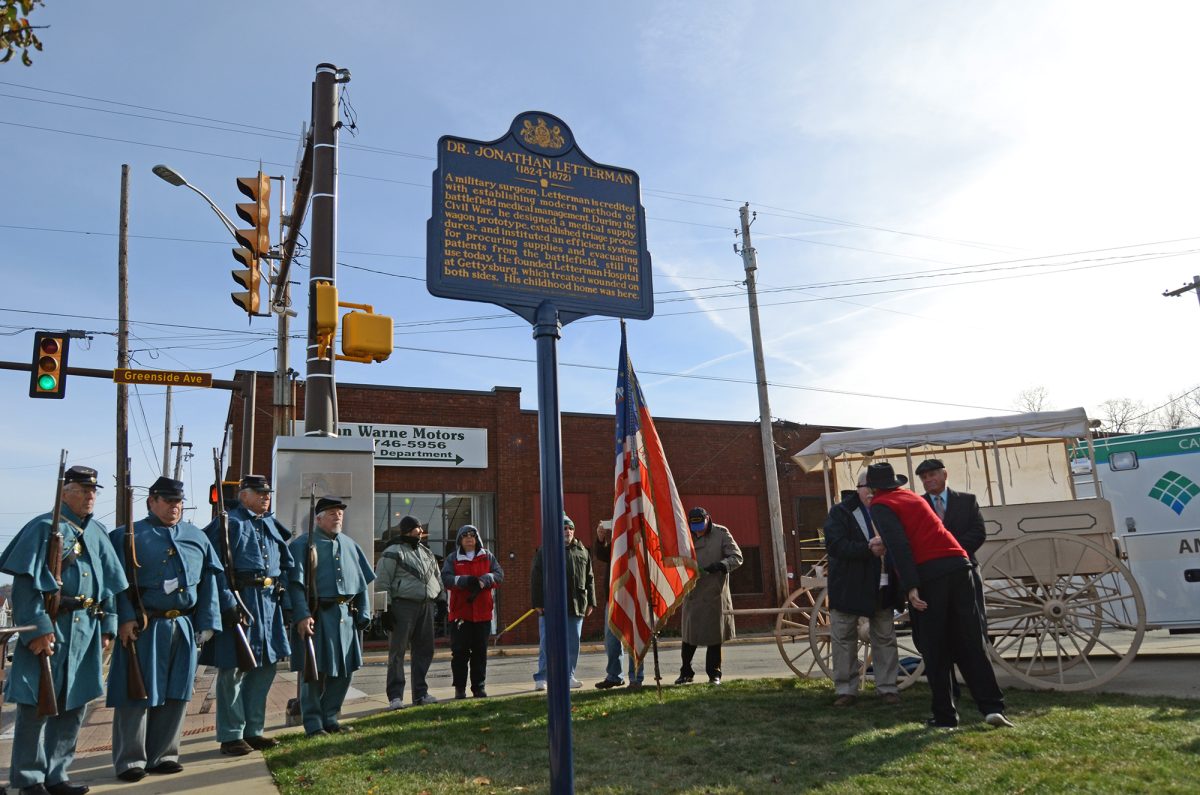
A memorial marker was dedicated to Major Jonathan Letterman on the site of his birthplace, the current location of the Canonsburg Municipal Building.
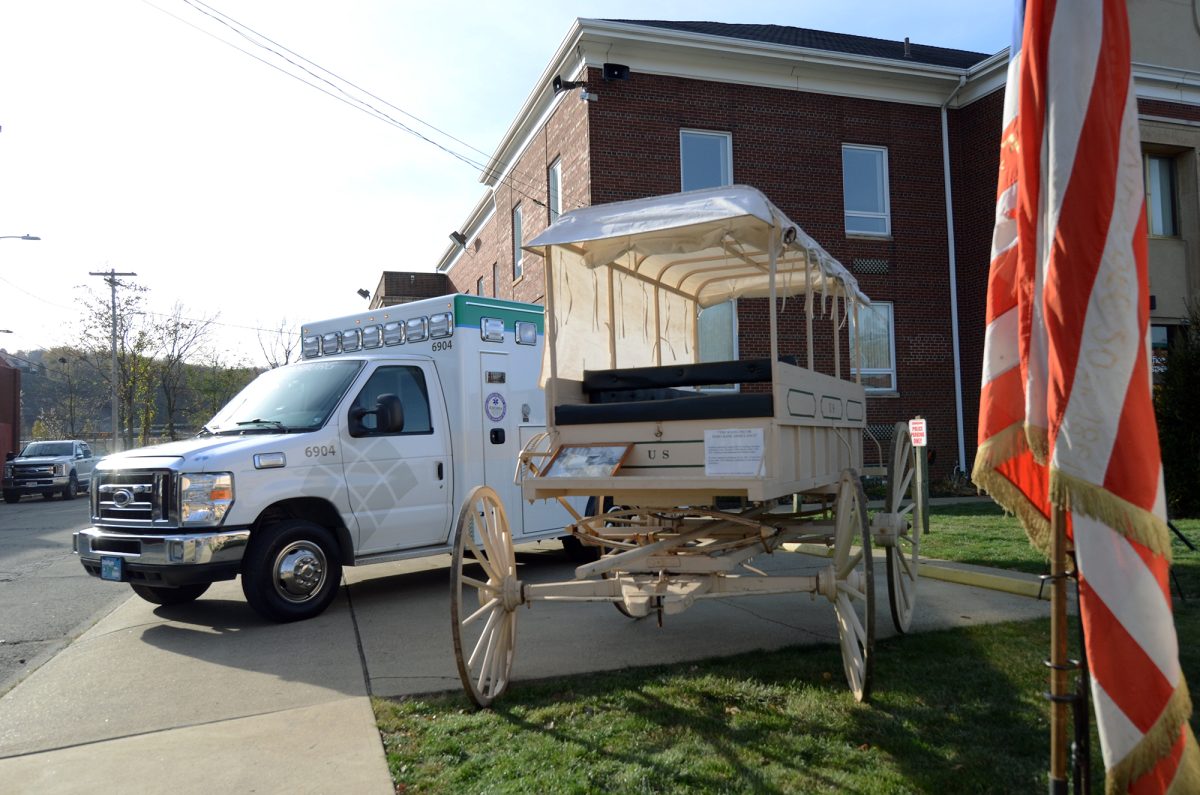
A replica of an original ambulance is pictured next to today’s modern vehicle.
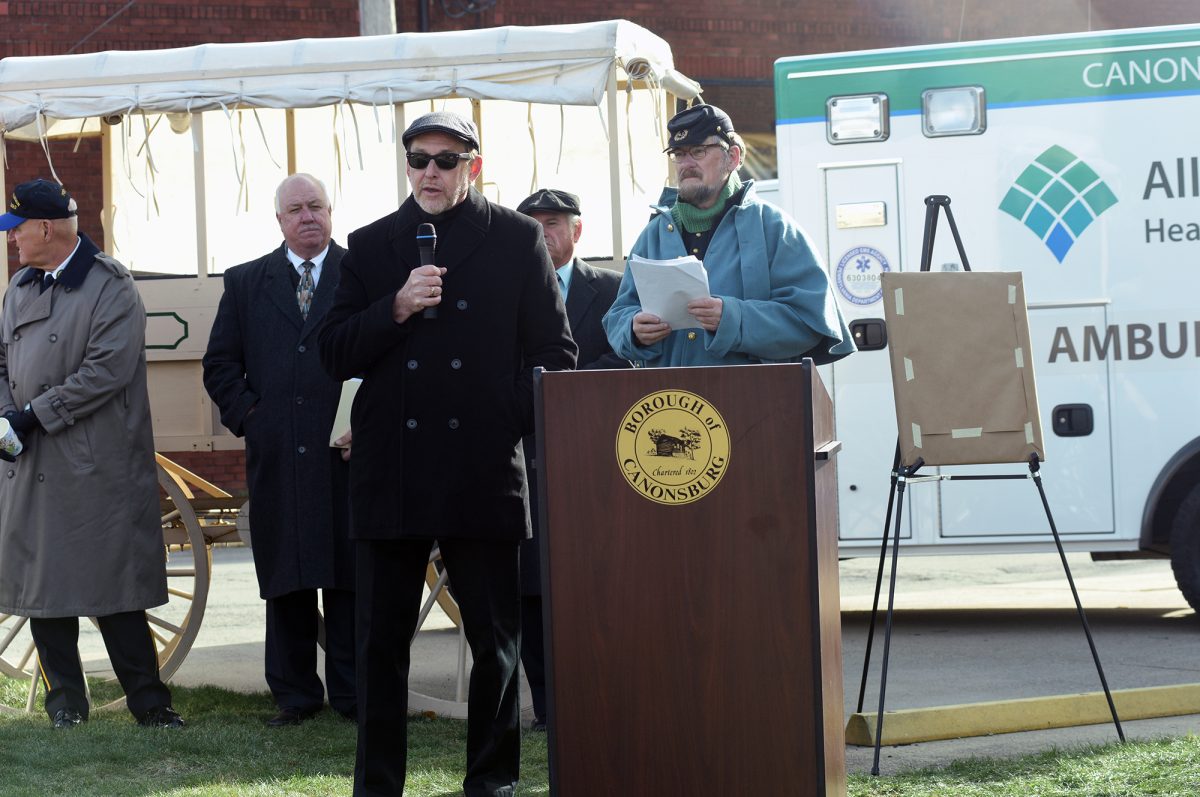
Dr. John C. Knapp, President of Washington and Jefferson College, speaks about the importance of Major Jonathan Letterman, a Civil War doctor born in Canonsburg who attended school at Jefferson College, which later became W&J.

South Strabane Township Supervisor Bracken Burns speaks about Major Jonathan Letterman during a ceremony to dedicate a marker for the medical pioneer who served during the Civil War.
Holly Tonini/Observer-Reporter
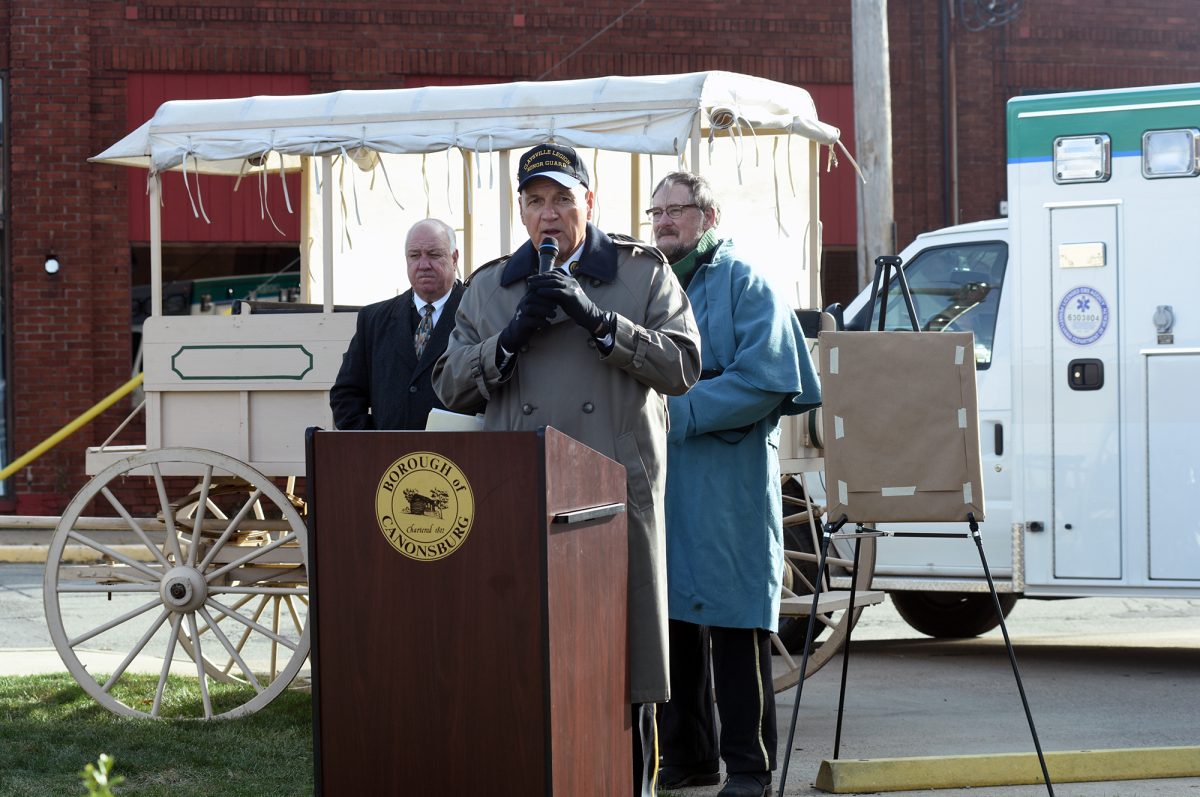
Washington County Commissioner Larry Maggi speaks about Major Jonathan Letterman during a marker dedication ceremony in Canonsburg.
Civil War surgeon and Canonsburg native Dr. Jonathan Letterman, known as “the Father of Battlefield Medicine,” saved the lives of thousands of soldiers during that war by implementing a triage system to treat the wounded.
Many of the techniques Letterman introduced on battlefields at Antietam, Fredericksburg and Gettysburg are still used today.
On a chilly, Saturday Veterans Day morning, the borough of Canonsburg honored its local hero with the unveiling of a memorial marker installed at the corner of the Canonsburg Borough Building on Pike Street, the site of Letterman’s boyhood home.
Ken Turner, a member of the Pennsylvania Historical and Museum Commission, which approved the marker, said in remarks that before Letterman’s innovations, wounded soldiers were often forced to fend for themselves in unsanitary conditions. He described the lasting impacts of Letterman’s contributions to battlefield medicine.
“At Gettysburg, his medical teams cared for tens of thousands of dead, wounded and sick, both blue and gray, both Federal and Confederate, but all Americans. How many more would have died, of course, is unknown, but what is known is that it would have been all the more catastrophic,” said Turner. “Today’s soldiers in Afghanistan have a better of being evacuated, treated, and their lives saved because of this humble servant and doctor from Canonsburg, Pa.”
Letterman, who was medical director of the Army of the Potomac, started the first Ambulance Corps, using two-and four-wheeled carts to transport the wounded.
Throughout the dedication, a reproduction of the original Wheeling Ambulance, co-designed by Letterman, was on display, next to a modern-day ambulance.
Letterman’s system of triage was adopted by U.S. Congress on March 11, 1864.
Rea Andrew Redd, a history professor and director of the library at Waynesburg University who served as Master of Ceremonies, worked with Mayor David Rhome and borough council to honor Letterman with the marker.
Rhome, referring to Letterman as the “Father of First Responders,” acknowledged the courage of first responders and expressed pride in the contributions of Letterman and local first responders.
“One year and one day ago, we lost Officer Scott Bashioum, one of our finest, because he was a first responder. And, because of other first responders, Officer Jimmy Saieva is alive today. So it is with pride and gratitude that we dedicate this memorial to Dr. Jonathan Letterman, the Father of First Responders and one of our own,” Rhome said. “I would like to think that his spirit of service to humanity inspires the work that we do here today.”
Letterman graduated from Jefferson College in Canonsburg. His father, also a physician, practiced medicine from their Canonsburg home.
Letterman earned his medical degree from Jefferson Medical School in Philadelphia and joined the military. After he left the Army in 1864, Letterman moved to San Francisco, where her served as coroner. He died in March 1872 at the age of 47.
Among those participating in the dedication were the Honor Guard from Canonsburg Veterans of Foreign Wars and Ninth Pennsylvania Reserves, Company A; the Canon-McMillan High School Band and local officials, educators and clergy.
Washington County Commissioner Larry Maggi, a veteran of the U.S. Marine Corps, described attending a Veterans Day speech on Friday delivered at Washington High School by Eric McElvenny, a U.S. Mariness captain in Afghanistan who lost a leg after stepping on an improvised explosive device in 2011.
“The process they used to evacuate him from the battlefield is basically the same thing Dr. Letterman started over 150-plus years ago,” said Maggi. “What (Letterman) has done is truly remarkable and it’s great that we’re finally recognizing a great individual from the borough of Canonsburg.”
Note: A traveling exhibit about Dr. Jonathan Letterman on loan from the National Museum of Civil War Medicine, Frederick, Md., is on display at Frank Sarris Library, North Jefferson Ave. and Murdock St., Canonsburg.