

Motorists must try to avoid bite of road gators
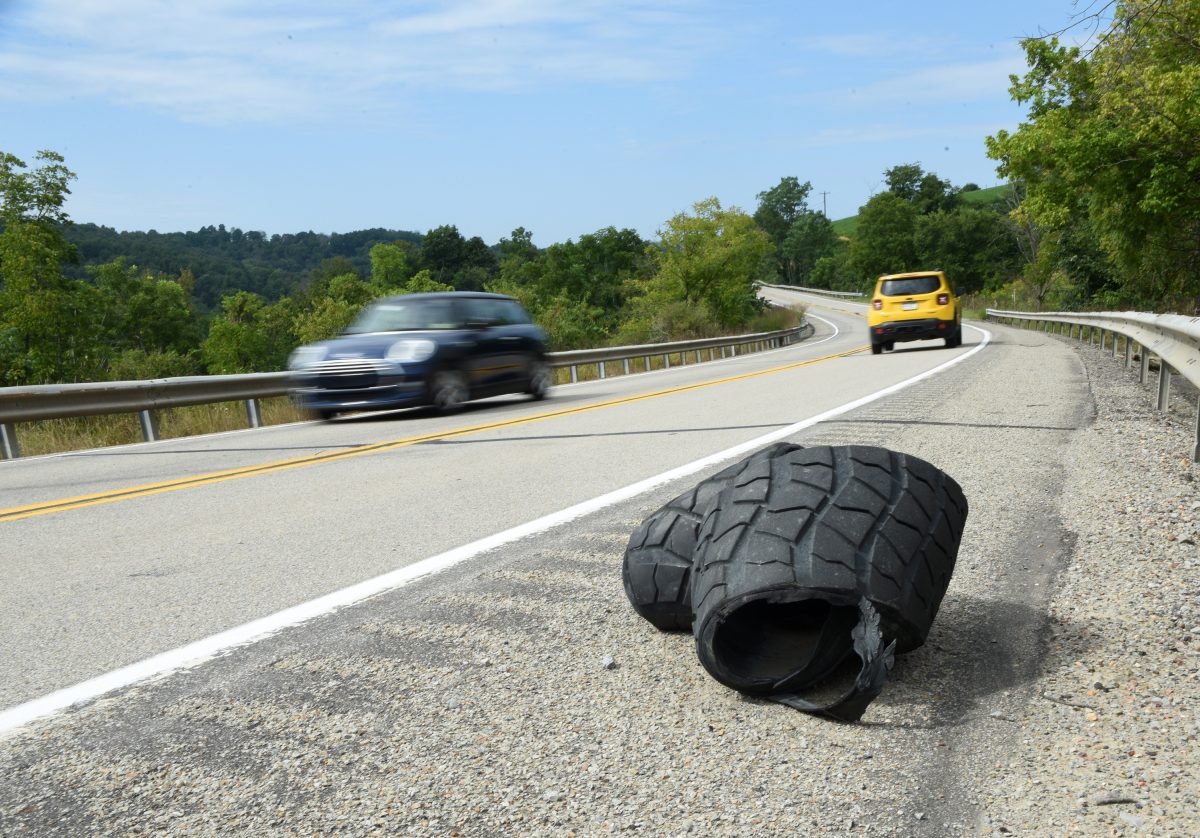
The outer layer from a truck tire lies along Route 40 in Claysville.
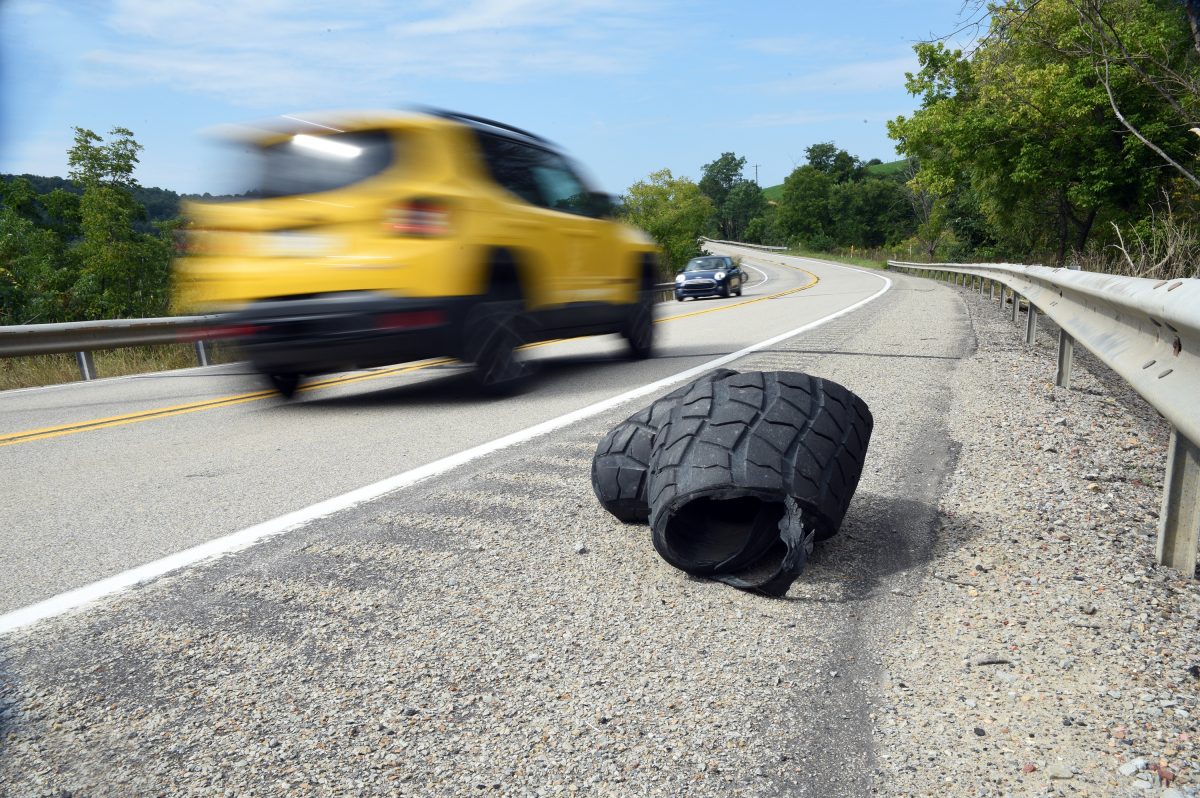
The outer layer from a truck tire lies along Route 40 in Claysville.
They are called “road gators,” and motorists should be wary of their attacks.
Road gators – defined by urbandictionary.com as “bits of truck tires … (that) look like an alligator’s back” – are treads that have broken away from tires, usually on heavy trucks. The treads, according to blog.allstate.com, are steel-reinforced, can be 8 to 10 feet long and weigh up to 70 pounds.
They aren’t commonplace, but they are a bona fide hazard.
These remnants are often strewn across pavement, most often on shoulders of high-speed roads and most frequently during warm-weather months. There are several causes, the most likely being low tire pressure. A study by the National Highway Transportation Safety Administration showed that more than two-thirds of tire failures result from insufficient pressure.
Driving into curbs or over potholes and other hazards also is blamed.
Some believe that recapped, or retreaded, truck tires are an issue, but according to the Allstate blog, recent studies indicate “that up to 70 percent of full-sized road gators come from ‘virgin’ truck tires, while a similar percentage of smaller rubber chunks are from retreads.”
To avoid tread of any size while driving, Allstate advises motorists to “look far ahead and notice what you see. Increasingly larger bits of rubber lying on a freeway may mean a truck tire just shed its tread and a road gator may be in your lane.”
The blog also recommends that a driver approaching a gator reduce speed “radically” before trying an evasive move, saying the NHTSA study shows that swerving to avoid debris at a high speed causes up to 25,000 crashes a year.
Keeping area roads clear of gators and other debris is largely the responsibility of Engineering District 12 of the Pennsylvania Department of Transportation. The Uniontown-based district serves Washington, Greene, Fayette and Westmoreland counties, overseeing a state-maintained network that includes 3,627 road miles and 2,339 bridges.
Each of the four counties has a maintenance department that clears debris from these roads and bridges, and from interstate highways that pass through their respective borders.
Ray Deep, a spokesman in the Uniontown office, said there is no data detailing how much tread is picked up on District 12 roads. “We treat it like any hazard,” he said. “If someone reports a hazard, we assess it, pick it up and get it off the road.”
Adam Smith, manager of PennDOT’s maintenance unit in Washington County, said roadway hazards have taken many forms in his area – which includes Interstates 79 and 70 and heavily traveled Washington Road (Route 19).
“We pick up tire casings and all kinds of debris that fall on interstates,” Smith said. “We’ve had dressers, hay bales, anything you could think of that isn’t properly secured.”
He said his crews make “weekly runs” to check on debris, but respond anytime to calls related to items on a roadway that are crash-related or not.
A road gator, Smith assures, isn’t the only road menace confronting local commuters.
“Any hazard on a roadway,” he cautions, “is potentially fatal.”