

Lawmakers hear testimony on volunteer firefighters’ thinning ranks
Holly Tonini/Observer-Reporter
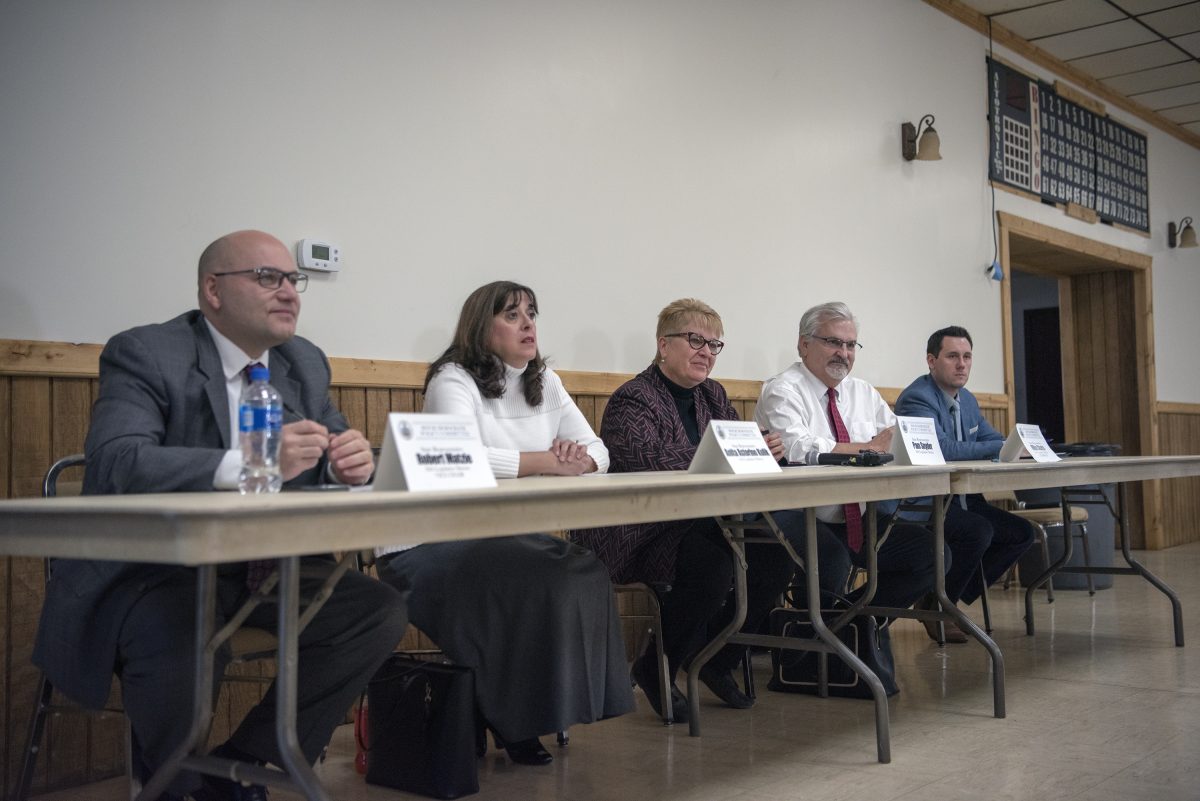
State Representatives Robert Matzie, D-16th District, Anita Astorino Kulik, D-15th District, Pam Snyder, D-50th District, Mike Sturla, D-95th District, and Michael Hillman, Democratic executive director, Veterans Affairs & Emergency Prep. Committee at Pennsylvania House of Representatives, listen as representatives from local volunteer departments and the state fire commission talk about the help they need in recruiting new volunteers.
Holly Tonini/Observer-Reporter
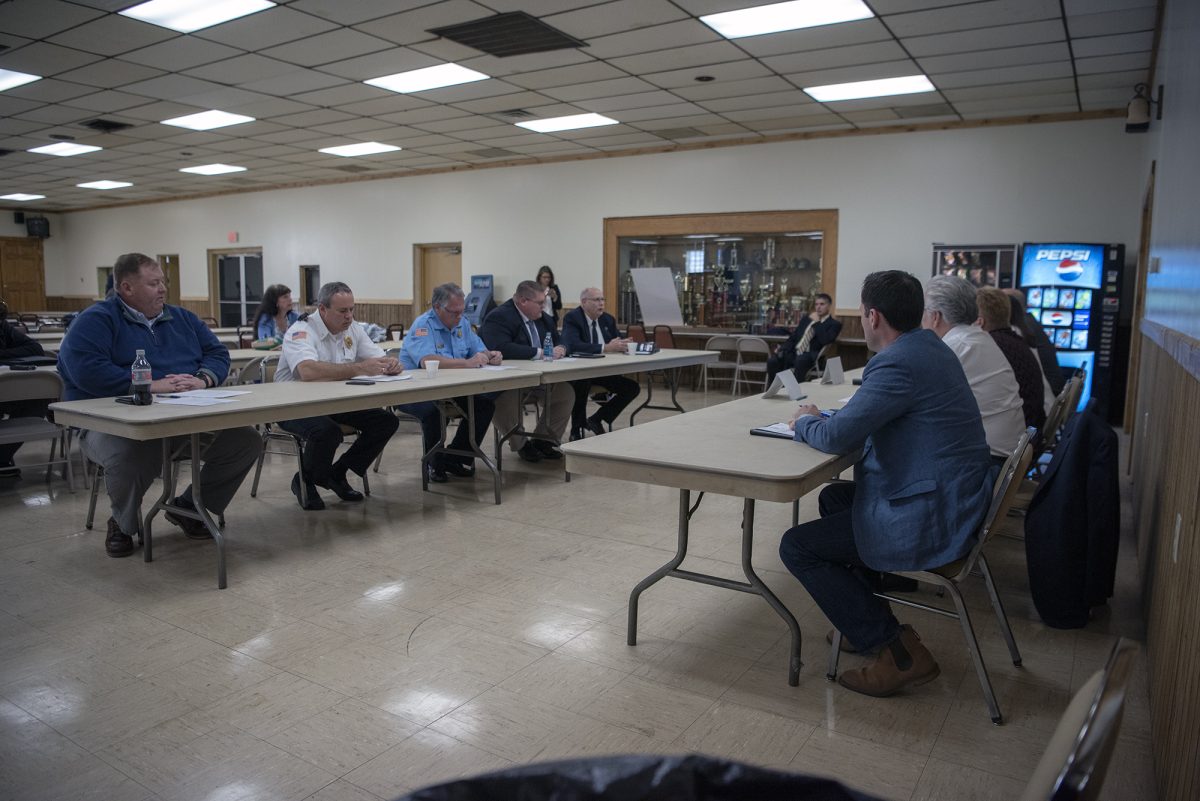
Acting PA State Fire Commissioner Bruce Trego, far right, speaks from a panel of local representatives from volunteer fire companies that includes Scott Dolan, chief of Hiller Volunteer Fire Company; Craig Baily, president of the Carmichaels-Cumberland Township Volunteer Fire Company; Mark Giovanelli, chief of East Bethlehem Volunteer Fire Company, and Jeff Marshall, chief of Waynesburg-Franklin Township Volunteer Fire Company, to state representatives and other officials about the need to attract volunteers into their departments so they can continue to serve their communities.
Holly Tonini/Observer-Reporter
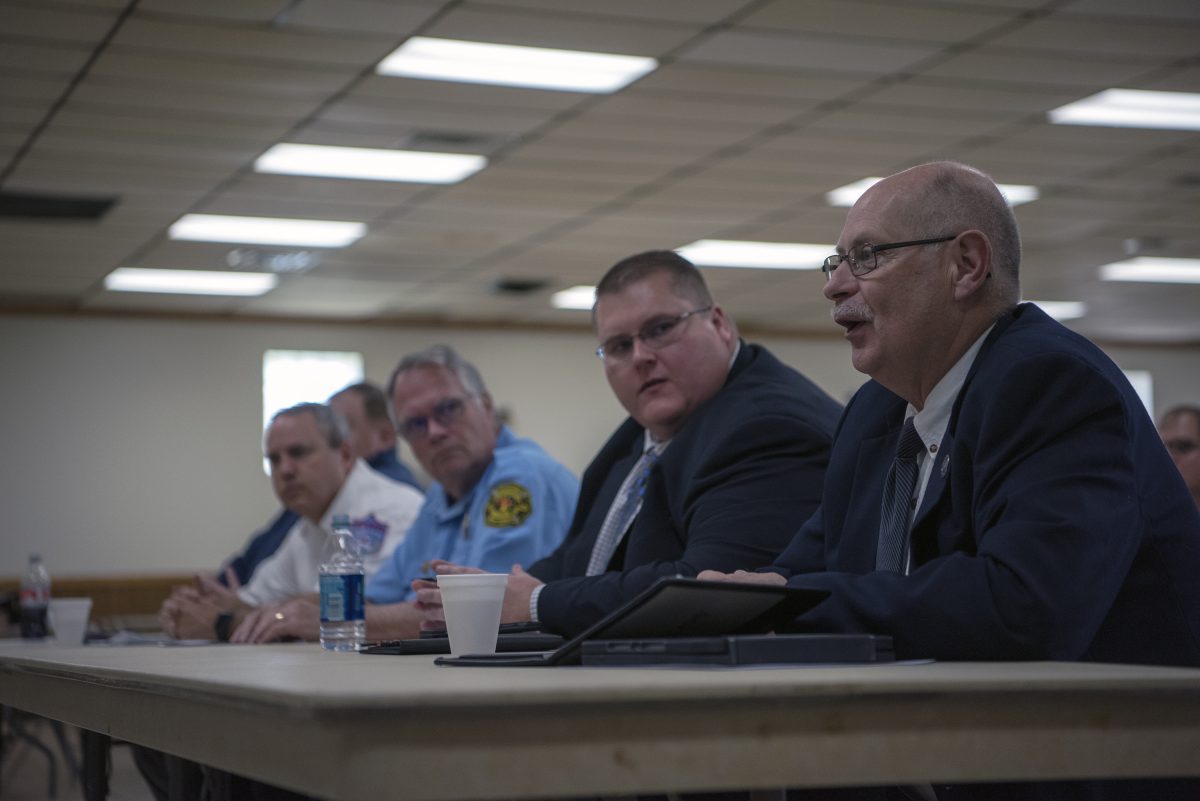
Acting PA State Fire Commissioner Bruce Trego, right, speaks alongside a panel of local representatives from volunteer fire companies that include Scott Dolan, Chief of Hiller Volunteer Fire Company; Craig Baily, President of Carmichaels-Cumberland Township Volunteer Fire Company; Mark Giocanelli, Chief of East Bethlehem Volunteer Fire Company and Jeff Marshall, Chief of Waynesburg-Franklin Township Volunteer Fire Company.
RICHEYVILLE – There were 10 people in the Hiller Volunteer Fire Company’s junior firefighting program when Scott Dolan joined in 1991. Now, he said, there are two.
“That number continues to dwindle,” Dolan, now chief of the company in Luzerne Township, Fayette County, told Democratic state lawmakers Thursday. “There’s no incentive for individuals to become a firefighter.”
Several of Dolan’s peers echoed his observations during the hearing when they addressed members of the House Democratic Policy Committee at Richeyville fire hall in Centerville Borough.
The proceeding, hosted by Rep. Pam Snyder, D-Jefferson, was dedicated to the endangered status of the volunteers who staff the overwhelming majority of Pennsylvania’s 1,800 departments.
Several of those present cited statistics which show a decline from the 300,000 volunteer firefighters in the 1970s to about 38,000 now, according to testimony.
Chief Jeff Marshall of Waynesburg-Franklin Township Volunteer Fire Company pointed to changes in the dynamics of the workforce as one reason for the dwindling membership in the local organizations.
“They’re not able to stay in their home communities” like decades ago, when many of the men in the area worked in coal mines, Marshall said. “They have to go to Pittsburgh, South Hills, somewhere else to work.”
Even with that decline, statistics maintained by the Federal Emergency Management Agency show 97 percent of Pennsylvania fire departments were mostly or fully run by volunteers.
Volunteer fire departments save an estimated $6 billion in public funds every year, according to a 2002 study by the state Emergency Management Agency. Some of the speakers expressed a desire to cut down on the time the volunteers spend on fundraising that many small departments rely on to pay the bills.
“I would really, really love to work closely with your office in the next legislative session to try to find ways to help these folks,” Snyder told acting state fire commissioner Bruce Trego, one of those who testified. “I would like to see my friends be able to stay home Saturday night with their families instead of having to be at a cash bash” or some other fundraiser for local departments.
Fire officials who testified – who also included Craig Baily, president of Carmichaels-Cumberland Township Volunteer Fire Company, and Mark Giovanelli, chief of East Bethlehem Township Volunteer Fire Company – also offered suggestions for ways to provide incentives they said could help retain and recruit members.
“We’re not doing it to get something from it,” Giovanelli said. “But … the people who go out on garbage trucks don’t have to come up with the money to buy a garbage truck. We do.”
Giovanelli proposed offering a state-funded benefit – $100 per “every solid five years” of service per month upon retirement – similar to a guaranteed pension.
“That’s my incentive to train, my incentive to contribute and my incentive to stay,” Giovanelli said.