

New board takes over at Fairview Cemetery
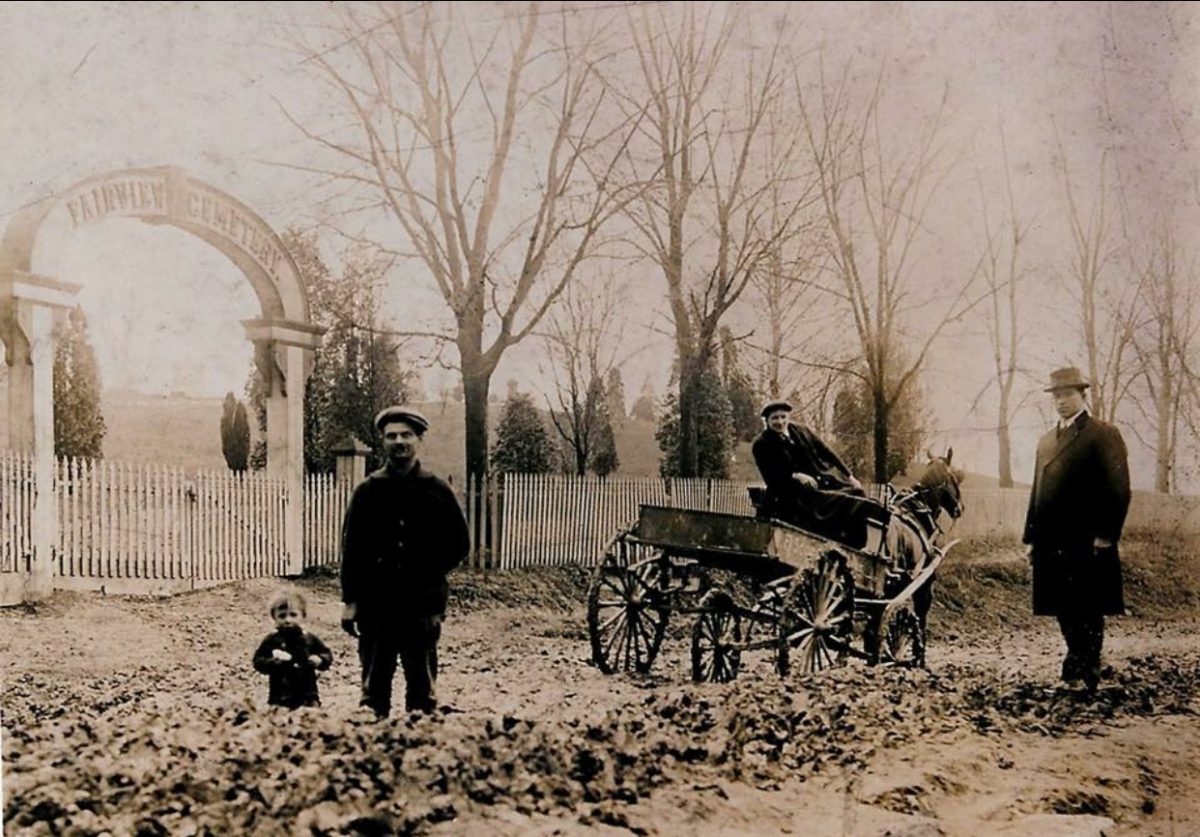
Courtesy of Fort Vance Historical Society
A photo from the early 1900s taken in front of the Fairview Cemetery entrance
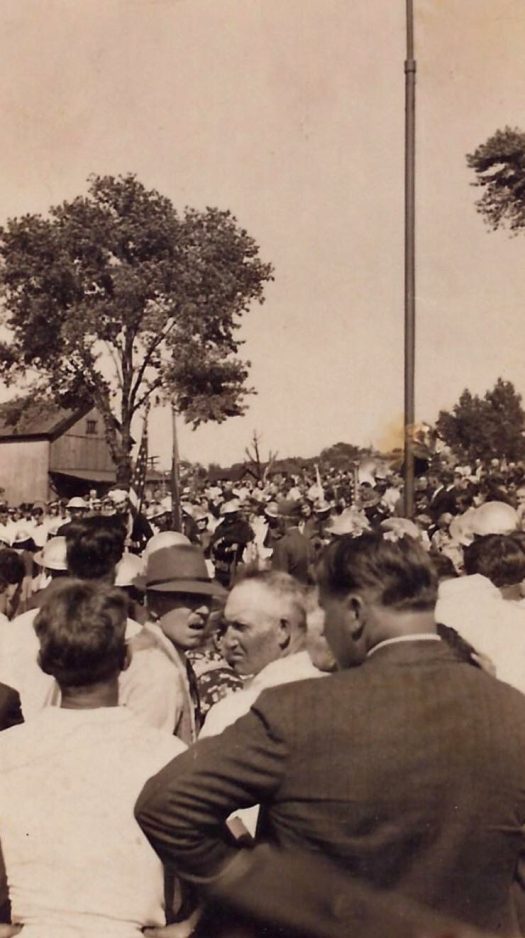
Courtesy of Fort Vance Historical Society
An event, most likely related to a Memorial Day-type service, in the early to mid-1900s at Fairview Cemetery in Smith Township
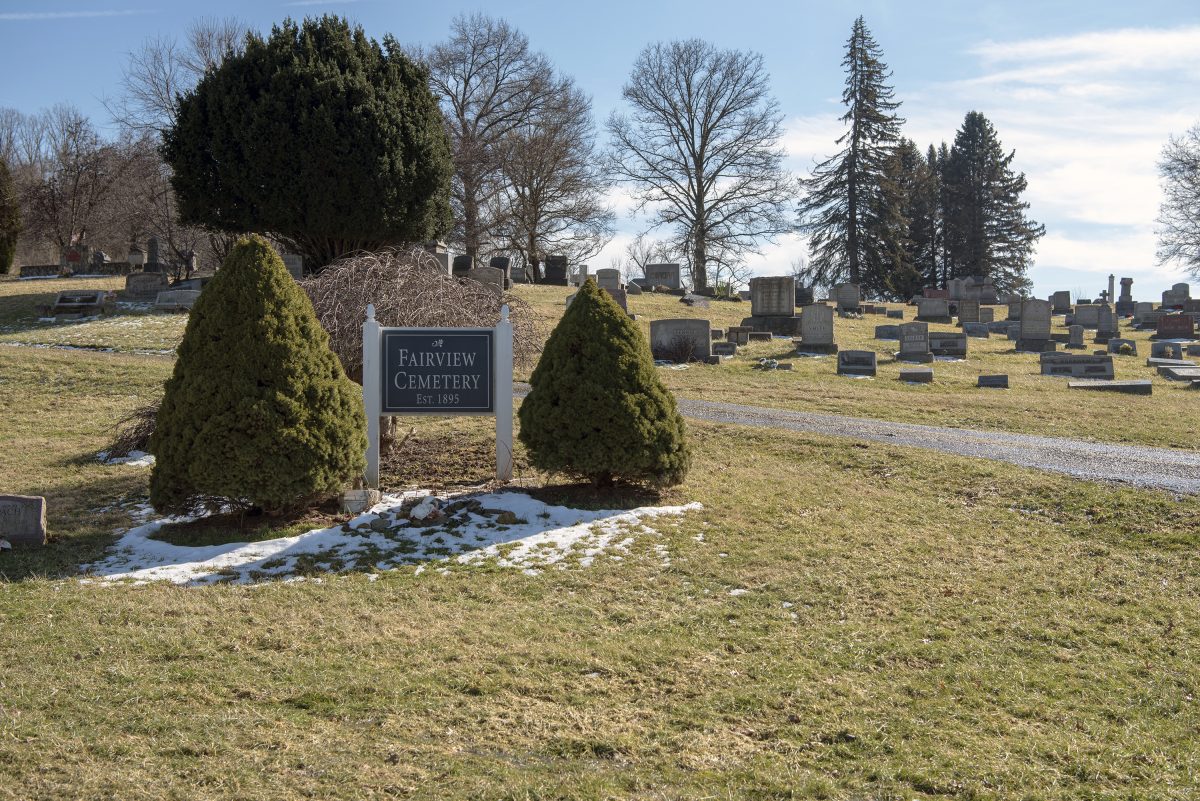
Holly Tonini/Observer-Reporter
The current entrance to Fairview Cemetery off Ostop Road in Smith Township
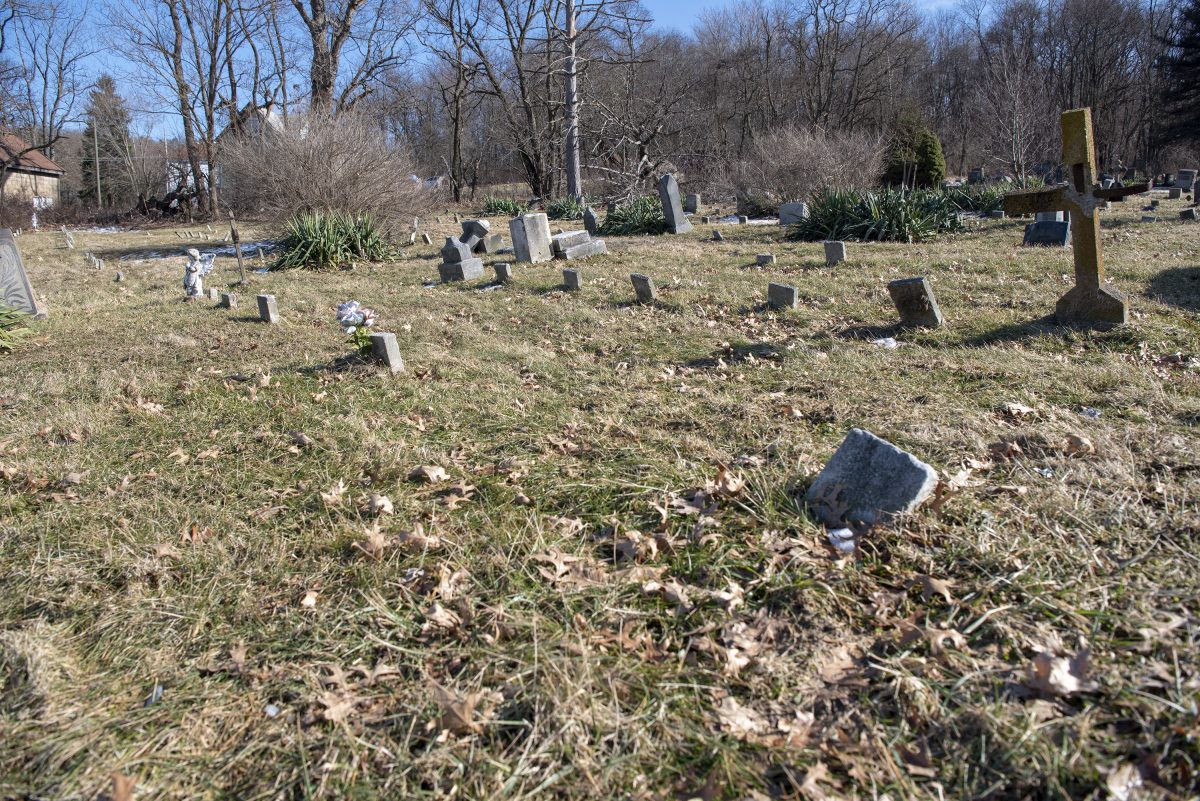
Holly Tonini/Observer-Reporter
The children’s section of Fairview Cemetery in Smith Township
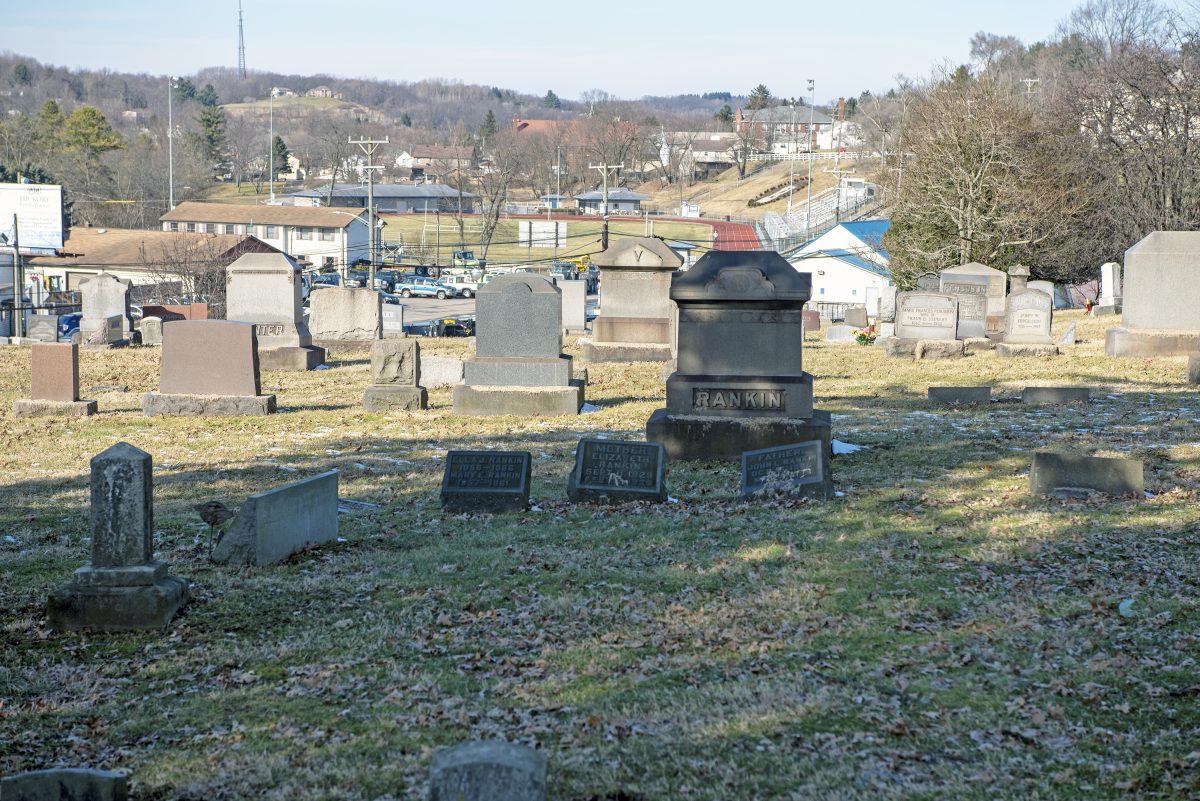
Holly Tonini/Observer-Reporter
Fairview Cemetery was given its name because it looked over the grounds of the Union Agricultural Fair, according to the Fort Vance Historical Society. Today, it overlooks the football stadium and track for Burgettstown High School.
It’s funeral director Charles Dougherty’s job to make sure people’s remains get to their graves. But he recently took on some additional obligations when he stepped up to lead the volunteer group that cares for Fairview Cemetery, just outside Burgettstown.
“We owe it to the deceased that are buried there to continue to maintain a dignified and safe place for the generation of ancestors that are interred there,” said Dougherty, who plies his trade at Lee & Martin Funeral Home in the borough. “For the survivors, their relatives and the community as a whole to have a place to be able to go to, to mourn and pay their respects.”
Dougherty, 41, is president of the Fairview Cemetery Association board, which was reformed in September following the retirement of his predecessor last year. There are only about 20 graves left to sell. The money from grave openings is unsteady.
“The biggest thing is, some of these bigger cemeteries had a perpetual care fund set up over the years,” Dougherty said. “We did have that, but we’re looking at close to $6,000 to $8,000 a year, just in grass cutting.”
Gianfrancesco Lawn Care, a local company, cuts the grass at cost.
Dougherty and Garry Reynolds, who also recently joined the board, spoke to Smith Township supervisors last month to request a donation. They told officials a typical year has just three or four grave openings, each bringing in only about $300 in profit.
They didn’t get a commitment from officials, who prepare budgets near the end of the year.
“We’ll consider it, we’ll look into it,” supervisors Chairman Tom Schilinski told the duo.
He also said officials want to avoid taking the cemetery over, which state law would require the township to do if the graveyard were to be abandoned.
“They had trouble in a couple other places (where) they took that over, it’s actually running their budget dry,” Schilinski said.
Reynolds and Dougherty said they’re trying to avoid that outcome.
Fairview was incorporated in 1895, but probably started even earlier. The nondenominational cemetery, which stretches over about 7 1/4 acres next to Route 18 in Smith Township, was “probably the predominant cemetery in Burgettstown” for the first half of the 20th century, Dougherty said. Now, it relies on committed volunteers to remain in operation.
Dougherty estimates there are 3,000 people buried there, including at least 166 military veterans. One section contains the remains of some 50 locals who died in the Spanish flu pandemic of 1918, when the virus hitchhiked on World War I troop movements to kill more people than any manmade biological weapon.
The graveyard gets its name from the fairgrounds that used to sit below the property on what’s now a football field.
“The people at the fair could see the cemetery, and vice versa,” said Pam Church, who was president of the cemetery association until she retired last year.
“My dad and mom, grandparents, cousins, aunts and uncles – pretty much my whole family on both sides are buried up there,” said Church, 64. “A lot of my family members own lots up there that are still living.”
Her father, Edward Slopek, had started working for the cemetery when he was 16. He was in his early 40s when the last living board member handed the responsibility for the place over to him.
While working a full-time job, her father managed the cemetery for decades, taking a small salary to cut grass, dig graves and install the footers for headstones. His wife, Ruth, received $50 a year to keep the books.
Church took over as a volunteer following Edward’s death in 1995. Ruth had been dead since 1990.
She stayed in that unpaid role for 23 years outside of a regular job. Like her parents – who’d turned the eight-foot-wide “streets” between sections of headstones into more graves – Church had to make the most of finite space, converting some of the dirt road through the cemetery into plots.
“The other cemeteries around us still have a lot more land to sell,” Church said. “We’re landlocked. That’s where we were running into a problem.”
Dougherty said he and the rest of the board – Reynolds, John Nemeth and Mike Krynak -all work full time. Part of their new role is to field calls and emails from genealogy researchers who’re looking for graves.
“That takes up a good portion of time, trying to research where these people are buried,” Dougherty said.
Dougherty said the records of Lee & Martin, which was founded in 1875, help fill in the gaps in the cemetery’s own documents.
“That’s why Pam Church and I always worked so good together, because if she didn’t have the record, I would,” Dougherty said.