

Looking Back: The flood of 1888
Flood of 1888 one
Photo courtesy of Washington County Historical Society
Courtesy of Washington County Historical Society
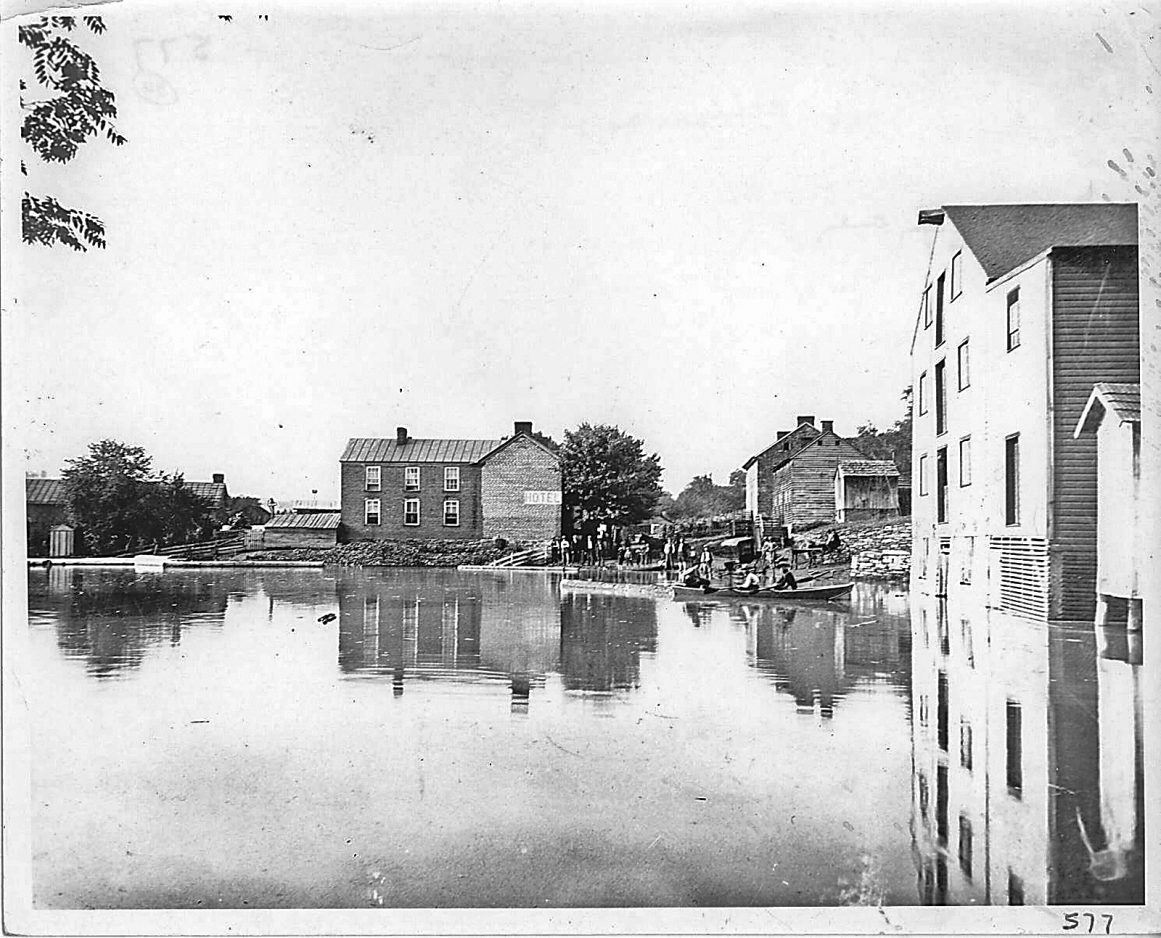
Fredericktown during the 1888 flood
Flood of 1888 two
Courtesy of Washington County Historical Society
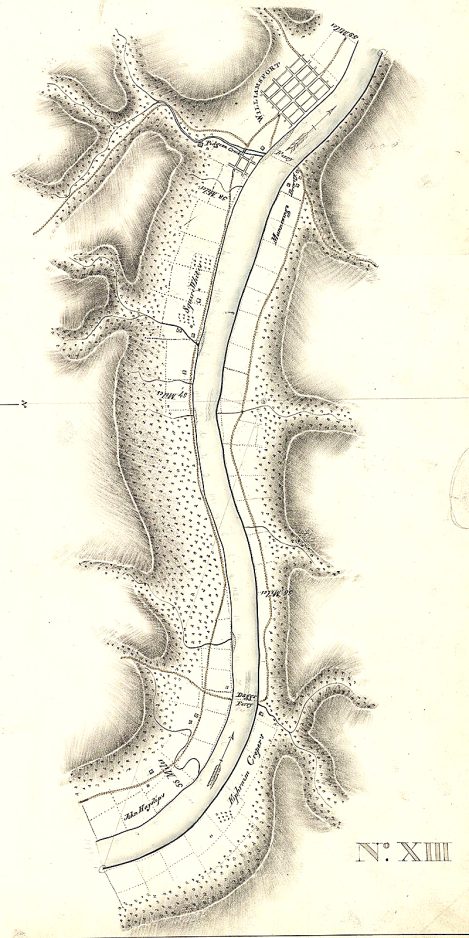
This map shows Williamsport (Monongahela), with Daggs Ferry Run to the south. It was the site of Moses Colvin’s death.
Courtesy of Washington County Historical Society
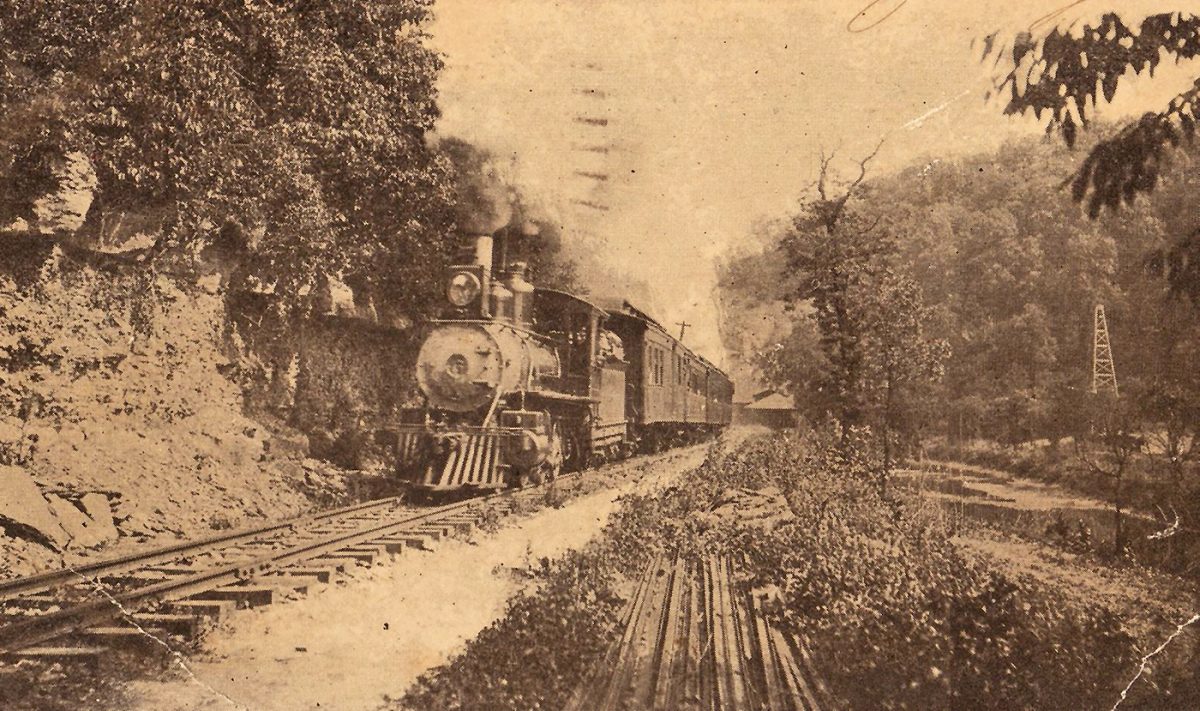
A train on the Waynesburg & Washington Line, just outside Waynesburg
The rain began to fall late in the evening of Aug. 22, 1888. In Monongahela, Moses Colvin was loading his wagon with plums that he planned to take to Webster the following day for sale. The last train of the day on the Waynesburg & Washington Railroad was leaving Waynesburg for Washington. Earlier that day, in Lone Pine, Solomon Bayne had just finished repairing fence that was damaged in the rains of past weeks. Bayne’s neighbor, Silas Crispin, was working in his new stable hoping to finish it by week’s end. There had been reports of a significant amount of rain coming to Southwestern Pennsylvania and flooding was expected, but no one believed when the Daily Republican in Monongahela claimed, “this could be the worse flood ever seen.” So people went about their business on Monday and thought little of the rain that fell that evening.
When he woke the next morning, Colvin saw the river rising in Monongahela, but decided there was little reason to delay his journey to Webster. He had plums to be delivered and would make sure they were. In Lone Pine, Crispin rose early and made his way to the dry interior of his new stable to continue the work on the building. Trains on the Waynesburg & Washington, Chartiers, and B&O Lines left their stations on time heading to their predetermined destinations. For the most part, people went about their day and gave the falling rain little thought. But as morning turned to afternoon, the light rain became a downpour and soon gained the full attention of the region’s residents. It came straight down, falling in sheets. Hail the size of quarters, damaging buildings and sending animals to seek cover, was reported in southern Greene County. While the hail was isolated to a small area, torrential rains fell throughout the region. Streams and creeks were cresting, and the Mon River was rising.
By early afternoon, Colvin began his return trip from Webster. With him was Evan Harris, who had come along to help unload the plums. By 5 o’clock they had reached Daggs’ Ferry Run – a river crossing just south of Monongahela. Seeing the rising waters, Harris warned that the crossing was too dangerous. Colvin wanted to get home to his children, and giving the horse a tap with the whip, urged him forward. The following day, in the The Daily Republican, it was reported, “When about one-third of the way across, the horse plunged into a washout, and broke loose from the buggy, pulling Colvin over the dashboard into the water; he held on to the lines, however, but the current swept both man and beast toward the river. Finally the lines broke, and the rushing waters swept Colvin with his back to the bank, when he was seen to fall forward, then disappear never to rise again. Harris, after the horse broke loose, climbed out of the back end of the buggy and reached shore in safety.”
A gentleman by the name of Milby witnessed the tragedy from the banks of the river, and had attempted to reach Colvin when he washed near the shore, but was unable to reach him in time. Shortly after failing to reach Colvin, Milby saw Colvin’s horse struggle ashore and find its way to safety. There were hopes that the body of Colvin would be recovered in the following days, but unfortunately, that never occurred.
At 5 o’clock in Lone Pine, water was reported in all the buildings in the lowland. On Main Street the waters were measured at over 10 feet deep. As the creek rose, the first structure to go was the bridge, which washed down stream into a smokehouse owned by B. Franklin Bayne and J.D. Huston. Soon after, Crispin’s new stable gave way to the torrents of water. Washing away with it was nearly 700 feet of fencing. The waters were so fierce that whole trees were being uprooted. A large portion of Solomon Bayne’s fencing, which had just been repaired the previous day, was taken out by the uprooted trees as they were carried south by the waters. By the end of the day, all of Bayne’s fences were gone. It was reported in the Aug. 23 edition of the Washington Observer “that four county bridges” were seen passing through the Main Street.
In Washington, Catfish Creek rose early in the day, causing the town to be inaccessible from the south. At the Hazel Glass works, the water was two feet deep. As the waters rose, the fires in the furnaces were extinguished, putting a stop to work and causing an estimated $3,000 worth of damage. Several women became stranded in the homes surrounding the glassworks and it became necessary for the men working in the factory to help carry them to safety. At the Strean building on South Main Street, more than 4,000 gallons of water were pumped out of the basement. Almost every house and building in the low-lying areas of Washington would be flooded. Other areas of the town suffered damage as well. The old fairgrounds were a large pond, and East Beau street was completely washed out. It would take weeks to effect necessary repairs.
The rain also brought rail traffic to a halt. The Aug. 23 edition of the Observer summed up the damages to the rail lines around the region.
“The three evening trains on the Chartiers Railway are laid up in Ewing’s, Canonsburg and Bridgeville, and from 10 to 15 bridges on the line are reported gone and the track washed out in places. On the B.&O. no trains passed through after Tuesday noon; a large number of bridges are reported gone and the temporary track on the Wheeling end washed away. The stone-arch bridge west of town, over Chartiers creek, is gone and a large part of the fill washed away, showing the volume of water to have been the greatest since the road was built. On the W.&W. three trains are reported laid up between West Union and Washington and a mile of the track wash(ed) away near Hackney’s.”
Throughout Washington and Greene counties buildings were flooded, roads were washed out, bridges were destroyed, and personal belongings were taken down river. The Observer would call the flood of 1888 “The Biggest Yet.” In total it was estimated that the flood caused more than $150,000 in damages. It would take more than a year before all the fences were rebuilt, roads were repaired, bridges were constructed and other damages fixed. Things would return to normal with time, but people who lived through it would always tell stories of where they were on Aug. 22, 1888, when the flood called “the biggest yet” hit Southwestern Pennsylvania.
Clay Kilgore is executive director of the Washington County Historical Society.