

Despite papal restrictions, Latin Mass retains adherents
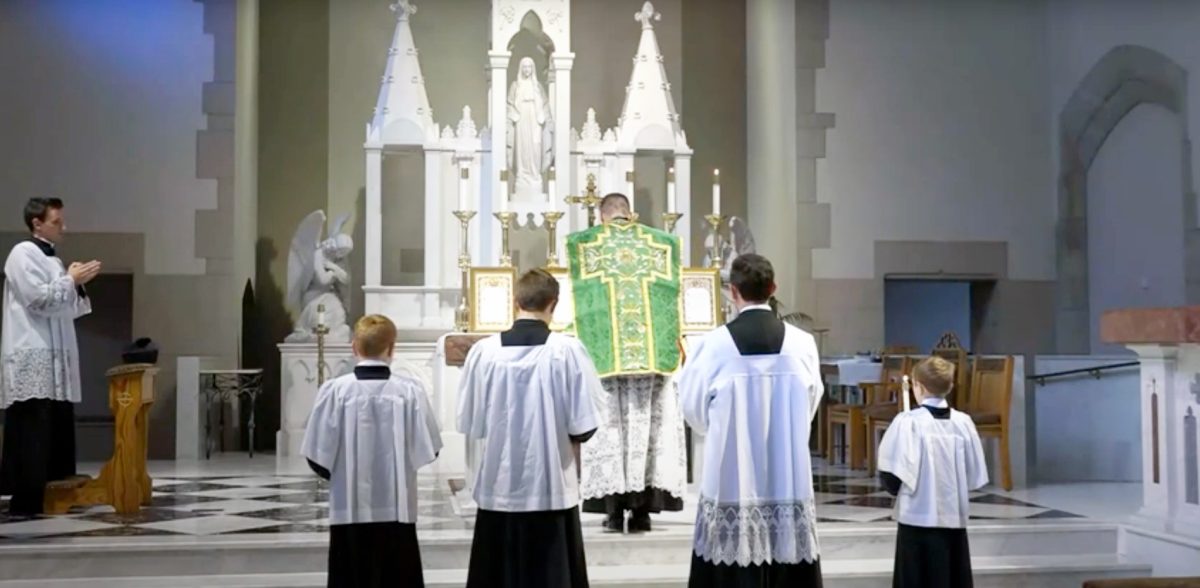
Courtesy of Immaculate Conception Church
The Rev. Adam Potter leads the Latin Mass at Immaculate Conception Church in Washington in September.
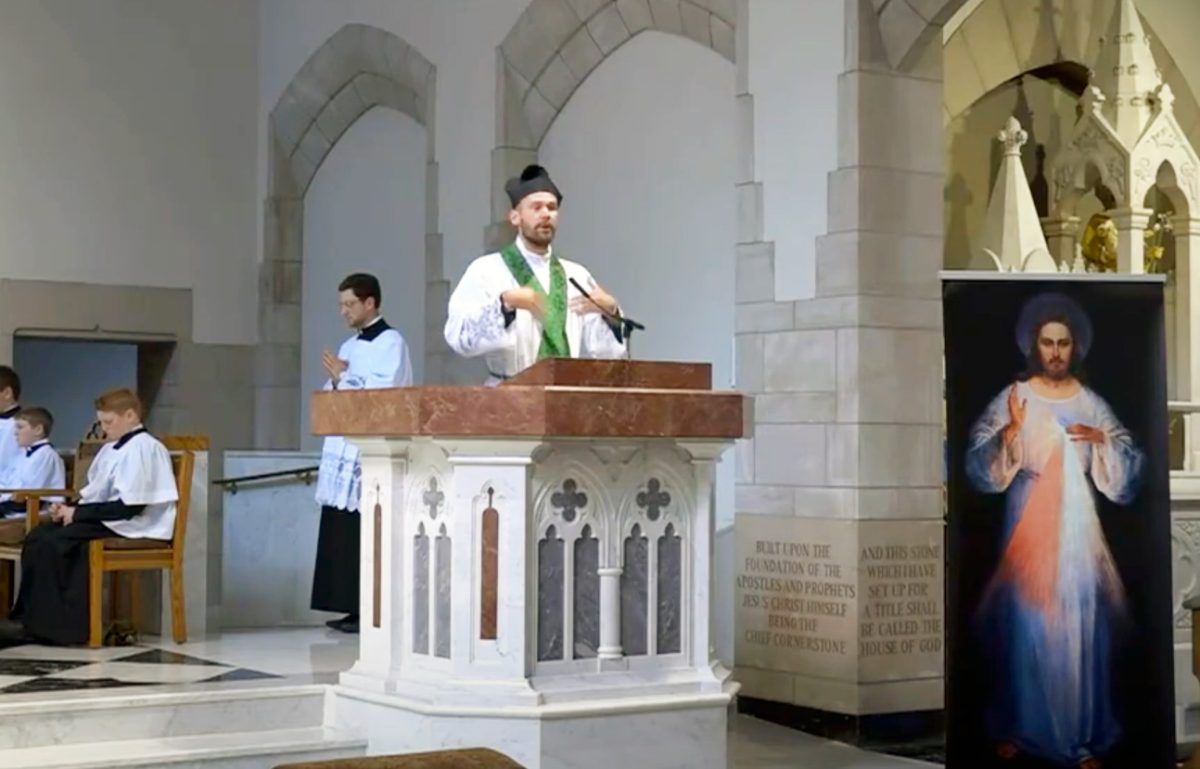
Courtesy of Immaculate Conception Church
The Rev. Adam Potter delivers a homily at the Latin Mass service at Immaculate Conception Church in September. Homilies are delivered in English.
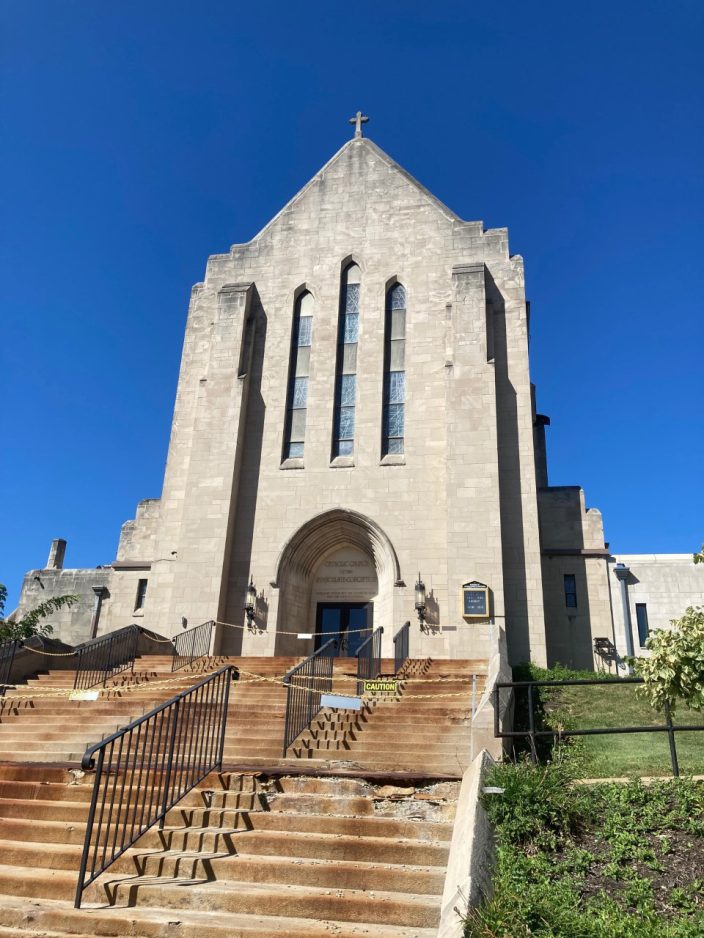
Brad Hundt/Observer-Reporter
Immaculate Conception Church in Washington is one of the few Catholic churches in the Pittsburgh region that offers a Latin Mass.
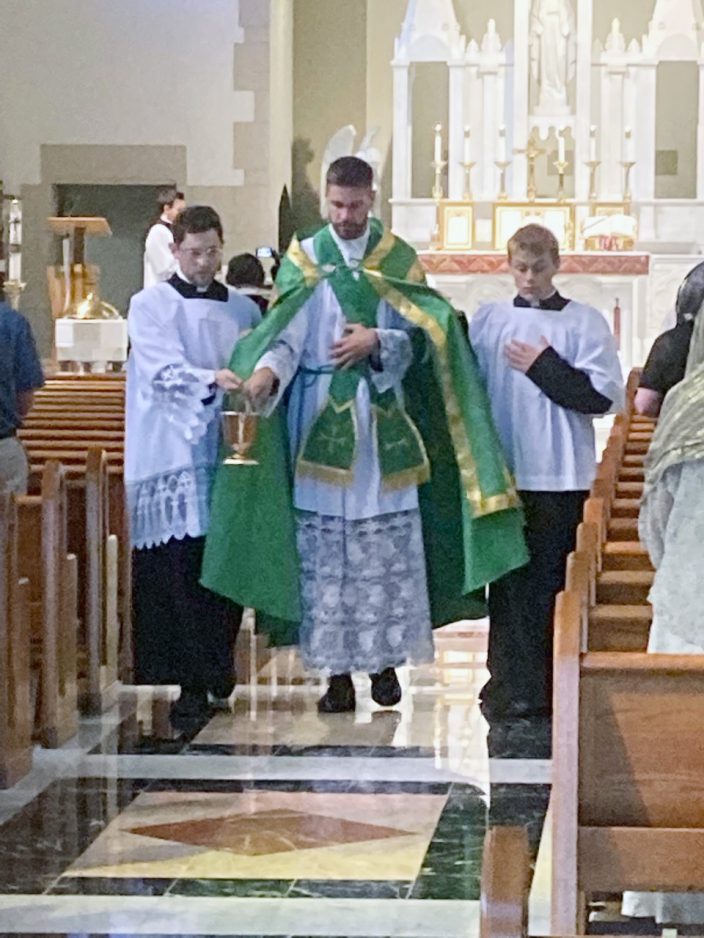
Brad Hundt/Observer-Reporter
The Rev. Adam Potter walks down the aisle at Immaculate Conception Church at the start of a recent Latin Mass.
Despite the earthly temptations of sunshine and a Pittsburgh Steelers game on TV, dedicated parishioners filed into Immaculate Conception Church in Washington on a recent Sunday afternoon, their minds devoutly focused on more spiritual pursuits.
Around 60 people were scattered throughout the pews, including several families with young children. The dress code has become much more casual at services in many denominations in recent years, but several men in the congregation were decked in buttoned-up suits with ties firmly knotted, and many of the women and girls accompanying them wore dresses that came to a stop just above their ankles. Most of the girls and women were also sporting veils on their heads, which were once a standard accessory for Catholic rites but have fallen out of fashion over the last 50 years.
Once the Mass began, moving at its own stately rhythm, sounds that have their roots in centuries long past echoed through the sanctuary:
”Protector noster, aspice, Deus, et respice in faciem Christi tui: quia melior est dies una in atriis tuis super millia. Quam dilecta tabernacula tua. Domine virtutem! Concupiscit, et deficit anima mea in atria Domini. Gloria Patri et Filio et Spiritui Sancto…”
It was the Latin Mass, which is offered at Immaculate Conception Church on the last Sunday of every month. To its adherents, the Latin Mass is the truest and best way to take in the Roman Catholic liturgy, its roots extending to a time before Shakespeare wrote a play or Rembrandt ran a paintbrush across a canvas. They say it emphasizes the sacred nature of the service and unifies Catholics through a common vernacular. To its opponents, the Latin Mass is a fusty, reactionary relic of a Catholic Church that long resisted modernization, and distances parishioners from the message of the liturgy since it’s being expressed in a language that is no longer taught in many schools or widely used.
And the centuries-old ritual has become a fresh source of controversy within the Catholic Church.
This summer, Pope Francis placed fresh limits on when the Latin Mass can be used, arguing that it had been exploited “to widen gaps, reinforce the divergences, and encourage disagreements that injure the Church, block her path, and expose her to the peril of division.” The decision by Pope Francis reversed a policy by his more conservative predecessor, Pope Benedict XVI, which allowed the Latin Mass to be used more widely. Benedict explained at the time, “What was sacred for prior generations remains sacred and great for us as well, and cannot be suddenly prohibited or even judged harmful.”
Following Francis’ new law, the Diocese of Pittsburgh announced that it would not change how it approaches the Latin Mass. One parish within the diocese, the Most Precious Blood of Jesus Parish, offers the Latin Mass daily. Immaculate Conception Church is one of two other churches in the diocese that offers the Latin Mass, along with St. Titus Church in Aliquippa, which has it on the first Friday of the month at 7 p.m. and third Sunday of the month at 7 p.m.
In a memo released in August, Bishop David Zubik explained that the diocese needed to follow the wishes of Pope Francis, while also being mindful of parishioners who prefer the Latin Mass. He said continuing the Latin Mass at Immaculate Conception and St. Titus churches was a reflection of the fact that “these locations have both had a stable community of the faithful in existence for a significant period of time who have had the opportunity to continue to worship the Lord according to the older form of the Mass.” The memo states, though, that only the Eucharist is allowed to be celebrated in Latin at the two churches, and no other sacraments. Only the Most Precious Blood of Jesus Parish is allowed to use Latin in baptisms, weddings, confessions, and the anointing of the sick.
Zubik also says in the memo, directed at priests within the diocese, “As faithful sons of the Church, it is clear that we need to be obedient to the wishes of the Holy Father and see to it that the new (edict) is implemented in a manner in keeping with his desires. At the same time, care and concern must be shown for our brothers and sisters in Christ who are spiritually nurtured by the older form of the liturgy and who may have been experiencing some spiritual and emotional difficulties in recent days.”
Within the Diocese of Greensburg, Holy Family Catholic Church in Latrobe offers the Latin Mass every Sunday at 1 p.m. On the church’s website, the Latin Mass is described as a ritual that “allows us to pray as our forefathers have prayed, forming a continuum of prayer from generation to generation.”
Isaac Bruce, a 19-year-old Butler County resident, has attended the Latin Mass at Immaculate Conception Church, as well as those within the Most Precious Blood of Jesus Parish. Though raised in a family he describes as “nominally Catholic,” he did not attend a Latin Mass service until two years ago, and was immediately taken with it.
“The liturgy is the most reverent to God, and it helps keep your mind on God more than any other service,” Bruce said, adding that he could “fill a book” about why he likes the Latin Mass. Bruce is hoping to become a pilot and is looking at flight schools based on how close they are to churches that offer the Latin Mass.
Connie Szafraniec of Chartiers Township is also an adherent of the Latin Mass. A Protestant convert to Catholicism, she and her family attend Mass at Most Precious Blood of Jesus Parish and Immaculate Conception when they have Latin Mass.
Her perception of the Latin Mass? “It’s an amazing miracle,” she said.