

Bentworth Middle School aviation program soaring to new heights
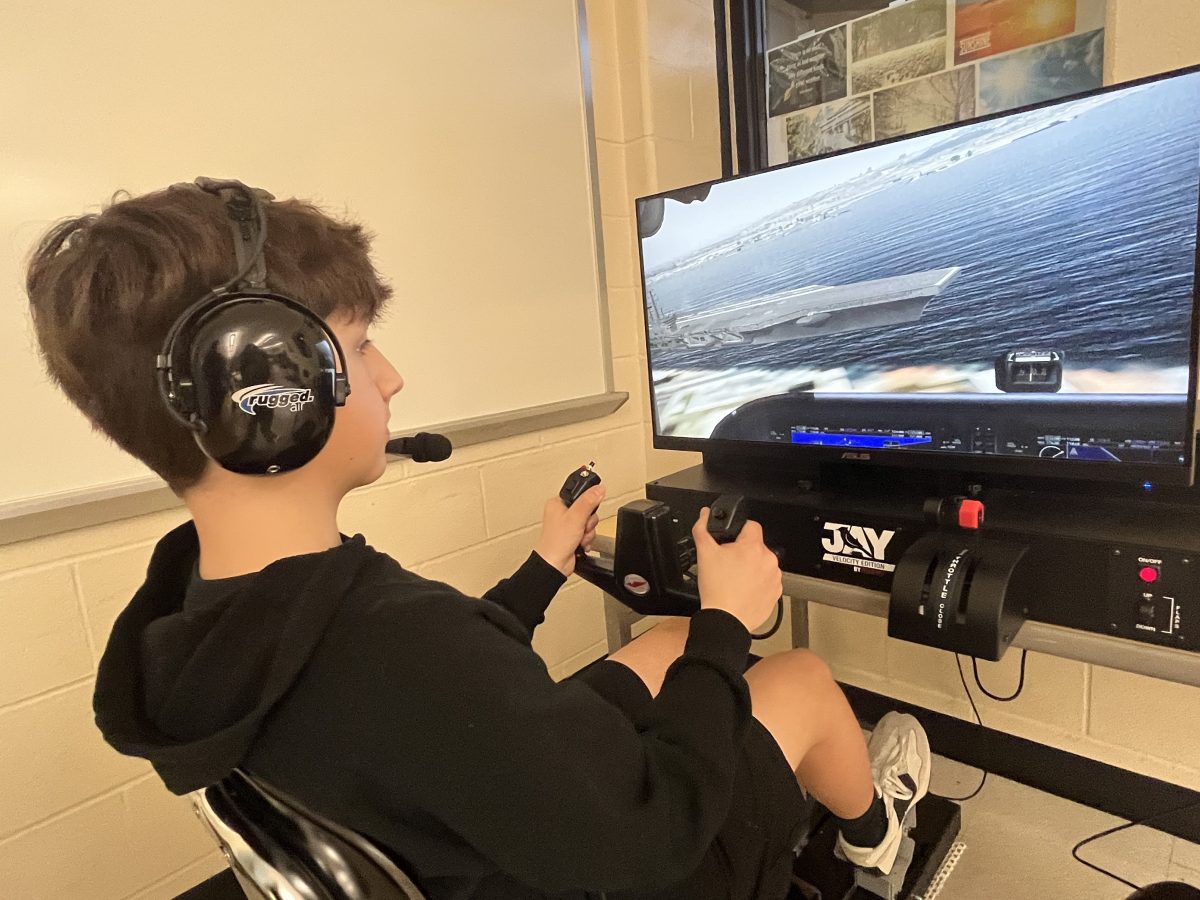
The San Diego skyline fell away and an aircraft carrier in the San Diego Bay popped into view.
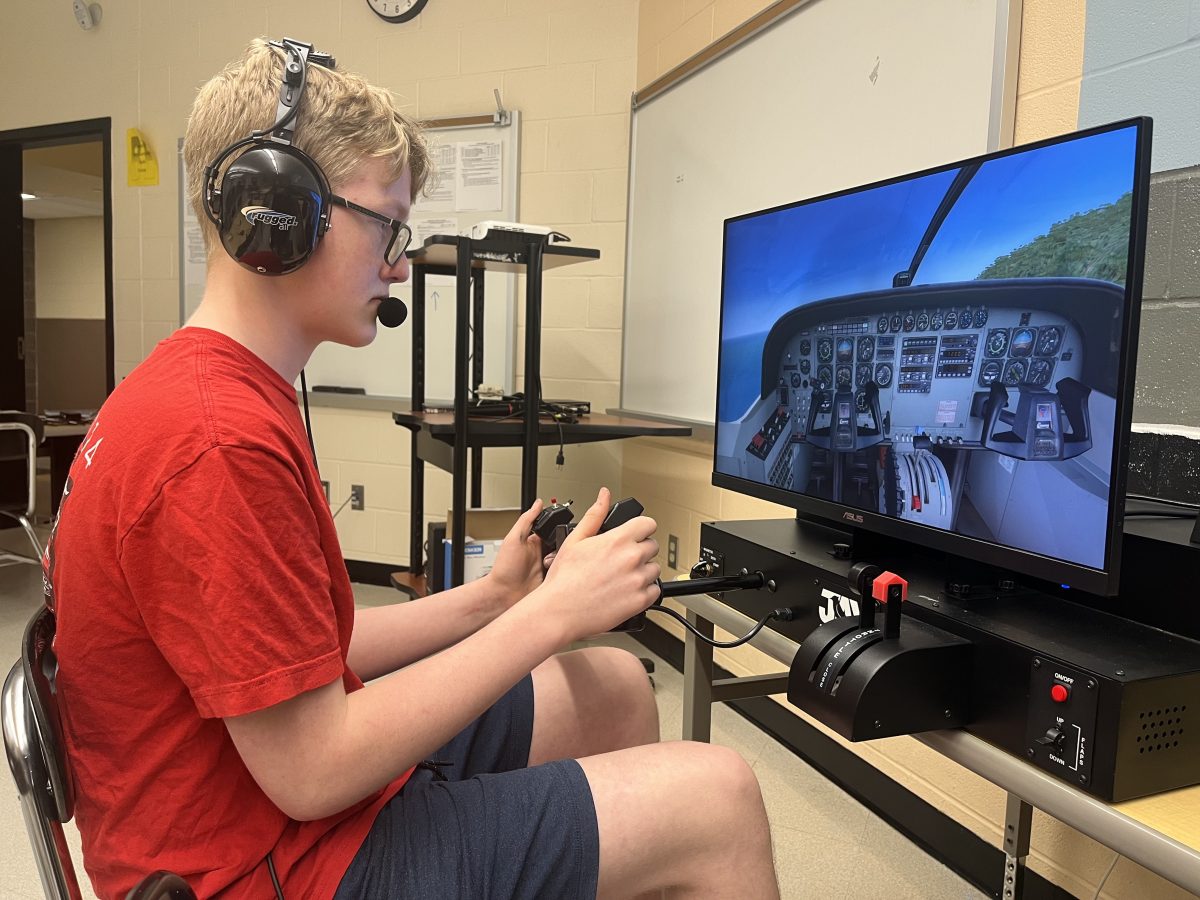
Bentworth Middle School student Calen Antanovich, sitting in the pilot’s seat with hands on the yoke, banked the Cessna airplane to the left and lined the aircraft up to land on the carrier.
Antanovich adjusted as he approached, but the seventh-grader made a miscalculation and the airplane crashed into the bay.
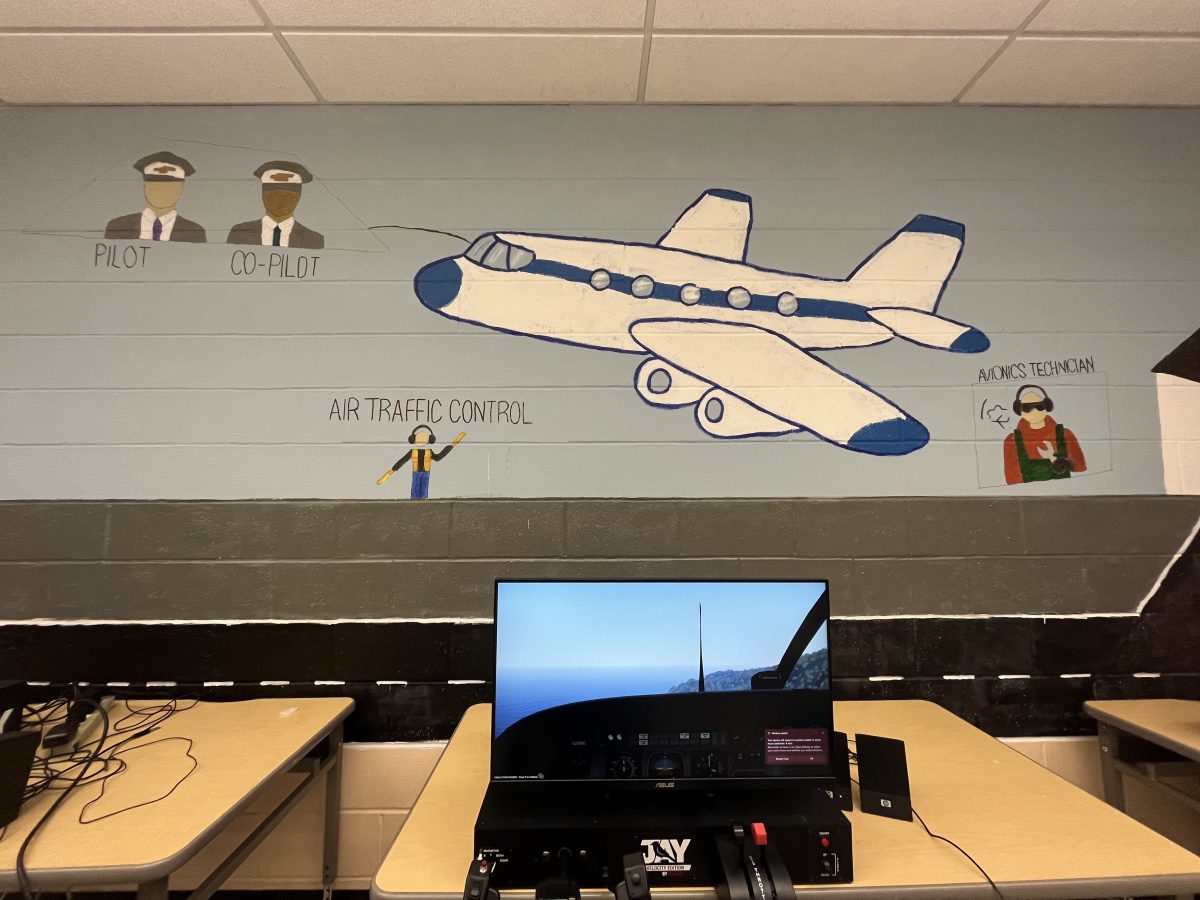
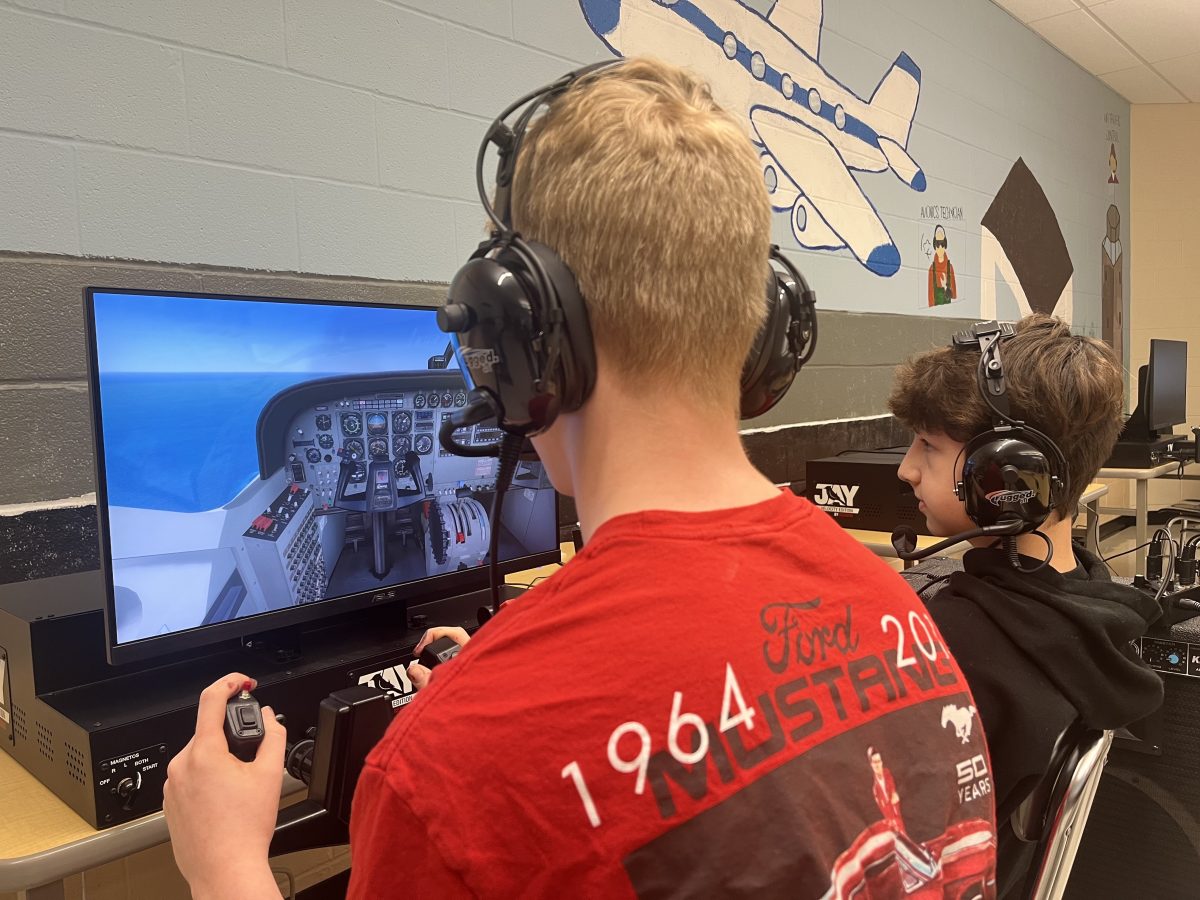
There were no casualties, though. Antanovich was operating a flight simulator, one of five Redbird flight simulators that serve as centerpieces of Bentworth Middle School’s flight simulator room.
The middle school is preparing to launch an aviation STEM (science, technology, engineering and math) program to inspire the next generation of aviation professionals and to provide exposure to industry career opportunities.
At the completion of the multi-year program, students will have gained the knowledge to earn remote drone pilot certification.
“There’s a lot of cool, cutting-edge stuff we’re doing with the aviation program,” said middle school Principal Dave Schreiber, who in recent years had been interested in implementing a STEM program that would inspire kids and provide useful skills in preparation for jobs. “The onset of esports and gaming got me thinking, what gets kids motivated. If you ask a kid why are you learning this, a lot of times they’ll say, ‘I don’t know.’ I can come into this simulator room and I know why. It all ties in here, it makes a connection here. It makes learning real for them. So when kids are learning about x and y axis and ask, ‘Why am I learning that?,’ it has everything to do with flight.”
Over the past two years, Schreiber and administrators have collaborated with PennWest California, Allegheny County Airport, and other experts to develop a comprehensive middle school STEM curriculum.
Starting in fall of the 2024-25 school year, students in grades five through eight will study the FAA flight manual (the airplane flying manual for pilots), working through 28 sequences during their four years in middle school.
The program will guide students in the small, rural district situated 45 minutes from Pittsburgh International Airport, through the intricacies of piloting an aircraft – introducing them to cockpit instruments, rudders, stabilizers – and will help them improve their skills.
Aviation will be integrated into their classes and into the building, too.
Examples: the main office will be called the air traffic control tower. All hallways will be named after airports such as Pittsburgh International Airport and LaGuardia Airport. Each classroom will serve as a terminal. And each student will be a part of a four-man crew and choose a call sign, like “Goose,” “Iceman,” and “Maverick,” names made popular in “Top Gun.”
The simulators alone cost an estimated $40,000 in total, which the district purchased through a combination of cookie dough fundraiser sales and grants.
They offer an almost limitless number of places around the world to fly and scenarios to experience.
In addition to the five simulators (which can accommodate four students at each simulator), the simulator room includes a weather station and a navigation station.
Schreiber noted flying requires a deep understanding of meteorology and navigation.
“Navigation is key, it involves making calculations, determining a plane’s position. And weather is science. Weather patterns are changing now, and that’s a piece of this,” said Schreiber. “We can challenge the kids in an eighth-grade class and ask, ‘Wind speeds are 30 miles an hour, how does that impact how we fly?’ These kids can leave here understanding navigation and instrumentation, understanding weather, air climate, about how important reading, writing, listening are, and foreign languages for flying internationally.”
One of the features of the aviation room is an aviation-themed mural painted by PennWest California student PSEA students as part of its Achieving Professional Excellence Program (APEX) community service project.
The high school, too, has added a STEM program that includes an aviation component, and plans are to grow the program.
The aviation program has the support of the Bentworth School Board, which includes two directors who hold pilot licenses. The fathers of two middle school students also are professional pilots and have played a role in developing the program.
The aviation industry faces a growing demand for skilled workers. According to a recent report from Boeing, the air travel industry will need 649,000 pilots over the next 20 years – about 32,000 pilots each year.
According to other reports, the aviation industry will require over a million new professionals in the coming years to meet the industry’s expanding needs in occupations including aircraft maintenance technicians, air traffic controllers, and engineers.
There are other jobs available in the industry: flight paramedics, baggage handlers, cargo agents, aircraft fuelers, airline food service workers, and security officers among them.
Schreiber believes that by entering the aviation program in middle school, students will be well ahead of their future colleagues if they choose to continue in the aviation career path after high school.
“Hopefully, students want to continue on, but if they don’t that’s OK. They’ll leave with the knowledge they gained. And how cool is it that a kid at age 16 in Bentworth can not only get their driver’s license but they can get a remote drone pilot’s license?” said Schreiber. “We want kids in our rural school to see the bigger picture in everything they’re doing here. The bigger picture is, there’s a whole world out there and the world moves through aviation.”