

Department of Health launches online tool for tracking tick-borne diseases
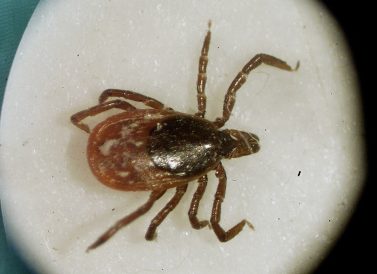 Associated Press
With the weather heating up people are going to be spending much more time outdoors, and reports of illnesses such as Lyme disease are expected to “tick” up.
To help people stay healthy, this week the Pennsylvania Department of Health launched a tool on its website for tracking cases of the tick-borne disease county by county.
“Pennsylvania has incredible outdoor recreational opportunities, and we want to provide as much information as possible for residents to enjoy them safely,” said Acting Secretary of Health Dr. Debra Bogen in a press release. “Taking appropriate precautions can help avoid Lyme and other tick-borne diseases that can lead to serious illness. As a pediatrician, I always recommend doing a tick check after playing outside, especially for children and pets.”
According to the dashboard on the DOH website, between the beginning of the year and May 8, Washington County had about eight cases of reported Lyme disease per 100,000 people. In Greene County, there were about 22 cases. Approximately 18 cases have been reported in Fayette County.
Dr. Sundeep Ekbote, the director of emergency medicine at Penn Highlands-Mon Valley Hospital and chief medical officer of the southwestern region for Penn Highlands Healthcare, said rates of tick exposure in the area are high.
“It’s important after being outdoors to check for ticks,” Ekbote said.
Symptoms of Lyme disease include joint aches, fevers and headaches. Ekbote notes that many people who come down with tick-borne diseases cannot remember ever being bitten by a tick.
“At least in Southwestern Pennsylvania, the incidence of tick-borne illness is so great the majority of patients cannot identify any kind of tick exposure at all. They cannot identify they ever saw a tick,” Ekbote said. “Many of them never get a rash and they end up with delayed onset secondary Lyme disease.”
Because of ticks’ prevalence, Ekbote has learned to always consider Lyme disease as a possibility, even if there is no recorded tick bite.
“It’s important for us to always think about tick-borne illness as a potential issue going on,” Ekbote said.
This includes in the winter months. Ekbote notes that someone could be exposed to a tick in September, and then begin experiencing joint problems in December or January.
To avoid coming into contact with ticks, the DOH recommends walking in the center of trails and avoiding tall grass, wearing light-colored clothing to make identifying ticks easier and bathing within two hours of going inside.
Attached ticks should be removed with a pair of fine-tipped tweezers.
“If they’re not able to get all the parts out, they need to present at the emergency room,” Ekbote said.