

Statewide committee rejects eight opioid settlement grants in Washington Co.
Board calls process problematic, plans to assign a liaison
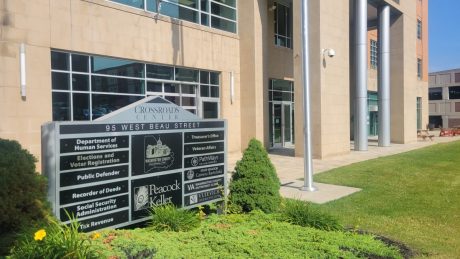
The statewide committee that oversees Pennsylvania’s opioid settlement trust fund is raising concerns about how Washington County is handing out its grants, calling the process “problematic” as it rejected eight applicants during its meeting last week and put nine others under further review.
The Pennsylvania Opioid Misuse and Addiction Abatement Trust’s dispute resolution committee met Dec. 4 to review more than 200 grants from across the state, but singled out Washington County and indicated it plans to assign a liaison to monitor the awarding of future rounds of grants.
Committee Chairman Thomas VanKirk, who could not be reached for comment Thursday, during the meeting called the process in Washington County problematic and told the other members that changes must be made moving forward.
The committee deemed eight grants as “non-compliant,” meaning the county would either have to claw back that money from the organizations that received the funds or county taxpayers could be on the hook to repay the combined sum of $438,623 to the trust fund. Of the more than 200 grant applications reviewed by the committee last week for the September reporting cycle, Washington County had eight out of the 11 non-compliant requests.
The non-compliant grants in Washington County were to LOYAL After School Programming for $125,000; North Strabane Resource Officer for $87,123; The Hill Group’s Washington Co. OUD Services Assessment for $58,500; Washington STEAMworks for $45,000; Jeff Hancher Enterprises Success Readiness Framework for $45,000; Leadership Development LLC’s 911 Training for $35,000; Shekinah Youth Ranch of the Mon Valley’s Youth Prevention Program for $25,000; and Regola Consulting Grant Management for $18,000.
The county could appeal the committee’s decisions and provide more information, or it could even file a lawsuit in an attempt to overturn the rejections.
Another nine grants totalling $949,910 were listed as “still under consideration” and could ultimately be rejected as well if the county does not provide additional information about the organizations and their project by Dec. 22. The previous 22 grants from the March reporting cycle in Washington County were listed as “still under consideration” during the committee’s June meeting, but all were later approved in August.
Washington County Commissioner Larry Maggi, who has raised concerns in the past about how the opioid settlement money is being distributed locally, was informed of the issue Tuesday with an email asking for more information on the nine grants still undergoing the review.
“That doesn’t surprise me with how our process is. We don’t have a process, as you know,” Maggi said about the number of rejected and pending grants. “I’m very disappointed in the process we have. I’ve said for a year now we need to have a process in place. We have not. We have three people from the county making the decisions. That’s not good. We need to set something up like the (Local Share Account) committee and be fair about it.”
Currently, county Administrator Daryl Price collaborates with Human Services Director John Tamiggi and his deputy, Tiffany Milovac, to review applications and send a list of grant recipients to the county commissioners for final approval. The county has allocated $4.7 million in opioid settlement grants over four rounds since September 2024. The county will be able to allocate these grants annually for 18 years as part of the nationwide opioid settlement, with the money being sent to individual states and then filtered to the counties to determine how it should be used.
In addition to setting up a specialized committee to review applications and recommend them to the commissioners, Maggi said he would be in favor of a “full investigation, full audit and full review” of all the projects that have been awarded money to ensure the funds are allocated appropriately and being used as intended.
“Not just the past cycle. All of them. And we need to make sure those entities are doing what they said they would do with that money. It’s a flawed process,” Maggi said. “It’s very embarrassing as a county to have that (happen). It’s very frustrating. The county taxpayers could be stuck with that bill.”
Commission Chairman Nick Sherman said they would review the rejected applications and determine whether more information needs to be sent to the committee, but he expects the grant recipients will be required to submit “evidence based” paperwork for formal approval.
“We’ll have to look at the grants and see why they were flagged. Before we give any money, we have to go through this review board,” Sherman said. “I would have to hear a final decision from the opioid committee.”
Sherman added that he thinks the trust fund committee is “moving the goalposts” compared to past approvals in previous rounds of allocations.
“It’s literally the same things they approved in the past,” Sherman said, pointing to the North Strabane school resource officer being rejected while a Peters Township police social worker was approved earlier this year. “It doesn’t really make sense.”
Commissioner Electra Janis did not return phone calls seeking comment Thursday afternoon.
Cheryl Andrews, who is director of the Washington Drug & Alcohol Commission, has raised concerns to the commissioners over the past month about how the county is allocating the opioid trust fund grants. She watched the committee’s Dec. 4 meeting, which was streamed online, and said the findings proved her concerns were valid.
“My assumptions were validated through that trust meeting,” Andrews said. “I would like to see this all the way through to assure that the opioid funds that will be coming in the county for years to come will be allocated appropriately. Looking at it as a team approach, rather than three individuals at the county commissioner level. What I’ve been saying is validated, and it’s only the beginning.”
But she also noted that the apparent mishandling of the opioid settlement grants illustrated that the county’s Department of Human Services should not be usurping the WDAC’s role as “single county authority” to help oversee drug and alcohol recovery services.
The commissioners voted 2-1 last month – Sherman and Janis voted in favor while Maggi voted against it – to submit a study to the state to bring the services “in-house” to Human Services, while the 2026 budget calls for a dozen new positions to handle that work. The $58,500 payment for the study performed by The Hill Group was one of the eight non-compliant grants rejected by the opioid trust fund committee.
“The argument with the state is how could they consider changing the structure of single county authority when (the county government) clearly has not been able to appropriately manage the opioid money?” Andrews said. “Why would we give them more money to potentially misappropriate?”
Information about the opioid trust fund and the committee’s quarterly meeting reports can be found online at www.paopioidtrust.org.
MORE INFO
‘Non-compliant’ opioid settlement grants in Washington County
LOYAL After School Programming – $125,000
North Strabane Resource Officer – $87,123
The Hill Group – Washington Co. OUD Services Assessment – $58,500
Washington STEAMworks – $45,000
Human Services – Jeff Hancher Enterprises – Success Readiness Framework – $45,000
Leadership Development LLC – 911 Training – $35,000
Shekinah Youth Ranch of the Mon Valley – Youth Prevention Program – $25,000
Regola Consulting – Grant Management – $18,000