

Immigrants straining borough resources, Charleroi councilman tells lawmakers
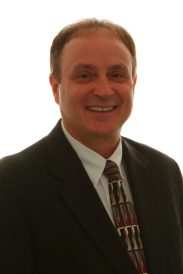
A Charleroi councilman testified before a U.S. House subcommittee Wednesday that an influx of immigrants in recent years has had a negative impact on the borough.
“I am here as a local elected official who has had to look residents in the eye and explain why their town no longer feels safe, stable and familiar – and why decisions made far from Charleroi have imposed consequences our community never agreed to accept,” Councilman Larry Celaschi told members of the House Judiciary Subcommittee on Immigration Integrity, Security and Enforcement during its hearing on “The Impact of Temporary Protected Status.”
Temporary Protected Status (TPS) allows eligible nationals from designated countries to live and work in the United States temporarily due to unsafe conditions in their home countries.
In recent years, Charleroi has seen a large influx of immigrants in the borough.
A 2023 survey showed that about 2,000 immigrants from 44 countries – including China, Spain, Indonesia and African nations – make Charleroi their home. Many are from Haiti.
Charleroi’s Haitian population gained national attention after a mention in September 2024 in a campaign speech by then-presidential candidate Donald J. Trump in Tucson, Ariz.
“Charleroi is less than one mile long from its first traffic light to its last,” Celaschi testified. “Under the Biden Administration’s approach to immigration enforcement and refugee placement, our borough has absorbed an estimated 2,000 to 3,000 migrants in a short amount of time. This represents a population increase of approximately 50 to 75%. No community – large or small – can absorb that level of growth overnight without serious consequences.”
Celaschi said the influx has placed a strain on public safety and municipal services.
“Charleroi’s police department, volunteer fire department, ambulance service and code enforcement office have all experienced a significant increase in service calls,” he said. “Many of these calls involve language barriers, overcrowded housing conditions and unfamiliarity with local laws and traffic regulations.
“Charleroi does not have a paid dedicated interpreter or translation service. Our first responders now spend significantly more time on each call, stretching limited resources and increasing response times for everyone in the community.”
Celaschi also said a large number of non-English speaking students in the schools has caused classroom disruption, and “strained special education services affect every child in the district.”
Ranking House member Pramila Jayapal, a Democratic representative from the state of Washington, offered opposing views from Charleroi residents, including council President Kristin Hopkins, for unanimous consent. They were accepted without objection.
Jayapal said there were a number of people classified as having TPS in attendance for Wednesday’s hearing.
“TPS recipients aren’t outsiders in our communities. They live in our neighborhoods, raise their families here and help keep local economies running,” she said. “TPS has also allowed hundreds of thousands of people to work legally, often in industries that are already experiencing severe labor shortages. They have followed our laws, paid their taxes and demonstrated their loyalty to this country. Instead of stripping them of their legal status and sending them back to dangerous conditions, we should be providing them with a path to local stability.”
Rep. Deborah K. Ross, a Democrat from North Carolina, proposed a statement from Nancy Ellis, former mayor and former councilwoman who recently won reelection, for unanimous consent that stated Celaschi’s comments were “biased and would not give a fair view of the Haitian community of Charleroi.” It was accepted without objection
Rep. Wesley Hunt, a Republican from Texas, said what Charleroi has faced is “unfair, unjust and un-American.”
Celaschi offered suggestions he feels could improve similar situations, including requiring mandatory consultation with local governments before migrant or refugee placements occur, limit placements to levels communities can realistically support and provide direct and flexible federal funding to municipalities absorbing migrant populations so local taxpayers are not left carrying the burden.
“Charleroi is not anti-immigrant,” Celaschi said. “I support legal immigration and the American Dream pursued through lawful means. However, what has been imposed on our borough has pushed public services to the breaking point and fundamentally altered our community without its consent. What happened in Charleroi should not be repeated elsewhere.”