

Year in review
Retail changes, ICE raids top stories of 2025





Here is a look back at the Observer-Reporter’s top 10 news stories of 2025.
1. Local retail in store for sweeping changes
The face of retail changed dramatically in Washington County in 2025, with two malls beginning the process of a massive redevelopment.
In South Strabane Township, demolition began on the Washington Mall in October. Once a staple of retail shopping in the area after opening in the 1960s, the mall had been mostly empty in recent years.
Washington County commissioners announced at the Real Estate Expo in March that a Costco would be moving into the property. Since then the county has allocated $5.9 million from its blight mitigation fund for the demolition, which is being handled by Neiswonger Construction. The process is expected to take about eight months.
In addition to Costco, a Campers Inn RV center is expected to move to the property. A new Harbor Freight location will also be built.
Washington Crown Center is also getting a significant facelift. PREP Funds, a real estate fund management and real estate firm based in Cleveland, and Industry Realty Group LLC, a Los Angeles-based real estate group, purchased the property for $5.25 million from Kohan Retail Investment Group.
The new owners are in the process of transforming the mall, which is now known as Franklin Crossroads Park. Gone are the days of the indoor walking mall, as every business will have an exterior storefront. The eastern side of the property at 1500 W. Chestnut St. will be for retail, while the west will become a business park.
As part of the redevelopment, the Bon Ton store and Hollywood Theater will be demolished.
In Fayette County, the owners of the Uniontown Mall were sued by South Union Township in November for what the township said are ongoing safety violations and “dangerous and unlawful” conditions.
The suit against Namdar Realty Group and Uniontown Mall Realty alleged a slew of hazards around the site. Conditions have been declining at the mall since Namdar purchased the mall and the surrounding property in 2015, township officials said.
Outside, photographs showed potholes and parking crumbling areas. Inside the mall, the township said, their code enforcement officer found locked or damaged exit doors, and a storage area full of rodents and feces.
Between the start of August and early November, when the suit was filed, the township had filed more than 100 citations against the ownership group.
The complaint asks the mall to make inside and outside repairs, remove obstructions to clear pathways inside the mall and immediately unlock any locked emergency exits except where they are legally allowed.
2. ICE raids impact immigrant community
U.S. Immigration and Customs arrests and raids under the Trump administration led to the arrests of dozens of immigrants in Washington County, including the detention and eventual release of Jesus Teran, a Venezuelan immigrant and member of Our Lady of the Miraculous Medal Church, St. Oscar Romero Parish, who was held by ICE for nearly three months at Moshannon Valley Processing Center.
In Southwestern Pennsylvania, detainments have increased 250% since November 2024, according to Casa San Jose, a Pittsburgh nonprofit support organization for Latino immigrants. ICE confirmed it has conducted raids in the city of Washington and surrounding areas, sparking anxiety in the immigrant community.
Immigrant families are afraid to perform everyday activities, so members of Miraculous Medal Church, led by church social worker Erenia Karamcheti, have shopped for groceries, cooked meals, and picked up prescriptions for those who prefer not to leave home, and have arranged transportation for school students whose parents are afraid to drive them.
3. Child deaths dominate headlines
The foster parents of a 9-year-old child in Fayette County are facing the death penalty after the death of their child earlier this year.
The body of Renesmay Eutsey was found in a tote bag along the Youghiogheny River, weighed down by rocks.
Dunbar residents Kourtney Eutsey, 31, and Sarah Shipley, 35, are facing trial on first-degree homicide charges, as well as aggravated assault, concealing the death of a child, endangering the welfare of children, tampering with physical evidence and abuse of a corpse.
The mothers reported the girl missing the afternoon of Sept. 4, though investigators found their stories to be inconsistent. Eutsey later drove officers to the spot on the river where Renesmay’s body was located.
Renesmay allegedly had several wounds, including a cut on the bottom of her chin and injuries to her eyebrows, legs and feet. Eutsey and Shipley are also accused of abusing a 6-year-old boy and an 11-year-old girl in their care. Those children, along with a 2- and 3-year-old, were removed from the home.
Fayette County District Attorney Mike Aubele is seeking the death penalty, though there is currently a moratorium on capital punishment in Pennsylvania.
In Washington County, several homicide cases involving child victims saw resolution.
In April, a jury acquitted 24-year-old Darian Helmantoler, of Monongahela in the death of her 13-day-old son, Asher. Asher died on Sept. 12, 2023. Prosecutors from the Washington County district attorney’s office alleged Asher had been bludgeoned, but autopsies by the coroner’s office and a private pathologist determined he died of Sudden Infant Death Syndrome.
Joshua George, 34, of Smith Township, was also acquitted in the death of his 6-month-old son Oliver, who died Dec. 30, 2021. The jury came back with a not guilty verdict after George’s attorney mounted a defense blaming the death on Oliver’s step-grandmother.
Kylie Lynn Wilt, 28, of Charleroi, faces 18 to 36 years in prison after pleading no contest to a lesser homicide for the death of her infant son Archer Hollis. Archer was found in November 2021 in a plastic crate that had been sealed in a wall in an apartment on Lookout Avenue. As part of a deal with prosecutors, Wilt will have to testify against Alan Wayne Hollis, Archer’s father.
Also this year, James Riley May IV, 34, and Shannon McKnight, 26, both of Canonsburg, pleaded guilty to drug delivery resulting in death in connection to the death of their 3-month-old daughter, Navaeah. Prosecutors alleged the child died of fentanyl poisoning. Both May and McKnight were sentenced to 10 to 20 years in prison.
4. Budget cuts impact nonprofits
Federal budget cuts under the Trump administration have impacted local nonprofits, including food banks, leaving them uncertain about funding for services programs for the people they serve. Among them, the U.S. Department of Agriculture announced in March it would end two programs that provided more than $1 million for food banks and schools to purchase food from local farmers and producers.
Charla Irwin-Buncher, Chief External Affairs Officer with the Greater Pittsburgh Community Food Bank, which serves 11 counties in Southwestern Pennsylvania, including Washington, Greene and Fayette counties, said in March the LFPA funding cut will result in the food bank losing $1.6 million annually to purchase roughly 2.9 million pounds of food – including eggs, milk and meat products – from Pennsylvania farms and manufacturers.
Additionally, proposed cuts to Medicaid could be devastating to Pennsylvania’s hospitals, health care experts and advocates warned. More than 3.1 million Pennsylvanians – roughly 21% of the state’s population, including people in long-term facilities, children, pregnant women, and people with disabilities – are covered by Medicaid, the public health insurance that also connects patients to everything from school-based health screenings to addiction treatment and mental health services.
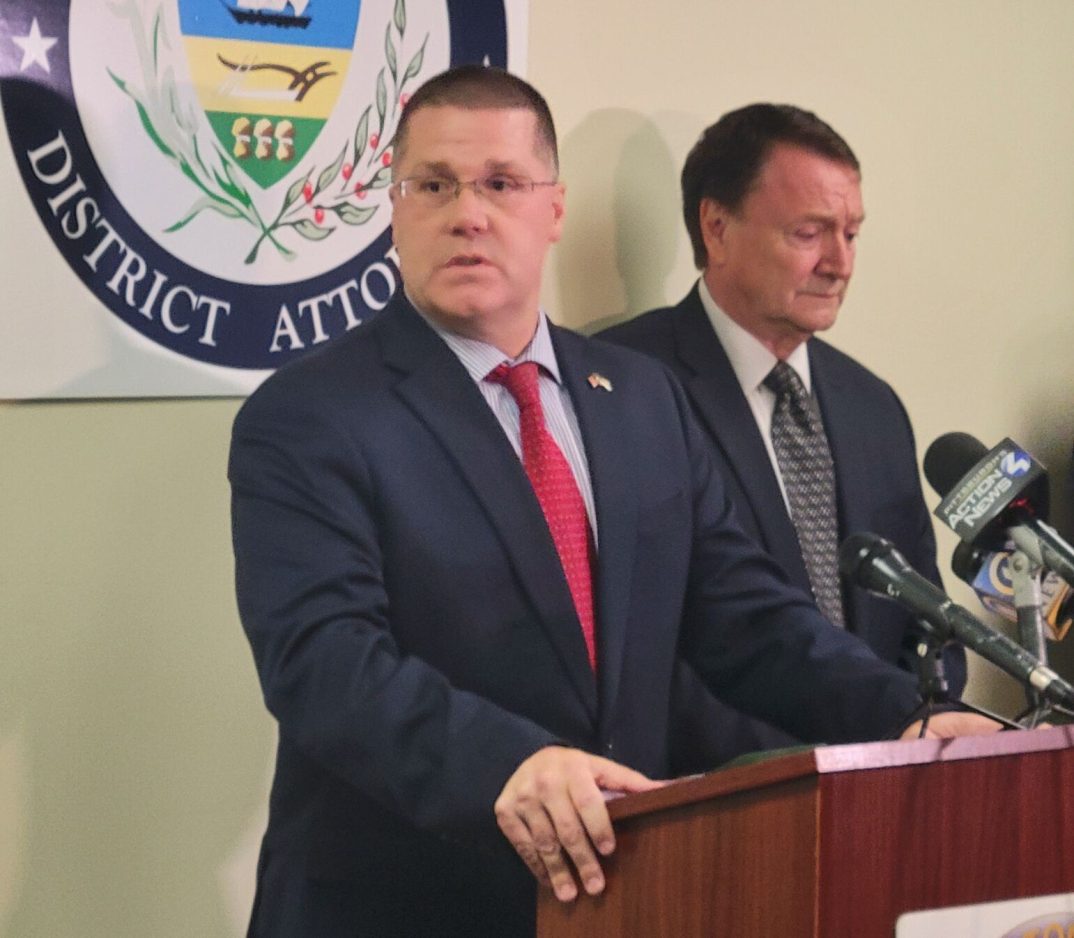
5. DA, coroner locked in bitter dispute over death investigation reports
Two years ago, the relationship between Washington County’s district attorney and coroner soured, and it’s only grown worse.
An inquest by Coroner Timothy Warco in October 2023 raised the ire of District Attorney Jason Walsh, and the two row offices that typically would work close together on death investigations have become alienated from one another.
That strained relationship got even worse in July when Warco signed a sworn affidavit accusing Walsh of coercing him into filing a fraudulent death certificate for a Peters Township infant – who died under suspicious circumstances – in order to help the prosecutor pursue capital murder charges against the child’s father.
Warco has claimed that the district attorney has not cooperated with his death investigations and he has been unable to review police reports to help rule on the cause and manner of death in some cases.
Walsh’s detectives and police officers from Washington, Canonsburg and state police went to the coroner’s office in November with a search warrant to retrieve records from five death inquiries after Warco refused to hand them over, while also demanding those entities pay a $700 fee. Peters Township sued the coroner earlier this month, asking for an injunction requiring Warco to turn over autopsy and toxicology reports to its police department and barring from requiring a $700 payment for the records.
6. Nonprofit seeks to restrict Walsh’s ability to seek death penalty
The Atlantic Center for Capital Representation, a group of Philadelphia attorneys specializing in capital murder, filed a “kings bench” petition to the state Supreme Court in July asking the high court to restrict Washington County District Attorney Jason Walsh’s ability to pursue the death penalty.
The nonprofit accused the district attorney of using it as a political tool while seeking election to the full-time prosecutor’s role in 2023, and also coercing defendants into cooperating with investigators or accepting plea bargains.
The petition was filed on behalf of Jordan Clarke of Peters Township and Joshua George of Smith Township – two defendants who were facing the death penalty if convicted of first-degree homicide in separate cases involving the alleged beating deaths of their children – asking the court to block Walsh from prosecuting them as capital cases. A jury took less than 90 minutes to acquit George of homicide in the death of his 6-month-old son, Oliver, while defense attorneys for Clarke have asked a judge to dismiss his charges after Coroner Timothy Warco claimed Walsh pressured him into filing a fraudulent death certificate that Clarke’s 11-week-old son, Sawyer, died by homicide.
At its peak last year, Washington County had 12 pending death penalty cases, which was a little more than one-quarter of all capital cases in Pennsylvania despite the county having less than 2% of the state’s population. Other defendants have asked to join the Atlantic Center’s petition, while the state Attorney General’s office is intervening on behalf of Walsh.
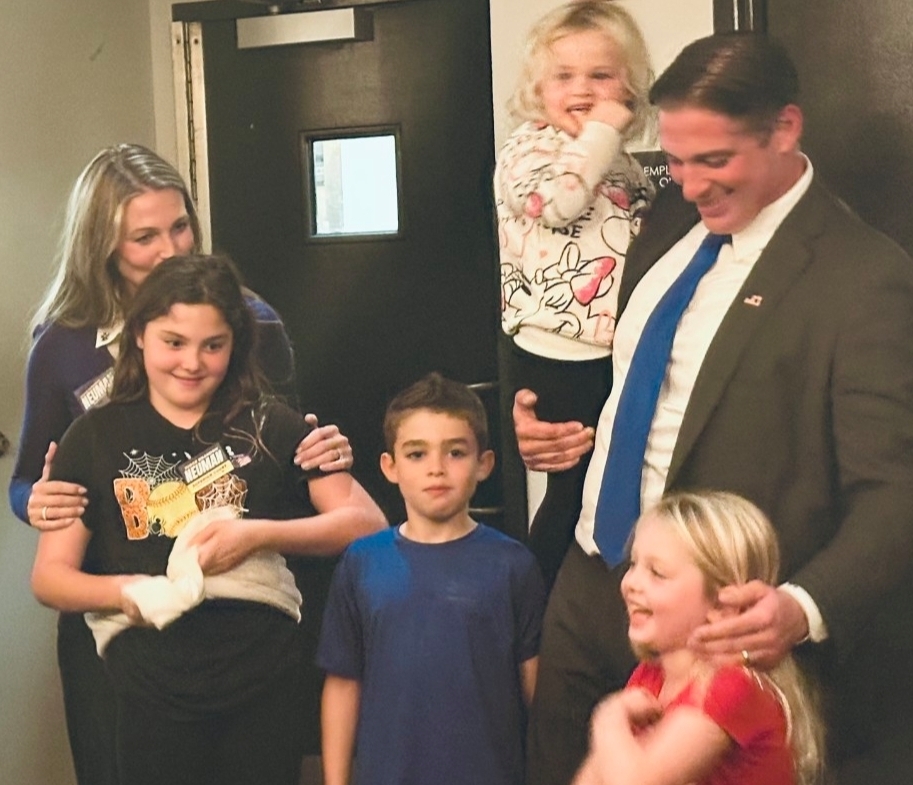
7. Neuman wins seat on Superior Court
Washington County Court of Common Pleas Judge Brandon Neuman made history this year becoming the first candidate from the county to ever win election to an appellate court.
Neuman secured a seat on the state Superior Court during the Nov. 4 off-year election, easily defeating Clarion County attorney Maria Battista and another independent candidate to win the open seat.
Neuman will become the first judge from Washington County to serve on the state Superior Court since Judge Richard DiSalle was appointed to the appellate court by then-Gov. Dick Thornburgh in 1980. However, Neuman is the first judge from Washington County to ever win election to a statewide appellate court, and will take his seat on the bench in January.
The Democrat served seven years as a state representative and has been a Washington County Court of Common Pleas judge since 2018.
In Greene County, Chris Simms won election last month to become the next judge on the Court of Common Pleas to replace President Judge Lou Dayich, who is retiring in January. Simms defeated Patrick Fitch in the Republican primary in May, and also won the Democratic nomination with a successful write-in campaign to appear uncontested on the Nov. 4 general election ballot. The Waynesburg attorney will take his seat on the bench in January.
8. Data center proposed in Greene
In October, Pittsburgh-based International Electric Power announced its concept for Project Hummingbird, a 1,400-acre complex on the former site of the Robena Mine in Monongahela Township in Greene County.
Power would come from two natural gas turbines generating a combined 910 megawatts. Bryn Mawr-based Essential Utilities would also build a water treatment facility for the approximately 18 million gallons a day that would be pulled from the Monongahela River to cool the system.
The site is being marketed for hyperscale data centers used to support massive cloud computing functions. At an open house for residents near the site in October, IEP CEO Peter Dailey said seven companies had shown interest in locating a center there; the company is expected to be decided in the first quarter of 2026.
The turbines have been secured for delivery by 2028, and IEP expects them to be operational by early 2029.
Another center could come to Washington County. Chicago-based real estate firm JLL announced in October it was marketing a 1,500-acre parcel in South Strabane Township off Zediker Station Road for a hyperscale facility.
Some residents are pushing back. At the October open house in Greene County, people from nearby Alicia confronted IEP executives and county board members with their concerns about noise and light pollution. A presentation by Center for Coalfield Justice in November drew about 150 people, most opposed to the project. In addition to noise concerns, many also cited concerns about the potential environmental impact of the center.
A crowd of about 250 people attended the Greene County Planning Commission’s December meeting, where it approved the first phase of IEP’s plans, consisting of site grading and other preliminary activity.
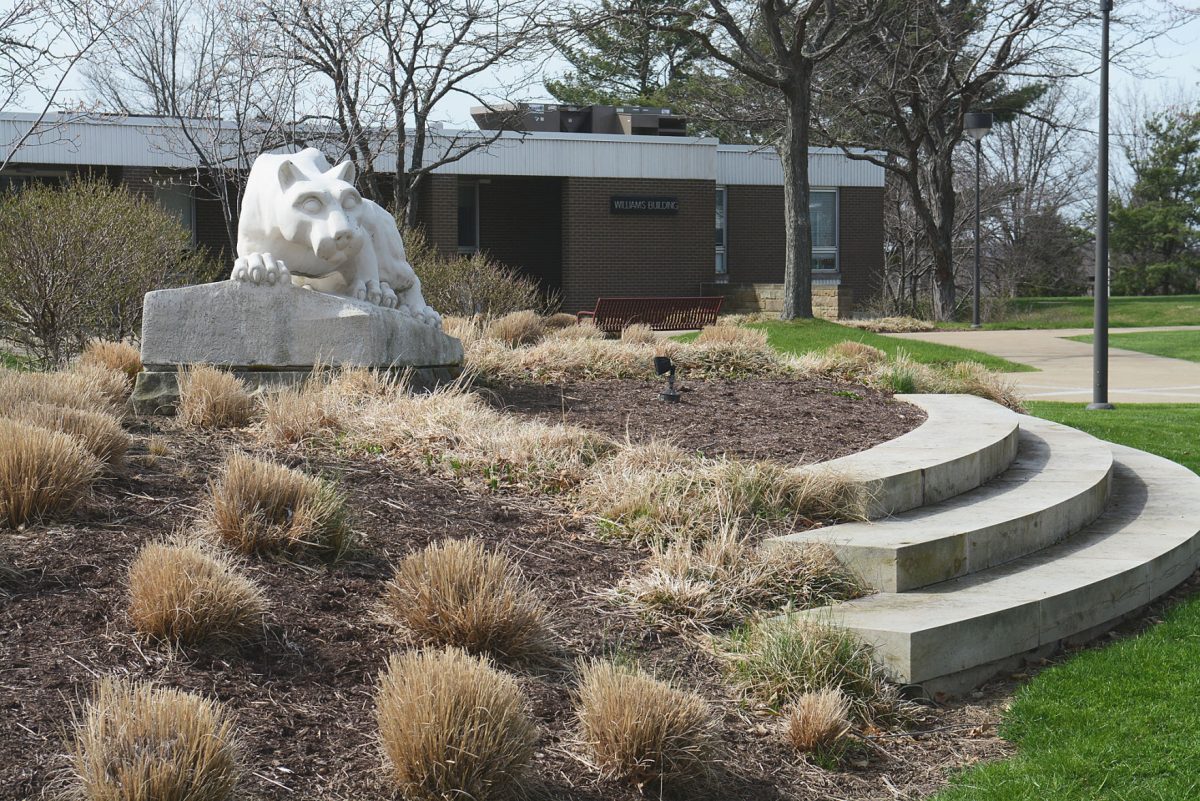
9. Penn State Fayette campus to close
When the last graduate walks the stage at Penn State Fayette’s spring commencement ceremony in 2027, it will mark the end of an educational legacy stretching back more than 60 years.
The Eberly Campus, located in Lemont Furnace, was one of seven branch campuses Penn State’s board of trustees chose for closure in May in a 25-8 vote. It is also not accepting new students after the fall 2025 semester.
The May vote ended three months of speculation over the campus’ future that began after Penn State President Neeli Bendapudi announced an internal work group was studying Fayette and 11 other branch campuses for potential closure.
The group eventually recommended closing seven branches, which they said had problems ranging from declining enrollment to maintenance backlogs. Between 2014 and 2024, enrollment at Fayette had dropped by 43% to 407 students.
Faculty criticized Penn State’s leadership for what they called a lack of transparency and an abdication of the university’s educational mission. Penn State Fayette’s closure will leave Fayette County without any four-year institutions.
The campus offers nine baccalaureate programs and five associates’ degrees.
Although Penn State Fayette will be closing, the campus might still serve as a hub for future learners.
After the closure was announced, the county formed a transition team to discuss the impact and ways the campus could be put to use.
“This campus will rise again,” Jo Ann Jankoski, an associate professor of human development and family studies at the Eberly Campus and a member of the transition team, said after the decision. “This community will rise again. We don’t know what it looks like yet, but too many of us have worked to build this community and this partnership between the university and the communities, we’re not going to give up that easily.”
One of the transition team’s recommendations was implemented in November, when the Fayette County board voted 3-0 to establish the Fayette County Educational Authority. The five-member group will look at ways to continue to use the campus as a higher educational site once it closes.
The board’s resolution listed several ways the Eberly Campus could carry on the educational purpose it’s had since 1965, from early childhood education facilities to universities.
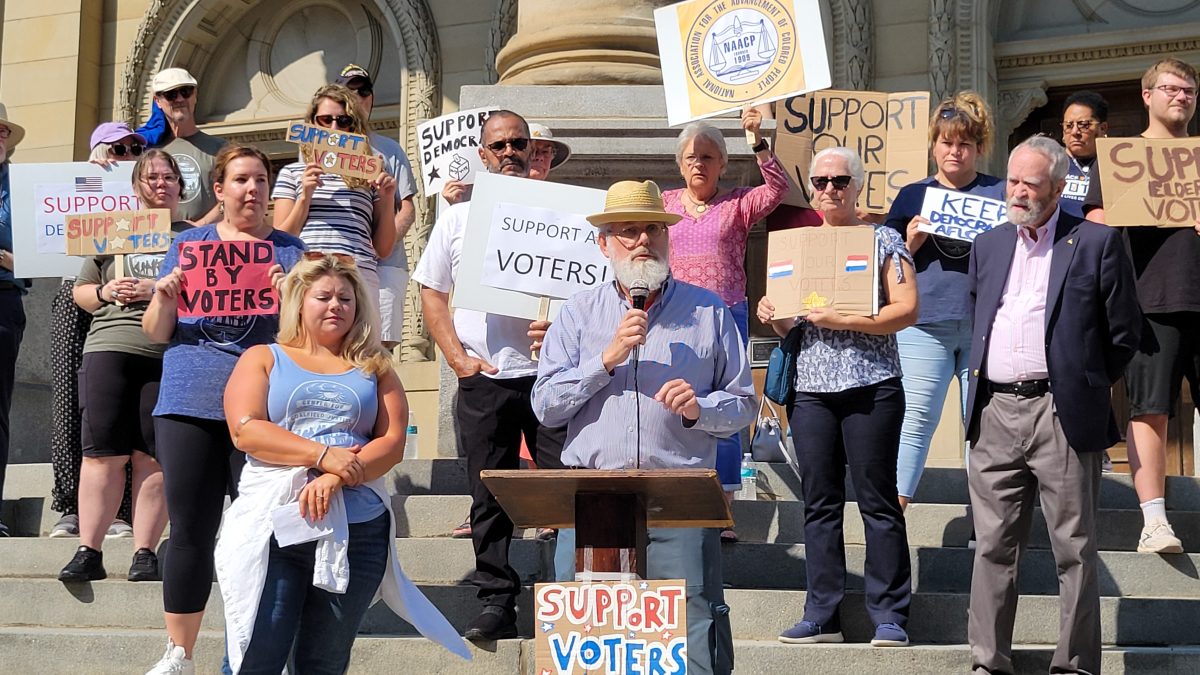
10. State Supreme Court rules on mail-in ballot lawsuit
The state Supreme Court streamlined the patchwork “notice and cure” policies from election offices across Pennsylvania when it ruled in late September on a lawsuit that originated in Washington County.
The 4-3 majority opinion from the high court affirmed an August 2024 ruling by Washington County Court of Common Pleas Judge Brandon Neuman that voters who make disqualifying errors on their mail-in ballots should be notified in some form and given the chance to vote with a provisional ballot on Election Day as a backstop.
Seven voters in Washington County sued the county’s elections board over its refusal to offer a “notice and cure” procedure for the April 2024 primary election. Voters in every county must be notified through email or possibly a letter sent to the home letting them know whether their mail-in ballot had a disqualifying error, and the steps they can now take by voting with a provisional ballot at their polling place on Election Day.
That lawsuit became a proxy war in the ongoing ballot-curing issue, with the ACLU of Pennsylvania, Center for Coalfield Justice, Public Interest Law Center and Washington NAACP representing the seven voters and the Republican Party of Pennsylvania and Republican National Convention intervening on behalf of the county.