

History brings crowds to Whiskey Rebellion Festival
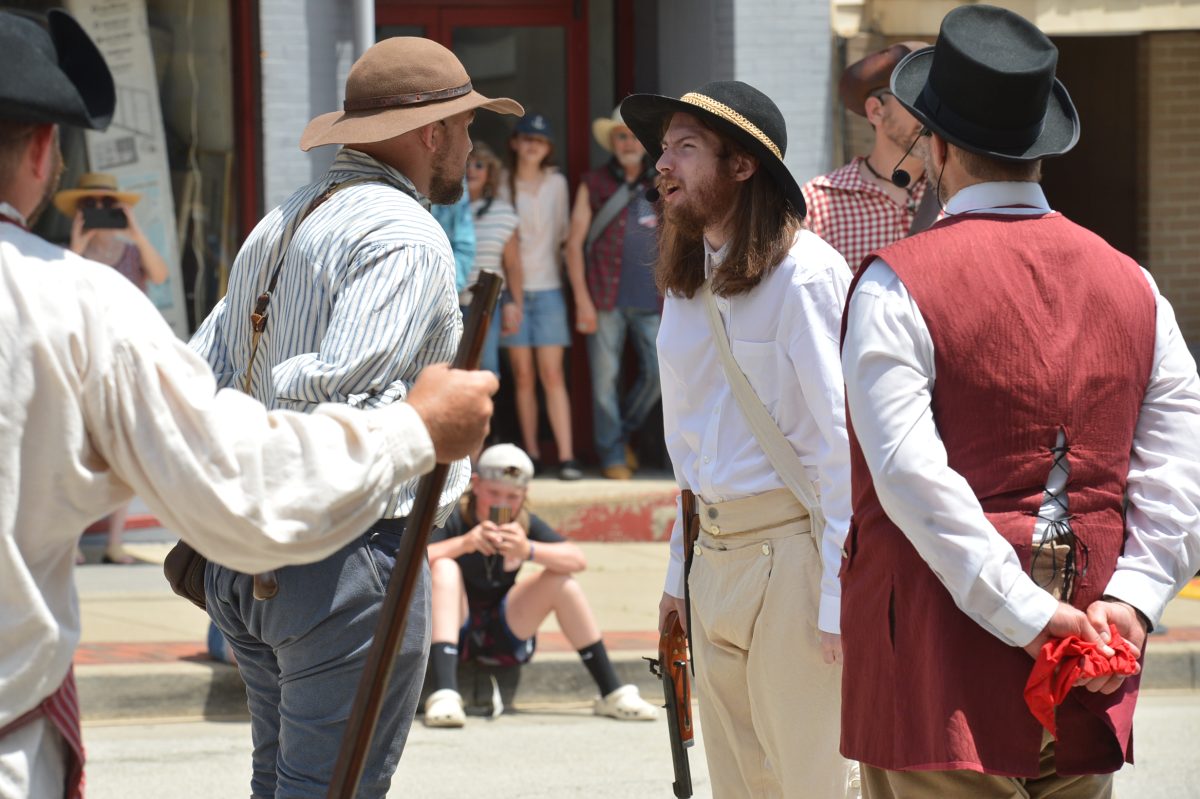
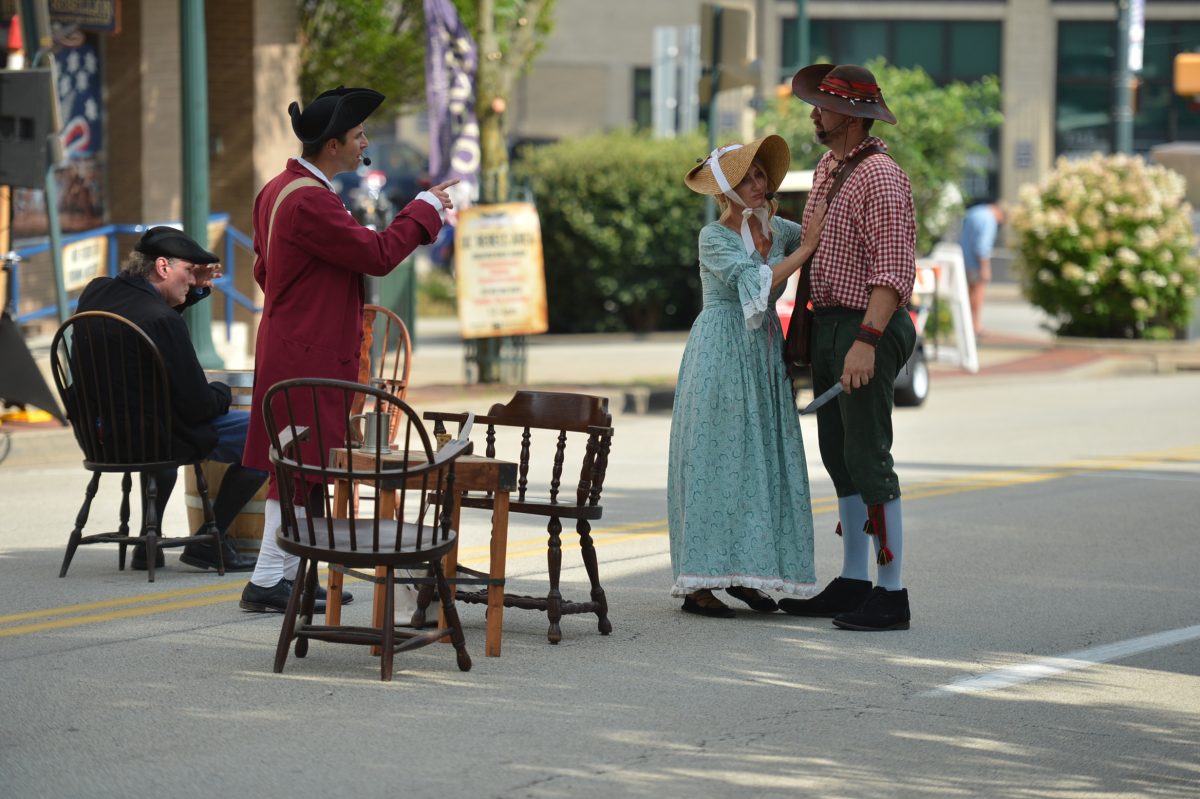
What separated the Pennsylvania farmers brewing a rebellion over a pint at the Black Bear Tavern from the actors reenacting their arguments on Main Street in Washington Saturday?
Looking at the calendar, about 230 years.
But by location, only 80 yards.
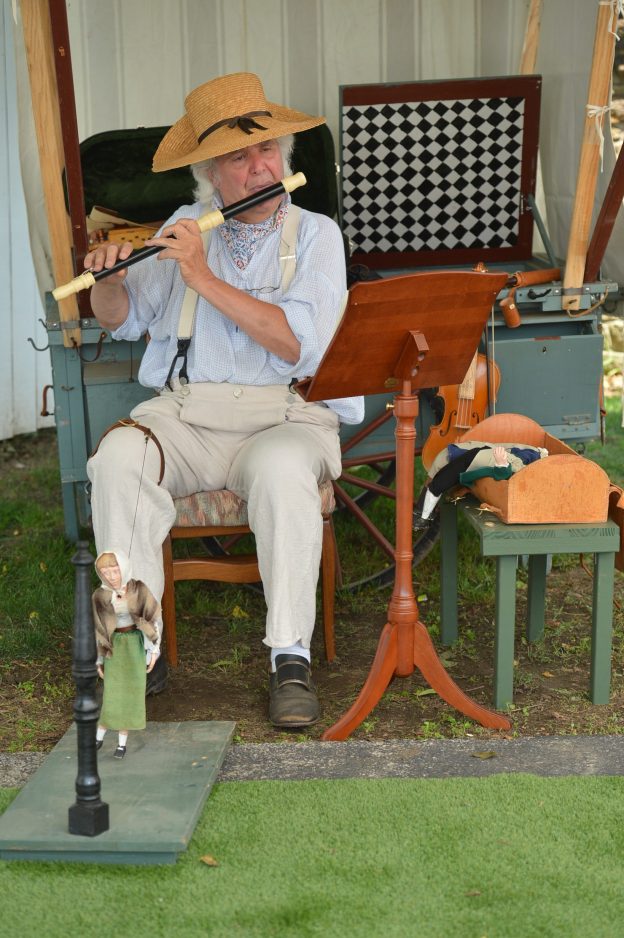
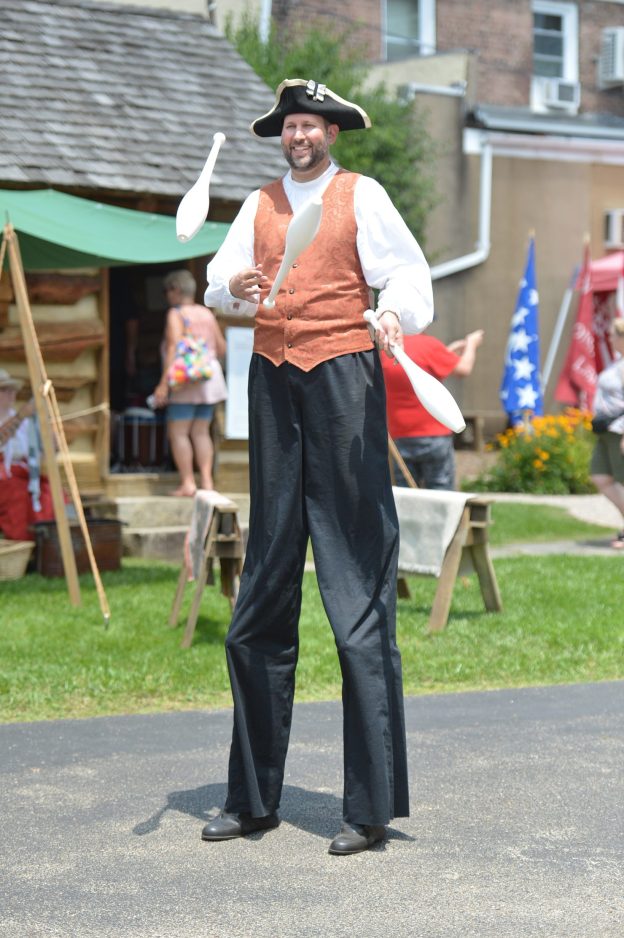
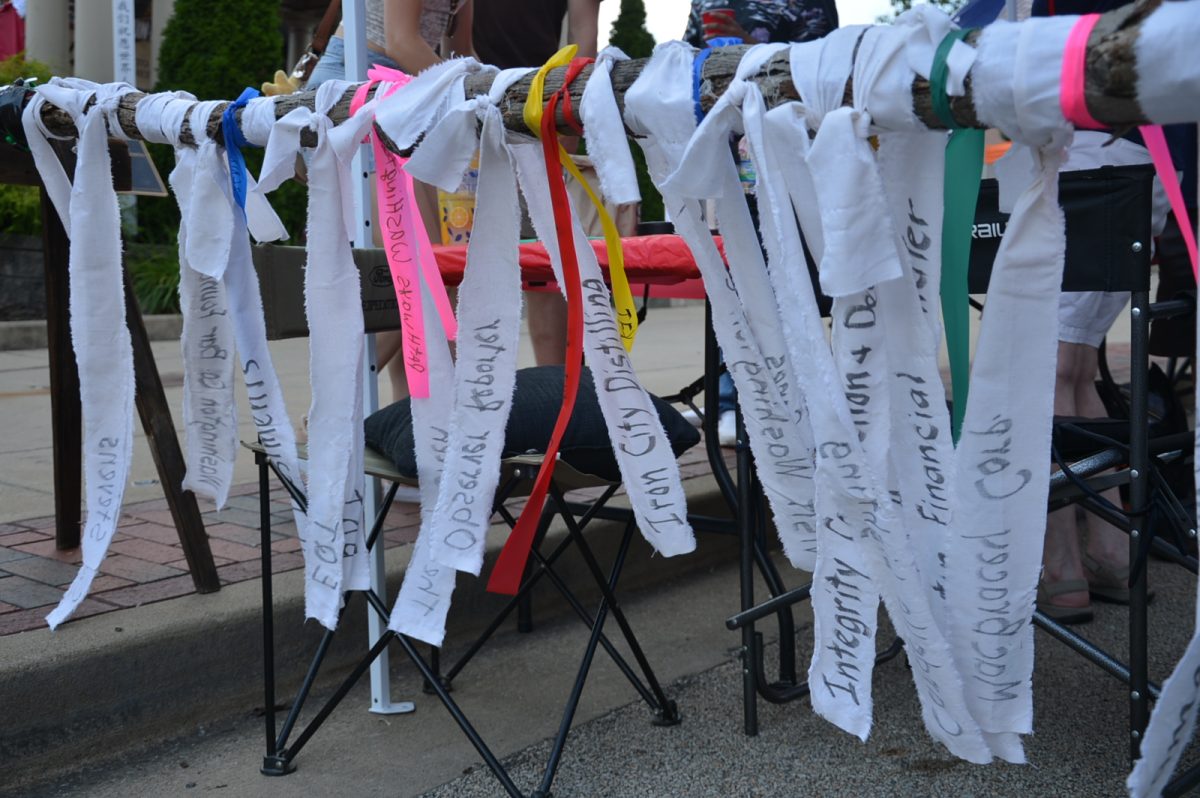
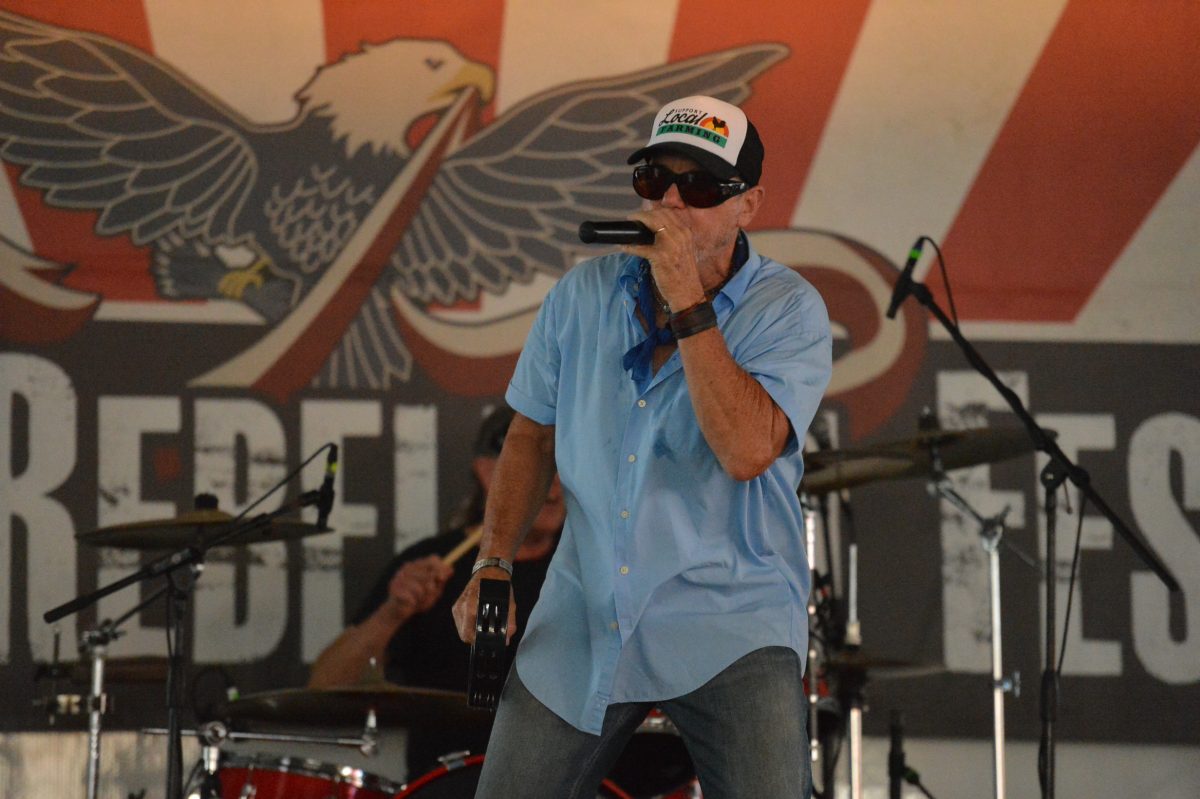
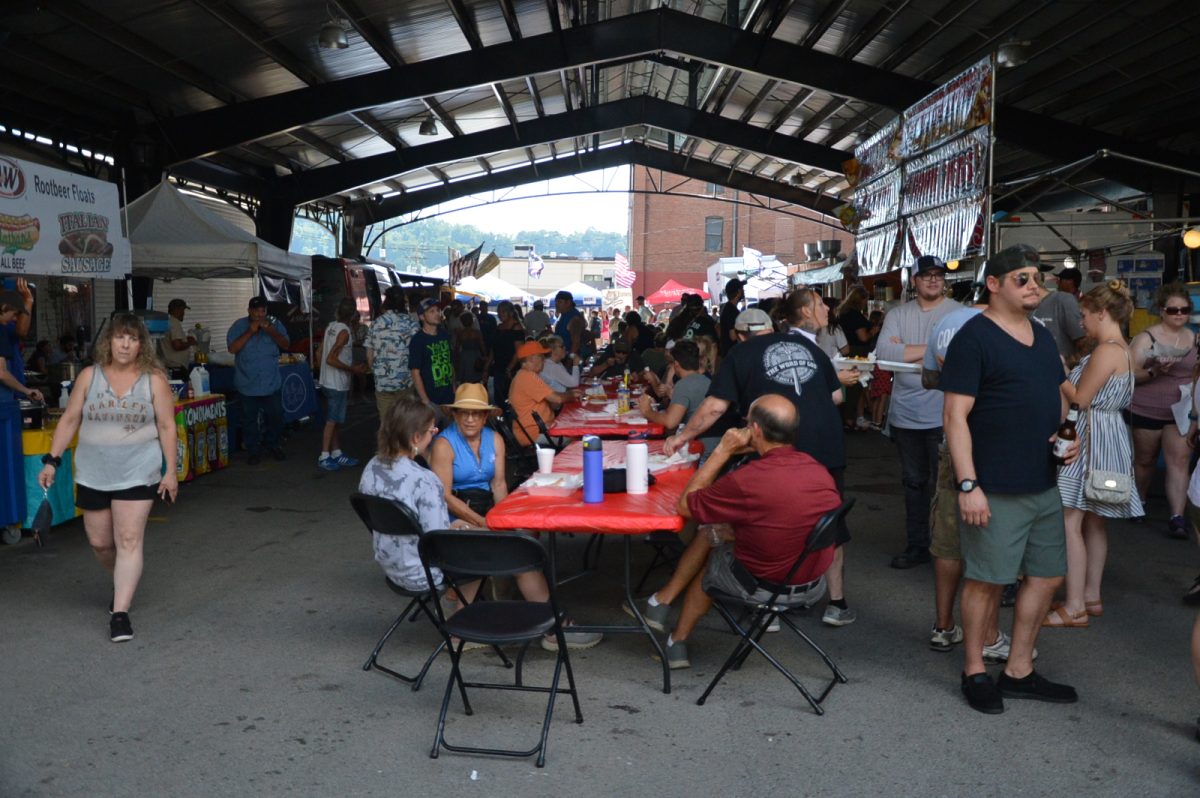
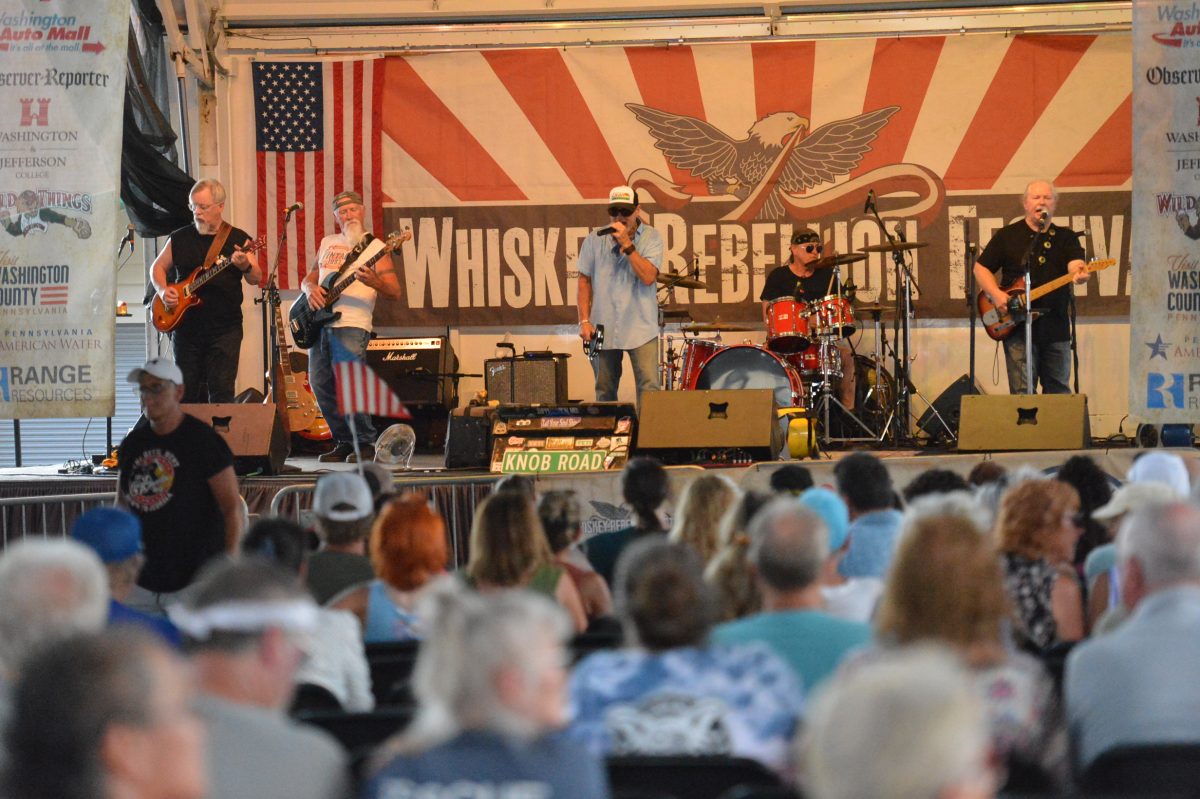
The Whiskey Rebellion Festival returned to downtown Washington Friday and Saturday, bringing a range of historical reenactments and demonstrations along with food and drink vendors, tours, shopping, live music and a whiskey and spirit walk.
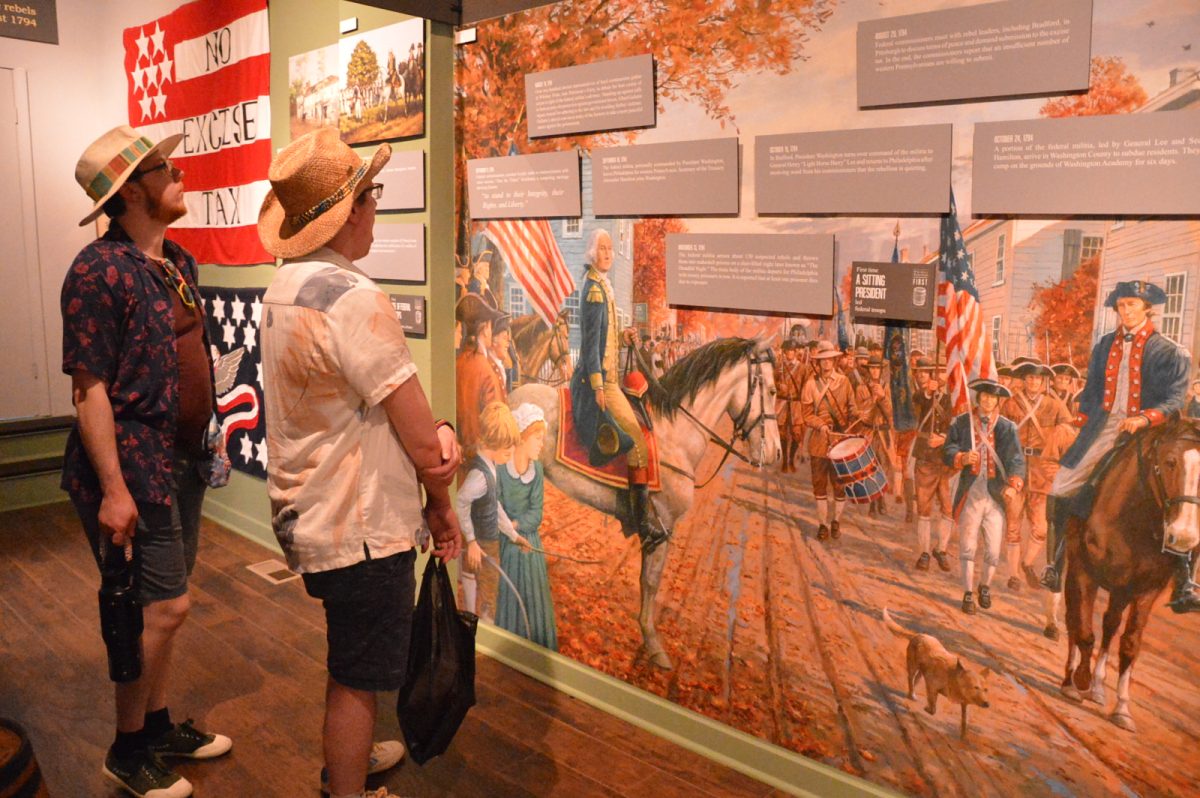
The festival launched in 2010 as a way to celebrate the area’s connection to the history of the Whiskey Rebellion. Between 1791 and 1794, farmers angered by an excise tax on the whiskey they made from their grain eventually mounted an armed rebellion, which ended when George Washington led an army of 13,000 militiamen to quell the uprising.
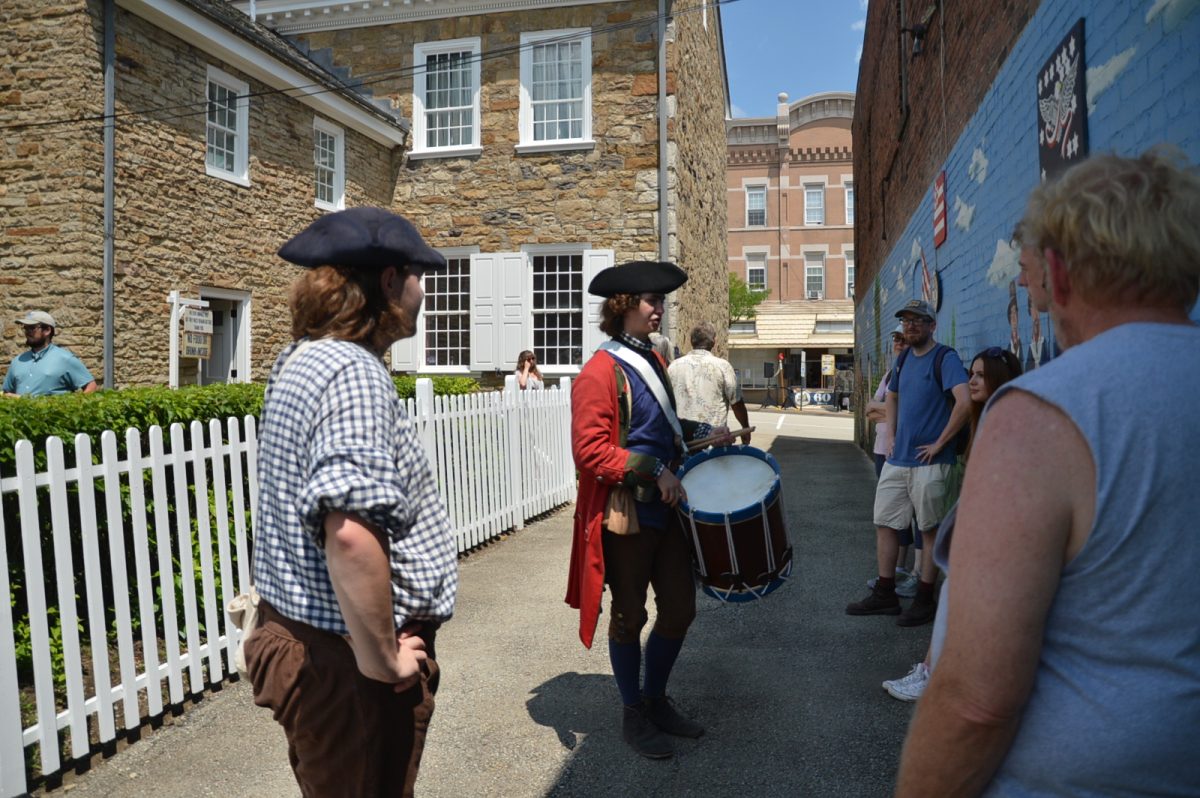
On Main Street, visitors could tour the Bradford House, where a federal tax collector had knocked on the front door of rebel leader David Bradford.
As an added connection, “It’s even the same door,” said Tracie Liberatore. Executive director of the Bradford House Historical Association, she also serves as the festival’s program director.
“When you’re young or when you’re old and you’re learning about history, you don’t realize it’s right here,” she said. “So there’s a lot of local awareness. With the local awareness, with all these people, it’s helping the local businesses, it’s helping the local mercantile because we have people selling stuff here, and the bands, so it kind of helps the community as a whole.”
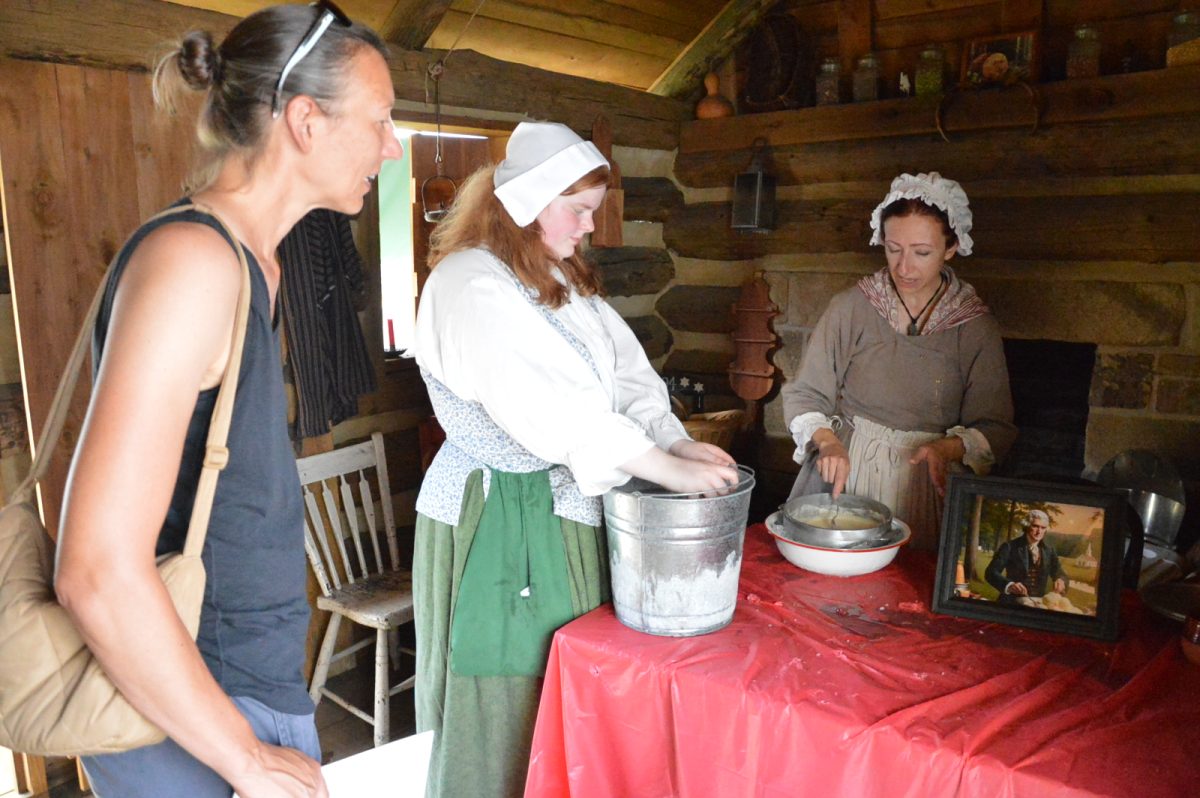
New this year, the George Washington Hotel added needlepoint and weaving demonstrations, along with the Soldiers and Sailors historical gaming group.
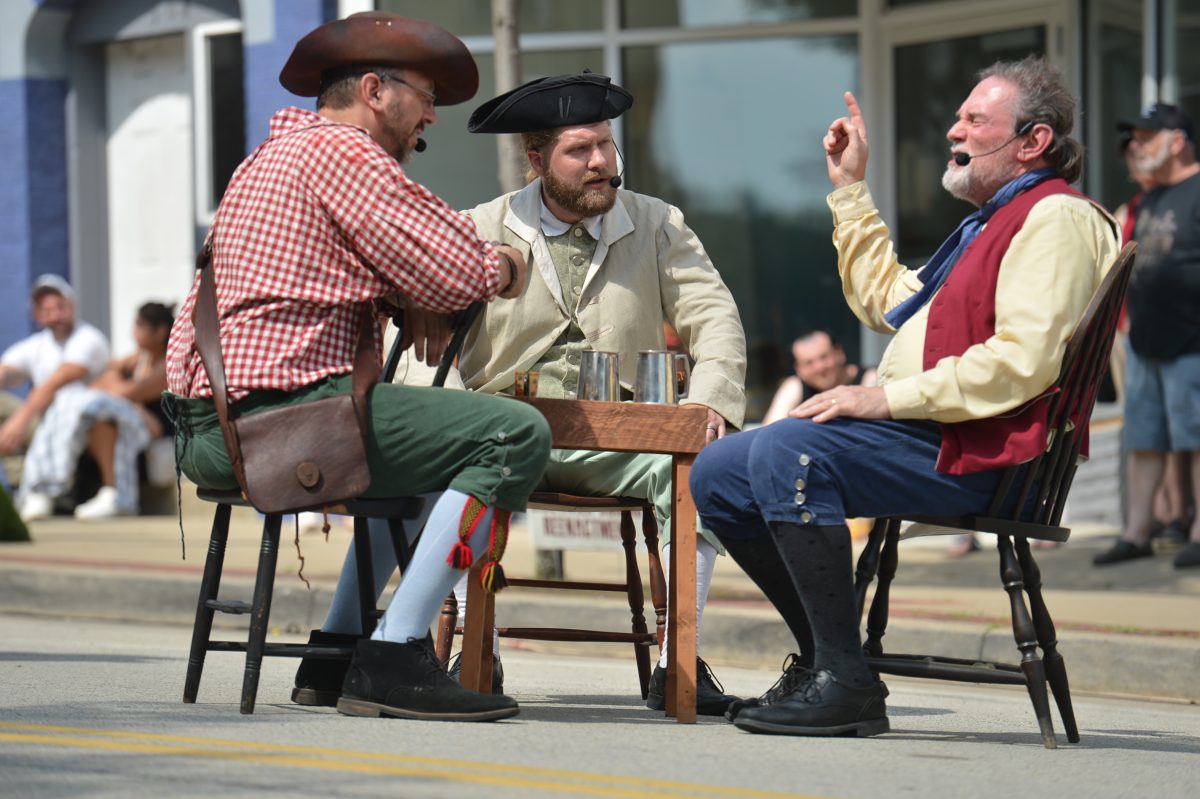
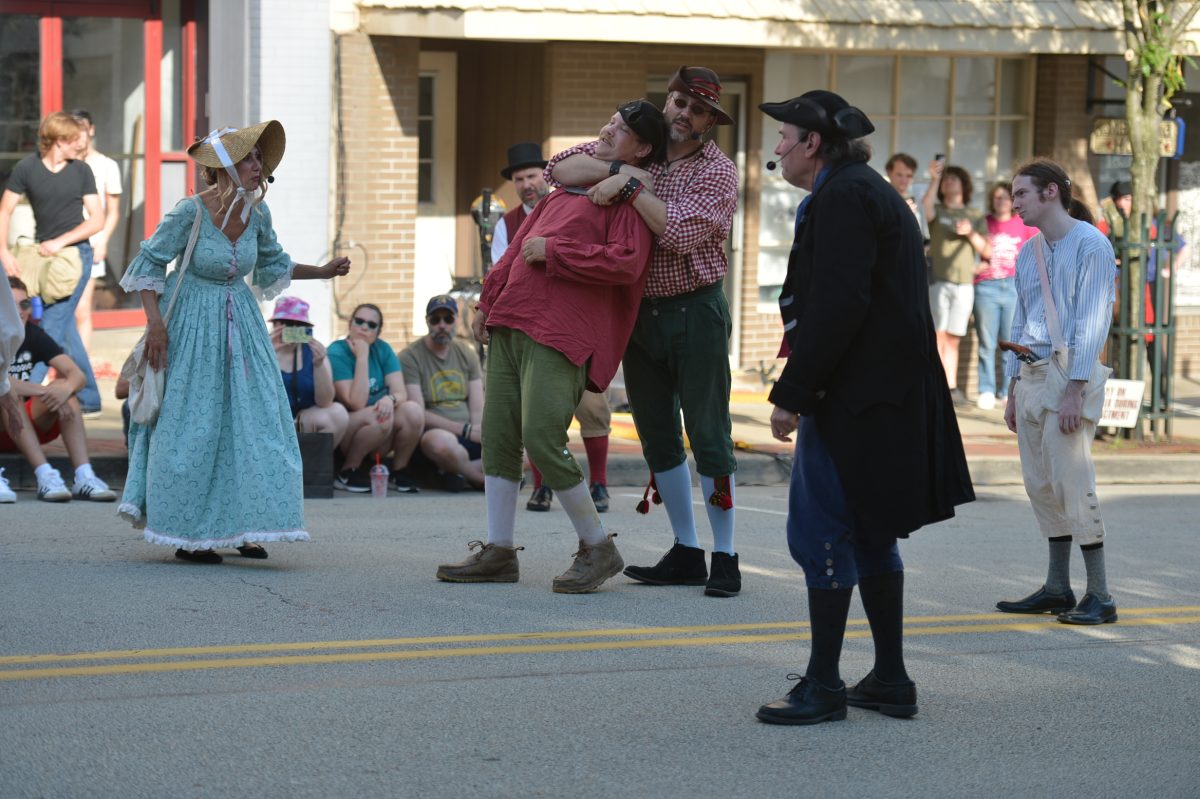
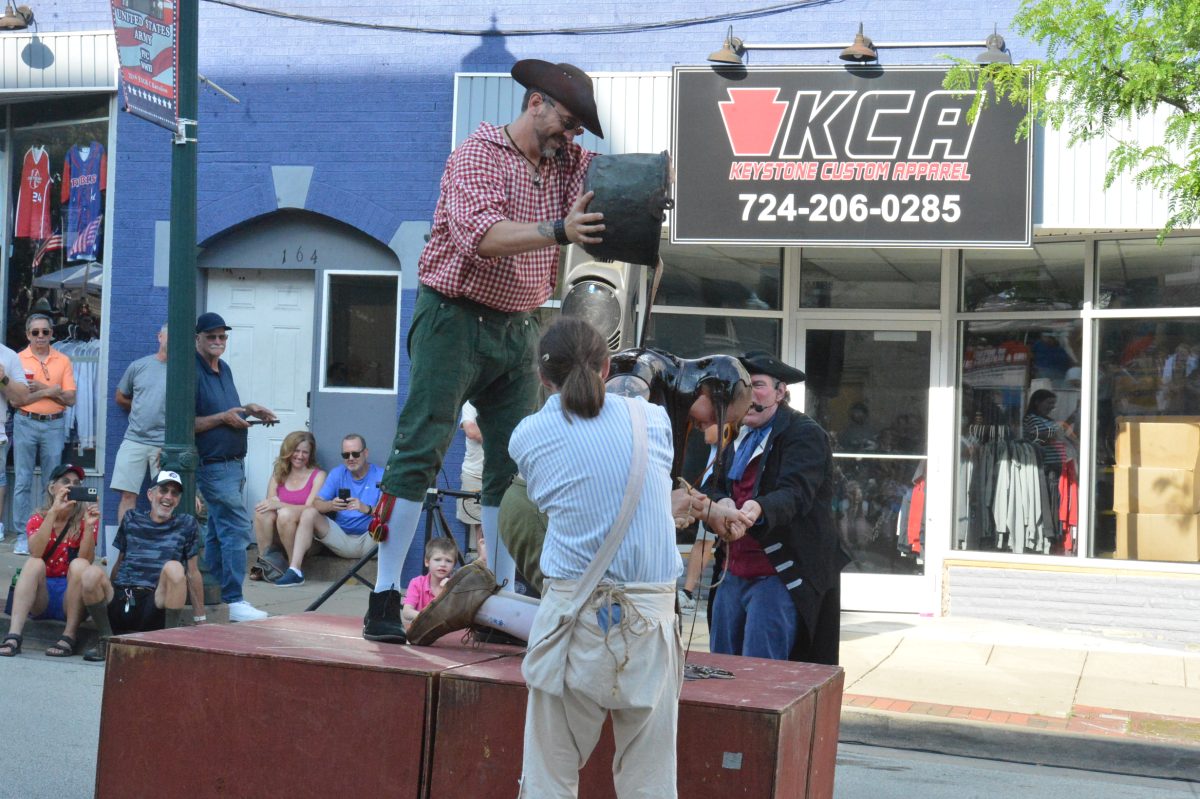
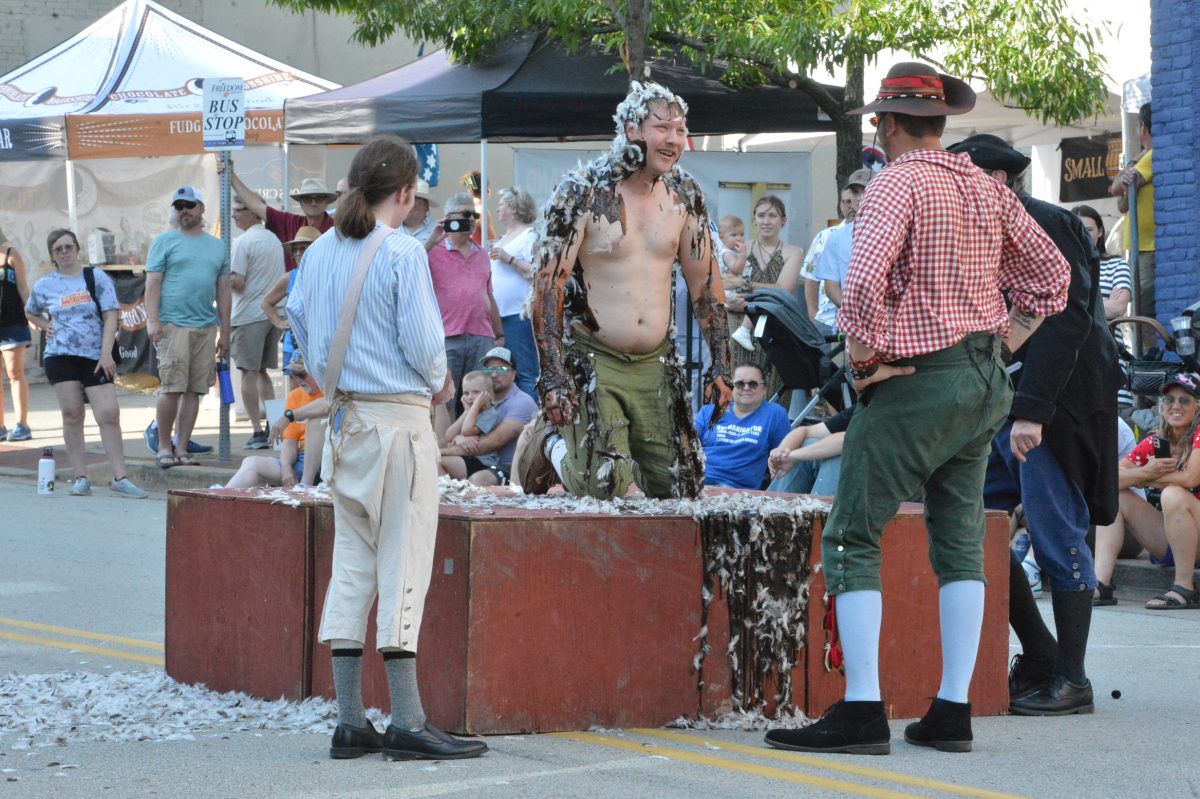
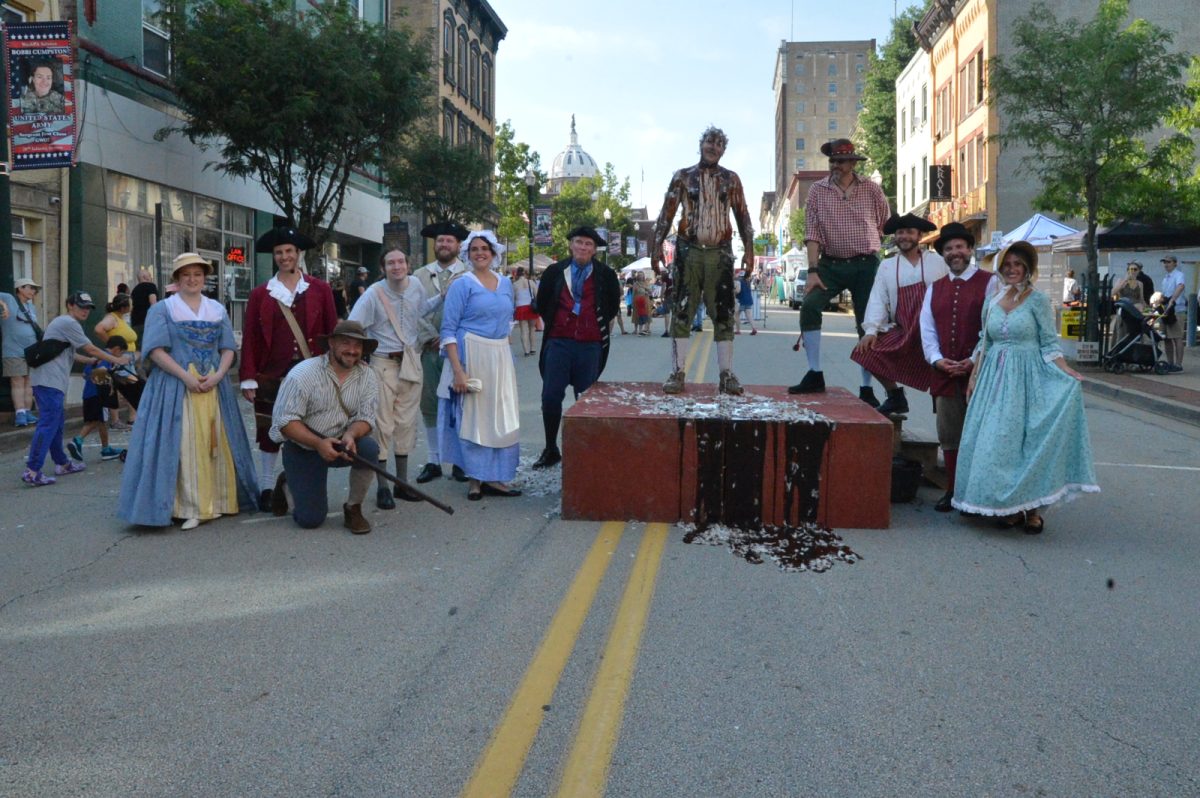
And as they do each year, the popular Whiskey Rebellion Street Theater found a new angle for the story, playing out six scenes among the rebel organizers, charting the course from their displeasure over the new tax to their boiling point, the tarring and feathering of a tax collector.
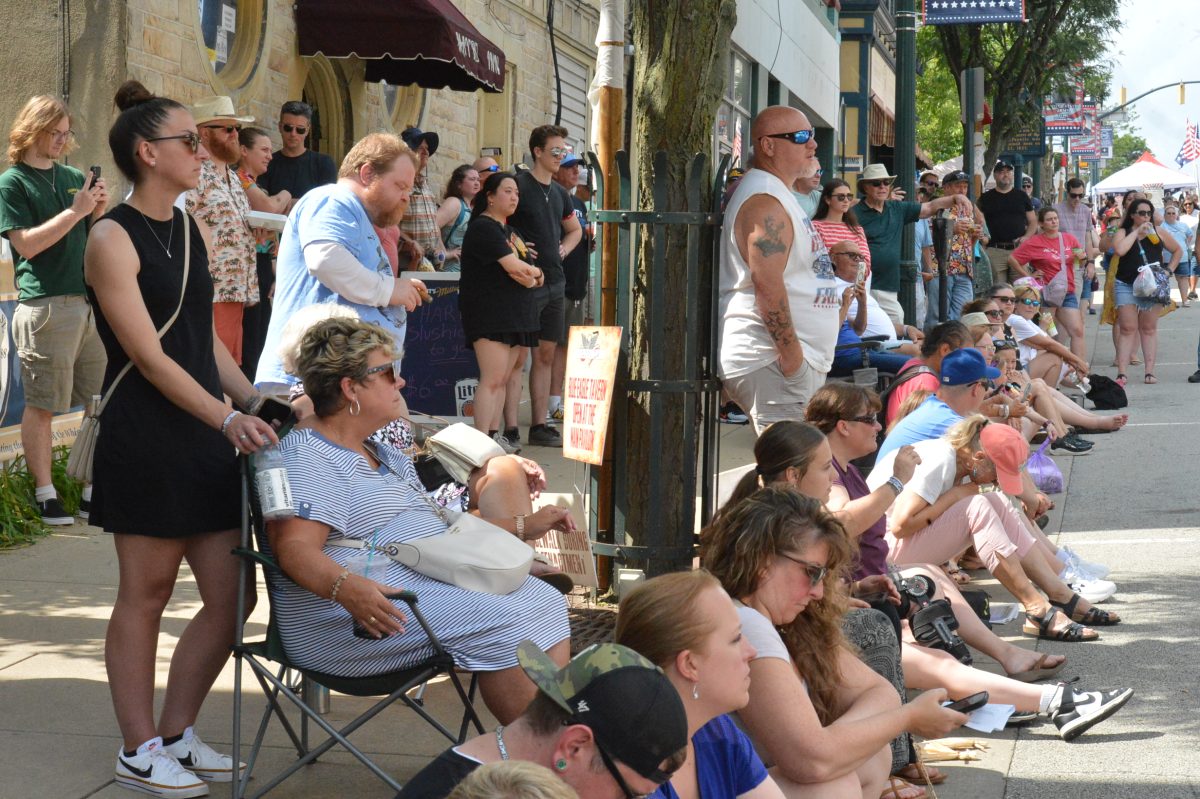
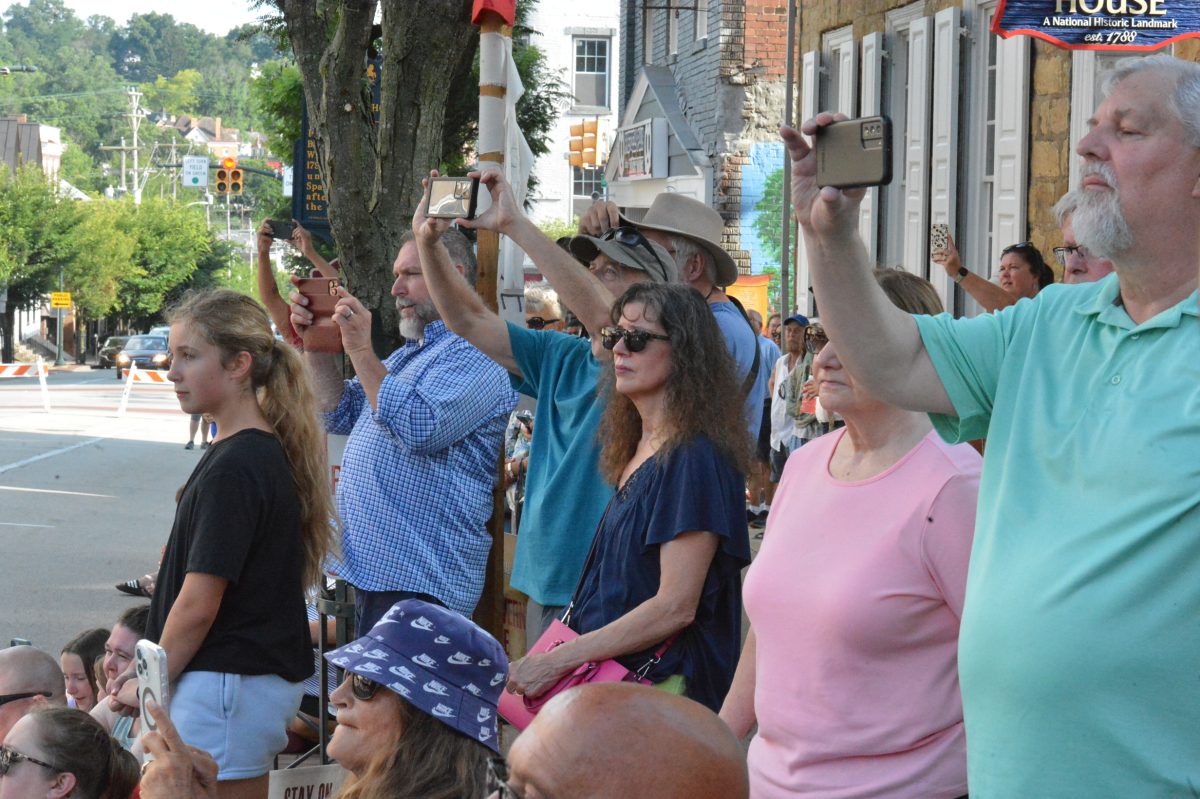
Crowds formed the sidewalks along Main Street near the top of the hour to catch the latest installments, which mixed historical figures like Bradford with invented character Samuel Clayton, a town drunk who becomes a revolutionary firebrand.
The tarring and feathering in the final scene drew the biggest crowd response, with onlookers shouting “Tar!”
Pete Fernbaugh, who played the town crier, said the display helps people engage with history.
“I think it’s important to understand that even though we do have a strong, centralized government, it wasn’t always approved of, especially out here on the frontier, because they weren’t always taking our interests into consideration,” he said. “So I think it’s important for people to understand who fought before them, who created this world that we now live in, this country that we now live in. Any event that can do that is a worthy event.”
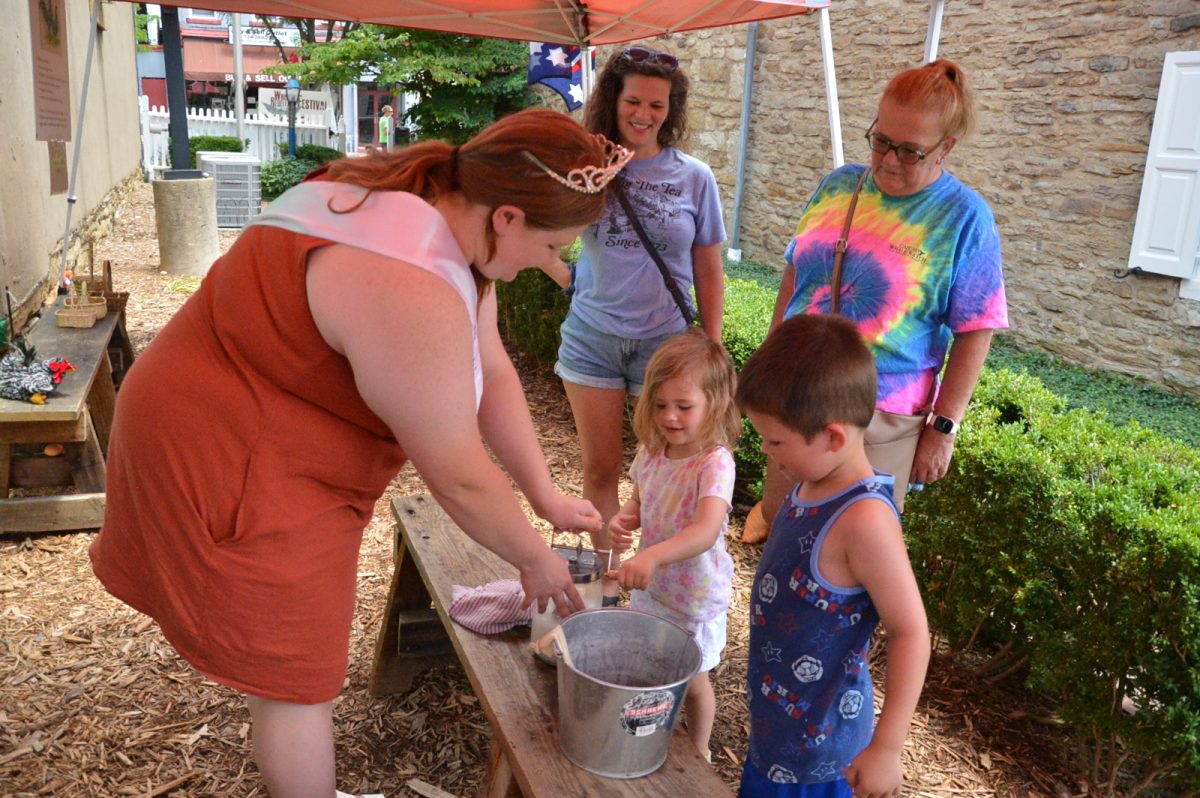
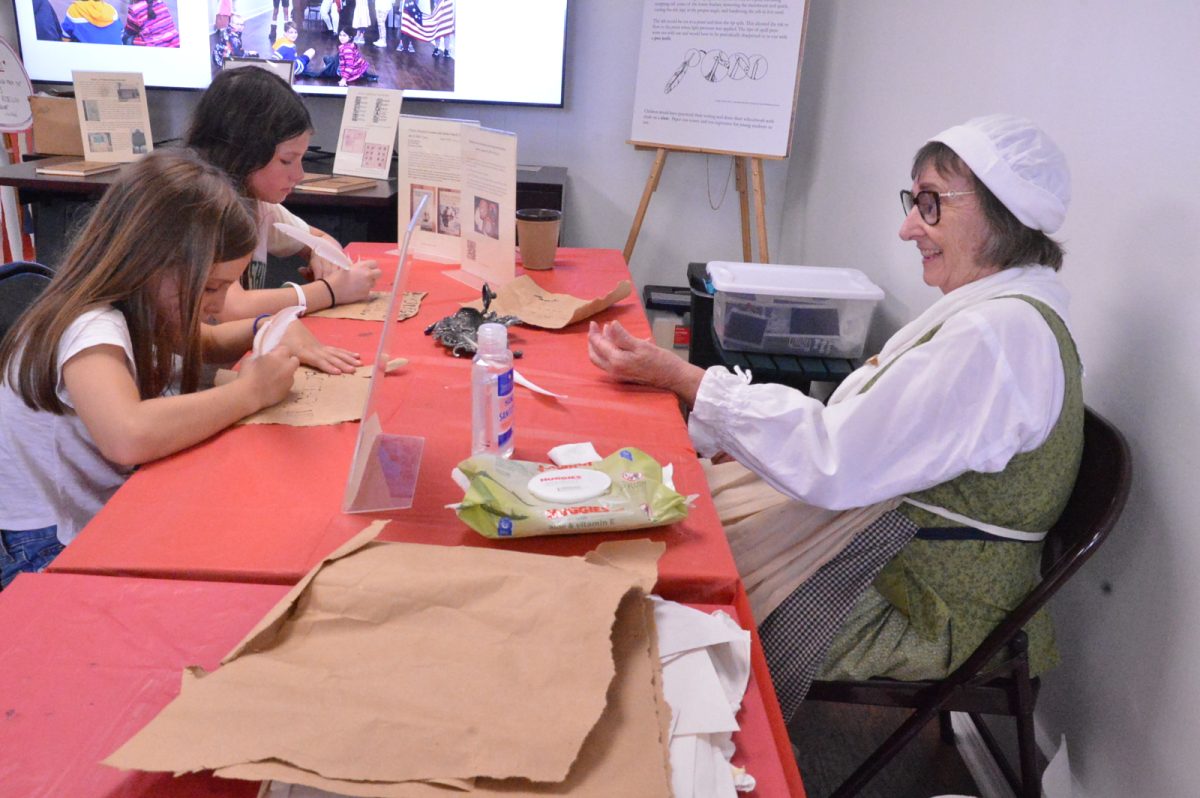
At the Bradford House and the Meeting House across the street, people could also experience more about life in the 18th century, playing old-fashioned children’s games with a hoop and stick, or practicing penmanship with a quill.
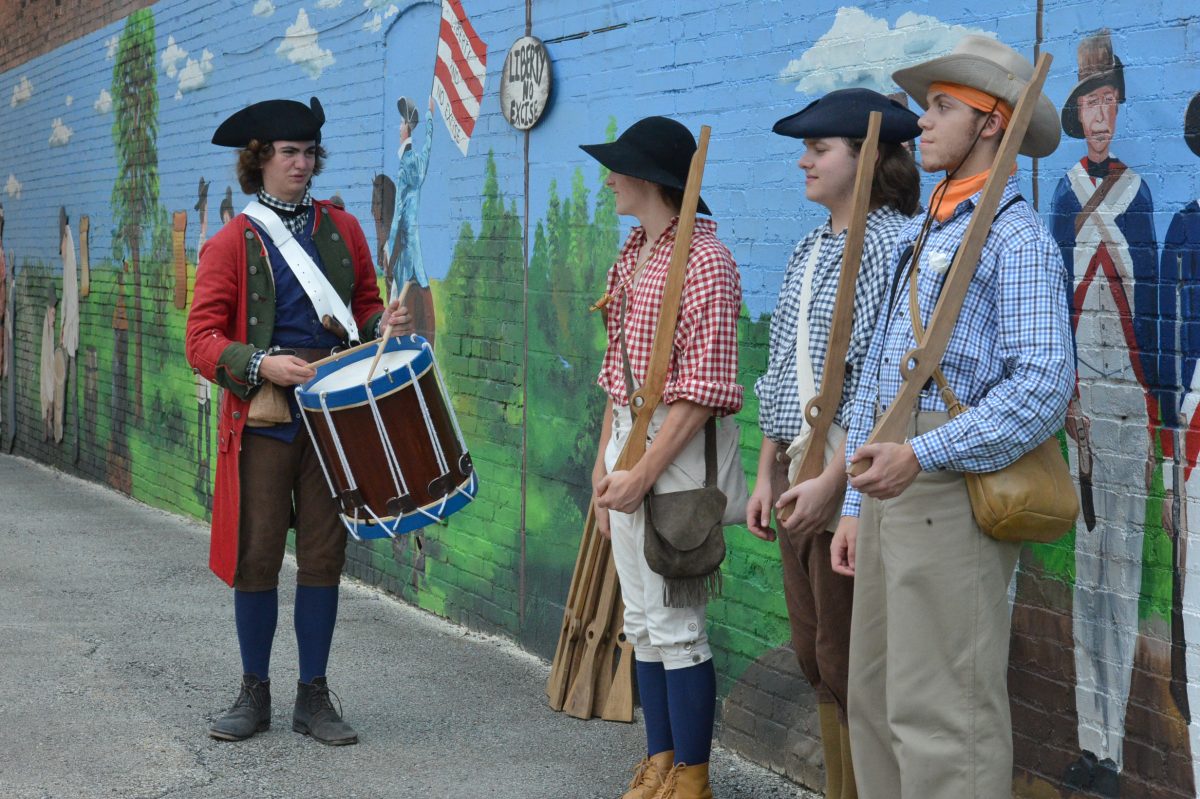
Jorma Borish of Strabane led volunteers in militia drills and musters outside the Bradford House; afterward, he explained to crowds the history of the Whiskey Rebellion.
Borish is a docent at the Bradford House, though he prefers to think of himself as a “living historian.”
Saturday, he wore the uniform worn by George Washington’s forces during the Battle of Fort Necessity, his first taste of combat. Sweltering under multiple layers in Saturday’s mid-90s heat gave him an appreciation for what those soldiers endured.
“This time period — or any time period — really isn’t out of reach,” he said. “Everything about it is still relevant. These were real people, and to be able to understand, I like to immerse myself.”
Last year’s festival drew about 7,000 people, the biggest crowd yet. Although numbers weren’t in yet, Liberatore said crowds had been packed for events Friday, including the night’s closing performance by the Washington Symphony Orchestra. Saturday was shaping up to be more of the same.
Word of mouth keeps the festival growing, Liberatore said.
“I even tell my family and friends who don’t come, ‘You have to come see what it is, and then you’ll come back,'” she said. “And that’s what’s happening. I had somebody that I ran into earlier who drove an hour and 20 minutes to come here.”
A frontier history enthusiast, Maximilian Brown of Brentwood had wanted to come to the festival since hearing about it last year. Saturday, he participated in a militia and muster drill outside the Bradford House.
“I think it’s awesome,” he said. “I love seeing all the costumes and the historical sites. It’s so cool to be able to see all the stuff I read about so much.”