

Ham radio operators have a field day
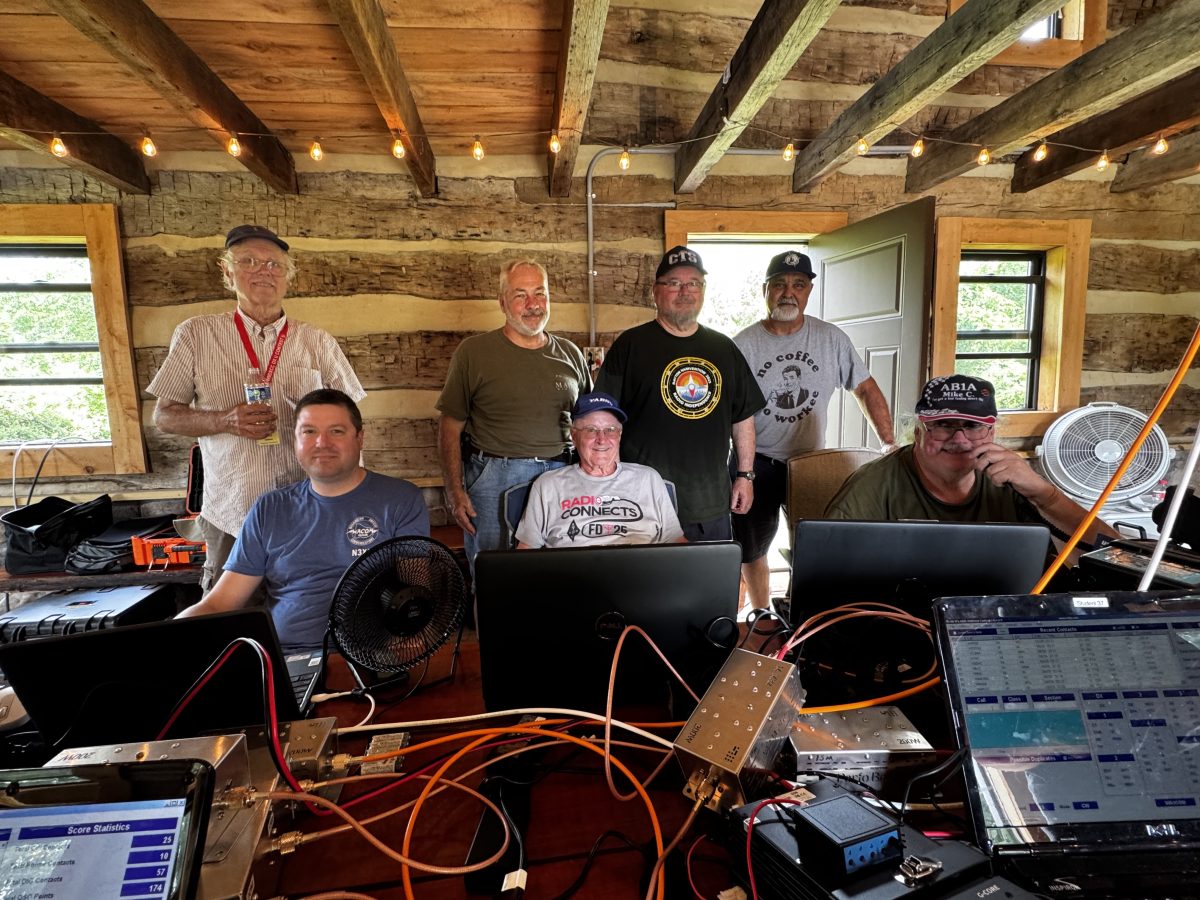
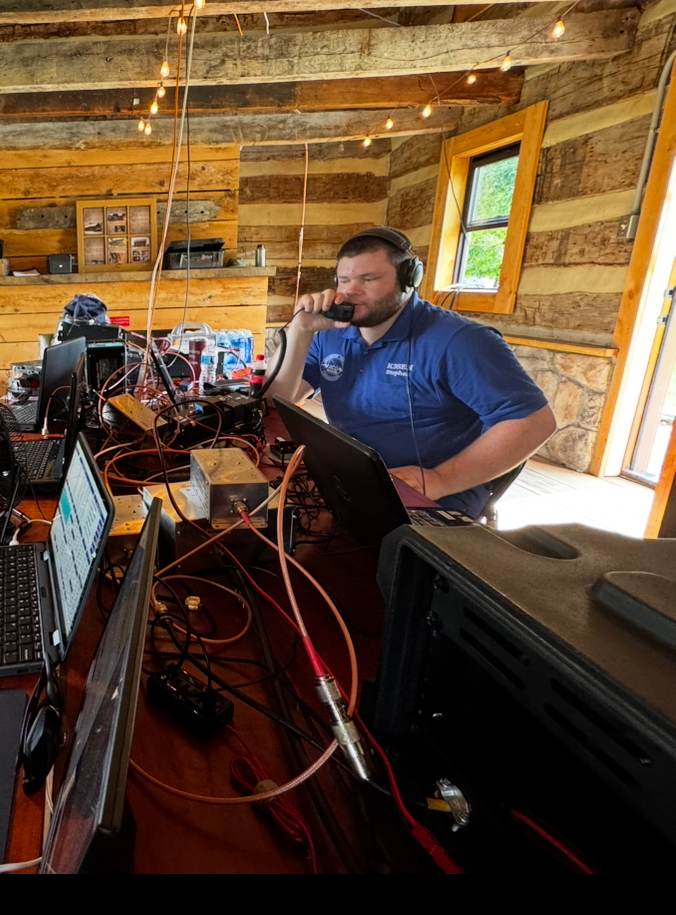
It is midday on Saturday, and a half-dozen members of WACOM (Washington Amateur Communications), an amateur radio club, are sitting inside the historic log cabin near the observatory of Mingo Creek County Park, a hodgepodge of cables, radios, and transmitters set up before them.
“Oh, Iowa! I got a new one!” said Mike Christeson, a ham radio enthusiast and a member of WACOM.
WACOM is participating in the 2025 AARL Field Day, an annual 24-hour event where “hams” gather to practice their emergency communications skills, and teach visitors about the importance of ham radio operations.
WACOM set up a temporary station for the event and invited the public to learn what it takes to operate a ham radio – a lifeline during disasters, where traditional cell phone or landline service fail.
That’s when hams step in, providing emergency communications to officials and citizens, said WACOM vice-president Tom Wright.
During the event, WACOM’s goal is to make contact with as many other amateur radio stations as possible in 24 hours. They also participate in various competitions that test their operating skills and technical proficiency, and clubs earn points for meeting those goals..
Ham radio is more than just a hobby, said longtime WACOM member Bill Steffey. It’s an important backup communication method when conventional systems fail because of floods, hurricanes, fires, or other disasters.
Hams have a long history of serving communities when storms damage critical communication infrastructure.
“There are numerous documented instances of disasters or power failures or floods, like in North Carolina and during Katrina and Hurricane Sandy, where ham radio was the only means of communication,” said Wright.
Ham radios function completely independently from the internet and phone systems, and hams can set up a station almost anywhere in minutes using a wire antenna in a tree or on a mast. Often, amateur radio is the only available means of communication when all other systems fail.
AARL stands for American Radio Relay League, and Field Day – which started in 1933 and has been held every year since – is the most significant on-air event of the year for ham radio enthusiasts across North America, drawing more than 40,000 “hams,” who set up temporary transmitting stations in public places to test their skills.
There are an estimated 900,000 hams in the U.S., including 400 in Washington County. About 60 people have WACOM membership.
WACOM has a relationship with Washington County emergency agencies, and WACOM participates in providing emergency communications for area races, including the Run for Alex and the Labor Day 5K in Washington.
Race routes have areas where cell phone communications could be difficult, so club members are posted along the route with their radios, able to call in if someone needed the help of emergency medical services or if traffic issues arose.
“We provide extra communications because we put a couple more volunteers on the course, and the more eyes you have the better things are, really,” said Wright.
And, ham radio draws people of all ages, ethnic backgrounds, education levels, and work experience, who all share a passion for the communication method.
Mike Lazeroff of South Strabane Township, became interested in ham radio when he was 12 years old, after his grandmother gifted him a small, portable radio that had an AM broadcast band and a short wave band. A neighbor who was a ham radio enthusiast introduced him to the hobby, and it impacted his career choice.
Lazeroff served for 20 years in the U.S. Air Force in radio communications, traveling around the globe and volunteering for radio operations globally. He was a member of a ham radio club during his service.
“Back then, when I was 12, radio was magic. We didn’t have the internet or cell phones,” said Lazeroff. “I was fascinated, listening to all these stations and faraway places.
The magic of taking a simple piece of wire like that and literally talking all over the world with it, it’s remarkable. I said, ‘I want to learn how to do that, that is so cool.’ And I spent 20 years doing it in the Air Force doing it. I’ve done this all over the world and it is fun and meaningful.”
Dr. Rich Scaglion, a retired anthropologist and New Jersey native who splits his time between Washington County and Oahu, Hawaii, said with a laugh, “I live in Hawaii in the wintertime and I still talk to these guys every week, because I like them. And when I’m here, I talk with my Hawaii guys.”
Steffey, who earned his license in the 1970s, has communicated with every country in the world except one – North Korea, which bans amateur radio activity.
Steffey, like several WACOM members, has achieved the rank of amateur extra, which can take years to reach but enables those with the certification to gain access to more frequencies.
He was able to contact a ham radio operator in the Galapagos Islands because of his “extra” rating.
Last year, WACOM ended up connecting with hams from North American stations except for the Northwest Territories during Field Day.
Hams are assigned call numbers when they receive their license – Steffey, for example, is NY9H, while Lazaroff is K3AIR, Okorn is W3CT, and Crhisteson is AB1A.
“We’re a close group, but sometimes we don’t remember each other’s last names, but we all know each other’s call signs,” said Steffey, with a laugh.
On Saturday, Dejanira Okorn, whose father, Jack, is a WACOM member, dropped by to learn more about the club.
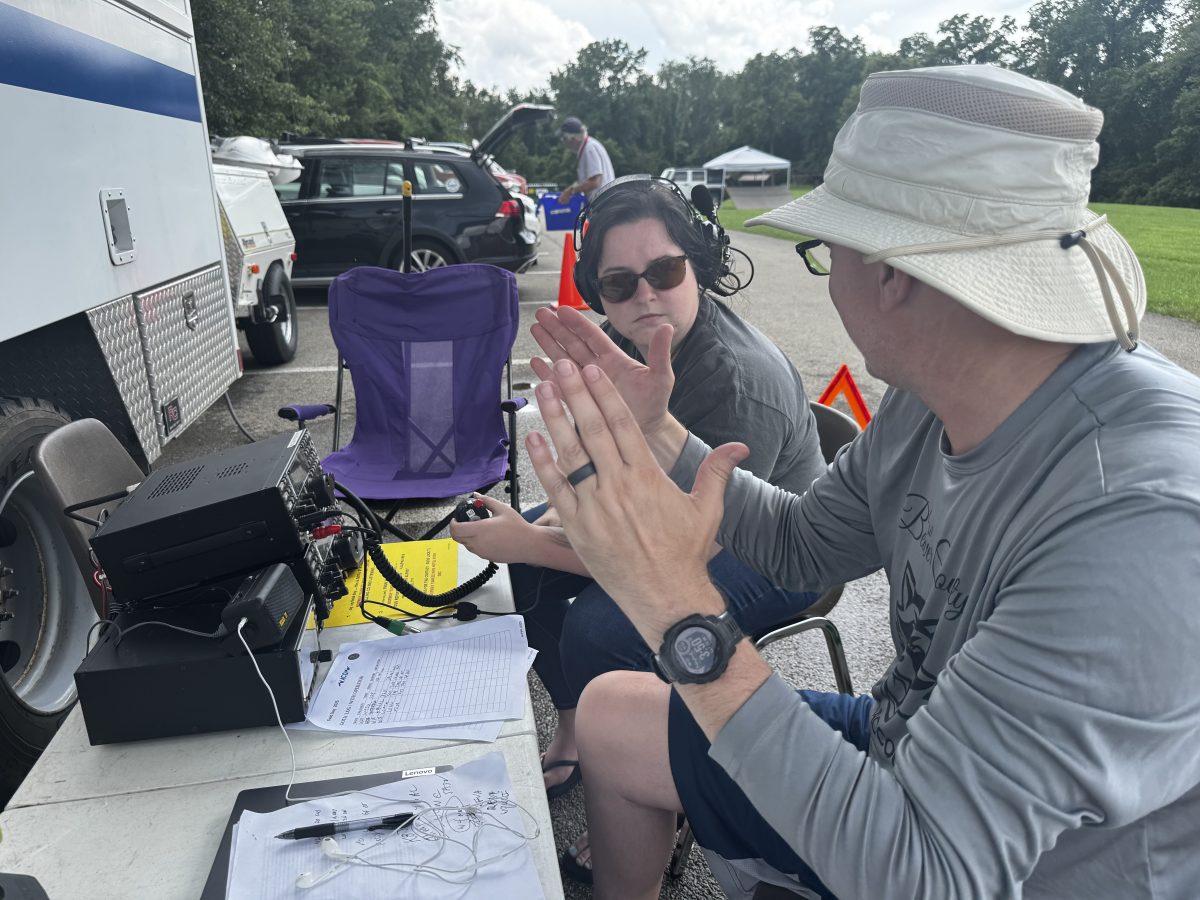
“This is November, Yellow, Nine Hotel. November, Yellow, Nine, Hotel,” said Okorn, who sat at a GOTA (Get on the Air) table and repeated the call, as Wright guided her through the steps to reach a U.S. ham operator.
“It was confusing at first,” said Okorn, who ended up touching base with an Indiana ham. . “But it was cool to connect with someone. It was satisfying.”