

Region can avoid fallout from helium supply chain disruption
Although the escalating war in Iran has threatened to disrupt the global supply of helium – an inert gas critical to both health-care and technology industries – western Pennsylvania will likely escape negative effects in the short term, according to experts and industry leaders.
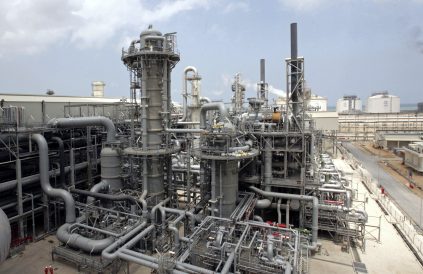
The March 18 Iranian strike on the Ras Laffan natural gas complex in Qatar has jeopardized about a third of the global supply of helium, which is refined as a byproduct of the LNG extraction process at the sprawling facility.
The small Persian Gulf nation is a major producer of both LNG and helium due to their joint possession of the North Field, which is the largest proven reserve on Earth, per QatarEnergy data.
While helium is one of the most abundant elements in the universe, it is relatively scarce on Earth since it is effectively a finite resource due to atmospheric escape, according to University of Pittsburgh Center for Supply Chain Management Director Prakesh Mirchandani.
Helium has a number of “unique properties” that make it invaluable to operations that require sub-zero operating temperatures, Mirchandani said, such as MRI imaging and semiconductor production.
There are no viable substitutes for helium in certain cryogenic operations, according to a 2025 U.S. Geological Survey report.
Mirchandani said that the attack on the Ras Laffan facility will have a negative impact on the global helium supply and will likely contribute to rising costs for industries that utilize the gas.
The U.S. is one of the largest global producers of helium after Qatar, with annual refinement capacity outpacing domestic consumption, he said.
This means that while prices for helium may rise over the coming months, American companies are unlikely to see a sudden decrease in helium availability, Mirchandani said.
Allegheny Health Network hospitals have not been impacted, and “don’t foresee any significant issues in the near term,” according to Public Relations Director William Toland.
Drew Rager, director of MRI Imaging Services at WVU Rockefeller Neuroscience Institute, said that at this time, WVU Hospitals is not experiencing any operational impact to MRI services related to helium availability.
Helium is not consumed in routine daily scans, so short-term supply fluctuations do not typically impact clinical operations, Rager said in a statement.
Mirchandani said American helium resources could be exported at greater rates if global helium refinement capacity cannot be returned to pre-war levels, eventually decreasing domestic availability.
Companies that use helium can install systems to capture and recycle the gas in order to conserve the resource, he said, which would become increasingly financially viable if helium costs continue to rise.
According to Mirchandani, the health-care industry should “keep a close eye” on the helium market over the next few years to ensure they maintain an appropriate supply of the gas to continue clinical operations.
Rebuilding the necessary refinement capacity could take years and billions of capital investment, so there is no clear timeline for the helium market to stabilize.
“There’s no quick fix,” he said.