

The data center boom: What to expect from facilities
In the past several months, residents in Southwestern Pennsylvania have have heard a lot about the potential development of data centers in the region.
If these projects were to come to fruition, what exactly does that mean for the communities where they are proposed?
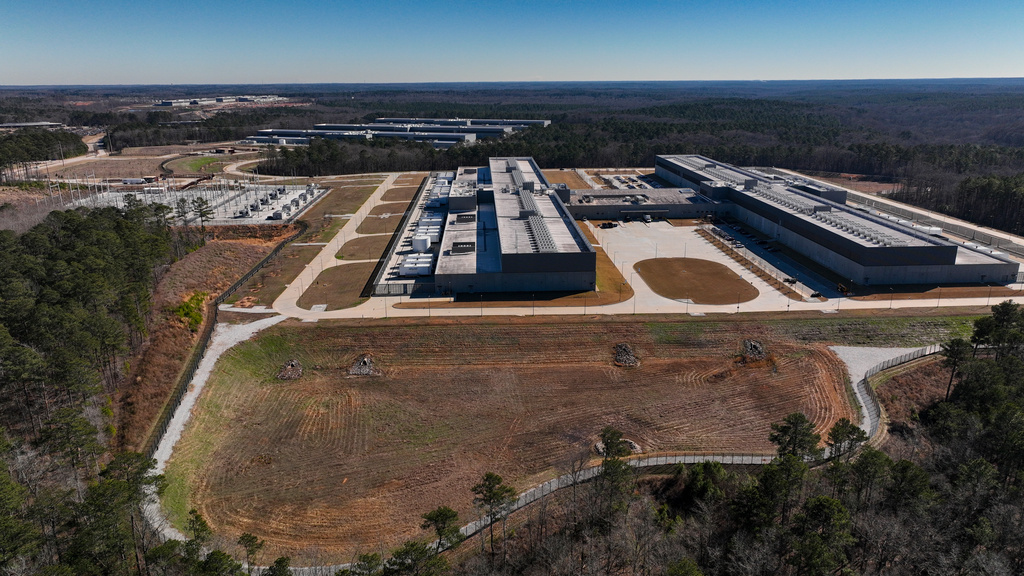
Data centers, from the outside, are essentially large warehouses. Inside are servers and other computer equipment that run constantly to operate just about everything that happens on the internet.
Dr. Lisa Kovalchick, a professor and the chair of Pennsylvania Western University’s Department of Computing and Engineering Technology, said the rush to build the centers is primarily fueled by artificial intelligence (AI) and cryptocurrency.
“(AI) is constantly storing data and learning from the data,” she said. “All that leads to the need for more and more servers to store data, and more computers to be able to do the computations and things like that.”
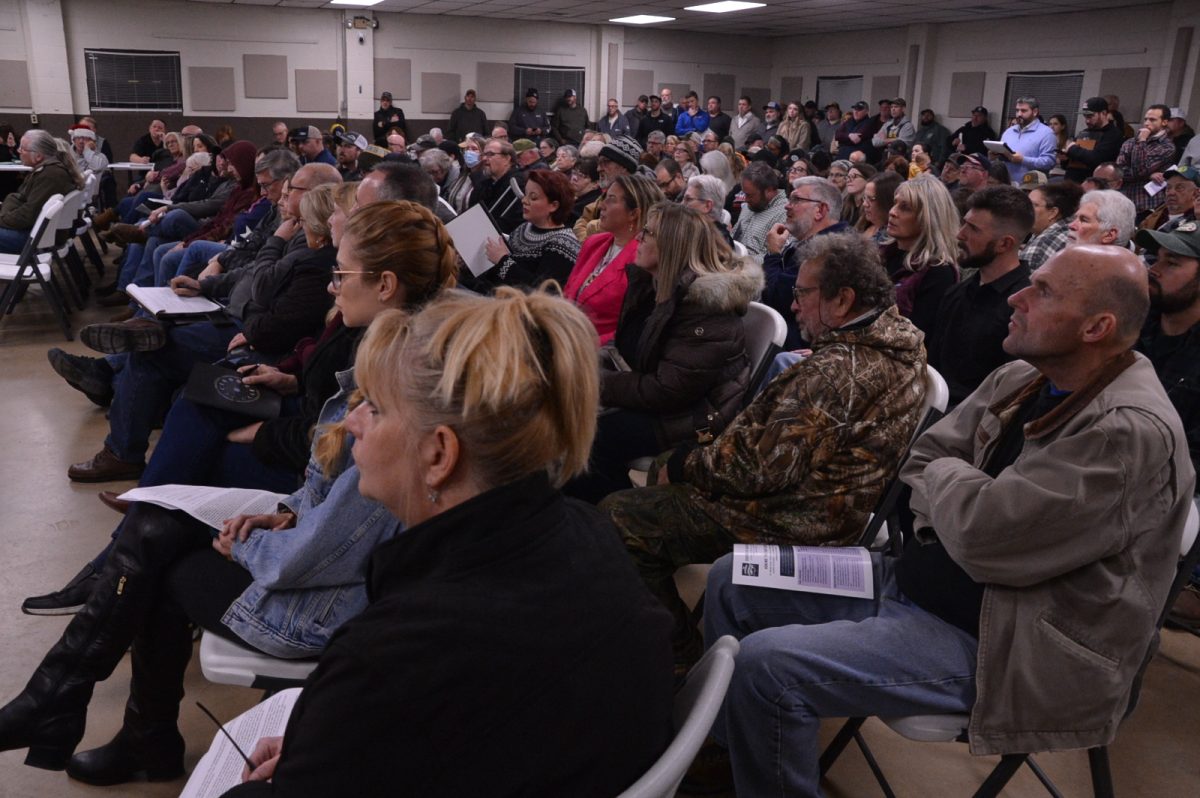
Sarah Martik is the executive director of the Center for Coalfield Justice, a nonprofit organization focused on environmental issues. In recent months the group has held community forums to raise awareness on data center proposals in the region.
“Data centers are not a new concept,” Martik said. “What is new is the (multi-building) data centers focus. Those are fueled by the development of AI.”
A potential site for that type of center is in South Strabane Township, off of Zediker Station Road. Since the fall, real estate firm JLL has been marketing the 1,400-acre tract of land, owned by CNX Resources, as having 400 buildable acres for a data center.
A brochure created by JLL shows a couple of different potential layouts for such a development. Each one features more than 40 buildings to house servers.
“It’s only one potential use for the property. CNX’s broader interest is really to find the highest and best use for that property,” said Daniel Bitz, a CNX employee, at a recent South Strabane Township board of supervisors meeting.
In Greene County, a data center is in the early stages of development at the former site of the Robena Mine in Monongahela Township.
The county’s planning commission voted 8-1 to allow development to begin on phase one of “Project Hummingbird.” The Pittsburgh-based International Electric Power hopes to begin building a 1,400-acre data center complex this year, and complete it by 2028.
Sara Harvey, the director of Fayette County’s department of planning, zoning and community development, said her office has received no applications for potential data centers. The county zoning department covers all but 10 municipalities in Fayette County.
JLL’s marketing materials tout the property’s access to natural gas and water. According to the brochure, a data center could access 525,000 gallons of water per day from the public waterline, and an additional 1.5 million gallons per day from nearby “third-party sources” to power its operations.
A water treatment plant for the Robena Mine project would have capacity for 18 million gallons of water per day.
“They are withdrawing all of that water, and it is being evaporated … What does that look like down stream? We want to make sure that people’s drinking water resources are prioritized,” Martik said.
Utility bills are also a concern.
According to Kovalchick, a large data center can consume more than 100 times the power of a typical office building.
“(W)e have a finite amount of power we’re having to share with these data centers that have much more demand. It’s causing the cost (of utilities) to rise,” she said.
Pennsylvania is one of 13 states on the electrical grid operated by PJM Interconnection. That includes Virginia, which is home to the largest number of data centers in the country.
Jeff Nobers, the executive director of Pittsburgh Works Together, said much of the energy used in those data centers is generated in Pennsylvania.
Both Nobers and Matt Smith, the chief growth officer for the Allegheny Conference on Community Development, pointed to the potential for job creation, particularly during construction.
Martik pointed out that jobs are temporary.
“We’re not seeing family-sustaining jobs. Once they’re built, we’re looking at 20 full-time jobs. Many of those are maintenance,” Martik said.
According to Smith, there is also potential for jobs in manufacturing of components for the computing equipment housed within the data centers.
“That’s going to create a permanent, positive economic ripple for the communities where the data centers are situated. That’s a really significant point to note. The benefit is not isolated to the footprint of the data center itself,” Smith said.
South Strabane supervisors are working on an ordinance to address data centers, but there are limits to what they can do, said Bull. If a property’s zoning allows for one, officials have to honor that.
“That being said, our job is to make sure it has the least amount of impact on our residents and the neighboring townships,” he said. “This is an exercise in us doing our best to protect our residents from something that may never happen.”