

Smithfield town hall details transmission line proposal
Residents briefed on ways to object
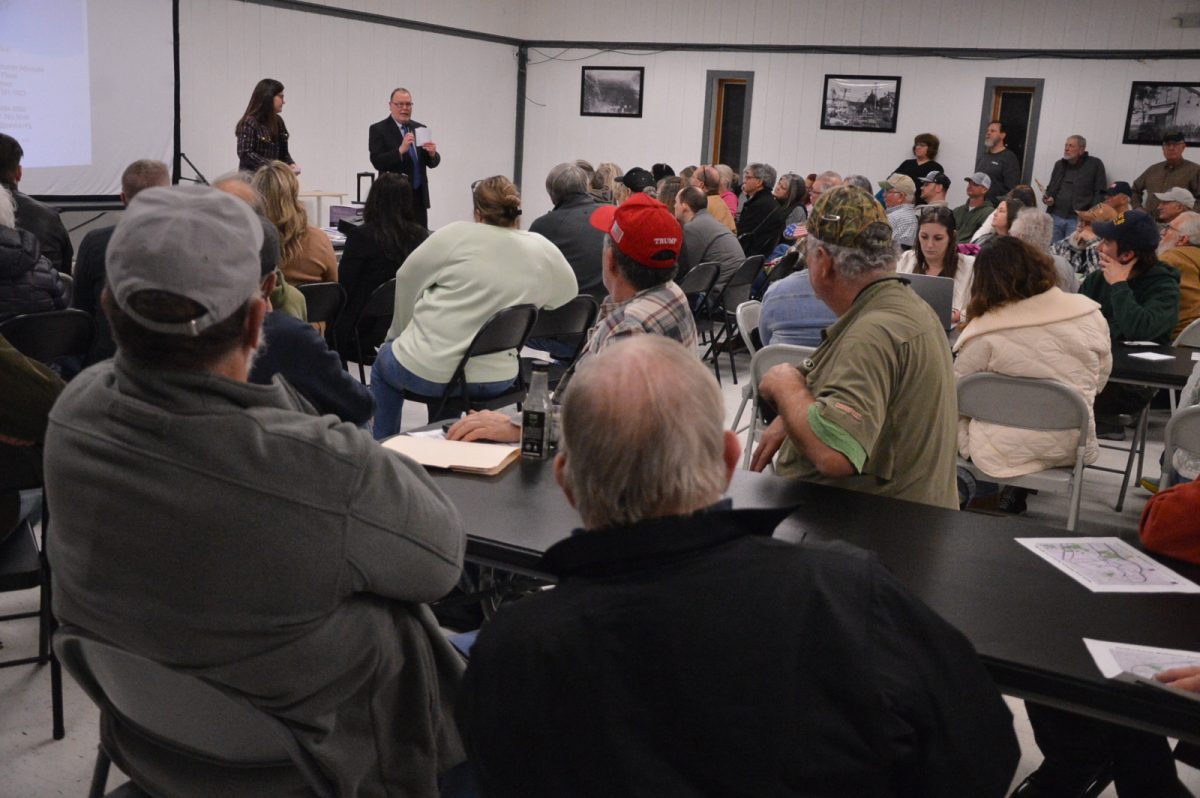
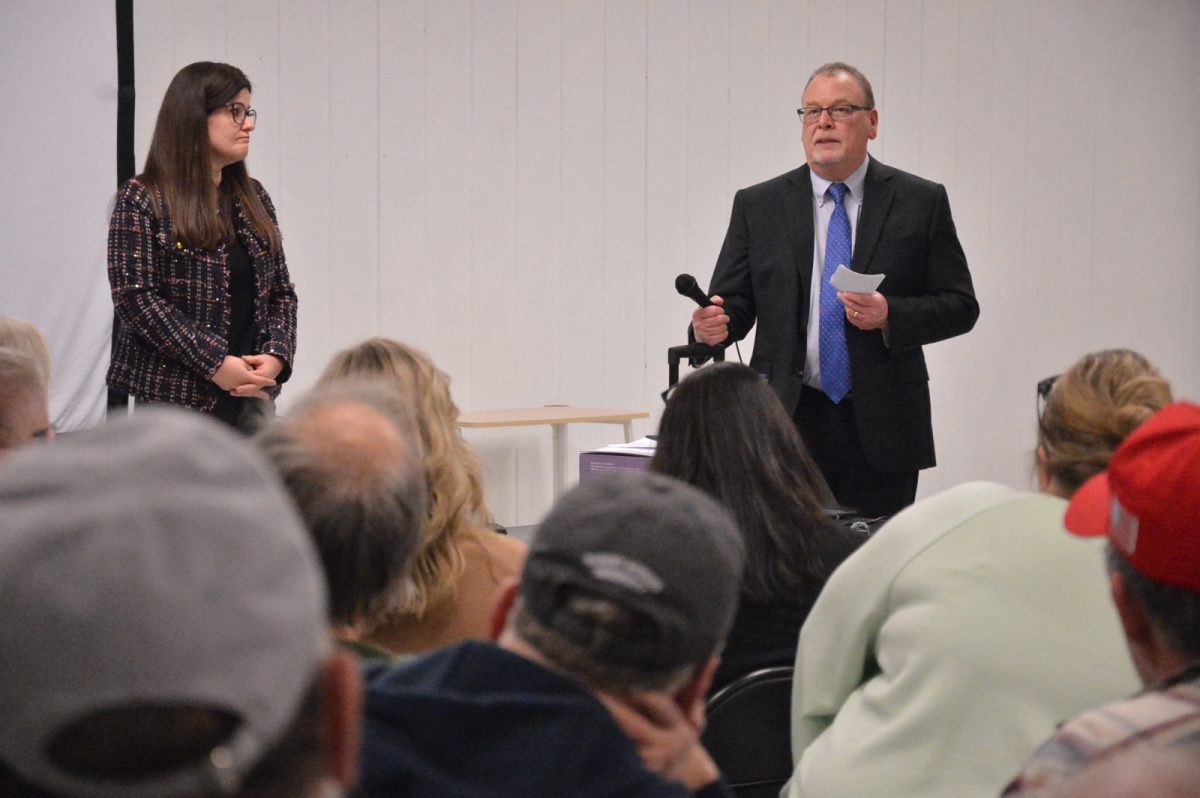
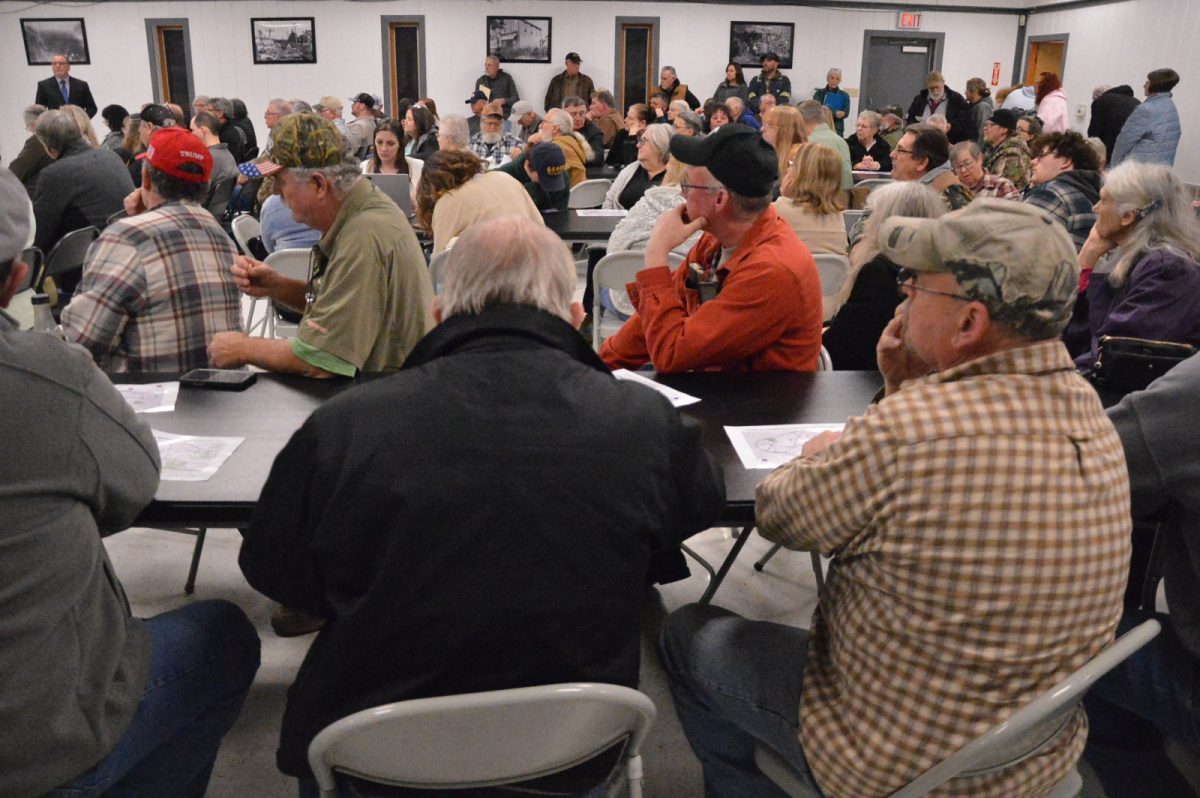
A standing-room-only crowd of more than 160 people packed a town hall in Smithfield Thursday on a proposed energy transmission line that would run through portions of Fayette and Greene counties.
NextEra expects to file its applications for the Mid-Atlantic Resiliency Link with the Pennsylvania Utilities Commission on Tuesday, said Darryl Lawrence, consumer advocate for Pennsylvania.
The 107.5-mile, 500-kilovolt transmission line would start in Dunkard Township in Greene County and end near Gore, Va.
In between, it would pass through sections of Fayette County, as well as portions of West Virginia and Maryland.
The main option would contain about four miles in Greene County and seven in Fayette, devoting more line to West Virginia, where it has seen widespread opposition. An alternate route put forth by NextEra would run further into Fayette County, going to a point north of Smithfield before dropping into Maryland’s Garrett County.
Lawrence, whose office represents the interests of utility ratepayers before state and federal boards, was brought in by state Rep. Charity Grimm Krupa, who co-hosted the event along with state Rep. Bud Cook.
Lawrence said regional grid operator PJM had identified the link as important to maintain the reliability of the electrical grid — particularly in the Virginia/Washington D.C. area, which has had had a shortfall in generating the power needed to fuel the new crop of data centers.
Grimm Krupa opposes the project, which she said would strain a Pennsylvania electrical grid already projecting blackouts and brownouts for next year because of poor planning at the state level.
“If we had a surplus and abundance of energy, it could be an amazing thing … it would be an economic boost to take our energy so that we could profit off of the sale of that, but that’s not where we’re at right now,” she said.
Although the consumer advocate office normally doesn’t object to projects along an existing right-of-way, it is more likely to intervene in cases of “greenfield development” that would include buying property or claiming it through eminent domain.
NextEra will be filing applications detailing the route and making any requests for eminent domain. The company will also apply for a certificate of public convenience, which allows it to operate as a public utility in Pennsylvania.
Some of the people at the town hall had already been contacted by NextEra representatives who may have interest in their property. Until NextEra’s application is approved by the PUC, land owners do not have to let their agents onto their property, Lawrence said. If they become a utility, they can come onto a property to do testing and take samples as long as they give 10 days notice.
The application detailing the route will be “enormous,” and probably at least 700 pages, Lawrence said.
He said his office will ask the PUC to make the application available on its website; if not, the Consumer Advocate office would get a copy and post it on its own site.
Impacted landowners are required to receive a paper copy. With the recent application filed by NextEra in West Virginia, others who wanted to see the filing had to visit locations such as county offices and libraries.
“It’s extremely cumbersome, and I think it inhibits the public process,” Lawrence said. “…We’ll do everything possible to make sure the … application becomes public, that it’s accessible and everyone can see it.”
The PUC will look at whether there’s a need for the project, risk of danger to the public, adverse environmental impact, and the Pennsylvania constitutional right to clean air and preservation of the state’s clean water and aesthetic beauty.
Grimm Krupa said if landowners want to file an objection to the project, they’ll need to act fast.
The PUC hasn’t set a timeframe for public responses, though Lawrence guessed it would be between 30 to 60 days.
Beyond that point, Grimm Krupa said, landowners would mainly have a voice in how much they’d be paid for any land the company took through eminent domain.
People can file a variety of responses to NextEra’s proposal, each with their own level of involvement. People can file a protest stating their objections to the proposal, or a petition to intervene, demonstrating that they have a direct interest. Either one will make them a party to the case.
An administrative law judge is assigned to oversee the proceedings.
Once they’ve become a formal party, people can decide how active they want to be.
Parties automatically get placed on an e-mail message list that could provide them with every item in discovery, which can run to tens of thousands of documents. There’s also a more pared-down version with items like judicial orders and the commission’s final decision.
“You can get the important documents, but you wouldn’t get all the cross-current that would go on between the attorneys and the company in the case,” Lawrence said.
They can make specific requests to the company for discovery, or submit witness testimony, though that also opens them up for cross-examination or discovery requests by the company for information tied to the case, Lawrence said.
In cases where larger groups of people are affected, they will sometimes ask for a site visit, where the administrative judge and a court reporter will come out to the site to take testimony.
The PUC will also hold a public input hearing where people can sign up to testify about the development’s impact.
“The more evidence that’s introduced in public input hearings, the stronger the case is to show the Public Utility Commission that perhaps this project is not the best of ideas,” Lawrence said.
People who don’t want to become a formal party can still write an objection letter or give comments.
After the judge issues a preliminary decision, people can file exceptions to improve the ruling before it goes to the PUC for a final order.
There’s no legal deadline for when a final decision must be issued, Lawrence said. Traditionally, the utilities will push for it to happen faster, while the consumer advocate office will try to prolong it; he’s currently involved in one filed in 2017.
“We want as much time as possible to do as much discovery as we need to do, get as in depth as we have to get, and strict timelines are going to hurt our case,” Lawrence said.
Residents said the town hall had made them better informed.
Beth Ann Bossio, owner of the Quarter Pine Tree Farm in Smithfield, had suggested the town hall to Grimm Krupa. If NextEra goes with its alternate route, her property would be affected, she said.
She hoped to dissuade people from signing over easements to land agents prematurely.
To see the level of turnout Thursday was “heartwarming” for Bossio.
“You really don’t know how much people care until you see a town hall like this, that there’s standing room only, that you finally see, ‘Okay, it’s not just you that scared about it. There’s other people in your community that are worried too,'” she said. “So I think that this is just the start of Pennsylvanians fighting against this unfair project.”
A map showing the proposed and alternate routes for the 107.5-mile, 500-kilovolt transmission line is available at bit.ly/4aU3TRK.