

Vatican priest visits Washington County on ‘Economy that Kills’ tour
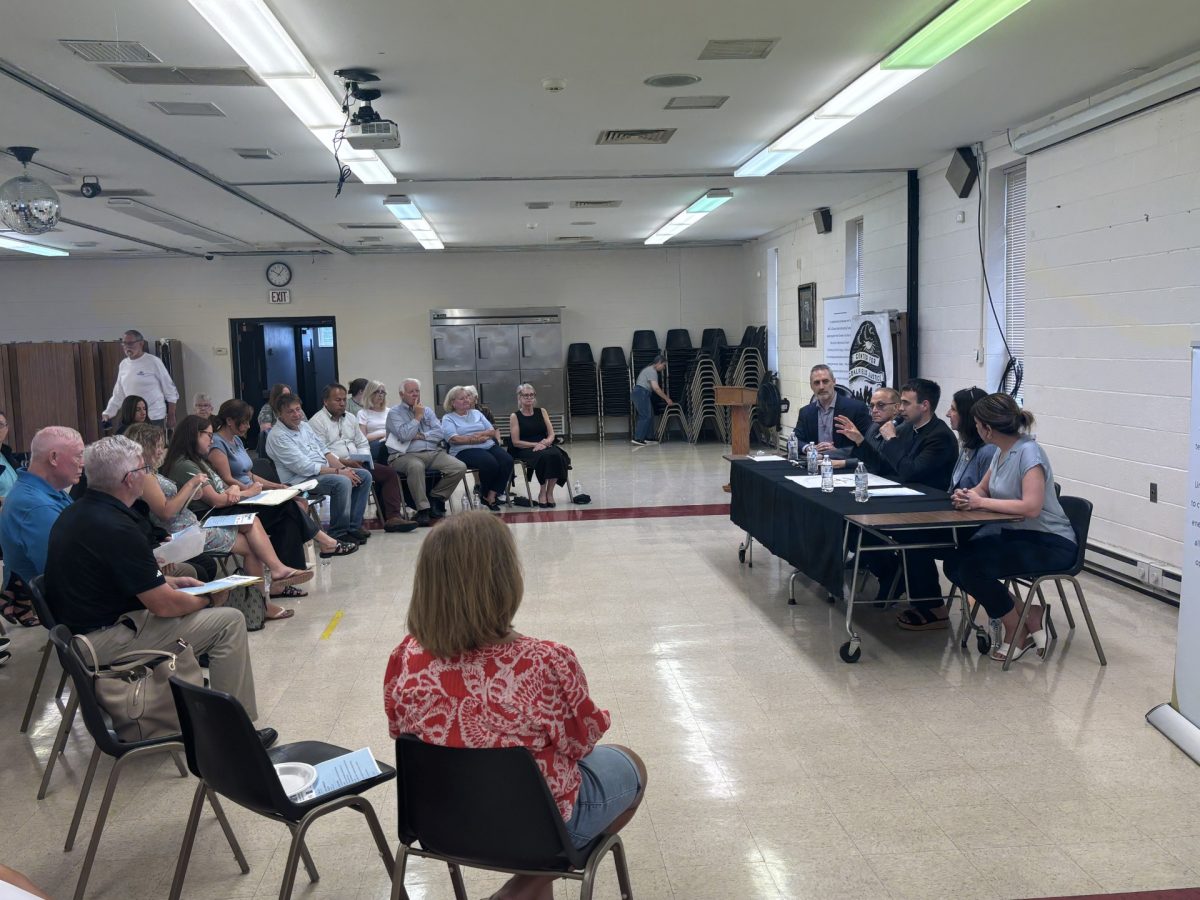
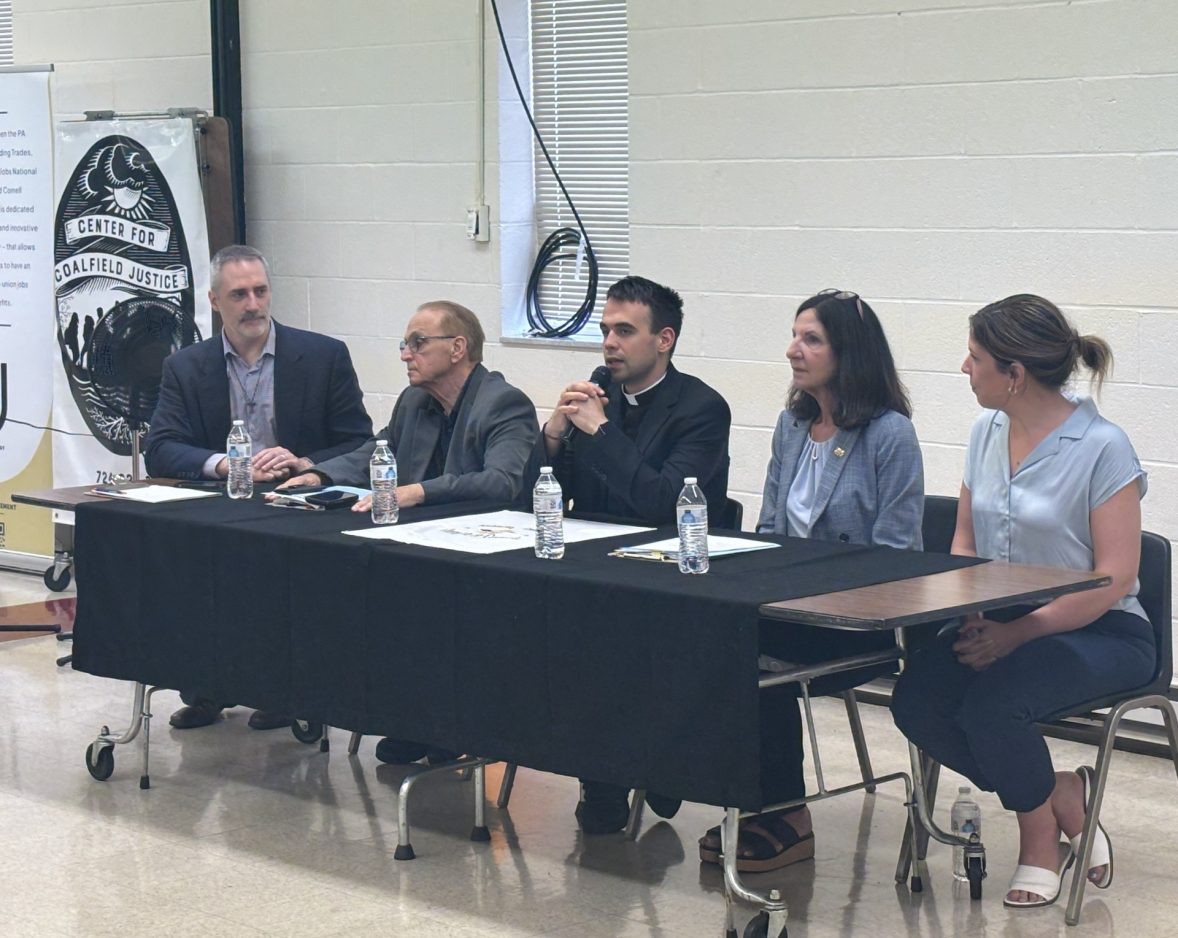
The Vatican’s social teachings were on full display during a weekend event at St. Oscar Romero Miraculous Medal Church in Meadow Lands.
The Rev. Mattia Ferrari, chaplain of the World Meeting of Popular Movements (WMPM), stopped in Washington on his month-long “An Economy That Kills” national tour to discuss the intersection of labor rights, environmental protection and Catholic doctrine.
More than 35 residents and regional labor leaders gathered for the event, which was organized by the Washington-Greene Central Labor Council and the Catholic Diocese of Pittsburgh.
The WMPM is an initiative created by former Pope Francis that is designed to “create an ‘encounter’ between church leadership and grassroots organizations working to address the ‘economy of exclusion and inequality’ … by working for structural changes that promote social, economic and racial justice,” according to the organization’s website.
Ferrari connected the mission of the tour with Pope Leo XIV’s 2025 apostolic exhortation “Dilexi te,” which builds on Francis’ earlier publications that call for the church to recenter the eradication of poverty and social injustices.
Ferrari said that “the poor do not wait anymore; they organize from below in this new way. This is also the message of Pope Leo, the organized communities can work together to face the big challenges of this historical period.”
Washington-Greene CLC President Donna Patrina said the coal, steel and glass industries in Southwestern Pennsylvania helped build local communities and the country at large through the 20th century, but that the region had irrevocably changed as these industries shrank over time.
Patrina said creating a public sector-equivalent to the Occupational Safety and Health Administration; raising the federal minimum wage; and enacting sensible regulations for artificial intelligence technologies so human workers are not displaced will all help workers across Pennsylvania survive the new 21st century economy.
According to Center for Coalfield Justice Executive Director Sarah Martik, the generations of local workers “paid a price” at the hands of the companies who led these industries.
Martik called for more government investment in remediating environmental pollution left by these industries, and work to build resilient, diversified communities.
“It’s important to remember that we have more in common with wastepickers in Kenya and Indigenous Peoples in Colombia than we do with the people at the top making decisions here,” she said.
South Franklin Township resident Jodi Borello shared her experience raising two children less than 1,500 feet from a natural gas pigging station and the impact, she said, the alleged discharge of chemicals had on her family.
“This is appalling that this is happening in our communities,” she said.
According to Ferrari, “since we are disciples of Jesus, we are to help our brothers who suffer under these injustices. This is our identity as Catholics.”
Ferrari said that to effectively combat the critical challenges facing society, communities must build connections and remain humble.
“To be able to face these challenges, the feeling of hurt must be rooted in the heart of Jesus,” he said. “We have to strengthen these connections and not lead, but serve communities like yours and build these relationships.”
Ferrari will continue his tour at churches along the East Coast until he returns to Vatican City on July 19.