

Former Charleroi glass plant on the market
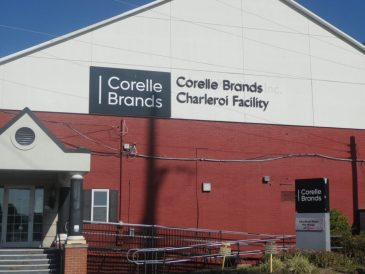
The former Corelle Brands glass plant in Charleroi is on the market.
The facility, which closed in April 2025 when owner Anchor Hocking decided to move operations to a plant in Lancaster, Ohio, is being marketed as a “premier heavy industrial riverfront property” by California-based GA Group Real Estate.
In a news release, the company notes that the plant “once served as an economic engine of Charleroi for over 130 years” and “this offering provides a unique, user-ready footprint for a buyer to write the site’s next chapter.”
GA Group is accepting formal purchase offers through Aug. 13. Chris Draper, the company’s senior vice president, said they did not publish a purchase price for the plant in order to “let the market determine the site’s final value. Given the amount of interest we’ve received so far, we anticipate this will be a highly competitive, market-driven process.”
The structure sits on 26 acres along the Monongahela River and still retains its glassmaking infrastructure, including furnaces and a 110,000-square-foot warehouse. Draper said, though, that it can be used by almost any heavy industrial manufacturer and the ideal buyer is “a turnkey user who will grow with the property and tap into the skilled workforce in the Mon Valley.”
The closing of the plant was a harsh blow to Charleroi and the surrounding area, which has struggled in recent years to retain residents and grow its economy. When the plant closed its doors last year, about 300 employees lost their jobs. In its final years, Pyrex kitchenware was made at the facility, which had a history dating back to the 1890s.
A food processing company and pasta-making plant in the Charleroi area both announced they were closing shortly after Corelle Brands pulled up stakes, resulting in the loss of about 350 jobs between the two firms.
Last year, the French industrial glassmaker Sediver struck a deal with Anchor Hocking to buy the plant and spend $125 million refurbishing it, but it was scotched by the Federal Trade Commission, apparently because industrial glass was going to be produced at the plant, rather than glass bakeware.