

Ben Franklin students make history come alive
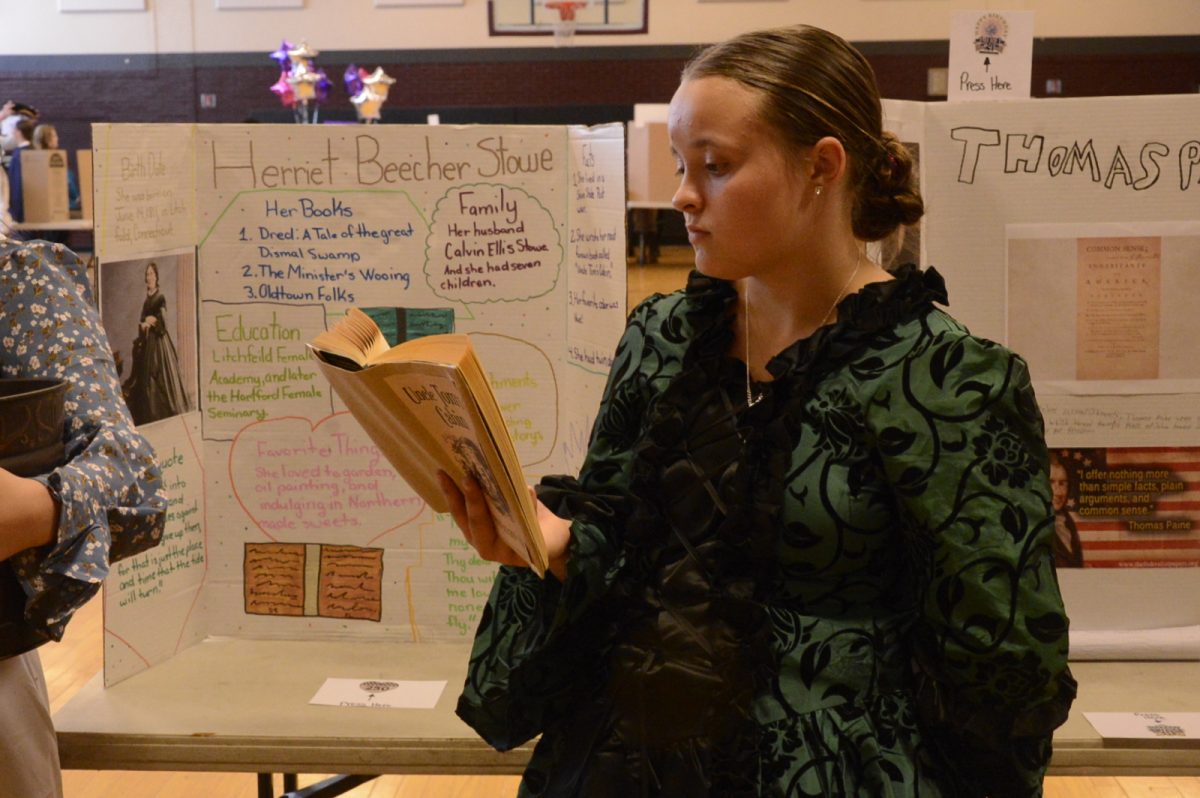
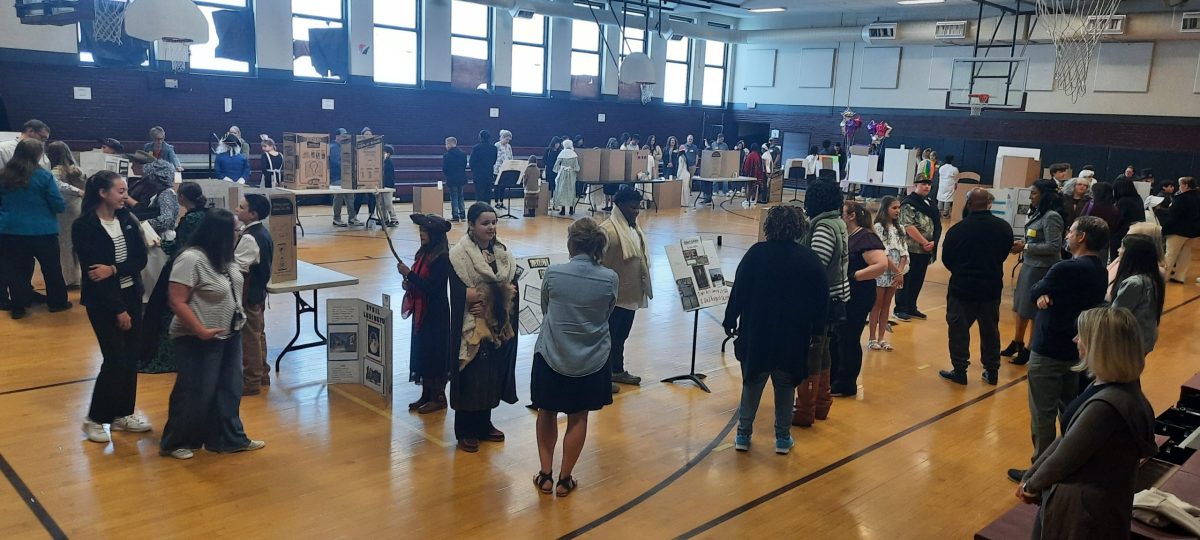
Presidents, explorers, nurses, generals, architects, scientists and plenty other notable figures stood arrayed in a rectangle at Ben Franklin Elementary/Middle School Thursday afternoon, waiting to tell their life story to whoever wanted to hear it.
And many people did.
The display was part of Julia Schiffbauer’s latest living wax museum. Her sixth-grade ancient history students spend weeks researching a historical figure, then create poster boards about their life, and assemble props and outfits to help them better depict the person.
“Getting them involved in researching a person and what they wore and what they were holding in their hands tells much more of a story than two paragraphs out of our social studies book,” she said.
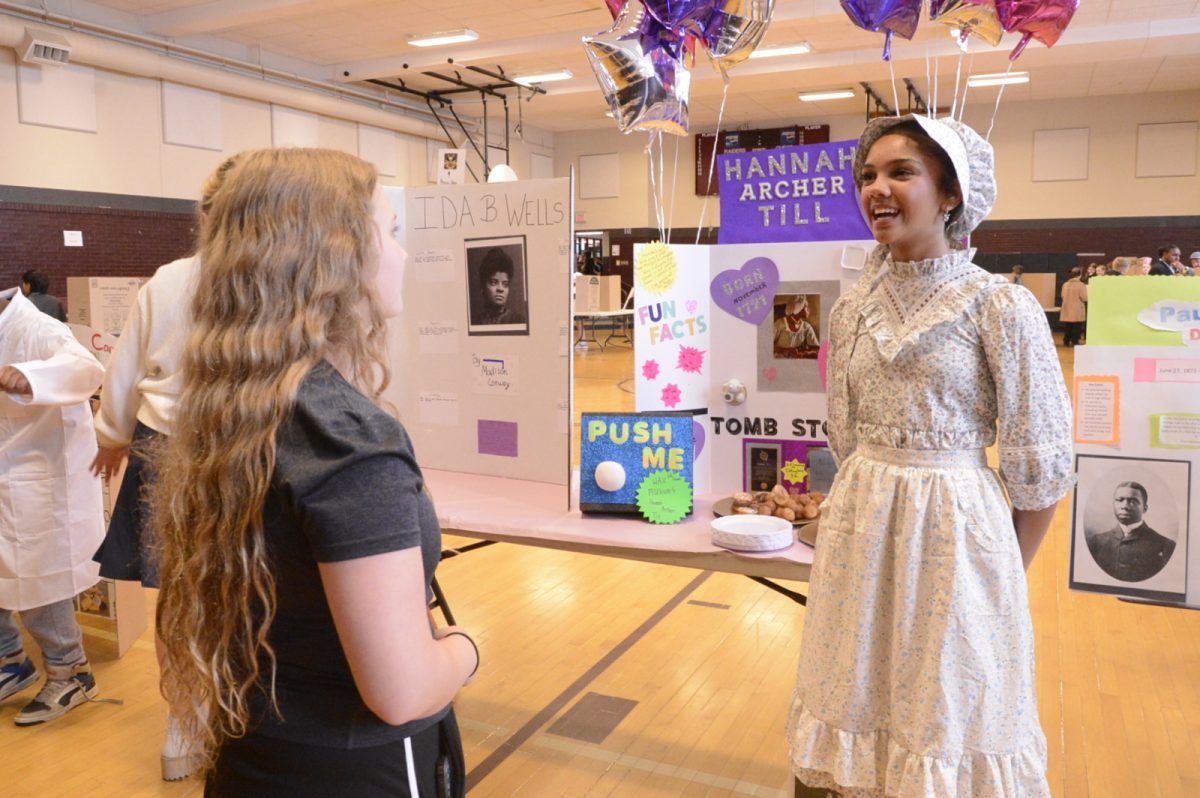
They also write a short speech, which they practice every day leading up to the big event. And when passersby prompted them — done by touching a piece of paper with a button drawn on it — they rattled off a condensed version of their biography.
For America’s 250th anniversary, Schiffbauer changed the emphasis to the American Revolution.
It was a collaborative effort, where students and Schiffbauer discussed people who influenced America, and students picked names off the finished list that stood out to them.
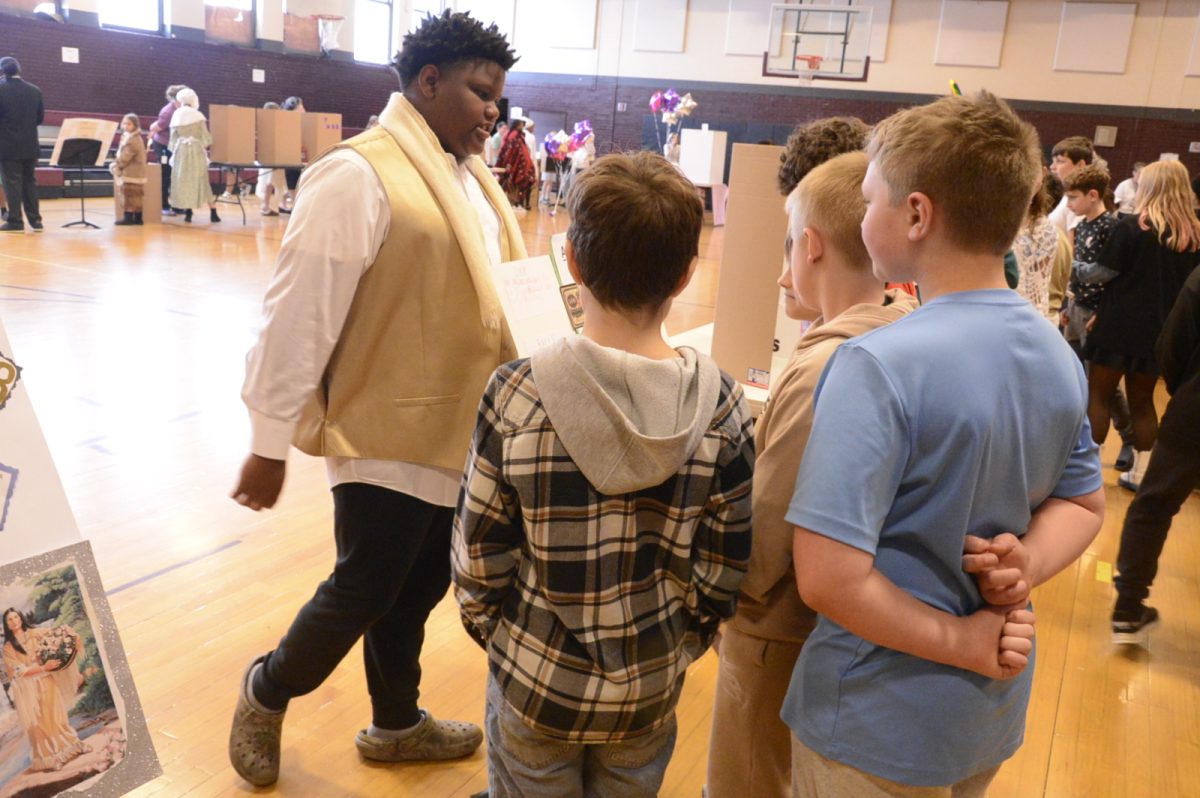
Stationed near the entrance, Allen Settles took on the plum role of Albert Gallatin, treasury secretary under President Thomas Jefferson (also featured). His Friendship Hill estate in Fayette County is now a national historic site.
For Settles, his most impressive feat was helping to finance the Louisiana Purchase. He was a popular stop.
“I really liked having to learn a bunch about him and having to learn my speech,” he said.
Schiffbauer started out with a tight focus on the American Revolution. But when students pushed for figures beyond the powdered-wig era, Schiffbauer broadened the scope to echoes of the revolution in the expansion of rights for women, Black people or Native Americans.
“If you proved your worth in helping somebody in this country and the generations that followed them, we said, ‘All right,'” Schiffbauer said.
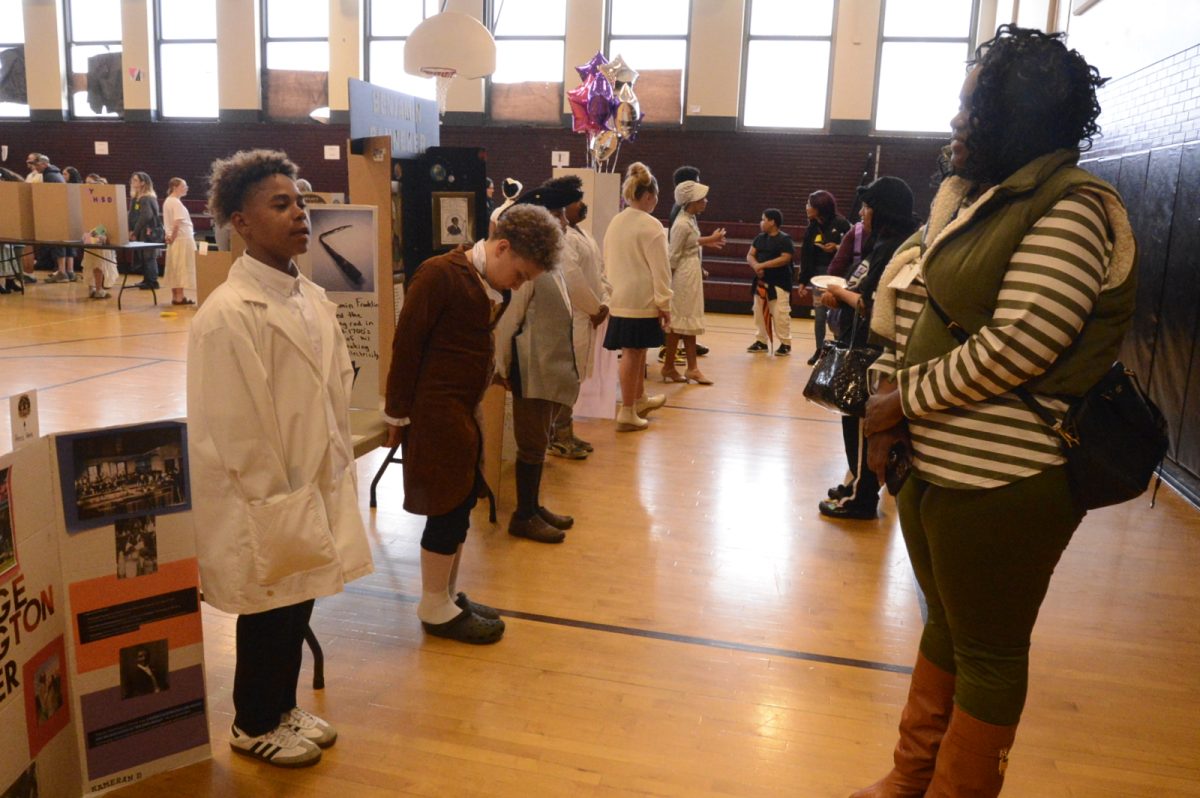
Kameran Dennis had already researched George Washington Carver for Black History Month.
He liked the way Carver had helped improve people’s lives through agriculture.
Thursday, Dennis got to explain Carver’s life first to parents, and then to a succession of younger elementary children who toured the exhibit.
“I was kind of nervous at first, but today, when it started to sink in, it’s not that scary,” he said.
Others chose more obscure figures from the past.
Neva Sangston dressed in 1770s garb to reflect the outfit of Sybil Ludington, the 16-year-old daughter of a Revolutionary colonel.
She had learned about Ludington while researching the life of a child in Colonial times.
After the British seized a critical supply depot in Connecticut, she warned her father after a ride of 40 miles — twice as long as Paul Revere’s.
“She was really brave,” Sangston said.
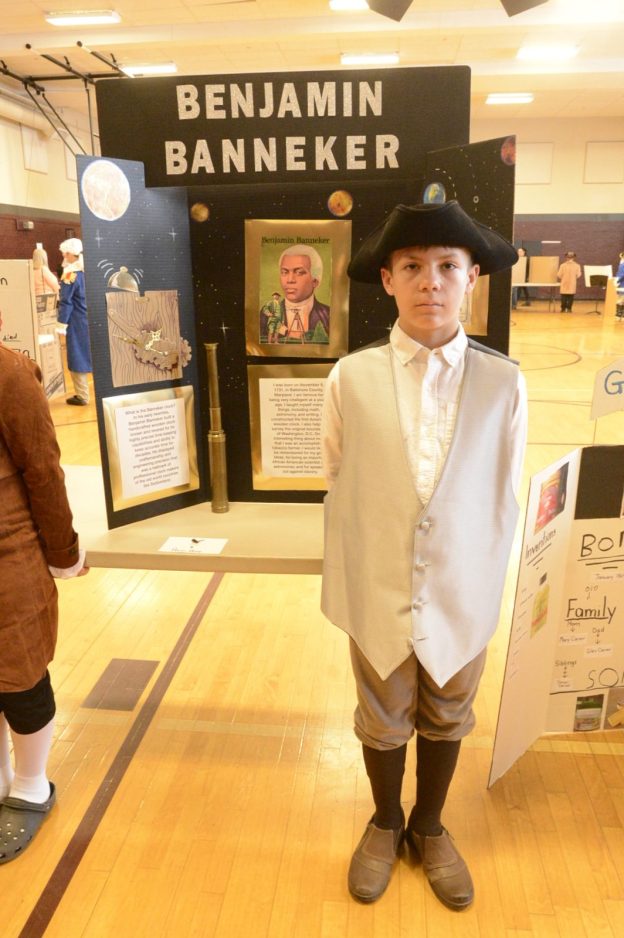
Benjamin Banneker was a last-minute pick by Raistlyn Smith. But he connected with the astronomer and mathematician, who assisted in surveying the land that later became Washington, D.C.
Smith’s poster board also included a homemade representation of the workings of a clock, in honor of Banneker creating one of the first striking clocks in America. With more time, he said, he’d have liked to build an actual 3D version.
It all helped showcase someone whose achievements would have eluded the parents or students who paraded past his booth.
“Sometimes when somebody doesn’t know you, or hasn’t heard about you or anything, it feels sad,” Smith said.
A crowd flocked around the tray of baked goods at the booth of Da’Laya Williams. She chose Hannah Till, an enslaved Black woman who served as a military chef for George Washington and Marquis de Lafayette throughout the Revolutionary War. That continued even after she and her husband purchased their freedom.
As much as she liked seeing her friends’ projects, the biggest thing she’d taken away from the assignment is a new appreciation for someone who she might never have known about otherwise.
“She did so much different stuff that I’d never seen,” Williams said. “I did a lot of projects because I was from Alabama and we did a lot of Black history, but she was someone I never knew up until recently.”