

Ross Farm to rebuild with century-old barn from neighboring property
Ross Farm to rebuild with century-old barn from neighboring property
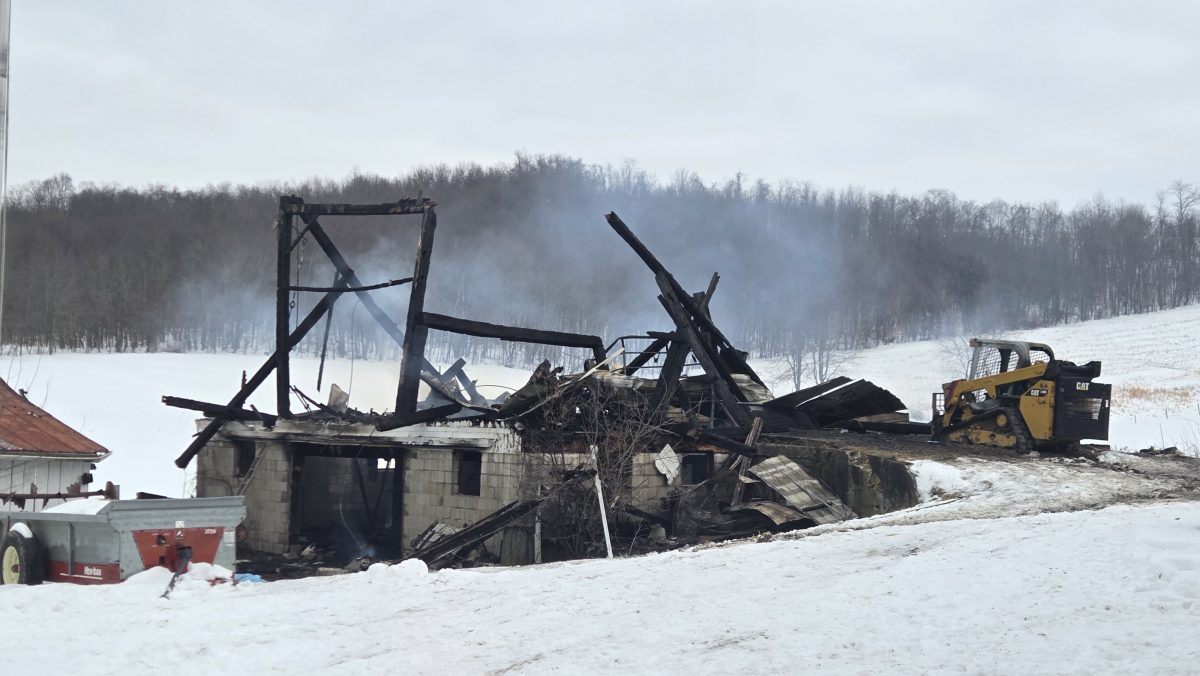
Three months after a devastating fire destroyed the historic “old barn” on Route 519 and killed 147 sheep, the Ross Farm is getting a new barn as it rebuilds the flock.
Amy Ross Manko, who owns the 178-acre property in North Bethlehem Township, didn’t have to look far to find a replacement for the 117-year-old barn that burned to the ground Feb. 2.
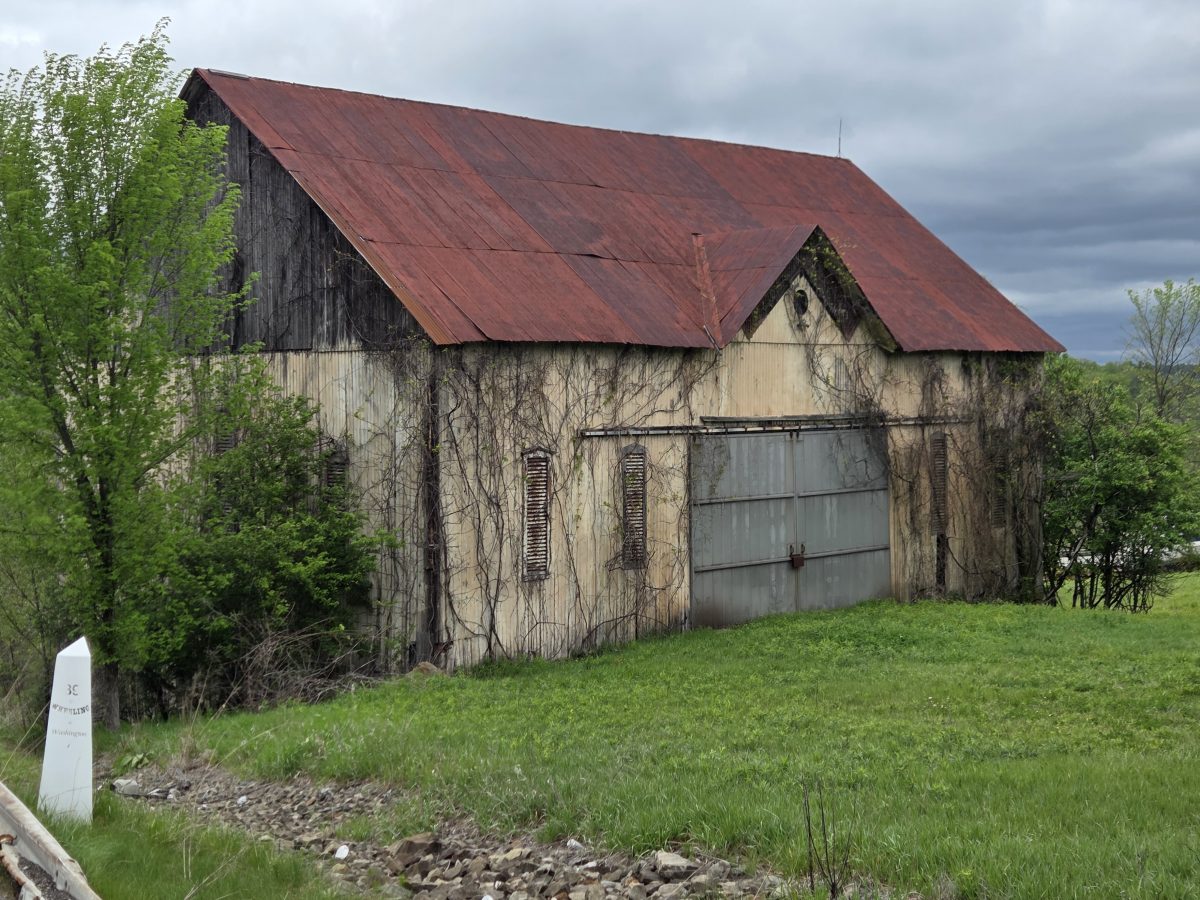
Less than a half-mile down the road sat a similarly sized barn located on the Ross Farm’s neighboring property that was built by Charles Ross, who was the brother of Ross Manko’s great-grandfather, Frank L. Ross Sr., who started her family farm.
“The beauty of all this is it’s actually a Ross family barn. That property was the twin to my property,” Ross Manko said. “All that’s left of Uncle Charlie’s property is that barn. And that barn will now move to my property so it can be loved and protected and brought back into production as an actual farm barn.”
That side of the family sold its property to the Ritter family decades ago, and the barn that can be seen from Route 40 as people pass by the intersection with Route 519 has not been in use for about 60 years. But when Ross Manko’s historic barn was lost, discussions began about how to repurpose the sister barn that was built in the early 1910s.
Ross Manko recently had a conversation with Washington County Historical Society Executive Director Clay Kilgore and National Road Heritage Corridor Executive Director Sarah Collier about the neighboring barn that had sentimental value to her family. Ross Manko remembers when she was a little girl riding in the car with her mother, Marjorie Ellen Ross Phillips, who would always tell her daughter she wished they could bring it back into the family one day.
“If I could have any barn in the world, I would want Uncle Charlie’s barn right next door,” Ross Manko told Kilgore and Collier.
They approached the Ritter family who owns the property now and pitched the idea to donate the barn to the historical society, which would in turn give it to Ross Manko so long as it would remain a protected historical landmark on her working farm. Later this summer, a company that specializes in barn-moving will lift the entire structure off its current foundation and move it less than a half-mile down the road to the Ross Farm and place it on the exact foundation where the “old barn” sat.
“The Ritters were very receptive to the idea of having the barn moved off the property and it having a second life,” Ross Manko said.
For being more than a century old and having not been used for about half of its life, the barn is still in relatively good condition, Ross Manko said. The barn is covered in vines and weeds, which can be easily removed, and it will need a new coat of paint and some roof patches, but she is hopeful they will be able to move the flock in and store hay inside by the end of the summer. The size is similar to the “old barn,” although it won’t look exactly the same since the dimensions are slightly different, but Ross Manko thinks it will still be a landmark for travelers on Route 519 like the last one was for the community.
“It’s a little sad and tired, but it’s going to be amazing. I’m really excited for the opportunity to make it a (working) barn again,” Ross Manko said. “It doesn’t look like much now, but once (the vines are) all pulled down, it’ll be in good shape. It’s pristine inside.”
While the barn is being donated, there still will be costs associated with removing all of the rubble from the old bar, rebuilding the foundation and transporting the new structure. While some of that cost will be offset by the insurance, the bulk of it will be paid for through generous donations and fundraisers from the knitting and fiber community that rallied around Ross Manko after the fire.
“The knitting and fiber community has gone absolutely above and beyond,” Ross Manko said. “I’m calling it ‘The barn that yarn built’ (with) people raising money. It’s been quite remarkable.”
All of this finally came together last Saturday on what would have been her son Drew Ross Manko’s 31st birthday. Drew, who was the sixth generation to run the farm and raise sheep, died Sept. 17 following a brief illness. The loss of her son compounded with the fire in February made the last half-year especially difficult, but the outpouring of support and the donation of the new barn has Ross Manko “cautiously optimistic” about the future.
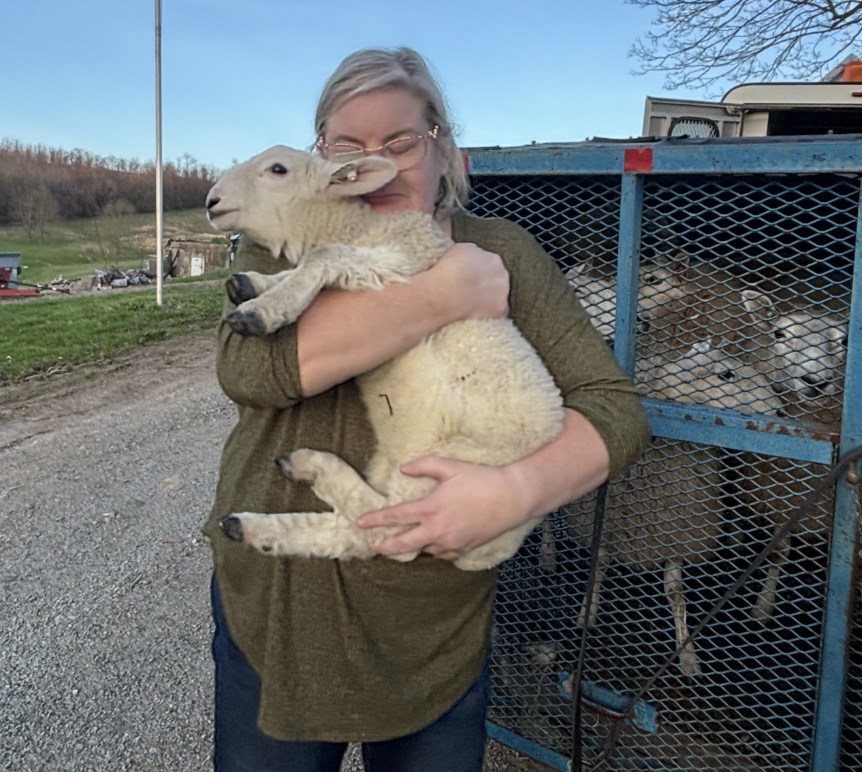
Even through tragedy, Ross Manko and friend Melinda Wamsley, who runs Boss Mare Shearing and had been caring for the animals to help following Drew’s death, have been working to rebuild the flock. They now have 65 sheep living in other barns on the property, some of which will be taking on the starring roles in the annual “Running of the Wools” sheep races down South Main Street in Washington on Saturday.
But without a barn, the Ross Farm would not be able to rebound with its heritage-bred sheep grazing the fields.
“You can’t rebuild the flock without the barn, and you can’t rebuild the barn without the flock. I’m overwhelmed by the way the community came together,” Ross Manko said. “We’re well along the road and things are progressing much better than I thought they would. I wasn’t expecting all of this.”