

Greene County, CMU partner on grant proposal for transportation
Greene County residents in need of transportation could soon have a new way to get around.
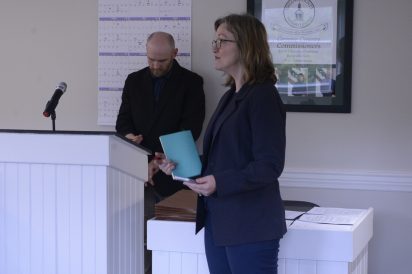
Thursday, the Greene County Board of Commissioners approved partnering with Carnegie Mellon University on an Appalachian Regional Commission grant to fund a program in the county.
Greene County would receive $675,000 from the grant through ARC’s Appalachian Regional Initiative for Stronger Economies (ARISE) initiative, paired with an in-kind commitment of up to $383,955 over a three-year period.
Karen Lightman, executive director of the Metro21:Smart Cities Institute at CMU, said the amount they’d been able to raise from the local community had actually knocked the county’s required contribution down to around $180,000.
“I’m getting chills just saying it to you: Your community wants to support you,” Lightman told the board. “They know that this is what you need, and they are willing to put skin in the game.”
Operating within the county’s existing transportation program, the new initiative would include two minivans, as well as drivers and a call coordinator.
The collaboration grew from a partnership between CMU and Waynesburg University to study food insecurity in Greene County.
“They quickly realized it was not because there was a lack of food, it was a lack of transportation,” Lightman said.
That led to the development of the Rural County Mobility Platform, a Department of Energy-funded pilot that ran for four months in Greene County in 2024. Blueprints managed the program, which combined a fixed-route shuttle system with on-demand vehicles.
Over that span, more than 1,000 people used the service, Brightman said.
In the year-and-a-half since it ended, many people have asked, “Where’s RAMP?,” Brightman said.
The permanent program will be on-demand only, with no fixed routes. And unlike the pilot, riders will have to pay a fee, which Brightman said would remain under $10.
“The expectation is this will be sustainable in the long term,” she said. “So we’ll be looking for ways to supplement the cost as well as to charge people to take the service.”
Lightman said she’s gotten calls from similar communities around the country asking for help with similar initiatives. She’s given presentations to places in Mississippi and Alabama.
“We are one day going to look back at this and say Greene County was the trailblazer,” she said.
Lightman said they should find out if the grant application was successful in August or September.
The ride share is being done in conjunction with the Steel Valley Regional Transportation Authority, which serves southeast Ohio, the panhandle portion of West Virginia and Southwest Pennsylvania.
The link will provide a “seamless connection” to other systems, such as the Fayette County bus system or the Pittsburgh Region Transit bus system, Lightman said.
“That’s the idea, is to help people of Greene County get to places that they need to go to for employment, for health care, job training,” she said.
Of the 10 counties in Southwestern Pennsylvania, Greene is the only one without on-demand public transportation, said board Vice Chair Betsy McClure.
“This will be our public transportation in Greene County — so in other words, don’t make that be a reason you don’t come live in Greene County,” she said. “We will be just like our neighbors. We will have public transportation that can get you to your job.”