

Century-old barn rolls down Route 519 to new Ross Farm home
Will replace ‘old barn’ that burned down in February, killing 147 sheep
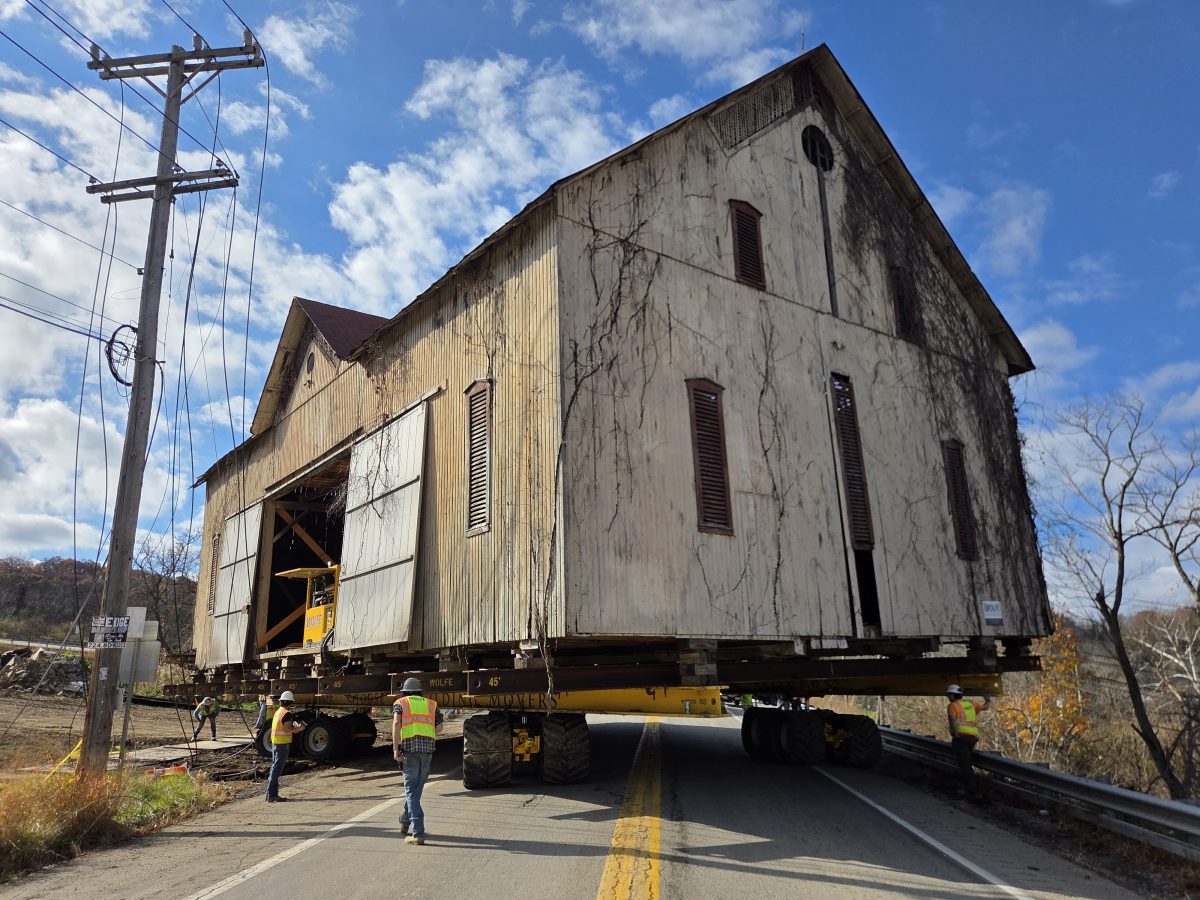
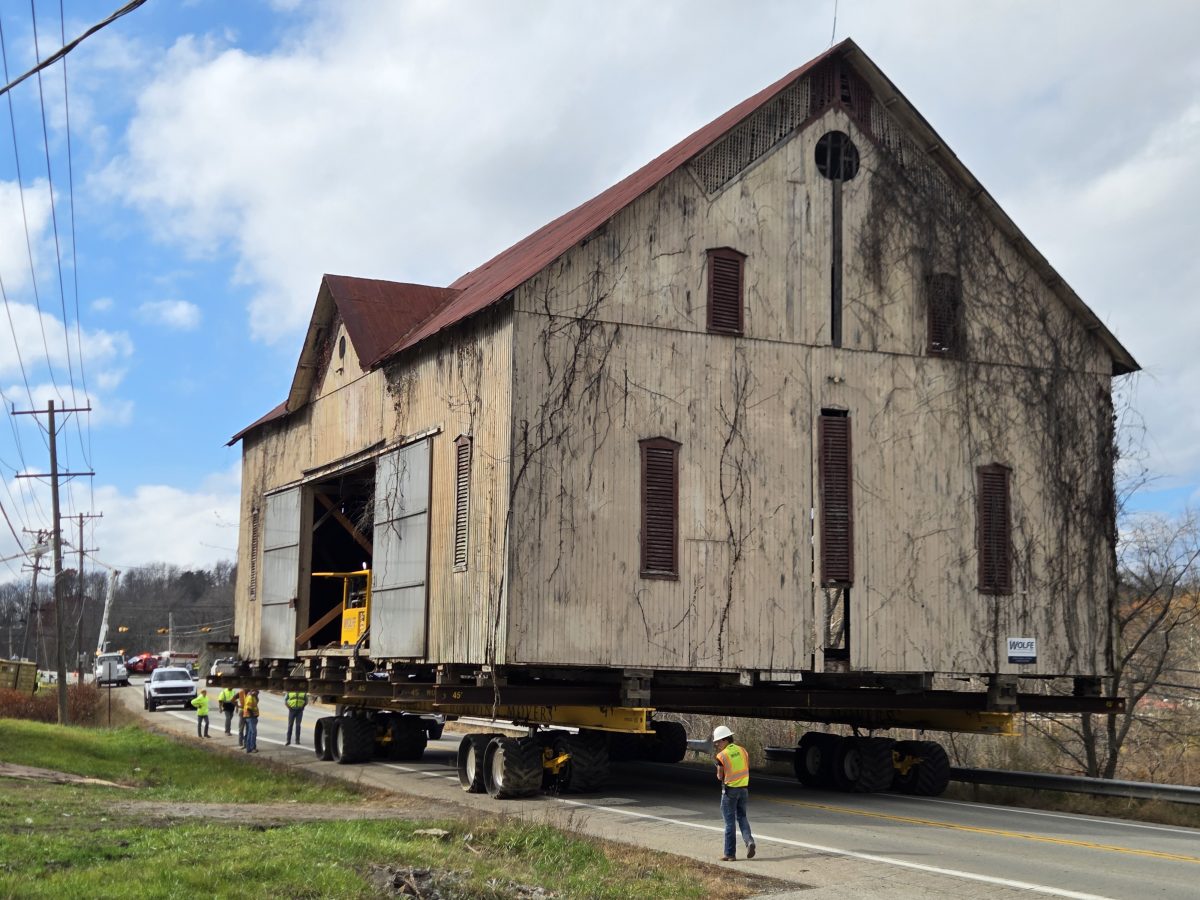
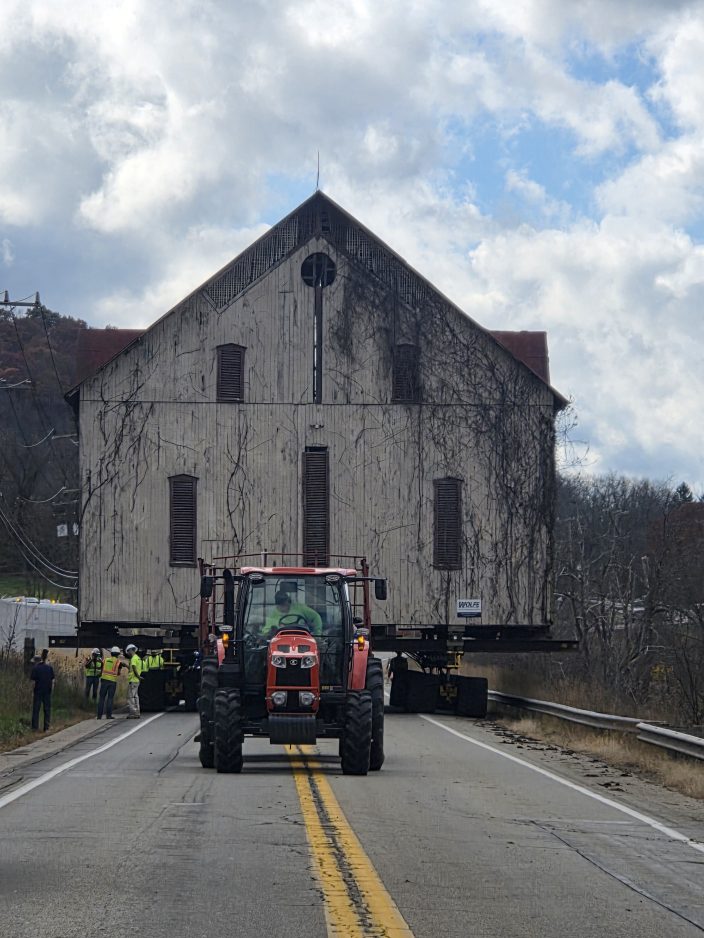
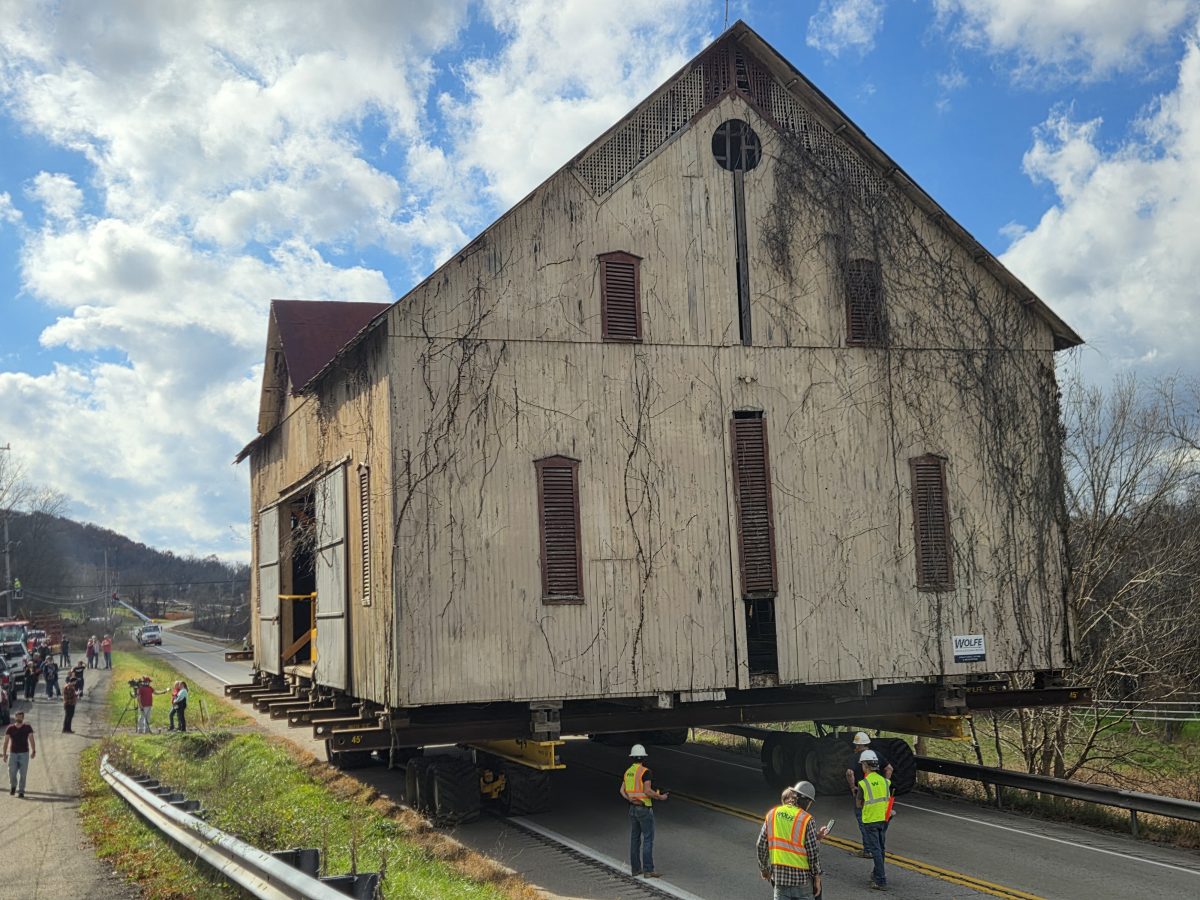
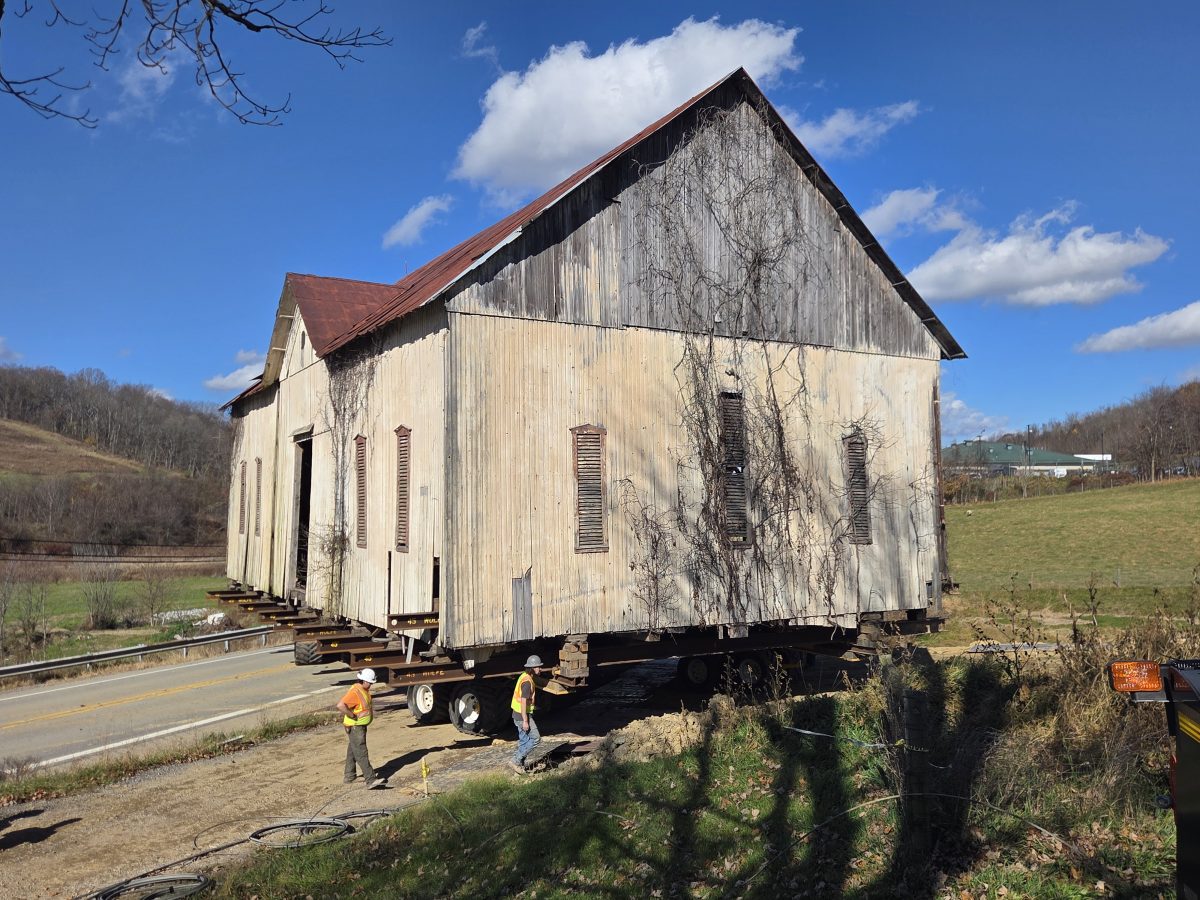
Inch by painstaking inch, the century-old Ritter barn weighing 110 tons crawled along Route 519 in Glyde on top of four motorized dollies Thursday as it crept to its new home at the Ross Farm.
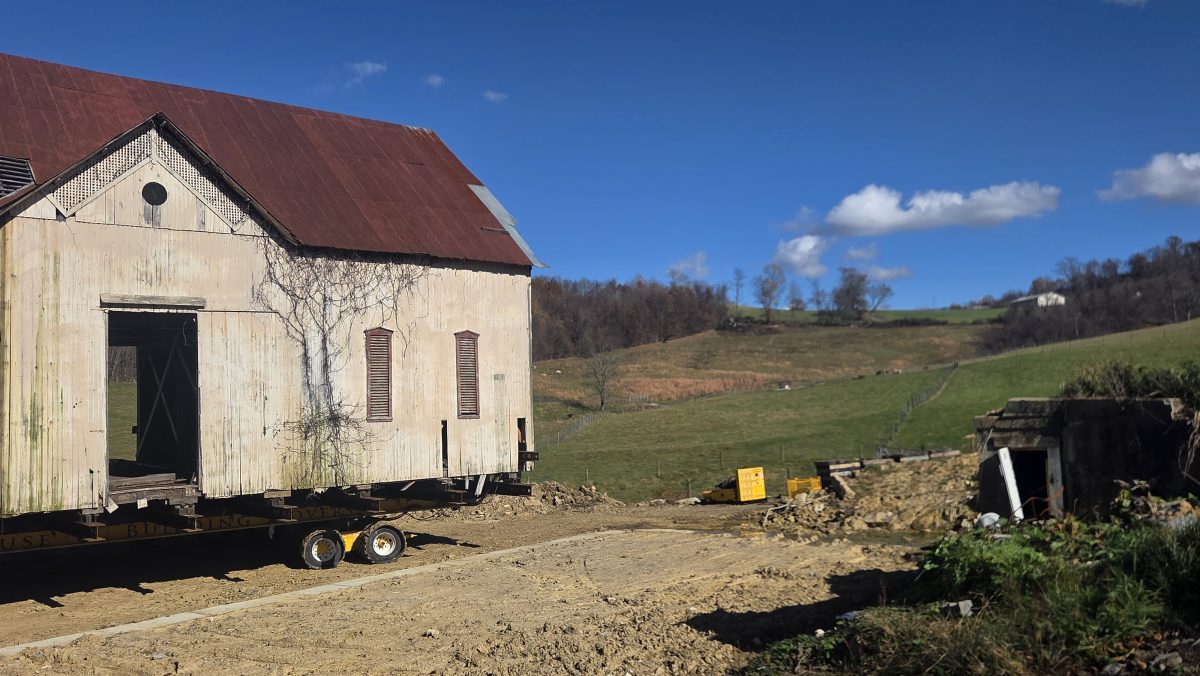
The half-mile journey took a little more than three hours before crews carefully wheeled it into place overlooking the rolling hills with roaming flocks of sheep that will soon call it home.
“It’s unreal, it really is,” said Amy Ross Manko, who owns the property. “I never thought this day was going to happen. I gave up many times, but you just have to keep going.”
The much-anticipated and highly technical move comes nearly nine months to the day after a devastating fire ripped through the “old barn” at Ross Farm in North Bethlehem Township, killing the 147 sheep inside. That Feb. 2 fire destroyed the 116-year-old barn and dealt a devastating blow to the collection of heritage and rare breed sheep owned by Ross Manko and managed by Melinda Wamsley, who runs Boss Mare Shearing and tends to the flock.
Rather than rebuild, officials with the Washington County Historical Society and National Road Heritage Corridor approached the Ritter family about possibly donating the barn located on their property at Route 40 and 519 that was built in the early 1910s but has gone unused for the last six decades. The historical society took ownership of the barn in May and will eventually donate it to the Ross Farm. Over the last six months, Ross Manko and others have been working tirelessly to organize the move and raise funds to pay for it.
After months of preparation, it all came together Thursday as Berks County-based Wolfe House & Building Movers carefully rolled the barn on four motorized dollies with wheels that moved independently. A worker with a digital controller guided the movements while crews surrounded the barn and even walked under it to make sure it steered clear of telephone poles and guardrails along Route 519, which was closed for about five hours to allow for the move.
“It’s really something,” said Darryl Ritter, whose family agreed to donate the barn. “I’ve never seen a building be moved like this in person.”
He admired spots on the barn that he remembered painting, and even noticed a lightning rod affixed to the roof that he had never noticed before. The historic barn had become a landmark for travelers on Route 40, so while he lamented the intersection with Route 519 might look a little different, he was “happy it’ll still be a barn” for Ross Farms to use.
“It’ll be different not seeing it on that corner there,” Ritter said. “But it’ll still be nice getting it fixed back up and be a working barn again.”
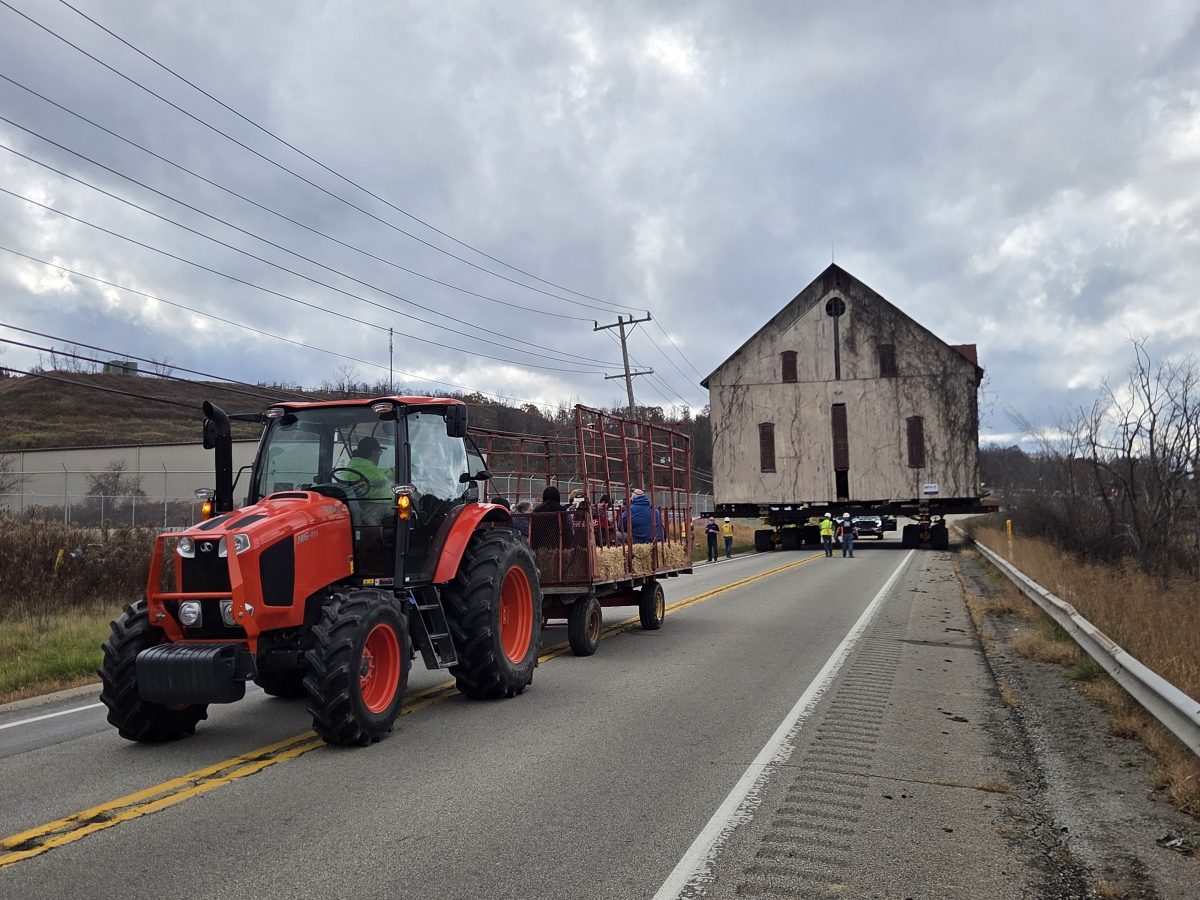
Ross Manko smiled as she watched the move alongside friends and family as they enjoyed a ride on a hay wagon pulled by a tractor to give them a leisurely trip along Route 519 just ahead of the rolling barn.
“Hey, Darryl!” Ross Manko shouted to Ritter as he walked beside the hay wagon as she live-streamed the move on her farm’s Facebook page. “Thanks so much.”
Wamsley, on the other hand, was “just pure nerves” as the hulking barn rolled along at less than a walking pace until she could finally take a breath when workers pivoted it toward the farm and moved the building into position above a cement pad at the same location where the “old barn” burned. She hopes to move the newly rebuilt flock of about 140 sheep — nearly the same number as before the fire — into the barn in a couple of months.
“It’s surreal,” Wamsley said. “I can’t wait.”
John Perry, who owns Claysville-based Integrity Construction & Design, was the concrete contractor who helped pour the foundation for the new barn, prepped for months leading up to Thursday and worked closely with Wolfe to make sure everything was ready for the move. Perry was friends with Ross Manko’s son, Drew, who died last September at age 30 following a brief illness. He was the sixth generation to run Ross Farm, so Perry said it was important to ensure Ross Manko would have a barn to rebuild the flock and keep Drew’s memory alive.
“It’s more of a personal project, a passion project,” Perry said. “It’s an honor to keep Drew’s legacy and the Ross Farm’s legacy alive and to preserve the barn.”
Ross Manko said she was thankful to everyone involved, including the Lone Pine volunteer firefighters who fought the blaze that destroyed the barn, and returned to the area Thursday to help direct traffic while Route 519 was closed.
“We are so grateful,” Ross Manko said. “We’re all invested in this. It’s really a community effort.”
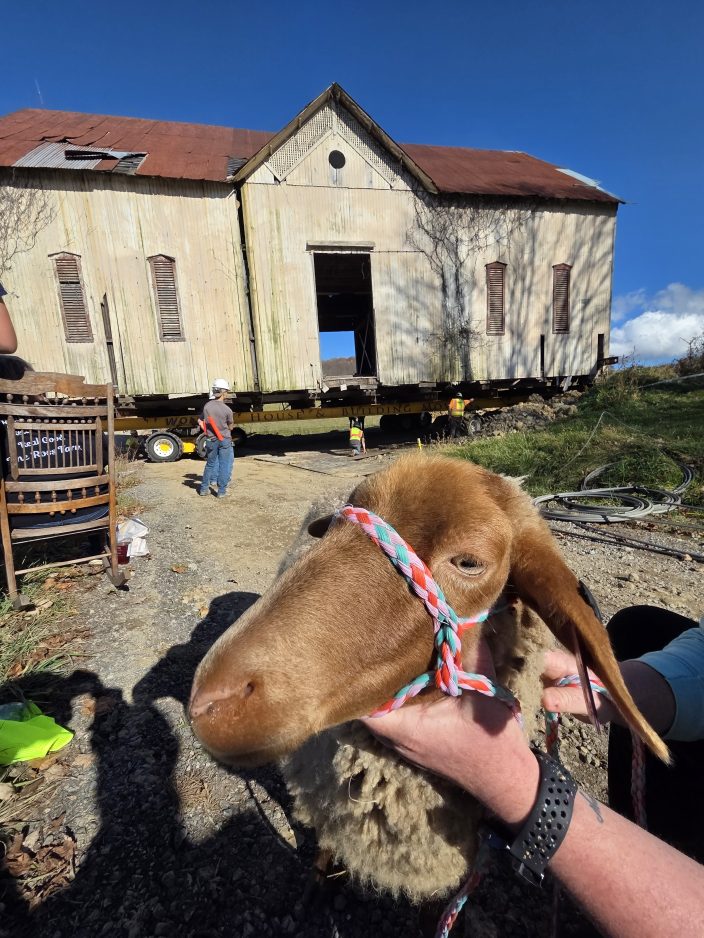
Ross Manko sat in a rocking chair a few feet away from the barn’s new home as she narrated the live-stream video while explaining to the viewers and spectators all that went into turning a nightmare into a dream come true. She thanked those who donated money to fundraise for the move, along with the yarn community that helped support her from far and wide.
“We don’t get across the finish line without everybody on our team,” Ross Manko said. “It takes a village to raise a barn.”
As the barn creeped up the dirt driveway to its new location on the Ross Farm, spectators could look through the double doors to see the rolling hills framed like a portrait with the new flock of sheep roaming in the fields. Soon, they’ll call the “barn that yarn built” their home.