

Forum at PennWest explores outcome of midterm election
It’s one of those iron laws of politics – a president’s party loses congressional seats in midterm elections.
What made this year’s midterm elections unusual is that it wasn’t a handful of House seats and maybe a Senate seat or two. As many commentators have noted, the “blue tsunami” that came ashore with the vote on Nov. 3 was unusual in its scale.
When the new Congress convenes in January, Democrats will have commanding majorities in both the House and Senate. Democrats won Senate seats in places where they haven’t for generations, including Kansas and Mississippi. Democrats now hold the majority of governorships and flipped scores of seats in state legislatures.
“It’s pretty simple,” according to Louis Jacobson, chief correspondent for the website PolitiFact. “President Trump is unpopular. His approval rating has been in freefall.”
Jacobson made this observation at a post-election forum convened at PennWest University’s California campus Tuesday night. The Dr. Melanie Blumberg Election Analysis Forum has become a biennial tradition, and is named after the late political science professor who founded the American Democracy Project at the California University of Pennsylvania. Other panelists were Jon Delano, a retired KDKA-TV political analyst; Dr. Amber Gaffney, associate professor of psychology at the Humboldt campus of California State Polytechnic University; and Kate Garfinkel, who chairs the Allegheny County Democratic Committee.
Just how bad was it for the Republicans? Any congressional district that President Trump won in 2024 by fewer than nine percentage points flipped to the Democrats. And in North Carolina, which has not been won by a Democratic presidential candidate since 2008, the congressional delegation could go from a 10-4 Republican advantage to a 13-1 Democratic edge once some still-close races are determined.
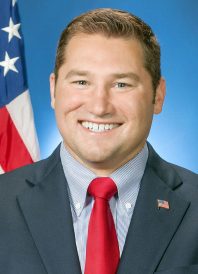
In Pennsylvania, as Delano pointed out, Democrats largely swept the eastern part of the commonwealth, while in this region Republican incumbents outside Allegheny County were able to hang onto their seats, though with mostly reduced margins of victory compared to recent contests. For instance, U.S. Rep. Guy Reschenthaler beat back a challenge from Democrat Alan Bradstock, defeating him by 16 percentage points – a landslide win, by most measures, but half Reschenthaler’s 33-point margin of victory in 2024.
“This was a referendum on Donald Trump,” Delano said. “I also think it was a referendum on Donald Trump and his personality. He projects a very hostile, very negative image.”
Delano added, “I really believe that when it comes to our presidents, we get tired of them. I think we’re tired of Donald Trump.”
One of the most surprising outcomes of the election, according to Garfinkel, is that at least initially Trump accepted the results.
“I was expecting a hellfire of litigation,” she said. “What we have now is a mandate to listen to voters to determine what they want.”
Following the election, Florida Gov. Ron DeSantis, a Republican and possible presidential contender in 2028, called it an “extinction-level event for Republicans.” So did the midterm results portend the end of the GOP? Probably not, according to the panelists. They pointed to the 1974 midterm elections that followed Watergate and the unpopular pardon of former President Richard Nixon by President Gerald Ford. Democrats made enormous gains in that election, only to see Republican Ronald Reagan resoundingly defeat Democrat Jimmy Carter in the presidential race just six years later, alongside the GOP winning 12 Senate seats.
“I refuse to believe the Republican Party is a lost cause,” Delano said. “They will be back. The question is how they will come back. They will lose in 2028 if they embrace Trump.”