

George Washington historical marker unveiled in Connellsville
George Washington historical marker unveiled in Connellsville
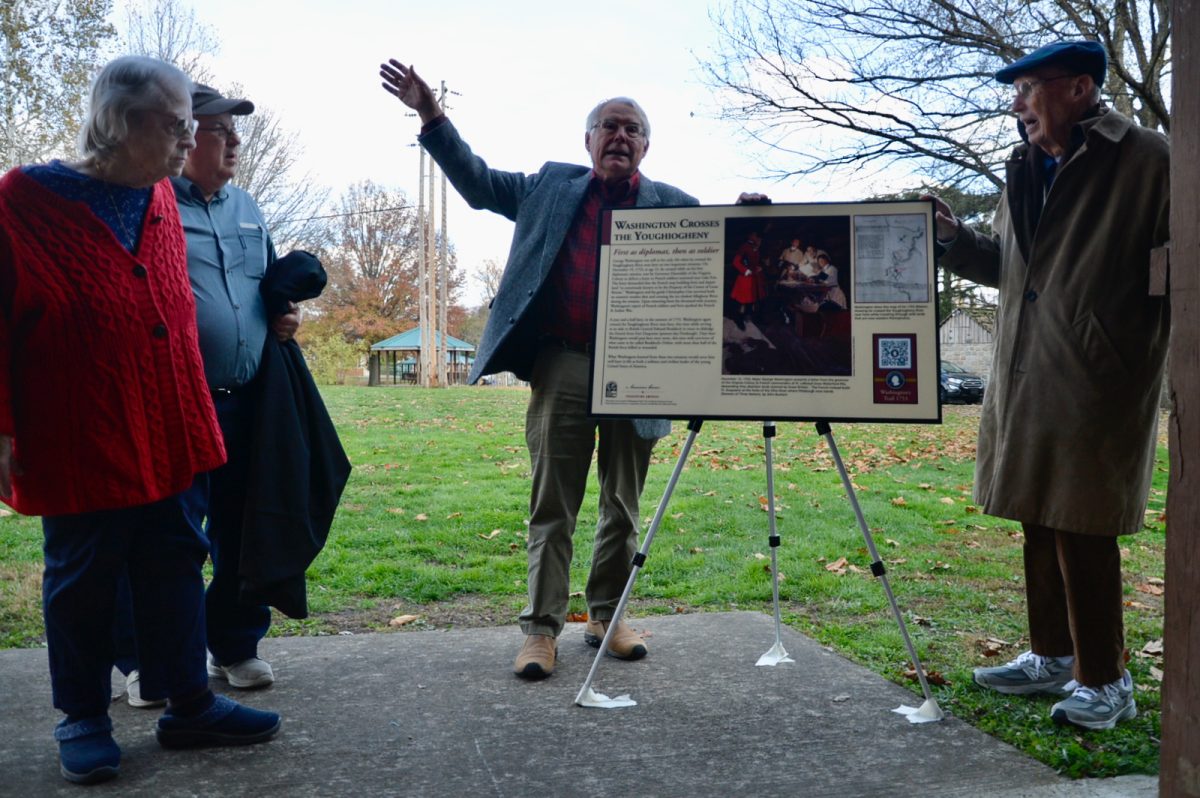
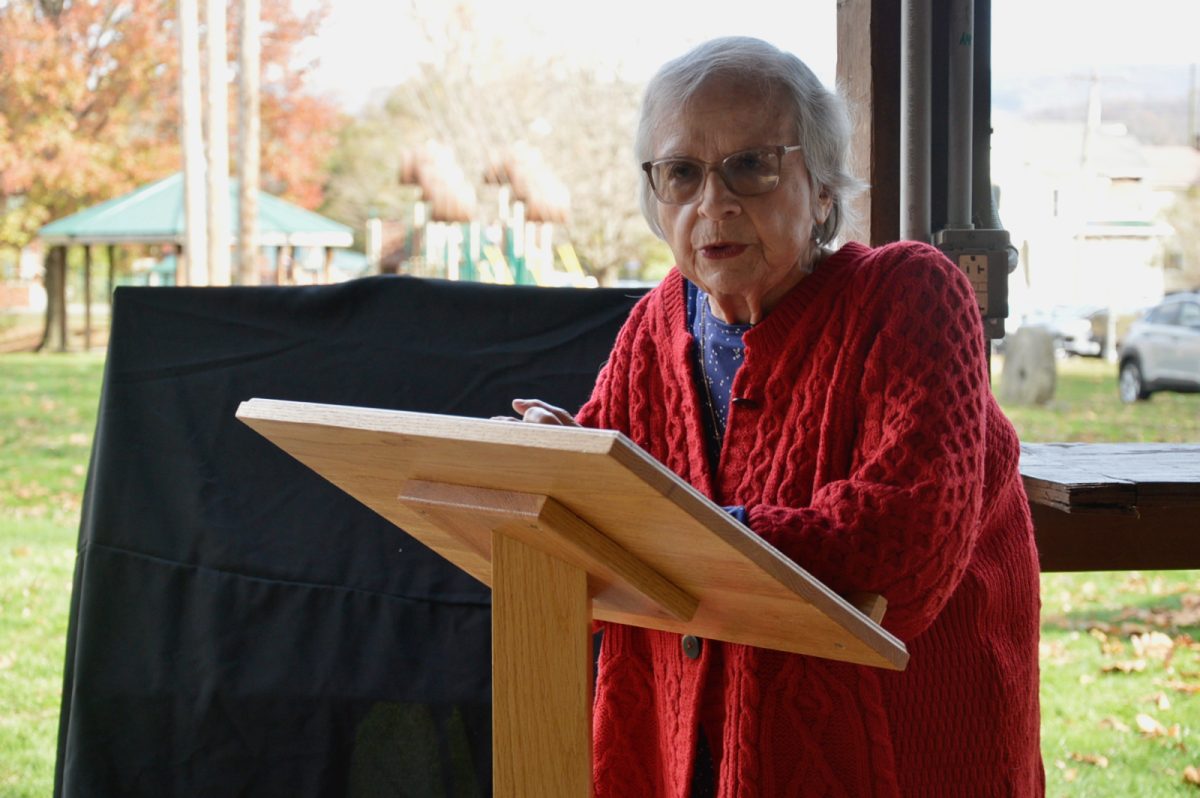
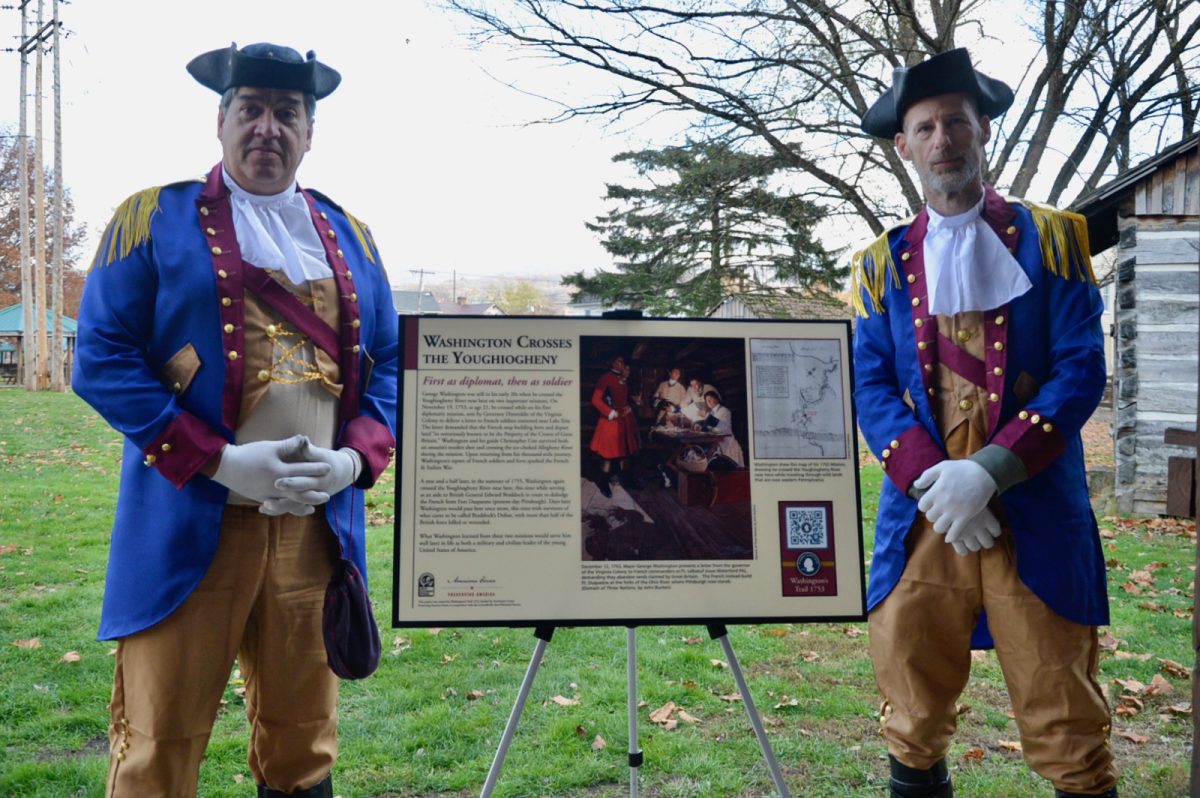
On Veterans Day, a crowd of people convened at Yough River Park in Connellsville to see a new monument to the leader one of them called “the first veteran.”
The new historical marker at the Connellsville Area Historical Society site commemorates George Washington’s several crossings of the Youghiogheny River in the 1750s, when he was a rising figure in the British military as the French & Indian War brewed.
The marker was a collaboration between the historical society, the Great Allegheny Passage — Regional Trail Council and Washington’s Trail 1753. The nonprofit commemorates the then-major’s first military diplomatic mission, a 1,000-mile roundtrip from Williamsburg, Va., through French-controlled territory to Fort Leboeuf in Waterford, Pa., in which he tried to convince the French to abandon their forts.
The river crossings were an important part of the journey through a western Pennsylvania that was still wilderness in the 1750s, said Rodney Gasch, a Washington’s Trail board member.
Washington’s Trail brought the idea to the other groups last spring after receiving a grant from Americana Corner’s grant program, Preserving America.
The site is in a great location overlooking the Yough, Gasch said. And the proximity to the Great Allegheny Passage creates a steady stream of new visitors who can learn about Washington’s connections to the area.
“People from all over the world that are on the Passage, as well as residents of Connellsville, who enjoy the park and the riverfront, we all get to tell that story about Washington’s several visits here in the 1750s,” he said.
Of the commemorative plaques Washington’s Trail has put up, the one in Connellsville is the furthest south.
“We are just so delighted to be here together to honor and respect and admire George Washington from the very earliest time in his career, being part of making America what it is today,” said Karen Heckler, president of the Connellsville Area Historical Society.
The area was highly contested between the French, who prized it as a lucrative fur-bearing area, and the English, who were on the lookout for good, cheap farmland out west, Heckler said.
Martin O’Brien, founder of Washington’s Trail 1753, said Washington first came to what was then known as Stewart’s Crossing on Nov. 19. He would come back in January, on his way back to Virginia.
In some places, Washington’s Trail has taken to marking the crossing with large red, white and blue signs, which O’Brien compared to supersized quarters.
“But we also find that these information plaques are really better than the big signs in one sense, because people will stop and read them and find out, ‘Oh, George Washington really did get through here,'” he said.
Washington would come back to Fayette County, and the Yough, several more times.
His forces sailed up the Youghiogheny River near Confluence while searching for a water route to the Ohio Forks.
He would rout the French at the battle of Jumonville Glen near Hopwood, the opening battle of the Revolutionary War, and later suffer the only surrender of his career at Fort Necessity.
“It’s a wonder that Fayette County isn’t named Washington County, from all his travels through here,” said Bill Sechler, a board member of the Connellsville Area Historical Society.