

Mt. Lebanon volunteer group replanting Twin Hills Park
Volunteers from the Mt. Lebanon Nature Conservancy are confident that ongoing restoration efforts within township parks will pay dividends for years to come.
According to Conservancy President Sarada Sangameswaran, the project to remove invasive plants and replace them with native alternatives at Twin Hills Park has made strong progress so far, with approximately one half of the 0.65-acre targeted restoration zone completed thus far.
Planning for the project began in late 2025 following the completion of a similar initiative in nearby Bird Park.
“The problem is that we have a lot of invasive vegetation and species that do not belong in the ecosystem,” Sangameswaran said.
These species have “taken over” valuable space and sunlight within the park to the detriment of native species and the wildlife it supports.
By removing and replacing these invasives, Sangameswaran said the conservancy hopes to create a healthier, more resilient ecosystem that can provide for an abundance of native wildlife.
According to Sangameswaran, native plants support a greater number of native insects, which in turn support species further up the food chain in trophic levels.
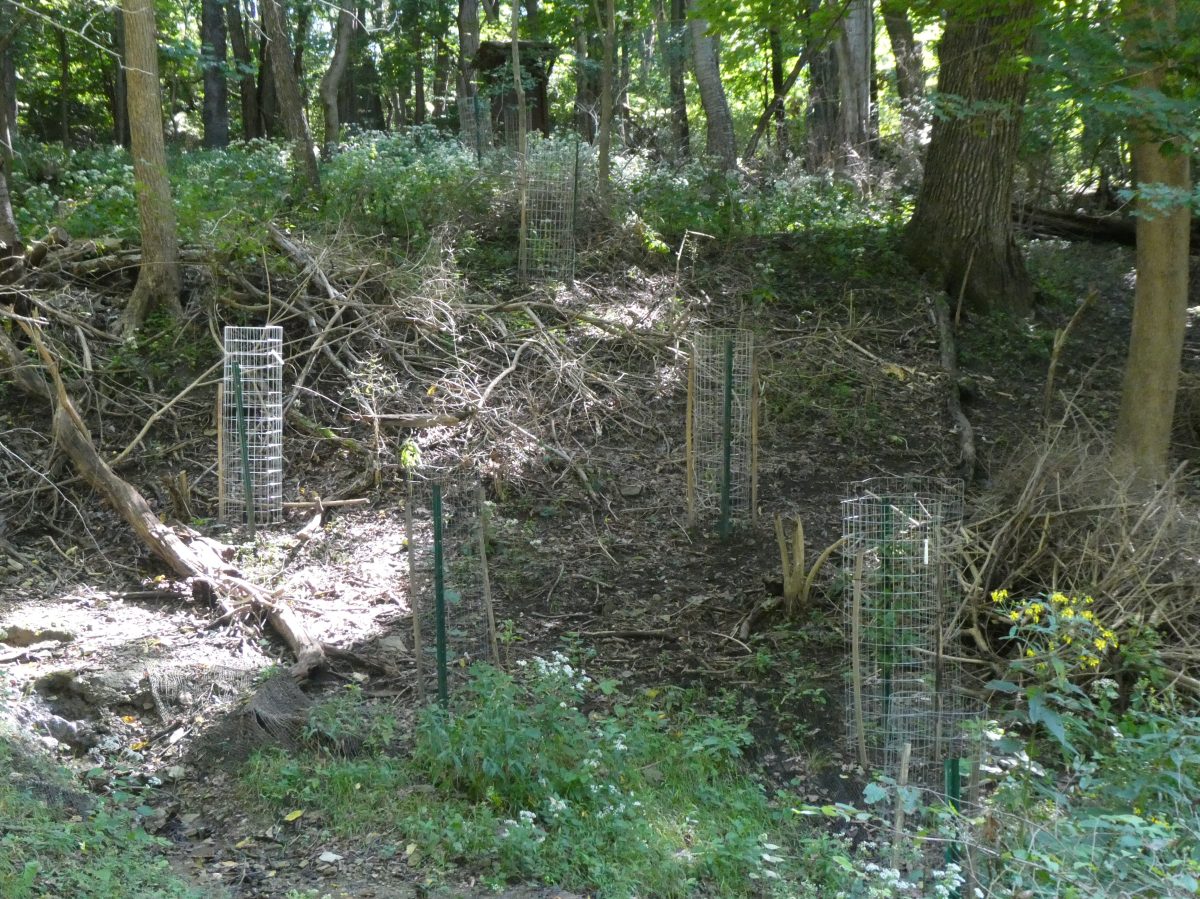
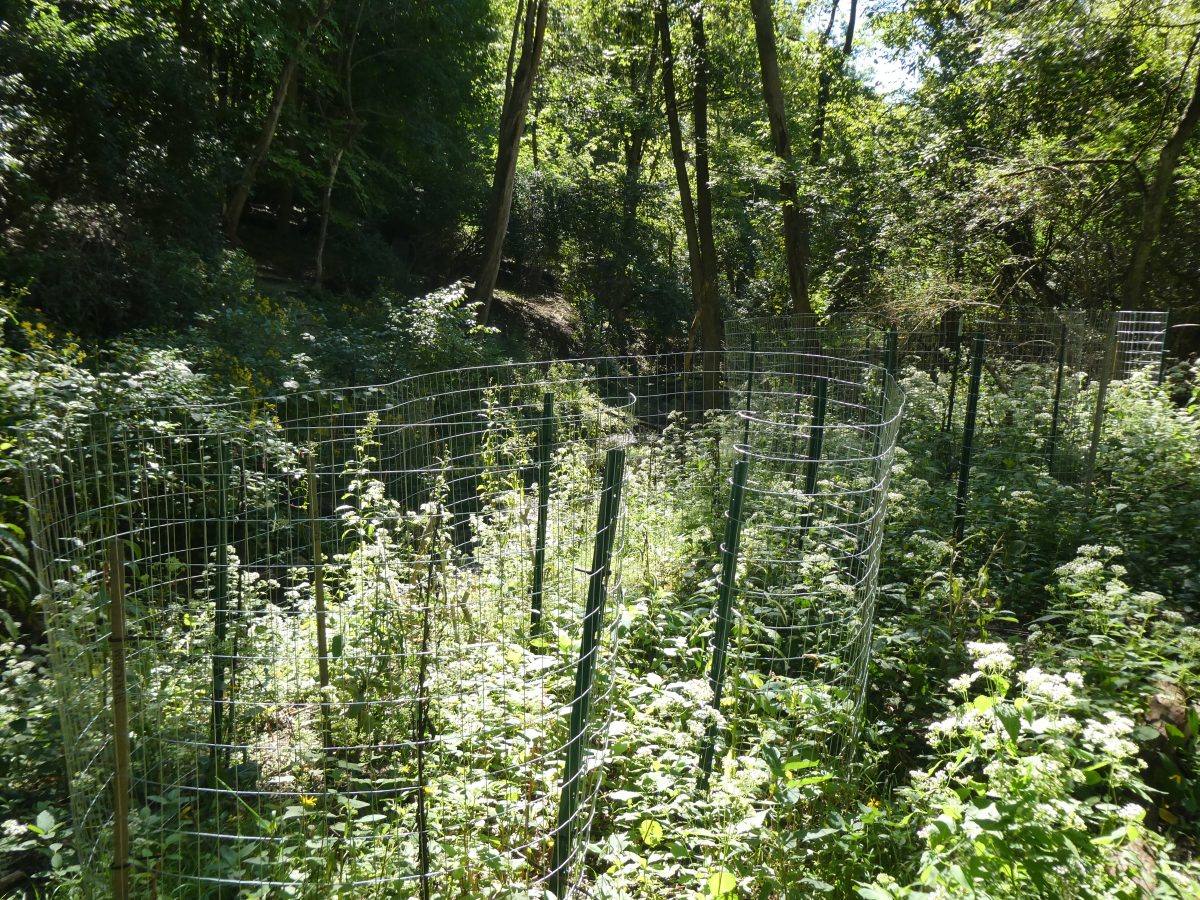
Work crews have installed a number of fenced-in “planting pods” within the project area to protect freshly planted saplings and other native vegetation from hungry deer.
Sangameswaran credits a nearly $10,000 donation from the Eaton Charitable Fund in March as a transformational influx of capital for the project.
Since the conservancy operates on a “shoestring budget,” this contribution allowed the nonprofit to purchase plants, fencing and related gardening equipment for the project, she said. “It’s had a huge impact.”
According to Conservancy VP of Projects Ron Block, as mature trees die and fall, the spaces are quickly filled with invasive shrubs and vines. This prevents new trees from becoming established. Without intervention, the park would become severely degraded over time.
“It’s a crisis in slow-motion,” he said. “The reason we do it is it ensure these woodland parks remain wooded in the future.”
Volunteers have completed four work days within the project area since mid-May, with plans to hold additional sessions throughout September, October and potentially early November.
More information on the project and how to get involved can be found online at lebonature.org/.