

Canton Township man released after spending more than 10 months in ICE custody
Canton Township man released after spending more than 10 months in ICE custody

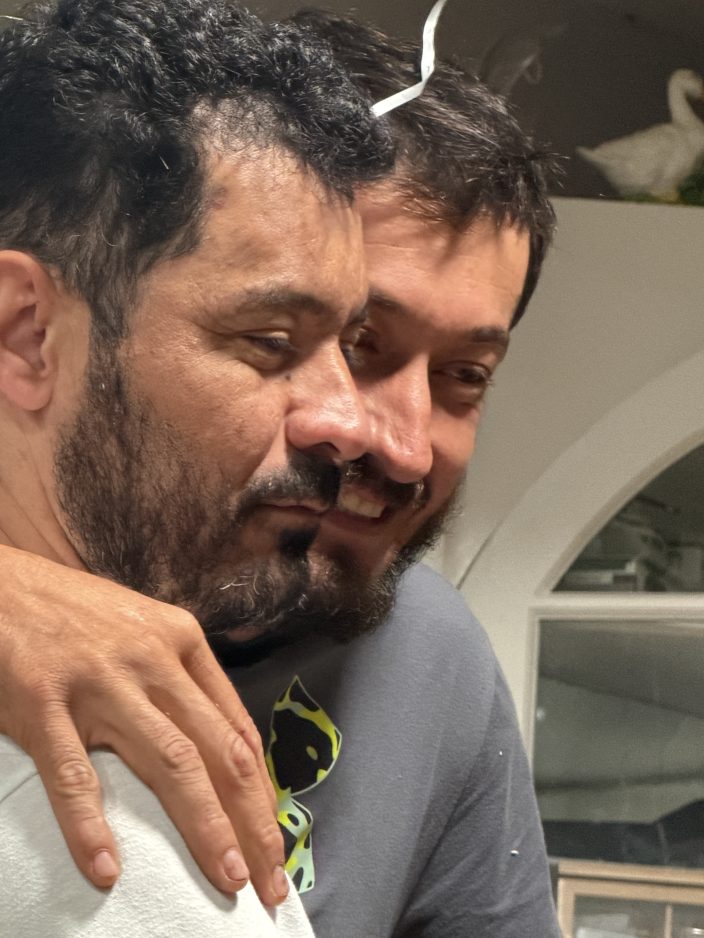
A Canton Township man who has lived in the United States for more than two decades is back home after spending more than 10 months in ICE custody.
Officers with U.S. Immigration and Customs Enforcement arrested Haroldo Garcia Alvarado, on Dec. 5, 2025, along with two other men, near the Houston exit of Interstate 79 in South Strabane Township while Alvarado was on his way to work.
On Oct. 13, a judge in the U.S. District Court for the Western District of Pennsylvania ordered the immediate release of Garcia Alvarado, after the court ruled that a June 3 bond denial based on ICE’s claim that he was “flight risk” was not justified.
“He could not believe it. He was in shock. It was a surprise,” said Erenia Karamcheti, a social worker at Our Lady of the Miraculous Medal Church in Meadow Lands, where Garcia Alvarado is a longtime member.
Garcia Alvarado fled Guatemala for the United States 24 years ago when he was 16 years old to escape extreme violence and poverty that remain rampant in the Central American country.
For Garcia Alvarado, the hardest part of being in ICE custody – he spent weeks in Moshannon Valley Processing Center in Clearfield County before he was transferred to Cambria County Prison, nearly 110 miles away from his home, after he suffered health problems – was being away from his family, including his wife, Esperanza, and their 7-year-old son.
Days before Garcia Alvarado was released, Esperanza shared the challenges of living with him in detention – including the family’s fear that he would be deported, and how they were trying to make ends meet without his income.
“It’s not easy to live in fear. It has been difficult to be without him here. I miss him a lot and am very worried about him; he’s not doing well. He’s losing his hair, he’s losing a lot of weight, and he has a lot of spots on his face because he is so stressed,” she told Karamcheti, who served as her translator.
Garcia Alvarado battled depression and anxiety in his prison cell.
“He read the Bible a lot, he prayed every day, and he walked back and forth in his cell. He tried to get in steps to be a little bit active,” said Karamcheti. “He said being in jail is awful, especially because he is not a criminal.”
Garcia Alvarado also described what he called “poor conditions” at the prison, which is one of a handful of county jails in Pennsylvania that have partnered with the federal government to detain immigrants in exchange for payment. The jail houses about 60 detainees.
Garcia Alvarado estimates he ate more than 500 packages of Ramen noodles during his detention “because it was the only thing he could eat that didn’t make him sick,” said Karamcheti.
Esperanza, originally from Guatemala and who has lived in the U.S. for 10 years, said their son suffered from anxiety while his father was away, and stress worsened his asthma. The boy had not seen his father in person since he was arrested.
Garcia Alvarado’s immigration attorney, Caleb Griffin, said he was frustrated “that it took 10 months for them to resolve this. He should have been released immediately, but we kept fighting until justice prevailed.”
While Garcia Alvarado was detained, Karamcheti and members of the church community – with the support of the Rev. Jay Donahue, the church’s senior parochial vicar – provided financial help, ran errands, and brought groceries to the home because Esperanza and her family are afraid to leave their homes because of a continued ICE presence in Washington and surrounding communities over the past several months.
“We helped as much as we could through the church. We don’t have many resources, but we do whatever we can to help out families. So many people have been taken,” said Karamcheti, who spends much of her days helping her community’s immigrant families navigate legal issues and organizing humanitarian aid.
While Garcia Alvarado is now released from detention – the federal judge determined ICE’s justification for holding Garcia Alvarado in prolonged detainment, based largely on a single DUI conviction more than 12 years ago, violated his due process rights – his deportation case is ongoing and his future is uncertain.
The federal judge noted the DUI occurred more than a decade ago, and that Garcia Alvarado has established significant ties to the United States, his community, and his church over the nearly quarter-century he’s lived here.
He remains in immigration limbo as he continues to wait for the green card he applied for – an issue his attorney calls “an uphill battle.”
The process can take as long as 25 years, due to a massive backlog of applications, per-country cap limits, and other issues resulting from current U.S. immigration laws.
Despite that uncertainty, Garcia Alvarado and his wife are focused on moving forward.
A week after he returned home, Garcia Alvarado started working a construction job, and he has returned to church.
“He’s trying to get his life back, but it’s not so easy. We are trying to see what the next steps are for him. When he was in jail, he fought hard to stay positive and to do everything he could to get out because he knew there were people outside fighting for him and his family was waiting for him.”
Karamcheti also is calling for reform to the Trump administration’s immigration policies – measures that include forced family separations and third-country deportations, where immigrants are deported to nations other than their home country, even if they have never been there – saying those measures are fundamentally cruel and inhumane.
She said some of the local immigrants who have been detained by ICE in recent months have voluntarily departed, in the hopes they can return – a court order of removal makes it nearly impossible to legally return to the U.S. for residency in the future.
“These are hard-working people, good people who have done nothing wrong and who came here for a better life for their families,” said Karamcheti. “There are families who have been here for years and have built a life here. This should not be happening to them.”