

Rep. Ortitay faces Crossey in 46th state House race
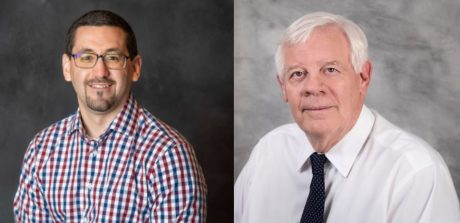
EDITOR’S NOTE: This is one in a series of stories featuring key races in the upcoming Nov. 3 election.
Six-term incumbent Republican state Rep. Jason Ortitay of Cecil Township is facing a challenge in the Nov. 3 general election from Democratic candidate Mike Crossey of South Fayette.
The 46th State House District includes several communities in northcentral Washington County and a few municipalities in southwestern Allegheny County.
We asked two questions to each of the candidates and asked them to respond with written answers.
Question 1: What are the most pressing issues facing Pennsylvania, and how would you address them?
Question 2: What is your position on the development of data centers, and what role should the state play in regulating them?
Their responses, which we asked to keep under 200 words, are below.
Name: Jason Ortitay
Age: 42
Residence: Cecil Township
Occupation: State Representative
Party: Republican
Question 1: Affordability is the issue I hear about most. Families and seniors are squeezed by higher electric bills, property taxes, health care costs and prices at the pump. I pushed for a gas tax holiday to give families relief when prices spike. I support streamlining energy permitting so we produce more power here in Pennsylvania and bring bills down and I want health care prices to be transparent so people know what they will pay before the bill arrives. I also led the fight that stopped the plan to toll I-79 at the Bridgeville exit.
Education is the second priority. I wrote Pennsylvania’s structured literacy law, Act 135, so proven reading instruction reaches every classroom. A child who reads well has a better chance of success at everything else.
Finally, Harrisburg works best when both parties work together. I have passed bills with Democrats and Republicans, and I will keep putting local families ahead of party.
Question 2: Data centers can bring investment and jobs, but they have to be built the right way. My biggest concern is electric bills. Large data centers use enormous amounts of power and families shouldn’t pay higher rates to cover that demand. The companies creating the demand should help pay for it.
The state should set clear, consistent rules: transparency on how much power and water a project will use, protections for ratepayers, and more in-state energy production so supply keeps up with demand. I supported stronger oversight of data centers this year in Harrisburg.
Local communities also need a real say. A township knows its roads, water supply and neighbors better than anyone in Harrisburg, so municipalities should have the tools to weigh in on projects in their own backyard. I supported legislation to give them that.
I am not against data centers. I am for making sure they don’t come at the expense of the families who live next door.
Name: Mike Crossey
Age: 75
Residence: South Fayette
Occupation: Semi-retired (Business Broker)
Party: Democrat
Question 1: The biggest problem affecting Pennsylvania today and the residents of my district is the growing affordability crisis. We are facing this crisis because of a structural deficit in Pennsylvania. We have been funding services with one-time fixes, drawing down the rainy-day fund, and backfilling with federal supplement dollars. Families are struggling to keep up. It is difficult to meet even basic needs for many. Families are strained. Costs are rising in every area of the family budget. All this while salaries have remained stagnant and public support has diminished or disappeared. I will present three specific plans to increase state revenue, to reduce costs, create family-sustaining jobs, and improve our infrastructure. We also need to increase the minimum wage, make healthcare and childcare accessible and affordable. Our young families should be able to buy a home, and our seniors should be able to retire in their homes with dignity.
Question 2: As far as data centers are concerned, state regulations must be written to coexist with local autonomy in a way that balances economic development, environmental protection, and local control. Water withdrawal must be tied to capacity. Efficiency standards must address water reuse and recycling. Contingencies must be in place in case of a drought. Water needs must be in priority: Household and residential use first, agricultural needs, local industry, then data centers. It must be built in from day one that all costs of power generation must be borne by the data center and not shifted to local ratepayers. I would also require that developers pay for all transmission upgrades and grid stabilization costs, and that no costs get shifted to or shared with local residential or business ratepayers. I am also adamantly opposed to any tax abatements or exemptions for the development of data centers. All that said, we must work with our building trades and look for opportunities to rebuild our infrastructure in ways that create sustainable jobs that can support families.