

DCED secretary visits Mon Valley economic development event
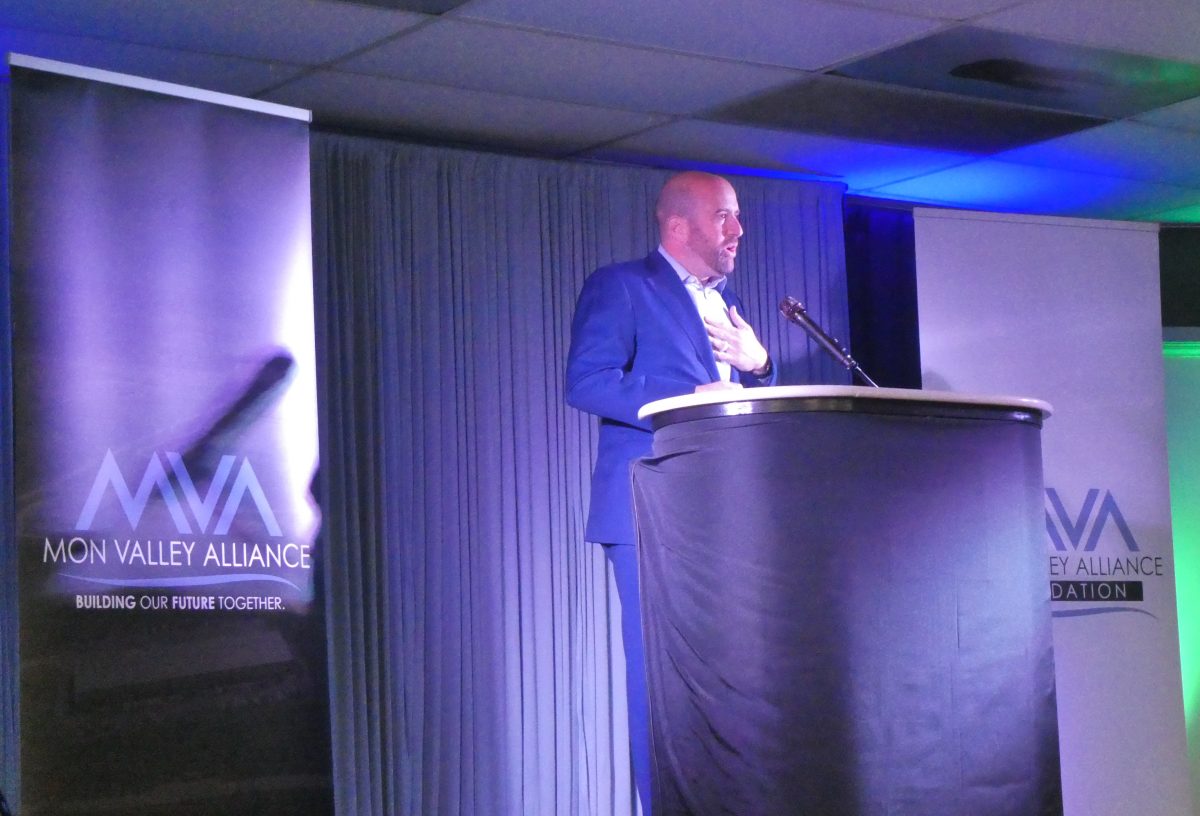
Department of Community & Economic Development Secretary Rick Siger delivered the keynote address during the Fourth Annual Mid-Mon Valley Economic Symposium, promoting a number of development initiatives launched by the Shapiro administration.
More than 200 local business leaders and elected officials attended Friday’s event in Belle Vernon, which was hosted by the Mon Valley Alliance.
Mon Valley Alliance (MVA) CEO Jamie Colecchi reflected on the organization’s 10-year anniversary.
“The first decade proved the model; the next decade must scale what works,” he said.
Colecchi highlighted the Alta Vista Business Park near Charleroi as the “clearest example” of what the partnership has successfully accomplished so far.
The 256-acre property was built from reclaimed mine land in the mid-2000s, and now boasts long-term tenants in 16 of its 17 total lots after securing a major investment from German separation systems manufacturer Spaleck USA LLC, which relocated its domestic headquarters to the park in June 2026.
“No one partner could have done all of that,” Colecchi said. “Together, however, we created a significant industrial asset for the region.”
In order to build on the economic development momentum present in the Mon Valley, Colecchi said the MVA and its partners need to scale the industrial development model; connect industrial development to local downtowns; and sustain key state and local investment into the region.
“The next decade will not be defined by one project. It will be defined by whether we build a stronger regional habit of acting together,” he said.
Siger touted the Pennsylvania Strategic Investments to Enhance Sites Program (PA SITES) as a leading example of the Department of Community & Economic Development’s (DCED) ongoing work to make the commonwealth a more welcoming business environment.
The PA SITES program funds local municipalities and economic development groups to plan and build pad-ready sites.
Modernization efforts to speed up permit and professional licensure wait times is another example of the detail-oriented efforts undertaken by the current administration to stimulate economic growth, according to Siger.
He said that thanks to these programs, and strong partnerships with local leaders, Pennsylvania is becoming one of the most welcoming business environments in the Northeast.
“Economic development is a team sport,” Siger said.
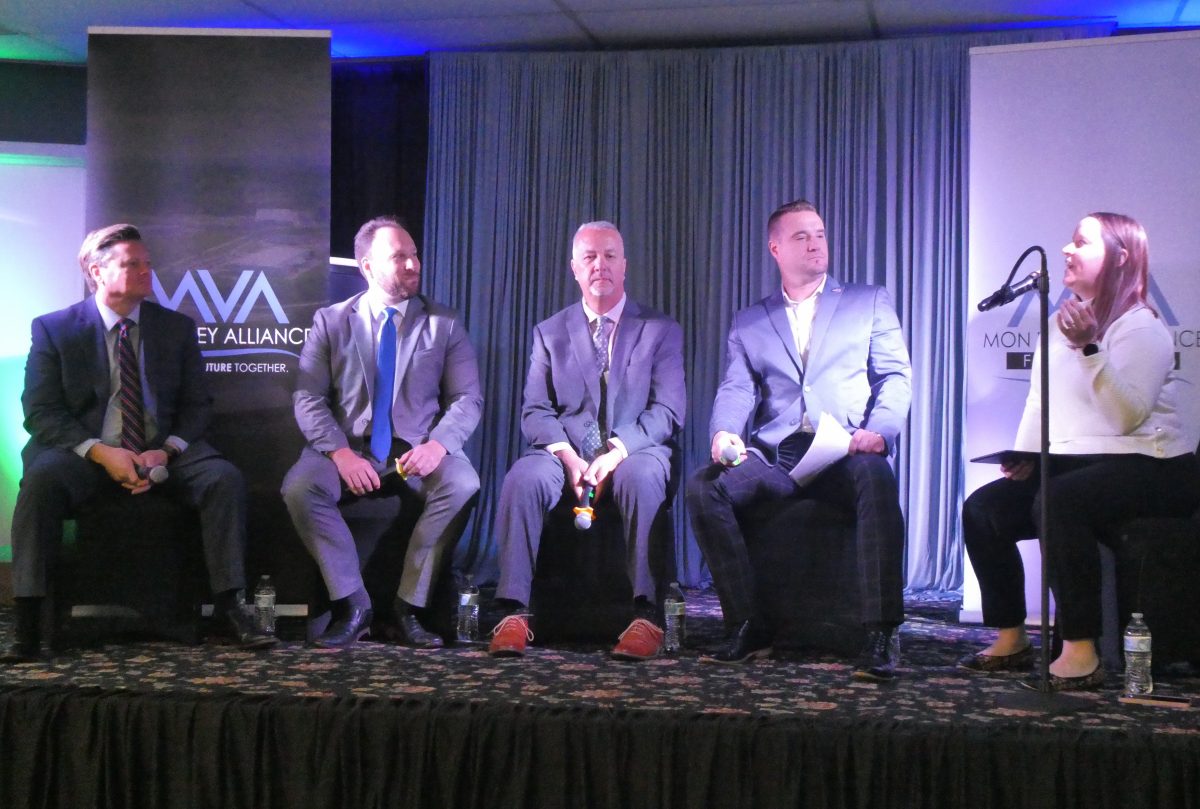
A panel discussion featuring four county commissioners representing Fayette, Greene, Washington and Westmoreland counties concluded the event.
Washington County Commissioner Chair Nick Sherman said that finding sufficient space to house new and incoming businesses is one of the main challenges left after the boom of natural gas projects in the 2010s absorbed a substantial amount of prime real estate in the county.
“It’s a great problem to have,” he said. “There are so many good things going (in Washington County), but we need the planning and oversight … to make that journey good.”
Westmoreland County Commissioner Chair Sean Kertes and Fayette County Commissioner Chair Scott Dunn both stressed that workforce supply and retention will limit future economic growth in the region if left unaddressed.
Sherman said limited housing availability, particularly for first-time homebuyers and young families, is another pressing concern.
Greene County Commissioner Chair Jared Edgreen added that businesses potentially interested in relocating to Southwestern Pennsylvania are often opting for Ohio or West Virginia instead, due to limited housing options and comparably low-rated public school districts.
Investing more in education so local high school graduates stay in the area instead of moving elsewhere for work is one way to address this, he said.
According to Dunn, closer collaboration between the four neighboring counties on big-picture infrastructure and economic development matters will drive growth across the entire region.
The decline of the steel industry in the late 20th century left much of the Mon Valley without a clear economic engine, but if local leaders want to attract a major national company that will form the core of a new engine, they will have to work together, he said.
“We all need to be at the table to contribute to that (economic development vision,” Dunn said.