

Peters council rejects comprehensive plan, asks for revisions
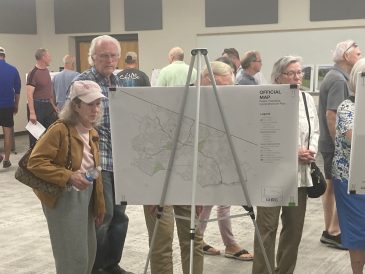
After more than a year of work, open houses and surveys, Peters Township Council rejected its comprehensive plan on Monday, saying that more work needed to be done on it.
Specifically, council said that more work needed to be done to clarify the status of a property a 366-acre property off Venetia Road that is partially zoned for mixed residential use, which means that high-density housing like apartments, condominiums and townhouses could be placed there. The plan that was rejected by council suggests that the parcel “warrants a study of alternatives, including planned residential development.”
The council’s rejection of the comprehensive plan came after a lengthy public hearing where residents voiced strong objections to any high-density residential development in the township.
“Let’s just cut it off,” said resident Tony Brown. “No more.”
Paul Lauer, the township manager, said after the council’s rejection of the comprehensive plan as it was presented, it would have to go back to the township’s planning commission, and then return to council for another vote. Lauer defended the plan, saying it does not lay out rules, but instead “it’s a vision.”
Comprehensive plans are meant to provide guidance for how land will be used and developed in a community over a decade or so. The Cranberry Township-based civil engineering firm Herbert, Rowland and Grubic Inc. (HRG) has provided consulting services throughout the process, which started in March 2025. Under the Pennsylvania Municipalities Code, updating a comprehensive plan is encouraged but not required. Peters Township last updated its comprehensive plan in 2013.
The plan was defeated on a 5-2 vote, with council members Robert Lewis and Frank Arcuri providing the votes in support. The comprehensive plan has been provided to neighboring municipalities, the county’s planning commission, and the Peters Township School District.
On Monday, the board also adopted a change to its zoning ordinance creating a separation of 100 feet between agricultural operations and residential structures.