

Canonsburg ceremony reunites piece of bomber plane with WWII veteran
Canonsburg ceremony reunites piece of bomber plane with WWII veteran
Aug. 6 marked the 81st anniversary of the U.S. atomic bombing of the Japanese city of Hiroshima.
Among the more than 70,000 people killed that day were 12 American prisoners of war.
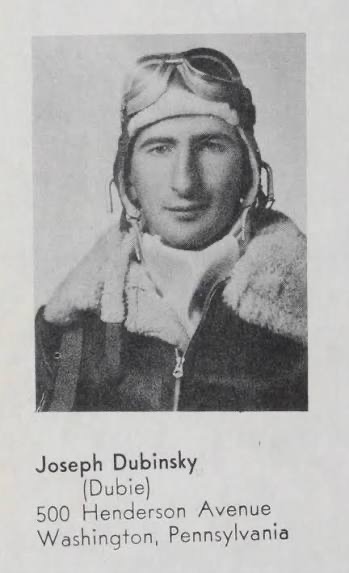
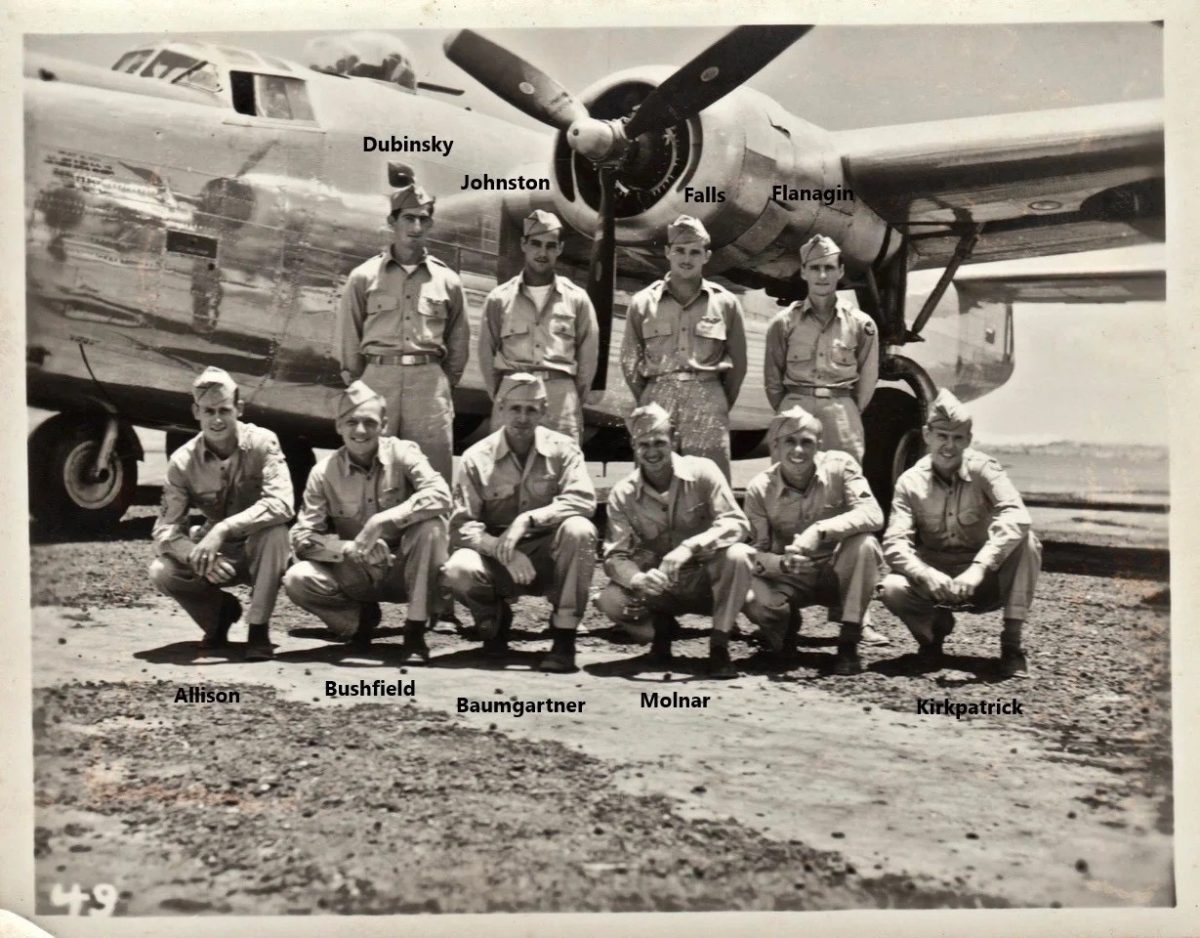
One of those prisoners was 1st Lt. Joseph Dubinsky, 26, of Washington, the pilot of a B-24 bomber, Taloa, which had been shot down nine days before on July 28, 1945.
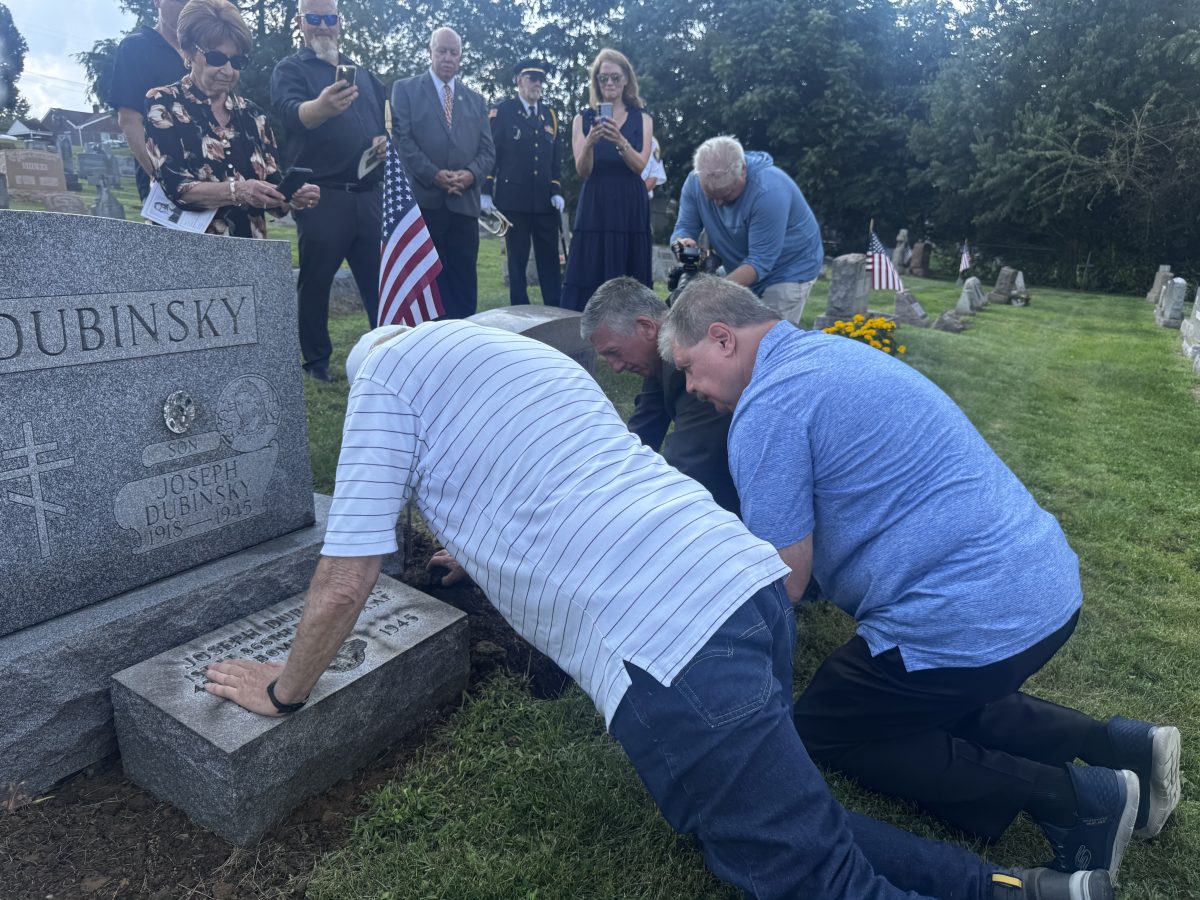
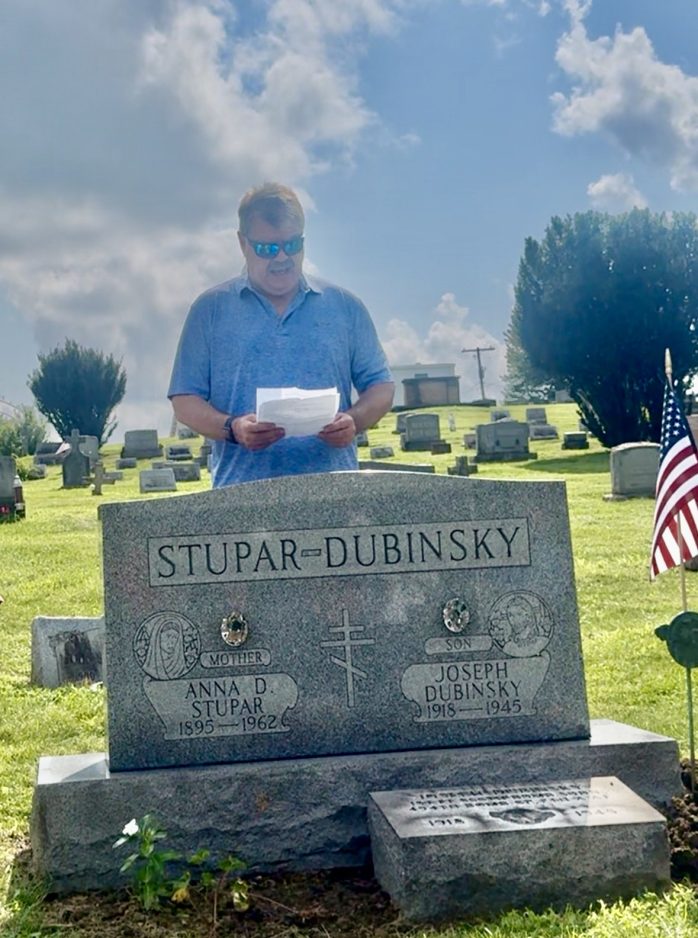
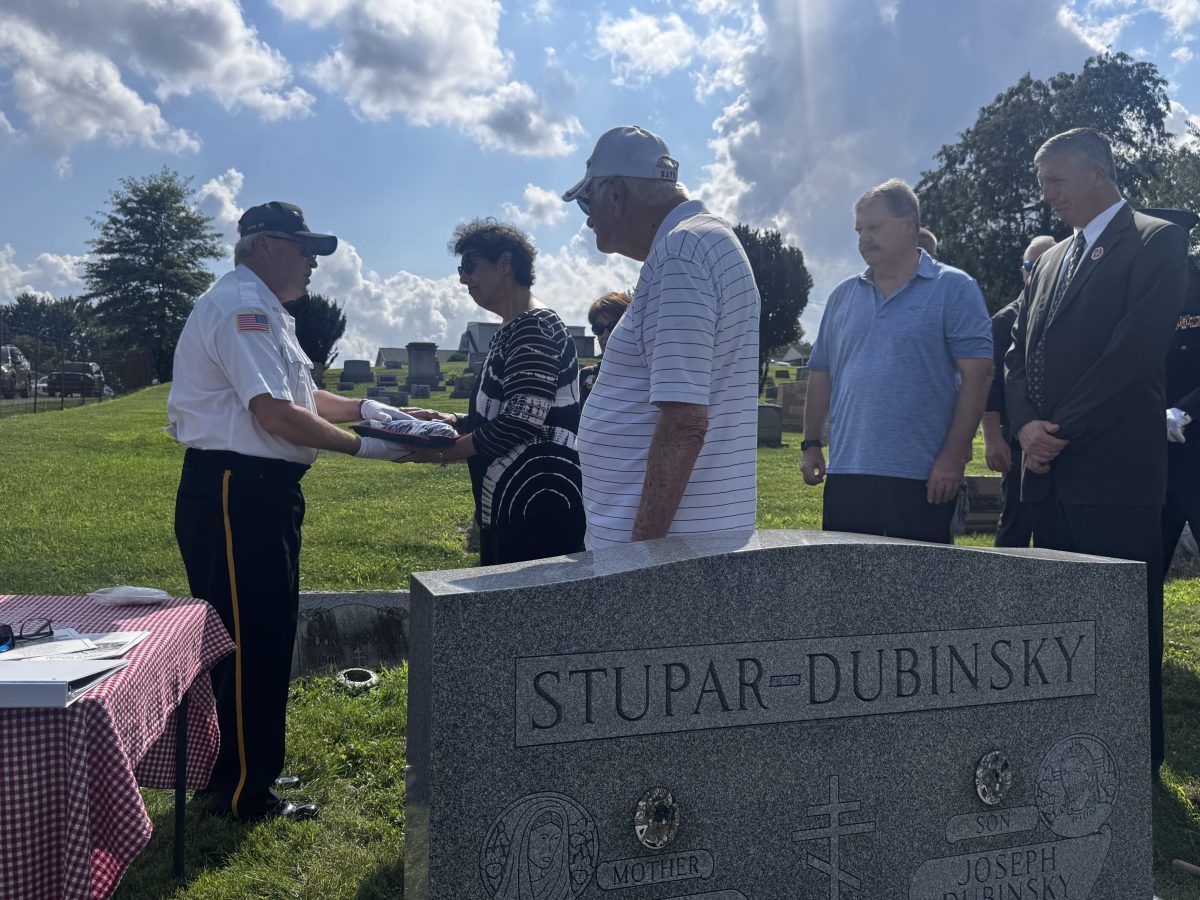
At St. Michaels Cemetery in Canonsburg on Thursday, Dubinsky’s relatives, friends, veterans and community members gathered for a memorial service, where they buried a piece of the Taloa in a time capsule alongside the pilot, concluding an extraordinary, decades-long effort by historian and atomic bomb survivor Shigeaki Mori to uncover the fates of the American POWs in Hiroshima.
“Now 81, years later, on the anniversary of the day Uncle Joe lost his life in Hiroshima, this piece of the plane has crossed the Pacific one final time. In June, it was returned to our family, and today it finally comes home to rest beside Uncle Joe, said Bob Tatalovich, Dubinsky’s nephew and the son of Dubinsky’s younger sister, Helen Stupar Tatalovich. “I ask you to remember not only Uncle Joe, but everyone whose compassion, persistence and humanity carried his story across 81 years and also brought us all together here today in remembrance of all the other victims of Hiroshima as well.”
Thursday’s service included the flyover of a C-130 bomber at 4:16 p.m. – the “Little Boy” detonated over Hiroshima at 8:16 a.m. – along with a 21-gun salute, the playing of “Taps,” and the presentation of a U.S. flag to the family from VFW Post 191 of Canonsburg.
For years, Dubinsky’s family did not know he survived the crash, until Mori contacted family members in 1999.
Mori’s research showed that eight crew members died, but Dubinsky and two other survivors parachuted to the ground and were captured by Japanese military police. Dubinsky was detained at Chugoku Regional Military Headquarters in Hiroshima, near the blast’s hypocenter.
Meanwhile, a Japanese youth, Masayoshi Kubota, had witnessed the plane crash and collected fragments of the fuselage.
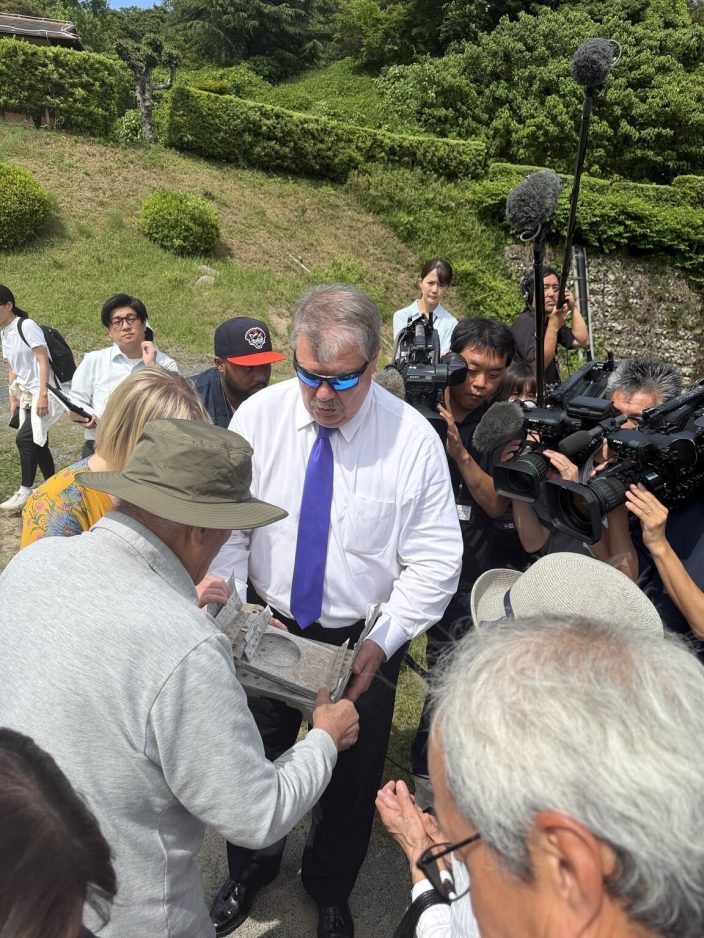
In June, Tatalovich, of Nevada, and his daughter, Haley Tatalovich, traveled to Japan, where Kubota, now 94, handed over the pieces – which he had kept hidden for years in a barn – in a paper bag to Tatalovich.
“It has been a deeply personal journey, but it also has been a lesson in remembrance, reconciliation, and shared humanity,” said Tatalovich.
Dubinsky was a graduate of Washington High School and Muskingum College.
In the summer of 1941, he completed a civilian pilot program and earned an FAA private pilot’s license.
Shortly after he graduated from college in 1942, Dubinsky enlisted with the U.S. Army Air Corps, and by 1944 he was a first lieutenant attached to the 494th bomber group and piloted a four-engine B-24 bomber.
Dubinsky’s brother, Branko Stupar, four years his junior, graduated from Muskingum College and, after completing a U.S. Navy B-90 program at Ohio Wesleyan College, became a Navy ensign who was assigned to command a landing craft tank in the Pacific Theater and was aboard a Navy ship near Dubinsky on Okinawa.
Said David Stupar, Dubinsky’s nephew and Branko Stupar’s son, at the service, “The greatest joy for my dad at that time was finding his older brother assigned to Yontan Airfield on the same island later that summer. My dad told us stories of climbing the hill to the airfield as often as he could, to see his brother and bring hot snacks from the ship’s galley to share with Uncle Joe’s crew. He so greatly admired his brother, and how could he not?”
Stupar was scheduled to fly with Dubinsky on the Taloa’s ill-fated mission, but was bumped from the flight that morning, David Stupar said.
Taloa’s mission was to bomb the Japanese battleship Haruna, which was anchored at Kure near Hiroshima.
But the Taloa was struck by heavy anti-aircraft fire, causing it to catch fire and crash into a mountain.
“Later that afternoon, my dad made his usual trek up the mountain to meet his brother and hear about the mission,” recalled Stupar. “Two airmen who were used to seeing dad knew who he was, and why he was coming up. They both looked at each other and stated, ‘Who wants to tell Ensign Stupar the bad news?'”
Mori dedicated his life to uncovering the names and stories of the American POWs from Taloa and another bomber, Lonesome Lady, which was shot down during the same military operations in the area, and eventually he connected with Dubinsky’s family.
Mori passed away in March 2026 at the age of 88, 2 1/2 months before Tatalovich visited Japan for the first time.
Mori’s widow, Kayoko Mori, guided Tatolovich and his daughter to a hill on the city’s outskirts where the Taloa crashed. The three also visited the plaque that Mori had installed at his own expense at the police headquarters where Dubinsky and other U.S. prisoners of war died in the atomic bombing, and at the Taloa crash site.
Later, Kubota, presented the piece of the plane to Tatalovich.
“It was one of the most meaningful experiences I’ve ever had. I held that piece of history in my hands, something that had been preserved for 80 years, and it is an experience I’ll never forget,” said Tatalovich.
Filmmaker Barry Frechette directed the 2016 award-winning documentary “Paper Lanterns,” which tells the story of Mori’s tireless, decades-long effort to uncover and share the stories of tens of thousands of Japanese victims, and to identify and honor the 12 American POWs who also perished in the Hiroshima bombing so that they, too, would be remembered as victims.
Frechette, who attended Dubinsky’s service in Canonsburg, said his curiosity was piqued by stories his uncle told about a friend of his, Norman Brissette, who died 13 days after the blast from radiation sickness. Brissette was 19.
“It is a subject that I do not think a lot of Americans know about,” said Frechette. “And I was so moved by Shigeaki Mori’s compassion and his determination to honor the POWS who died.”
Japanese media also attended Dubinsky’s memorial service.
The ceremony comes at a time when America is placing renewed emphasis on preserving the stories of the World War II generation while firsthand witnesses are still alive. It highlights the importance of passing these stories to future generations and that the sacrifices of those who served are not forgotten, said Tatalovich.
And, Tatalovich said the memorial service carries on Mori’s wishes to build empathy, connection, and compassion in the world.
“There are fewer and fewer people who can provide first-hand accounts abut World War II and the events that happened, and it’s now up to the younger generation, like my daughter, to pick up the mantle and keep these stories alive,” said Tatalovich. “I don’t want Mr. Mori’s story of compassion and reconciliation, and the work he did to build bridges, to die.”